


Wilko Water Filter Cartridges
In the realm of water treatment, the term "filter cartridges" encompasses a broad spectrum of products ranging from basic domestic solutions to high-precision industrial components. Wilko water filter cartridges represent the consumer end of this spectrum, designed primarily for residential use to improve the taste and odor of tap water. However, for engineers and procurement professionals operating in industrial sectors—such as chemical processing, pharmaceuticals, or food and beverage—understanding the underlying technology of these cartridges is essential for making informed decisions about filtration scale, material compatibility, and performance expectations.
This article examines the technical specifications of domestic filtration solutions like those offered by Wilko, contrasts them with industrial-grade Filter Cartridges, and provides a guide for technical professionals on evaluating filtration systems for demanding applications.
Understanding the Technology Behind Wilko Water Filter Cartridges
Wilko water filter cartridges are typically designed for use in gravity-fed pitchers or small-scale under-sink systems. Their primary function is the reduction of chlorine, limescale, and certain heavy metals that affect the sensory qualities of drinking water.
Filtration Media and Mechanisms
Most domestic cartridges utilize a combination of two primary media:
1. Activated Carbon: This medium works through adsorption. The porous surface of the carbon traps organic compounds and chlorine. In consumer-grade cartridges, this is often granulated activated carbon (GAC).
2. Ion-Exchange Resin: These small beads are used to reduce water hardness by swapping calcium and magnesium ions with sodium or hydrogen ions. This process is critical for preventing limescale buildup in domestic appliances like kettles.
While effective for low-volume, low-pressure applications, these materials have limitations in industrial environments where high flow rates, extreme temperatures, and aggressive chemical solvents are present.
Industrial vs. Consumer Filtration: Performance Expectations
When transitioning from a consumer context, such as wilko water filter cartridges, to an industrial setting, the engineering requirements shift from "aesthetic improvement" to "process integrity." The differences are defined by several key performance metrics.
Pressure and Flow Rates
Consumer cartridges are generally designed for gravity flow or domestic line pressures (typically 2 to 4 bar). In contrast, industrial filter cartridges must withstand significant differential pressures (ΔP). In hydraulic or high-viscosity chemical processing, filters may need to maintain structural integrity under pressures exceeding 10 bar. If a consumer-grade housing or media were subjected to these forces, media migration or catastrophic structural failure would likely occur.
Filtration Efficiency and Micron Ratings
Domestic filters often provide "nominal" filtration, meaning they catch a percentage of particles at a certain size. Industrial applications often require "absolute" filtration ratings. For instance, in pharmaceutical manufacturing, a 0.22-micron absolute rating is standard for sterilization. While a Wilko-style cartridge may reduce sediment, it lacks the precision required for high-purity industrial outputs.
Key Evaluation Criteria for Replacement Filter Cartridges
Engineers tasked with selecting or replacing filtration components must look beyond brand names and focus on technical specifications. Whether evaluating a simple water filter or a complex stainless steel assembly, the following criteria are paramount:
1. Chemical Compatibility
Before purchasing any filter cartridge, the chemical nature of the fluid must be cross-referenced with the filter media and the housing material. While plastic (polypropylene) is common in domestic water filters, it may degrade when exposed to certain oils, solvents, or high-temperature steam. In such cases, stainless steel 304 or 316L is the preferred material for industrial durability.
2. Temperature Stability
Standard water filter cartridges are usually rated for ambient or slightly chilled water. Industrial processes often involve fluids at boiling points or cryogenic temperatures. Selecting a cartridge with the appropriate thermal expansion coefficient is vital to prevent bypass—where fluid leaks around the filter media due to material shrinkage or expansion.
3. Dirt-Holding Capacity
The longevity of a filter is determined by its dirt-holding capacity. In industrial settings, frequent replacement of cartridges leads to increased downtime and labor costs. High-performance industrial cartridges often utilize pleated designs to maximize surface area, significantly extending the service life compared to standard cylindrical domestic filters.
Material Selection: From Plastic to Stainless Steel
One of the most significant differences between consumer products like wilko water filter cartridges and industrial solutions is the material of construction.
The Limitations of Polymers
Most domestic cartridges use plastic housings and synthetic fiber media. These are cost-effective for single-use applications but are prone to "leaching" in certain environments and cannot be easily cleaned. Once a plastic cartridge is clogged, it must be discarded, contributing to environmental waste and ongoing procurement costs.
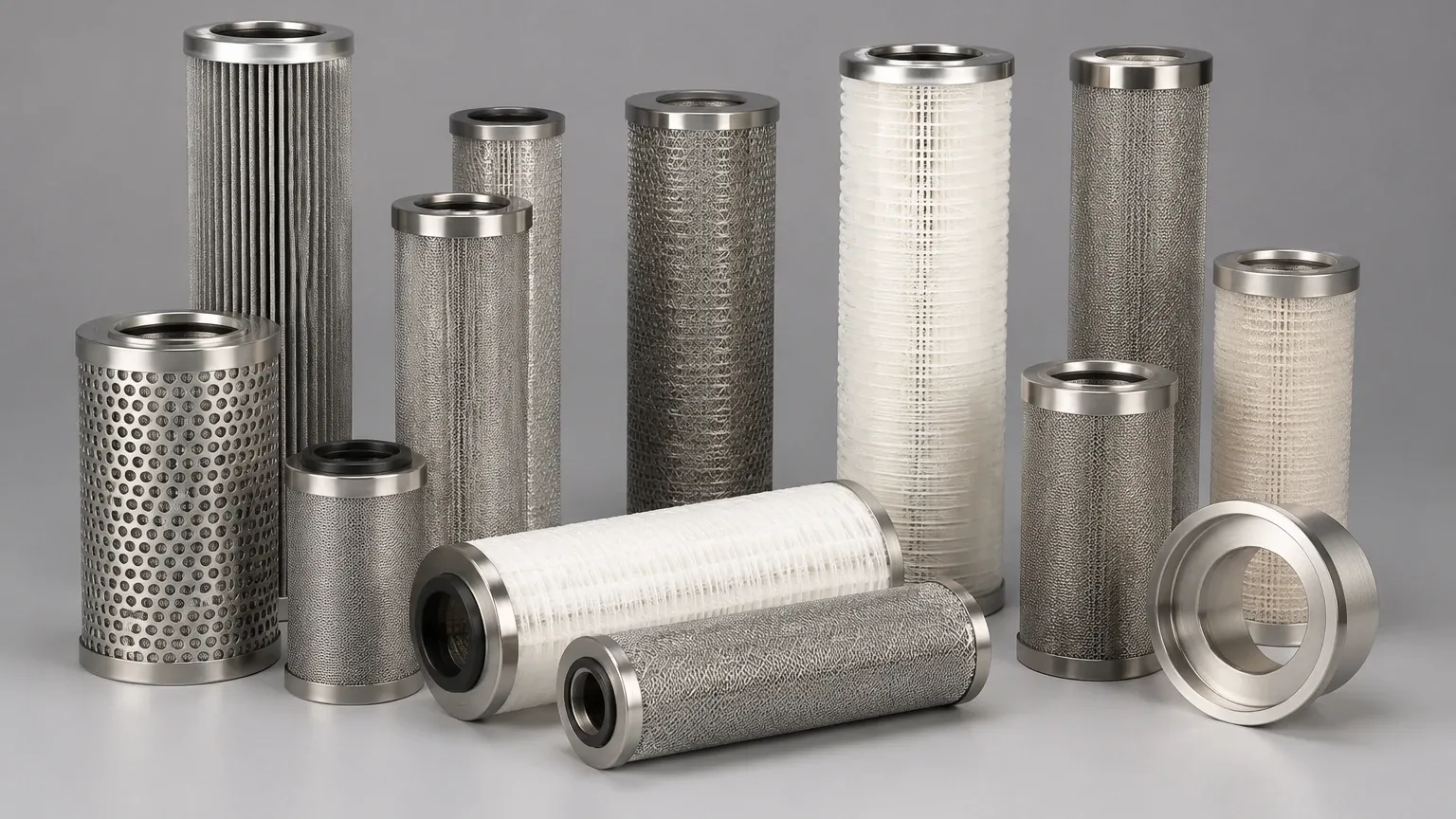
The Advantages of Stainless Steel Wire Mesh
For demanding industrial applications, Kaifil specializes in stainless steel filtration solutions. Unlike polymer-based cartridges, stainless steel wire mesh filters offer:
* Cleanability: These filters can be backwashed or ultrasonically cleaned, allowing for multiple reuse cycles.
* Structural Rigidity: They do not collapse under high differential pressure.
* Corrosion Resistance: Essential for chemical processing and marine environments.
* No Media Migration: Unlike carbon or fiber filters, precision-woven wire mesh ensures that no part of the filter itself enters the downstream fluid.
Engineering Considerations for Custom Filtration Solutions
In many B2B scenarios, off-the-shelf cartridges do not meet the specific needs of a unique system. This is where OEM (Original Equipment Manufacturer) and customized filtration solutions become necessary. When designing a custom filter cartridge, engineers must consider the following:
* End-Cap Configurations: Ensuring a leak-proof seal requires precise matching of end-cap styles (e.g., 222 O-ring, 226 locking tabs, or flat gaskets).
* Mesh Weave Types: Depending on the particle shape and fluid viscosity, different weave patterns (plain, twill, or dutch weave) may be required to optimize flow and retention.
* Pleating vs. Cylindrical: Pleating the metal mesh increases the filtration area, which is critical for systems with high flow requirements but limited housing space.
By working with a professional manufacturer, companies can develop Filter Cartridges that are tailored to their specific operational parameters, rather than forcing a standard product into a non-standard application.
Total Cost of Ownership and Maintenance Cycles
When analyzing the cost of filtration, purchasing departments often focus on the initial unit price. However, the Total Cost of Ownership (TCO) provides a more accurate financial picture.
Consumable vs. Permanent Filters
Consumer-grade filters like wilko water filter cartridges are inexpensive upfront but require frequent replacement. In an industrial plant, the cost of replacing 50 plastic cartridges every month, plus the cost of disposal and the labor for change-outs, quickly exceeds the cost of a single high-quality stainless steel filter that lasts for years.
Monitoring Performance
To optimize maintenance cycles, industrial systems should be equipped with differential pressure gauges. A sudden drop in pressure may indicate a filter breach, while a steady increase signals that the cartridge is reaching its dirt-holding limit. Establishing a baseline for "clean" ΔP allows maintenance teams to schedule cleanings or replacements before process efficiency is compromised.
Conclusion
While wilko water filter cartridges serve their purpose in the domestic market for basic water improvement, they represent only a small fraction of the filtration landscape. For technical professionals and engineers, the transition to industrial-grade Filter Cartridges involves a rigorous evaluation of material science, pressure dynamics, and long-term cost-efficiency.
Selecting the right filtration component requires a deep understanding of the specific application—whether it involves the delicate filtration of pharmaceutical ingredients or the robust straining of industrial cooling water. By focusing on high-quality materials like stainless steel and considering custom-engineered solutions, businesses can ensure reliable performance, minimize downtime, and achieve superior filtration results in even the most demanding environments.
