


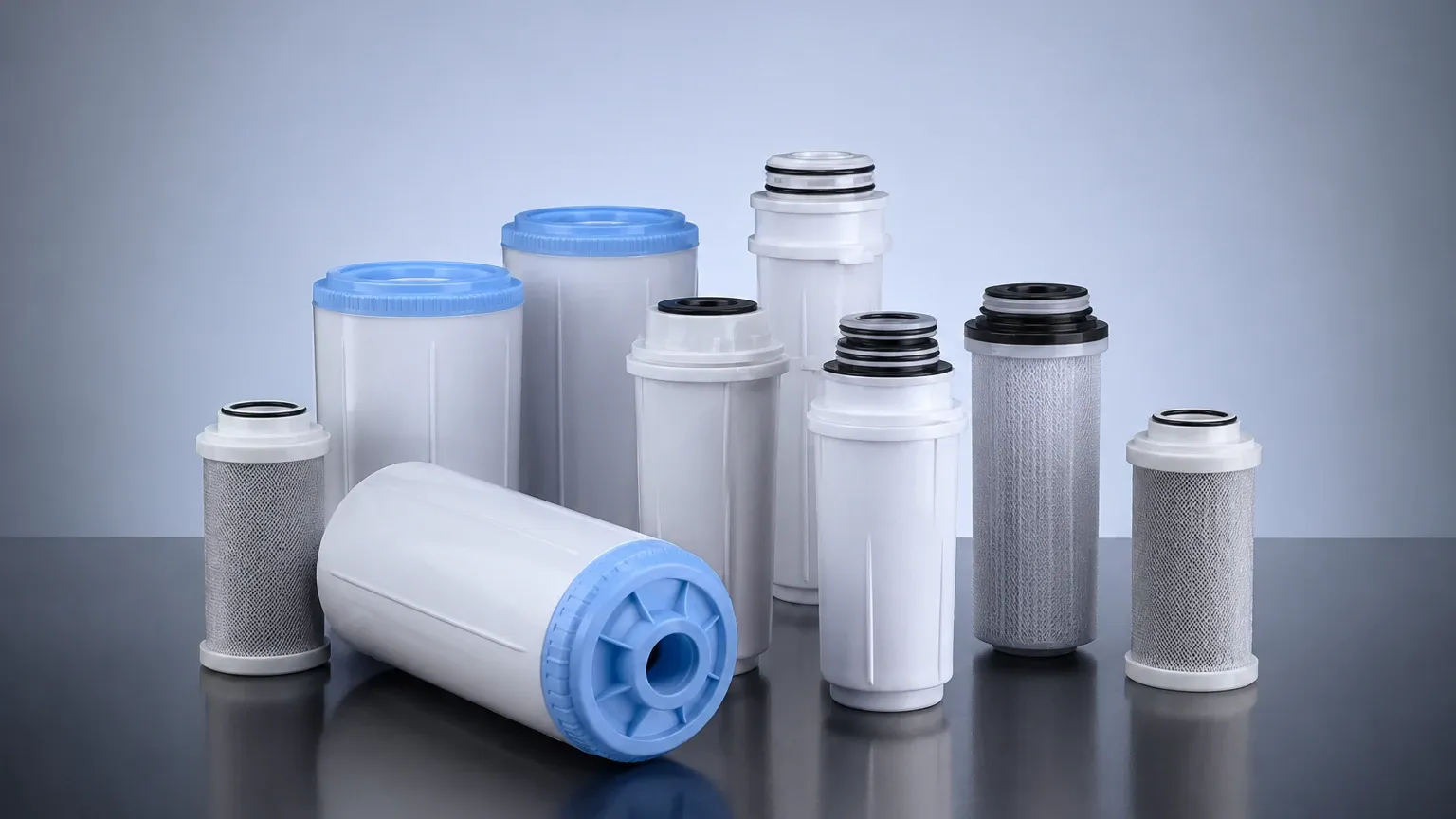
Zero Water Filter Cartridges
In industrial process engineering, the pursuit of "zero water"—water characterized by near-zero Total Dissolved Solids (TDS) and minimal conductivity—is essential for high-precision manufacturing, chemical processing, and power generation. Achieving this level of purity requires a sophisticated multi-stage approach where specialized filter cartridges play a critical role. While consumer-grade zero water filter cartridges are common in domestic settings, industrial applications demand robust, high-capacity components capable of maintaining effluent quality under rigorous pressure and flow conditions.
For engineers and procurement specialists, selecting the appropriate Filter Cartridges involves more than just identifying a micron rating. It requires a deep understanding of solute chemistry, mechanical durability, and the specific contaminants that must be removed to reach ultra-pure water (UPW) standards. This guide examines the technical specifications, engineering considerations, and material selection criteria for industrial-grade zero water filtration solutions.
The Technical Definition of Zero Water in Industrial Contexts
In a B2B or industrial environment, "zero water" typically refers to deionized (DI) or demineralized water. The goal is to remove virtually all inorganic salts and organic impurities. This is measured by electrical resistivity, with the theoretical limit of pure water being 18.2 MΩ·cm at 25°C.
To reach these specifications, filtration systems utilize a combination of technologies:
1. Mechanical Pre-filtration: Removing suspended solids that can foul downstream membranes.
2. Adsorption: Using activated carbon to remove chlorine and organics.
3. Ion Exchange (IX): Utilizing resin beads to exchange H+ and OH- ions for dissolved minerals.
4. Reverse Osmosis (RO): A membrane process that removes the bulk of dissolved solutes.
Zero water filter cartridges are often the final polishing stage or a critical pre-treatment component in these systems, ensuring that the water entering the final process is free of particulate matter that could interfere with sensitive chemical reactions or delicate machinery.
Engineering Considerations for High-Purity Filtration
When specifying zero water filter cartridges for industrial use, several engineering parameters must be evaluated to ensure system longevity and performance consistency.
Micron Rating: Nominal vs. Absolute
For high-purity applications, the distinction between nominal and absolute ratings is vital. A nominal rating indicates the cartridge's ability to trap a percentage of particles of a given size, whereas an absolute rating (often defined as Beta 5000 or 99.9% efficiency) provides a guarantee of particle retention. In zero water systems, absolute-rated cartridges are preferred to prevent "breakthrough," where particles bypass the filter media under pressure surges.
Flux and Flow Rate
The flux—the rate of flow per unit area of the filter media—affects both the filtration efficiency and the pressure drop ($\Delta P$). In ultra-pure water systems, maintaining a low flux can prevent the migration of fine particles through the media. Engineers must balance the desired flow rate with the surface area of the cartridge. Pleated designs are frequently employed in these scenarios because they offer significantly higher surface area than depth filters, allowing for higher flow rates without compromising the "zero water" quality targets.
Pressure Differential and Structural Integrity
Industrial zero water filter cartridges must withstand significant differential pressures. As the filter accumulates contaminants, $\Delta P$ increases. If the cartridge lacks structural integrity, the media may collapse or bypass seals, contaminating the downstream ultra-pure water. Stainless steel cores and reinforced end caps are common features in high-performance industrial cartridges to prevent such failures.
Material Selection for Zero Water Environments
The materials used in the construction of filter cartridges must be chemically inert to prevent leaching. In high-purity water, even trace amounts of plasticizers, adhesives, or metallic ions can compromise the "zero" status of the water.
Stainless Steel and Metal Alloys
For demanding industrial environments involving high temperatures or aggressive cleaning cycles, stainless steel filter cartridges are often the superior choice. Specifically, 316L stainless steel provides excellent corrosion resistance. Unlike polymer-based filters, metal filters do not outgas or release organic compounds into the water stream. This makes them ideal for steam filtration and the protection of high-value RO membranes.
Synthetic Polymers
In applications where metal ions must be strictly avoided, high-purity polypropylene or PTFE (Polytetrafluoroethylene) cartridges are used. These materials are chosen for their low extractable profiles. It is essential to confirm that the resins used in these cartridges meet FDA or relevant industrial standards for purity to ensure they do not introduce contaminants into the zero water stream.
The Role of Zero Water Filter Cartridges in System Protection
One of the primary functions of high-efficiency cartridges is the protection of downstream assets. In an industrial UPW system, the most expensive components are often the Reverse Osmosis membranes and the Ion Exchange resin beds.
* RO Membrane Protection: Colloidal silica and fine particulates can cause irreversible fouling of RO membranes. Using a high-quality pre-filter cartridge with a 1-micron or sub-micron rating can extend the life of these membranes by years.
* Resin Bed Shielding: Ion exchange resins are sensitive to physical fouling and chemical degradation. Zero water filter cartridges placed upstream of the IX columns remove suspended solids that would otherwise coat the resin beads, reducing their exchange capacity and increasing the frequency of costly regenerations.
Evaluating Total Cost of Ownership (TCO)
When purchasing zero water filter cartridges, the initial unit price is often a misleading metric. Procurement teams should instead focus on the Total Cost of Ownership, which includes:
1. Service Life: How much total volume can the cartridge process before reaching the terminal pressure drop?
2. Labor Costs: The time required for technicians to change out filters. High-capacity pleated filters may cost more upfront but require fewer change-outs.
3. Disposal Costs: Metal filters can often be cleaned and reused, whereas polymer depth filters are single-use and contribute to the waste stream.
4. Downstream Impact: The cost of replacing fouled RO membranes or contaminated product batches due to poor-quality filtration.
By selecting a cartridge with a higher dirt-holding capacity and more robust construction, industrial facilities can significantly reduce their annual filtration expenditure despite a higher initial component cost.
Common Risks and Quality Assurance
The primary risk in zero water applications is "bypass." This occurs when water flows around the filter media rather than through it, usually due to poor seal design or improper installation. Engineers should look for cartridges featuring double O-ring seals (such as 222 or 226 configurations) which provide a more secure fit than flat gaskets.
Another risk is media migration, where fibers from the filter itself break off and enter the effluent. In high-purity water systems, this can be catastrophic. Specifying "fixed pore" media or sintered metal structures ensures that the filter remains intact even under fluctuating pressure conditions.
Customization and OEM Solutions
Standard off-the-shelf filters may not meet the specific requirements of every industrial process. Factors such as unique housing dimensions, extreme temperature requirements, or specific chemical compatibility often necessitate customized filtration solutions.
Manufacturers like Kaifil specialize in developing bespoke stainless steel filtration components that bridge the gap between standard mechanical filtration and the extreme purity required for zero water applications. Customizations can include specific alloy selections, tailored micron ratings, and reinforced structural designs to meet the exact needs of chemical, pharmaceutical, and power generation facilities.
Conclusion: Selecting the Right Solution
Achieving and maintaining zero water quality is a technical challenge that relies heavily on the performance of individual filter cartridges. Whether used as a final polishing stage or as a protective barrier for sensitive membranes, these components must be selected based on rigorous engineering data rather than marketing claims.
When evaluating zero water filter cartridges, technical teams should confirm:
* The absolute micron rating and efficiency.
* Material compatibility with the process fluid and cleaning chemicals.
* The structural integrity of the core and end caps.
* The sealing mechanism to prevent bypass.
By focusing on these factual boundaries and performance metrics, industrial operators can ensure reliable, high-purity water production that supports the efficiency and quality of their overall manufacturing processes. For those seeking specialized metal-based solutions for demanding environments, exploring professional Filter Cartridges options is a critical step in optimizing system design.
