


0.2 Disc Filter
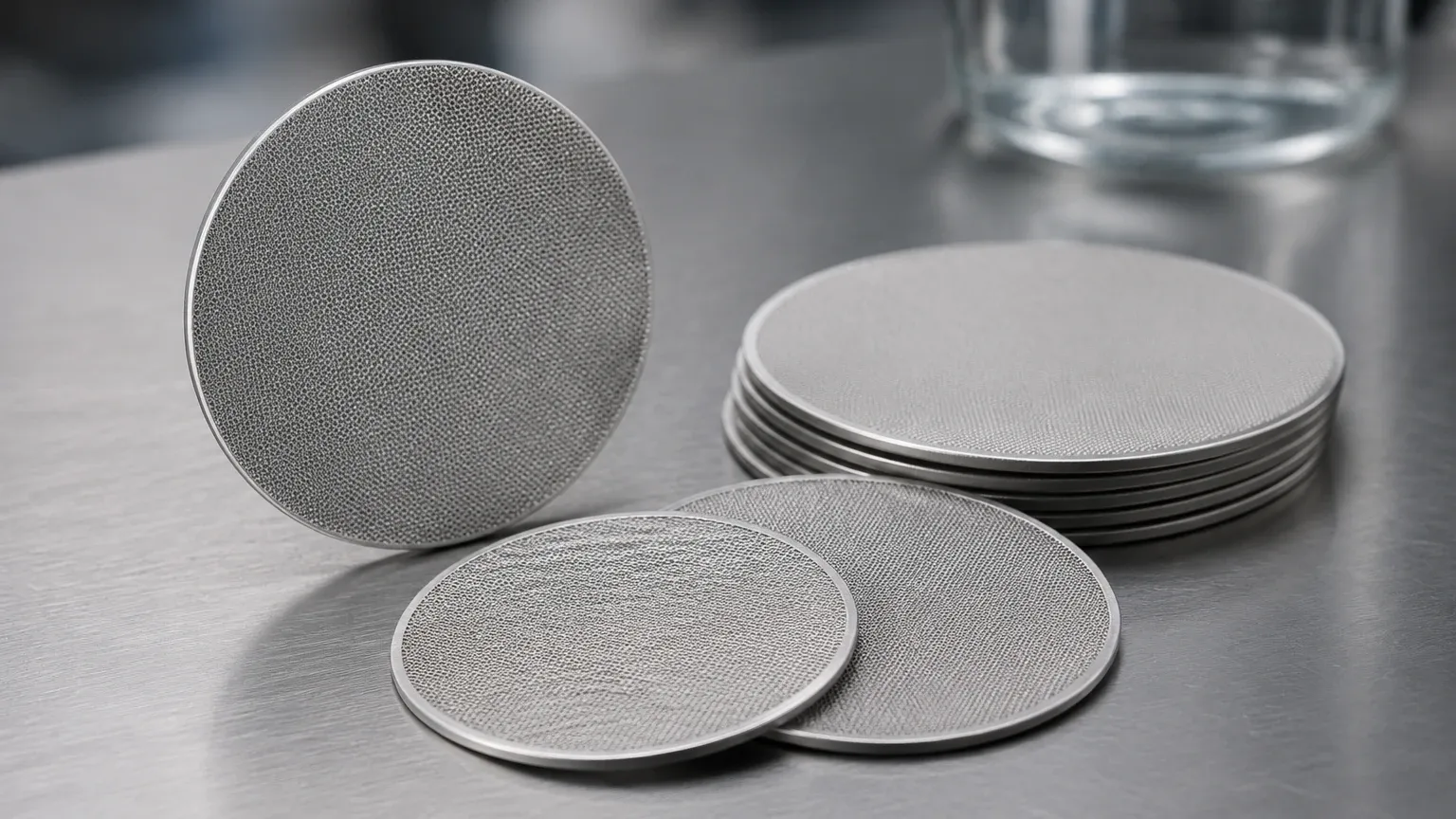
In high-precision industrial filtration, the 0.2 micron rating represents a critical threshold for particulate control and fluid purification. A 0.2 disc filter is an engineered component designed to intercept microscopic contaminants, ensuring the integrity of downstream processes in sectors ranging from pharmaceutical manufacturing to aerospace hydraulics. Unlike standard coarse filters, these high-precision discs utilize advanced materials—primarily sintered stainless steel mesh or metal fiber felt—to achieve consistent performance under demanding thermal and mechanical stresses.
For engineers and procurement specialists, selecting a 0.2 disc filter requires a deep understanding of material science, pore geometry, and the structural requirements of the specific application. This guide examines the technical nuances of these components, their integration into Filter Discs & Packs, and the performance metrics that define their operational value.
Understanding the 0.2 Micron Filtration Threshold
The designation "0.2" refers to the pore size rating of the filter media. In the context of metal filtration, this is typically an absolute rating, meaning the filter is designed to retain 99.9% or more of particles at the 0.2-micron level. This level of precision is essential for applications where even sub-microscopic debris can cause catastrophic system failure or product contamination.
Absolute vs. Nominal Ratings
When evaluating a 0.2 disc filter, it is vital to distinguish between absolute and nominal ratings. A nominal rating is an indicative value, often representing the retention of a certain percentage of particles of a given size. In contrast, an absolute rating is verified through rigorous testing, such as the bubble point test or multipass testing, ensuring that no particle larger than the specified pore size can pass through the media. For critical industrial applications, absolute-rated 0.2 micron media is the standard for reliability.
The Role of Sintered Metal Media
To achieve a stable 0.2 micron rating in a metal format, manufacturers utilize sintering. Sintering is a thermal process that bonds layers of stainless steel wire mesh or metal fibers at their contact points without melting them. This creates a rigid, porous structure that does not migrate or deform under high pressure, maintaining the 0.2 micron pore integrity throughout the filter's service life.
Material Selection and Engineering Considerations
The performance of a 0.2 disc filter is largely dictated by the alloy and the physical structure of the media. Kaifil specializes in utilizing high-grade alloys to meet the chemical and thermal demands of industrial environments.
Stainless Steel 316L
Stainless steel 316L is the preferred material for most 0.2 micron applications. The "L" denotes low carbon content, which enhances corrosion resistance, particularly after welding or sintering. This alloy is resistant to various organic and inorganic chemicals, making it suitable for pharmaceutical and food-grade applications where hygiene and non-reactivity are paramount.
Sintered Metal Fiber Felt vs. Wire Mesh
For a 0.2 disc filter, the choice often lies between sintered wire mesh and sintered metal fiber felt:
* Sintered Wire Mesh: Constructed from multiple layers of woven wire cloth. While highly durable and easy to clean, achieving a 0.2 micron rating with mesh requires extremely fine weaves, which may have lower porosity compared to felt.
* Sintered Metal Fiber Felt: Composed of non-woven stainless steel fibers. This media offers high porosity (up to 80%) and a high dirt-holding capacity. For 0.2 micron filtration, fiber felt provides a "depth" filtration effect, trapping particles within the complex matrix of fibers rather than just on the surface.
Structural Design of Filter Discs & Packs
A 0.2 disc filter rarely operates as a single, unsupported layer of media. To withstand differential pressures and ensure a leak-proof seal within a housing, these filters are often incorporated into complex assemblies.
Multi-Layer Configurations
Precision 0.2 micron media is thin and mechanically delicate. To provide the necessary strength, it is usually sandwiched between coarser support layers. A typical 5-layer sintered disc might include:
1. Protective Layer: A coarse mesh that protects the fine media from physical damage.
2. Filter Layer: The 0.2 micron sintered media.
3. Drainage/Support Layer: A medium mesh that facilitates fluid flow away from the filter layer.
4. Reinforcement Layers: Heavy-duty meshes that provide structural rigidity against high pressure.
Edge Treatments and Framing
To prevent bypass—where fluid flows around the edges of the filter rather than through the media—the edges of the 0.2 disc filter must be properly treated. Options include:
* Spot Welding: Bonding the layers together at the periphery.
* Aluminum or Stainless Steel Rim: A metal frame or "U-binding" that encapsulates the edge, providing a flat surface for gaskets and seals.
* Sintered Edges: The layers are sintered together into a solid mass at the edge to ensure zero bypass.
Performance Metrics: Flow Rate and Pressure Drop
One of the primary engineering challenges with a 0.2 disc filter is managing the relationship between filtration fineness and fluid resistance. Because the pores are so small, the resistance to flow (pressure drop) is naturally higher than in coarser filters.
Permeability and Porosity
High-quality 0.2 micron media must balance retention with permeability. If the porosity is too low, the filter will clog rapidly, leading to frequent downtime for cleaning or replacement. Sintered fiber felt is often chosen for 0.2 micron applications because its high void volume allows for higher flow rates at lower differential pressures compared to traditional membranes or dense weaves.
Viscosity and Temperature Effects
The viscosity of the fluid significantly impacts the performance of a 0.2 disc filter. As temperature increases, the viscosity of most liquids decreases, which can improve flow rates. Conversely, in low-temperature hydraulic applications, the increased viscosity requires a larger surface area (often achieved through pleated designs or multiple Filter Discs & Packs) to maintain the required flow without exceeding the collapse pressure of the media.
Industrial Applications for 0.2 Disc Filters
The 0.2 micron rating is a standard in industries where purity is non-negotiable. The durability of stainless steel allows these filters to be used in environments where polymer-based filters would fail due to heat, pressure, or chemical attack.
Pharmaceutical and Biotechnology
In the production of Active Pharmaceutical Ingredients (APIs), 0.2 micron filters are used for the removal of fine catalysts and carbon particles. They also serve as vent filters for storage tanks, preventing the entry of microscopic contaminants while allowing the tank to "breathe" during filling and emptying cycles.
Chemical Processing
High-purity chemical manufacturing requires the removal of sub-micron particulates that could interfere with chemical reactions or contaminate the final product. The corrosion resistance of 316L stainless steel ensures that the 0.2 disc filter does not introduce metallic ions into the process stream.
Aerospace and High-Pressure Hydraulics
In aerospace hydraulic systems, even a 0.2 micron particle can cause wear on precision valves and actuators. Metal 0.2 disc filters provide the necessary mechanical strength to operate under extreme pressures and vibrations while maintaining absolute filtration efficiency.
Selection Criteria for Engineering and Procurement
When sourcing a 0.2 disc filter, technical teams should confirm several key parameters to ensure the component is fit for purpose:
1. Operating Environment: What is the maximum operating temperature and pressure? Are there corrosive agents present?
2. Flow Requirements: What is the target flow rate, and what is the maximum allowable initial pressure drop (ΔP)?
3. Cleaning Protocol: Is the filter intended to be disposable, or must it be cleaned via ultrasonic bath, backflushing, or chemical cleaning (CIP)?
4. Mechanical Interface: How will the disc be seated? Is a specific rim material or thickness required for sealing?
5. Certification: Does the application require compliance with FDA, USP Class VI, or other industry-specific standards?
Maintenance, Cleaning, and Longevity
One of the greatest advantages of a stainless steel 0.2 disc filter over synthetic alternatives is its reusability. Because the structure is permanently bonded through sintering, it can withstand aggressive cleaning cycles.
* Backpulsing/Backflushing: Using a reverse flow of clean fluid or gas to dislodge particles from the surface of the media.
* Ultrasonic Cleaning: Using high-frequency sound waves in a cleaning solution to remove deeply embedded contaminants within the 0.2 micron matrix.
* Chemical Cleaning: Using acids, bases, or solvents that dissolve the specific contaminants without affecting the stainless steel.
Properly maintained, a 0.2 disc filter can provide years of service, significantly reducing the total cost of ownership compared to disposable cartridges. However, it is essential to monitor the "clean pressure drop" after each cleaning cycle. If the baseline pressure drop begins to rise, it indicates that the media is becoming permanently fouled and the disc should be replaced to prevent system inefficiency.
For specialized requirements involving custom dimensions or specific alloy grades, technical teams can Review product options and application support to determine the optimal configuration for their filtration systems. By focusing on the engineering fundamentals of 0.2 micron media, organizations can achieve superior process control and long-term operational reliability.
