0 Filter
In the landscape of industrial fluid dynamics and precision manufacturing, the concept of a "0 filter"—often referring to zero-bypass filtration or absolute-rated filtration systems—is critical for protecting sensitive downstream equipment. Achieving a zero-tolerance environment for contaminants requires a sophisticated understanding of filter media, mechanical seals, and the structural integrity of the filtration components. For engineers and procurement specialists, selecting the right Filter Discs & Packs is not merely about choosing a mesh size; it is about ensuring the entire assembly functions as a high-integrity barrier against particulates that could compromise product quality or mechanical reliability.
The Engineering Logic Behind Zero-Bypass Filtration
When industry professionals discuss a 0 filter approach, they are typically addressing the elimination of bypass. Bypass occurs when fluid takes the path of least resistance, flowing around the filter media rather than through it. This is a common failure point in poorly designed filter housings or when using low-quality filter discs that lack proper edge treatments.
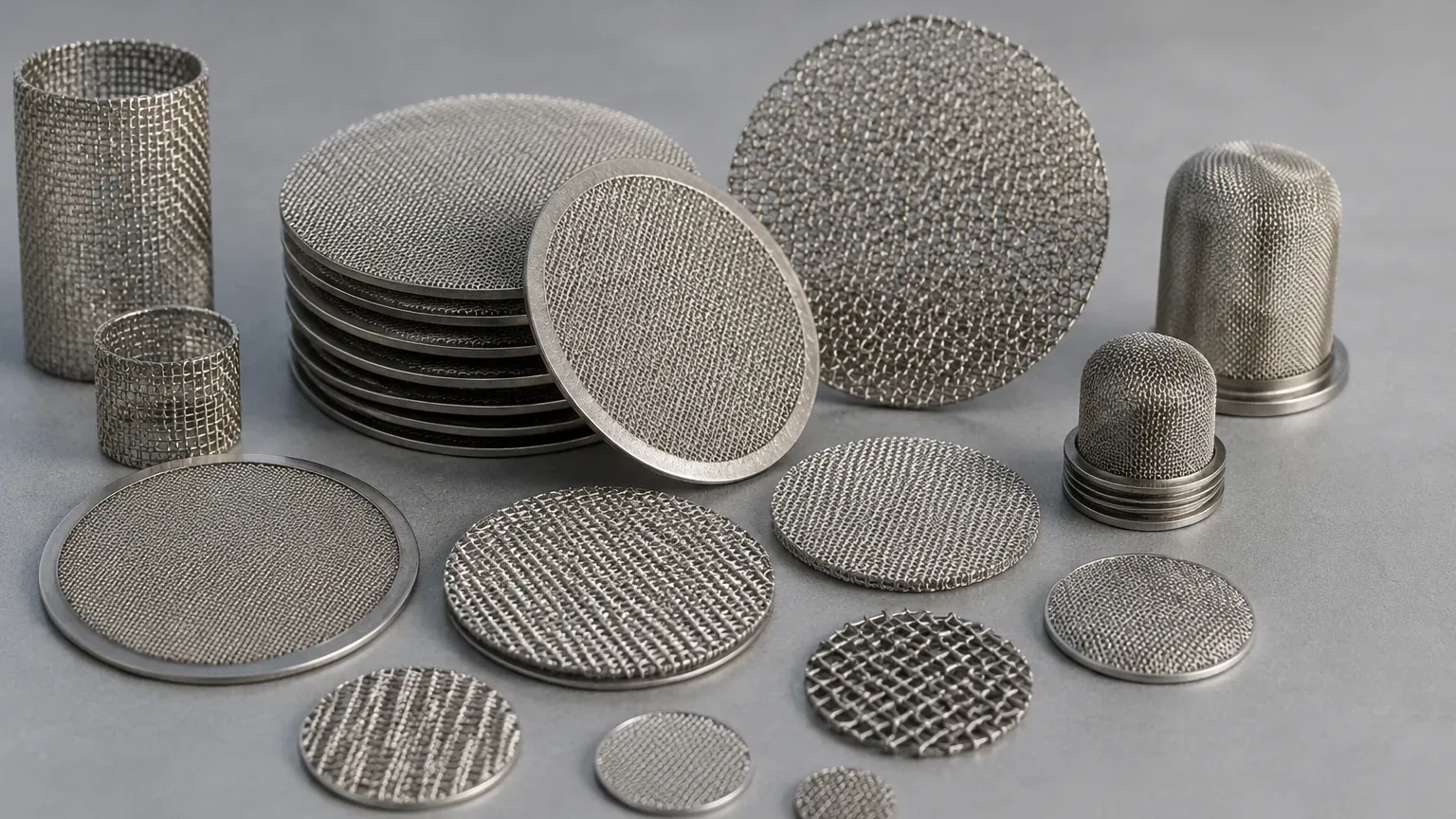
To achieve true 0 filter performance, the interface between the filter element and the housing must be hermetically or mechanically sealed. In the production of stainless steel filter packs, this is achieved through precision spot welding or the addition of specialized rims made from aluminum, copper, or stainless steel. These rims provide a compression surface that ensures the fluid is forced through the wire mesh layers, maintaining the intended micron rating across the entire surface area.
Structural Components of High-Precision Filter Discs & Packs
Filter discs are rarely composed of a single layer of wire mesh. To balance filtration accuracy with mechanical strength, manufacturers like Kaifil utilize multi-layer configurations. These packs are engineered to withstand high differential pressures without deforming, which is essential for maintaining a 0 filter standard throughout the production cycle.
1. The Filtration Layer: This is the core component that determines the micron rating. Using high-density weaves such as Twill Dutch Weave (TDW), engineers can achieve filtration levels as fine as 1 to 5 microns.
2. Support Layers: Coarser mesh layers are placed on either side of the fine filtration layer. These provide the necessary rigidity to prevent the fine mesh from tearing or collapsing under the force of the fluid flow.
3. Drainage Layers: In complex multi-layer sintered packs, drainage layers facilitate the even distribution of fluid across the filtration surface, preventing localized clogging and extending the service life of the element.
4. Binding and Edging: As mentioned, the edge treatment is what separates a standard disc from a 0 filter grade component. Whether through resistance welding or mechanical framing, the edges must be sealed to prevent fiber migration and fluid bypass.
Material Integrity and Chemical Compatibility
Achieving consistent filtration performance requires materials that can withstand the chemical and thermal rigors of the application. Stainless steel is the industry standard for 0 filter applications due to its corrosion resistance and thermal stability.
* AISI 304: Suitable for general industrial applications where moderate corrosion resistance is required.
* AISI 316L: The preferred choice for pharmaceutical, food and beverage, and marine environments. The lower carbon content and the addition of molybdenum provide superior resistance to pitting and chloride-induced stress corrosion cracking.
* Specialty Alloys: For extreme environments involving high-temperature acids or alkaline solutions, alloys like Monel, Inconel, or Hastelloy may be employed within the filter disc structure.
From an engineering perspective, material selection directly impacts the "total cost of ownership." While 316L may have a higher initial cost than 304, its longevity in harsh chemical environments reduces the frequency of replacement and the risk of catastrophic system failure.
Defining Filtration Accuracy: Absolute vs. Nominal
In the context of 0 filter requirements, understanding the difference between absolute and nominal ratings is paramount. A nominal rating refers to the ability of the filter to retain a major weight percentage of particles of a certain size (e.g., 90% of 10-micron particles). However, in critical systems, a nominal rating is insufficient.
An absolute rating implies that 99.9% (or higher) of particles larger than the specified micron size will be captured. This is often quantified by the Beta Ratio (β). For a filter to be considered a high-performance 0 filter component, it must maintain a high Beta Ratio even as the differential pressure increases. Filter Discs & Packs manufactured with sintered wire mesh are often the preferred solution for absolute filtration because the sintering process fuses the wire contact points, ensuring the pore size remains fixed under pressure.
Key Applications for 0 Filter Performance
The demand for zero-bypass filtration spans several high-stakes industries where even minor contamination can lead to significant financial losses or safety risks.
1. Polymer and Plastic Extrusion
In the production of fine films and fibers, any particulate matter can cause "breaks" in the extrusion line. Filter packs are used in screen changers to remove degraded polymer and foreign contaminants. A 0 filter setup ensures that the melt remains pure, resulting in a consistent end product and reduced downtime.
2. Hydraulic and Lubrication Systems
Modern hydraulic valves operate with extremely tight tolerances. A single particle can cause a valve to stick or lead to accelerated wear of expensive pumps. Using high-pressure filter discs at critical points in the hydraulic circuit provides a final line of defense, ensuring that only clean fluid reaches sensitive components.
3. Pharmaceutical and Biotechnology
In these sectors, filtration is not just about particle removal; it is about sterility and purity. Stainless steel filter discs are used because they can be easily cleaned, sterilized (SIP/CIP), and do not shed fibers into the process stream, which is a common risk with polymer-based filters.
4. Chemical Processing
High-temperature and high-pressure chemical reactions often require the recovery of expensive catalysts. A 0 filter disc assembly can effectively capture catalyst fines, allowing them to be recycled and preventing them from contaminating the final chemical product.
Engineering Considerations for Selection
When specifying Filter Discs & Packs, engineers must look beyond the micron rating. Several variables influence the effectiveness of a 0 filter installation:
* Differential Pressure (ΔP): The difference in pressure between the upstream and downstream sides of the filter. As the filter captures contaminants, ΔP increases. The filter pack must be engineered to withstand the maximum system pressure in the event of a total blockage.
* Viscosity: High-viscosity fluids (like molten polymers) require larger surface areas or coarser support meshes to maintain flow rates without exceeding pressure limits.
* Flow Velocity: Excessive velocity can cause "channeling" or force particles through the mesh. Correct sizing of the filter disc diameter is essential to keep the face velocity within acceptable limits.
* Dirt Holding Capacity: This determines how much contaminant the filter can hold before it needs cleaning or replacement. Multi-layer designs often improve dirt-holding capacity by providing depth filtration characteristics.
Maintenance and Lifecycle Management
One of the primary advantages of stainless steel 0 filter components is their cleanability. Unlike disposable cartridges, stainless steel discs can be cleaned using ultrasonic baths, chemical solvents, or high-pressure backwashing.
However, a rigorous inspection protocol is necessary. Over multiple cleaning cycles, the wire mesh may experience fatigue or the pore sizes may slightly enlarge. Engineers should implement a bubble point test or a pressure-drop baseline test to confirm that the filter still meets its original 0 filter specifications after cleaning. If the integrity of the mesh is compromised, the risk of bypass increases, and the component must be replaced.
Conclusion: The Value of Precision Manufacturing
In industrial filtration, the margin for error is often measured in microns. A 0 filter strategy is only as effective as the weakest link in the filtration chain. By utilizing high-quality Filter Discs & Packs that feature robust edge sealing, multi-layer support, and absolute-rated wire mesh, facilities can protect their equipment, optimize their processes, and ensure the highest standards of product purity.
For technical teams, the focus should remain on the engineering fundamentals: material compatibility, mechanical integrity under pressure, and the elimination of bypass routes. When these factors are addressed, the filtration system moves from being a simple consumable to a strategic asset in the production environment.