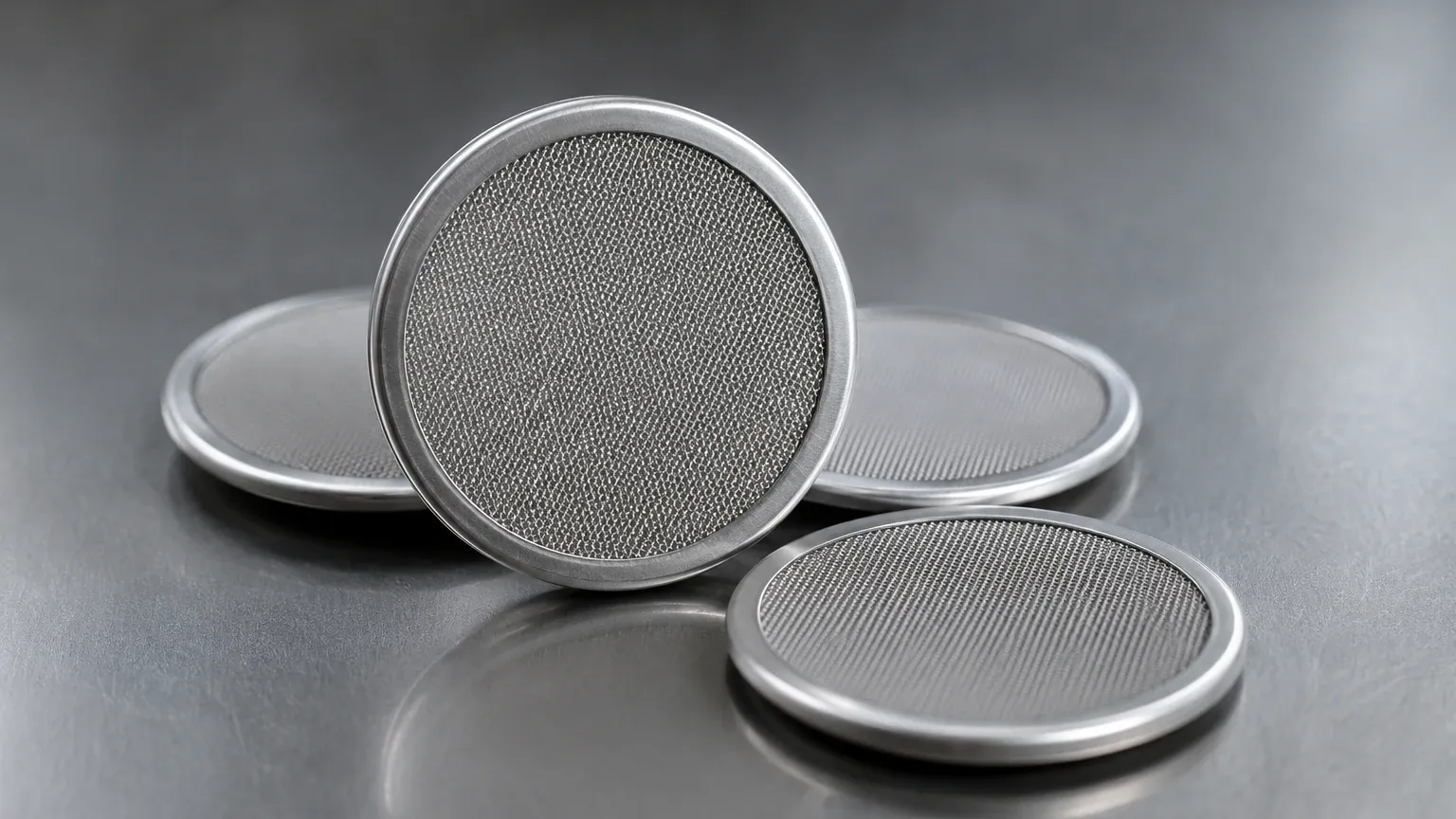
Filter 3 Pack
In the landscape of industrial filtration, the term "filter 3 pack" often refers to specialized multi-layer assemblies or standardized sets of filtration components designed for high-pressure and high-precision environments. For engineers and procurement specialists, selecting the right Filter Discs & Packs involves more than just matching dimensions; it requires a deep understanding of fluid dynamics, material science, and the specific mechanical stresses of the application. Whether used in polymer extrusion, chemical processing, or hydraulic systems, these components are critical to ensuring product purity and protecting downstream equipment.
Understanding Multi-Layer Filter Discs & Packs
Industrial filter packs are rarely composed of a single layer of wire mesh. To achieve both fine filtration and structural integrity, manufacturers like Kaifil utilize multi-layer configurations. A common "3 pack" or three-layer configuration typically consists of a fine filtration layer sandwiched between two coarser support layers. This design serves several engineering purposes:
1. Filtration Accuracy: The middle layer is selected based on the required micron rating, capturing particles of a specific size.
2. Structural Support: The outer layers provide the mechanical strength necessary to withstand high differential pressures without the fine mesh deforming or "blind-holing."
3. Flow Distribution: Coarser mesh layers help distribute the fluid evenly across the surface of the fine filtration media, preventing localized clogging and extending the service life of the pack.
These packs can be joined using various methods. Spot welding is common for simpler applications, while sintering—a process of fusing the layers together using heat and pressure in a vacuum furnace—is preferred for high-performance environments where media migration must be eliminated.
Engineering Considerations for Filter 3 Pack Configurations
When specifying a filter 3 pack for an industrial system, engineers must evaluate several technical parameters to ensure the component performs reliably under operational loads.
Micron Rating and Efficiency
Filtration efficiency is defined by the smallest particle size the mesh can reliably retain. In a multi-layer pack, the nominal or absolute micron rating is determined by the finest mesh layer. Engineers must balance the need for high-purity output with the potential for rapid pressure buildup. Selecting a mesh that is too fine for the contaminant load will lead to frequent downtime for replacement.
Pressure Drop (ΔP)
The resistance to flow offered by the filter pack results in a pressure drop. This is influenced by the mesh weave type (e.g., plain, twill, or Dutch weave), the total open area, and the viscosity of the fluid. A well-designed 3-layer pack optimizes the ratio of open area to structural strength to minimize initial ΔP while maintaining the necessary filtration barrier.
Mechanical Strength and Pleating
In some applications, filter packs are pleated to increase the effective filtration area within a compact housing. For these designs, the ductility of the stainless steel wire and the integrity of the layers are paramount. The filter 3 pack must be able to withstand the pleating process without cracking the individual wires or delaminating the layers.
Material Selection and Chemical Compatibility
The choice of material is perhaps the most critical factor in the longevity of a filter pack. Stainless steel is the industry standard due to its corrosion resistance and thermal stability. At Kaifil, we focus on high-grade alloys to meet diverse industrial demands:
* AISI 304: A versatile and cost-effective option suitable for many food and beverage or general industrial applications where moderate corrosion resistance is required.
* AISI 316: Contains molybdenum, providing enhanced resistance to chlorides and pitting. This is often the baseline for chemical processing.
* AISI 316L: The low-carbon version of 316, which is essential for applications involving welding, as it prevents carbide precipitation and maintains corrosion resistance at the weld points.
* Specialty Alloys: For extreme environments involving high temperatures or highly acidic/alkaline fluids, alloys like Monel, Inconel, or Hastelloy may be utilized in the construction of the filter discs.
Common Applications in Industrial Filtration
The versatility of the filter 3 pack makes it a staple in several high-stakes industries. Understanding how these components function in specific contexts helps in making informed purchasing decisions.
Polymer and Plastic Extrusion
In the plastics industry, melt filters or screen packs are used to remove contaminants from molten polymer before it passes through the die. A 3-layer pack is often used here to handle the immense pressures of the extrusion process. The support layers prevent the fine mesh from being pushed into the breaker plate holes.
Chemical and Petrochemical Processing
Filtration in chemical plants often involves aggressive solvents and high temperatures. Sintered filter packs are preferred here because they offer a rigid structure that does not shed fibers or metallic particles, ensuring the purity of the chemical end-product.
Food and Beverage Production
Stainless steel filter packs are ideal for the food industry because they are easy to clean and sanitize. They are used in the filtration of oils, syrups, and beverages, where they must meet strict hygienic standards and resist the corrosive effects of organic acids.
Hydraulic and Lubrication Systems
Protecting sensitive hydraulic valves and pumps requires fine filtration. Filter packs integrated into hydraulic circuits help maintain the ISO 4406 cleanliness codes required for modern high-pressure machinery.
Performance Evaluation and Quality Control
To ensure that a filter 3 pack meets the rigorous demands of industrial use, several quality control measures are typically employed during manufacturing:
1. Bubble Point Test: This non-destructive test measures the pressure required to force air bubbles through a liquid-saturated filter. It is used to verify the pore size and ensure there are no defects or leaks in the assembly.
2. Flow Rate Testing: Measuring the volume of fluid that passes through the filter at a specific pressure drop helps confirm that the pack meets the system's throughput requirements.
3. Dimensional Inspection: Precision is vital, especially for packs that must fit into tight-tolerance housings or screen changers. Laser cutting and CNC machining are often used to ensure the outer diameter and thickness are within specified limits.
Maintenance and Replacement Cycles
One of the primary concerns for maintenance engineers is the "total cost of ownership," which includes not just the purchase price of the filter 3 pack, but also the cost of downtime and cleaning. Stainless steel filters offer the advantage of being cleanable and reusable, unlike disposable synthetic filters.
Cleaning Methods
* Ultrasonic Cleaning: High-frequency sound waves create cavitation bubbles that dislodge particles from deep within the mesh layers.
* Chemical Cleaning: Soaking the packs in specialized solvents or acids can dissolve organic or inorganic buildups that mechanical cleaning cannot reach.
* Burn-off/Pyrolysis: For polymer applications, heating the packs in a controlled environment can carbonize the plastic, which is then removed via ultrasonic cleaning.
Identifying the Need for Replacement
While cleanable, filter packs eventually reach a point of "permanent fouling" or mechanical fatigue. Monitoring the "clean pressure drop" after each cleaning cycle is essential. If the initial ΔP begins to rise significantly even after thorough cleaning, the filter pack has reached the end of its functional life and should be replaced to prevent system inefficiency.
Customization and OEM Solutions
No two industrial processes are identical, which is why customization is a core component of Kaifil’s service. When ordering a filter 3 pack, engineers should confirm the following details with the manufacturer:
* Layer Sequence: Specifying the exact mesh count for each of the three layers.
* Edge Treatment: Options include raw edges, spot-welded edges, or aluminum/stainless steel rims (frames) to provide a better seal and easier handling.
* Shape and Geometry: While circular discs are standard, packs can be manufactured in oval, rectangular, or complex custom shapes to fit specific machinery.
* Surface Finish: Some applications require specialized coatings or finishes to enhance release properties or further improve corrosion resistance.
By working closely with a manufacturer that understands the nuances of wire mesh weaving and sintering, purchasing teams can secure filtration components that are optimized for their specific flow rates, contaminant types, and environmental conditions.
Conclusion
The selection of a filter 3 pack is a technical decision that impacts the efficiency, safety, and profitability of an industrial operation. By focusing on material integrity, structural design, and precise micron ratings, engineers can ensure that their filtration systems provide consistent performance. As a professional manufacturer, Kaifil provides the technical expertise and manufacturing precision required to deliver high-performance Filter Discs & Packs tailored to the most demanding industrial environments. Understanding the relationship between mesh layers and operational stress is the first step toward achieving optimized filtration and reducing long-term maintenance costs.