


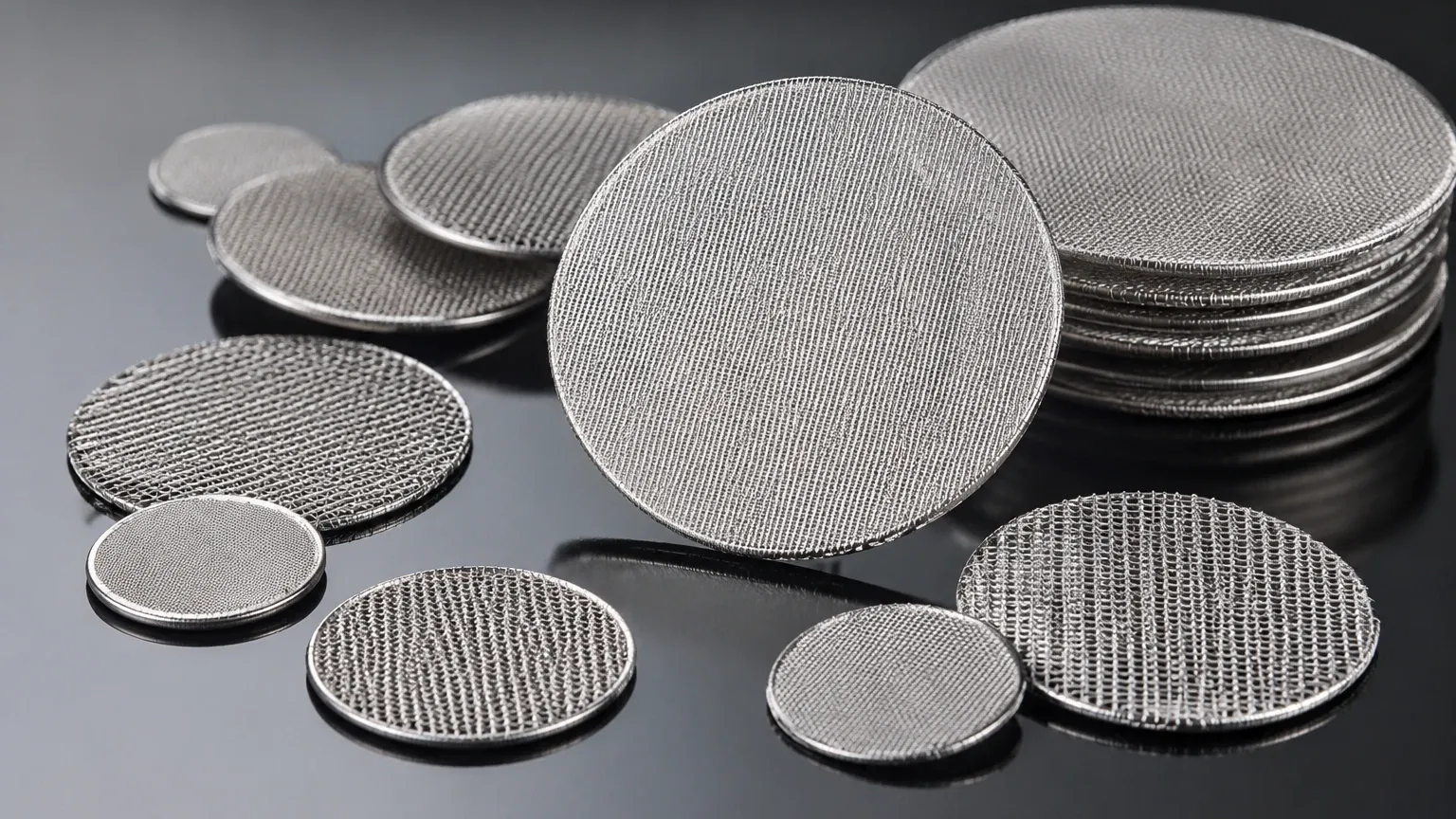
304 Stainless Steel Filter Mesh Discs
In industrial filtration, the selection of component materials and configurations directly impacts the efficiency, longevity, and safety of a processing system. Among the various solutions available, 304 stainless steel filter mesh discs are recognized as a versatile and cost-effective standard for liquid and gas separation. These components are critical in protecting downstream equipment, ensuring product purity, and maintaining consistent flow rates in demanding environments ranging from polymer extrusion to pharmaceutical manufacturing.
Understanding the technical nuances of these discs—from the metallurgical properties of the 304 alloy to the complexities of mesh weave patterns—is essential for engineers and procurement teams tasked with optimizing filtration performance. This guide provides a technical overview of the specifications, applications, and engineering considerations for Filter Discs & Packs constructed from 304 stainless steel.
Technical Properties of 304 Stainless Steel in Filtration
Type 304 stainless steel (UNS S30400) is an austenitic chromium-nickel alloy. It is the most widely used stainless steel in the filtration industry due to its excellent balance of corrosion resistance, mechanical strength, and fabricability.
Chemical Composition and Corrosion Resistance
The performance of 304 stainless steel filter mesh discs is rooted in its chemical composition, typically containing 18% chromium and 8% nickel. This combination facilitates the formation of a passive chromium oxide layer on the surface, which protects the underlying metal from oxidation and corrosion in various environments. While 316 stainless steel is often preferred for high-chloride or marine environments, 304 provides superior resistance to most oxidizing acids, organic chemicals, and atmospheric conditions. This makes it the standard choice for food processing, beverage production, and general industrial water treatment.
Temperature and Mechanical Stability
Industrial filtration often occurs under extreme thermal conditions. 304 stainless steel maintains its structural integrity at temperatures up to 800°F (427°C) in continuous service. Furthermore, the material exhibits high tensile strength and durability, which are critical when the mesh must withstand significant pressure differentials across the filter surface without deforming or rupturing.
Design and Construction of Filter Discs & Packs
Filter discs are rarely just single circles of wire cloth; they are engineered components designed for specific flow dynamics. The construction of these discs involves several critical manufacturing steps that determine their final performance.
Single-Layer vs. Multi-Layer Configurations
Single-layer 304 stainless steel filter mesh discs are typically used in low-pressure applications or as pre-filters. However, many industrial processes require multi-layer "packs." These packs combine different mesh counts to achieve a specific filtration goal.
1. Support Layers: Coarser mesh layers provide mechanical rigidity to the pack, preventing the finer filtration layer from collapsing under pressure.
2. Filtration Layers: The middle layers consist of fine mesh that dictates the micron rating of the disc.
3. Drainage Layers: These layers help distribute the fluid flow evenly across the entire surface of the disc, maximizing the effective filtration area (EFA).
Edge Treatment and Binding
To ensure a proper seal within the filter housing and to prevent wire fraying, the edges of the discs are often treated. Common methods include:
* Spot Welding: Multiple layers are welded together at specific points to maintain alignment.
* Rimming (Framing): The edges are enclosed in a metal rim, typically made of aluminum, stainless steel, or copper. This provides a robust sealing surface and prevents bypass, which occurs when fluid escapes around the edges of the filter rather than passing through the mesh.
Weave Patterns and Their Impact on Filtration
The performance of 304 stainless steel filter mesh discs is heavily influenced by the weave pattern of the wire cloth. Each weave offers a different balance of flow rate, strength, and particle retention.
Plain Weave
This is the most common weave, where each warp wire crosses alternately over and under each shute wire. It provides a square opening and is ideal for high-flow applications where precise particle retention is required but the pressure drop must be kept to a minimum.
Twill Weave
In a twill weave, each shute wire passes alternately over and under two warp wires. This allows for the use of heavier wires in a given mesh count, resulting in a stronger mesh that can withstand higher mechanical loads. It is often used for finer filtration tasks where a plain weave would be too delicate.
Dutch Weave (Plain and Twill)
Dutch weaves utilize a combination of different wire diameters for the warp and shute. This results in a much tighter, denser mesh with smaller openings. Plain Dutch weaves are excellent for high-pressure filtration, while Twill Dutch weaves allow for the finest micron ratings (down to 1–5 microns) by creating a "tortuous path" for particles to navigate.
Key Performance Metrics for Selection
When specifying 304 stainless steel filter mesh discs for a project, engineers must evaluate several performance metrics to ensure the component meets the application's demands.
Micron Rating: Absolute vs. Nominal
* Nominal Micron Rating: This refers to the ability of the filter to retain a major percentage (usually 60% to 90%) of particles of a specific size. It is an indication of the average pore size.
* Absolute Micron Rating: This represents the diameter of the largest hard spherical particle that will pass through the filter under specified test conditions. For critical applications, such as pharmaceutical sterile filtration, an absolute rating is often required.
Pressure Drop (Delta P)
Pressure drop is the difference in total pressure between the upstream and downstream sides of the filter. A high initial pressure drop can indicate that the mesh is too fine for the required flow rate, leading to premature clogging and increased energy costs for pumps. Selecting the right Filter Discs & Packs involves balancing the need for fine filtration with the requirement for low resistance to flow.
Dirt Holding Capacity
This metric defines the amount of contaminant a filter disc can retain before the pressure drop reaches a terminal point, necessitating cleaning or replacement. Multi-layer discs generally offer higher dirt-holding capacity than single-layer discs because they can capture particles throughout the depth of the pack.
Industrial Applications of 304 Stainless Steel Discs
Due to their durability and chemical resistance, these discs are utilized across a broad spectrum of industries.
Polymer and Plastic Extrusion
In the plastics industry, filter discs (often called screen packs) are used to remove unmelted resins or contaminants from the polymer melt before it passes through the die. The high-pressure environment of an extruder requires 304 stainless steel for its ability to resist deformation at high temperatures.
Food and Beverage Processing
304 stainless steel is inherently food-safe and easy to sanitize. Filter discs are used in the production of fruit juices, syrups, and dairy products to remove pulp, seeds, or foreign particulates. The material's resistance to organic acids ensures that the filter does not leach metallic ions into the product.
Chemical and Petrochemical
In chemical processing, 304 stainless steel filter mesh discs are used to filter catalysts from process streams or to protect sensitive instrumentation from particulate damage. Their resistance to a wide range of solvents and alkaline solutions makes them a staple in chemical plant maintenance.
Hydraulic and Lubrication Systems
Precision hydraulic systems require clean fluid to prevent wear on valves and actuators. Stainless steel discs provide a permanent filtration solution that can be cleaned and reused, unlike disposable paper or synthetic filters.
Customization and Engineering Considerations
Standard sizes are available, but most industrial applications require customized 304 stainless steel filter mesh discs to fit specific housing geometries or to meet unique process requirements.
Geometric Precision
Modern manufacturing techniques, including laser cutting and precision stamping, allow for discs to be produced with extremely tight tolerances. This is crucial for automated filter changers where even a fraction of a millimeter in deviation can cause a mechanical jam or a seal failure.
Layer Sequencing
Engineers can customize the sequence of layers in a pack to address specific challenges. For example, if a fluid contains a high concentration of deformable particles (like gels), a graded density structure—where the mesh becomes progressively finer—can prevent surface blinding and extend the service life of the disc.
Material Certification
For B2B procurement, especially in regulated industries like aerospace or pharmaceuticals, material traceability is vital. Specifying 304 stainless steel requires confirmation of the alloy's composition through Mill Test Reports (MTRs) to ensure the material meets ASTM or ISO standards.
Maintenance, Cleaning, and Lifecycle Costs
One of the primary advantages of 304 stainless steel filter mesh discs over disposable media is their cleanability. However, the method of cleaning must be carefully chosen to avoid damaging the mesh structure.
Cleaning Methods
* Ultrasonic Cleaning: High-frequency sound waves create cavitation bubbles that dislodge fine particles from deep within the mesh pores. This is highly effective for Dutch weave discs.
* Backwashing: Reversing the flow of fluid through the filter can dislodge surface-level contaminants.
* Chemical Cleaning: Soaking the discs in compatible solvents or mild acids can dissolve organic or mineral buildup. It is essential to ensure the cleaning agent does not compromise the 304 stainless steel's passive layer.
Total Cost of Ownership (TCO)
While the initial cost of stainless steel filter discs is higher than that of polymer or paper alternatives, the TCO is often lower. The ability to clean and reuse the discs multiple times reduces waste and the frequency of procurement cycles. Furthermore, the durability of 304 stainless steel minimizes the risk of filter failure, which can lead to costly downtime or the contamination of entire production batches.
Conclusion
Selecting the appropriate 304 stainless steel filter mesh discs requires a deep understanding of the process environment, including fluid chemistry, temperature, pressure, and the nature of the contaminants. By evaluating the weave patterns, layer configurations, and micron ratings, engineers can implement a filtration solution that optimizes both performance and cost-efficiency.
Whether used as a single-layer screen or a complex multi-layer pack, 304 stainless steel remains the material of choice for industrial filtration due to its reliability and versatility. For those seeking to refine their filtration processes, exploring the full range of Filter Discs & Packs and consulting with manufacturing experts can ensure that the selected components are perfectly aligned with the technical demands of the application.
