


3m Filter How Long Does It Last
In industrial filtration, determining the exact service life of a filter is one of the most critical challenges for process engineers and procurement teams. When professionals ask, "3m filter how long does it last," they are typically seeking to optimize maintenance schedules, reduce downtime, and manage the total cost of ownership (TCO). While 3M is a prominent manufacturer of high-efficiency disposable filters, the principles governing filter longevity apply across the spectrum of industrial filtration, including the permanent and semi-permanent Filter Discs & Packs used in high-pressure and high-temperature environments.
Understanding filter lifespan requires moving beyond a simple calendar-based estimate. Instead, it involves analyzing the interaction between the filter media, the fluid dynamics of the system, and the specific contaminant profile of the process.
The Technical Determinants of Filter Lifespan
The longevity of any industrial filter—whether it is a synthetic depth filter or a stainless steel mesh disc—is primarily governed by its dirt-holding capacity and the terminal pressure drop. In engineering terms, the lifespan is the duration it takes for the filter to reach its maximum allowable differential pressure ($ΔP$).
1. Contaminant Loading and Particle Size Distribution
The most significant factor in filter life is the nature of the solids being removed. A high concentration of deformable particles (such as gels or organic matter) will blind a filter surface much faster than hard, granular particles. If the particle size distribution is narrow and matches the pore size of the filter exactly, the media will clog rapidly. Conversely, a broad distribution allows for better depth loading, extending the time between replacements.
2. Flow Rate and Flux
Flux, or the flow rate per unit of filtration area, directly impacts how quickly particles are forced into the media. Operating a filter at its maximum rated flow often leads to a non-linear increase in pressure drop. By increasing the surface area—for example, by using multi-layered Filter Discs & Packs—engineers can reduce the flux, significantly extending the service life of the component.
3. Fluid Viscosity and Temperature
Viscosity is inversely proportional to temperature. In hydraulic or chemical processing applications, cold starts can create high initial differential pressures that may be mistaken for a clogged filter. Ensuring the filter material can withstand the operating temperature without deforming is essential for maintaining the integrity of the pore structure over time.
Recognizing the Signs of Filter Depletion
To answer "how long does it last" in a practical industrial setting, operators must monitor specific performance indicators. Relying on visual inspection is rarely sufficient for precision processes.
Terminal Pressure Drop (ΔP)
Most industrial systems are designed with a "clean" pressure drop and a "terminal" pressure drop. For many disposable 3M-style cartridges, the terminal pressure drop might be 25–35 psi. For stainless steel filter packs used in polymer extrusion, the threshold might be significantly higher. Once the terminal ΔP is reached, the risk of media migration, particle breakthrough, or structural collapse increases.
Flow Rate Decay
In constant-pressure systems, the most visible sign of filter depletion is a gradual reduction in downstream flow. This is common in gravity-fed or low-pressure circulation loops. When the flow rate falls below the minimum required for the process, the filter has reached the end of its functional life.
Downstream Contamination (Breakthrough)
In some cases, a filter may not clog but may instead fail due to "channeling" or "breakthrough." This occurs when the pressure forces the media to stretch or tear, allowing contaminants to pass through. Regular fluid analysis is necessary to ensure the filter is still meeting its micron rating.
Disposable vs. Cleanable: A Strategic Comparison
When evaluating how long a filter lasts, it is important to distinguish between disposable media (like many 3M products) and cleanable media (like stainless steel wire mesh).
Disposable filters are designed for convenience and high-purity applications where cross-contamination must be avoided. However, their lifespan is strictly limited to a single loading cycle. Once full, they must be discarded.
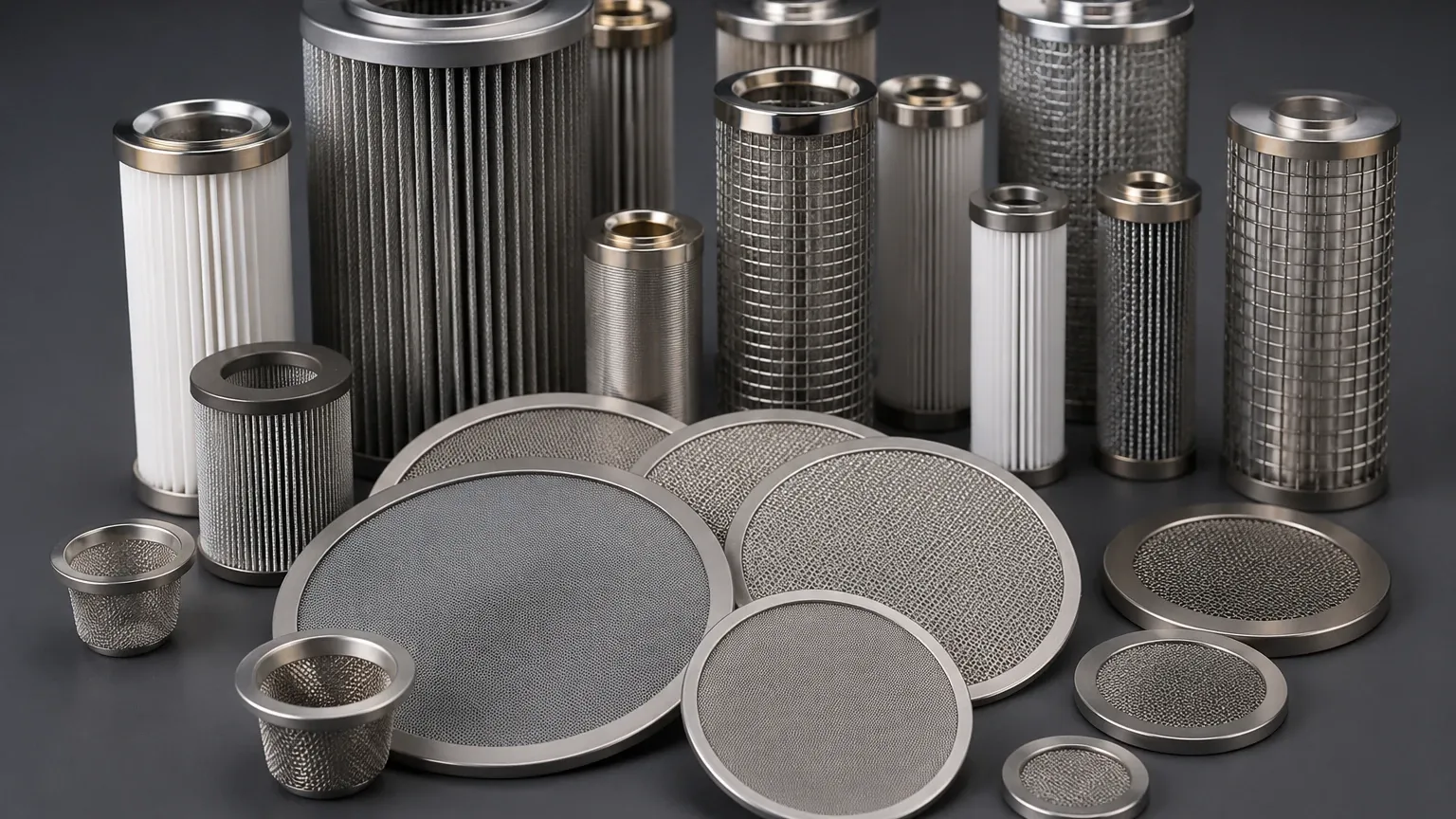
In contrast, Filter Discs & Packs manufactured from stainless steel offer a different longevity profile. While the "run time" per cycle may be comparable to a high-quality disposable filter, the total service life of the component can span years. These metal filters can be cleaned via ultrasonic baths, backwashing, or chemical cleaning, allowing them to be returned to service multiple times. This makes them the preferred choice for high-temperature, corrosive, or high-viscosity applications where the cost of frequent disposable filter changes would be prohibitive.
Engineering for Longevity: Selection Criteria
To maximize the interval between filter changes, engineers should consider the following design elements during the procurement phase:
* Multi-Layer Construction: Using a graduated density approach—where coarser mesh layers protect finer inner layers—can distribute the contaminant load and prevent surface blinding. This is a hallmark of high-performance filter packs.
* Material Compatibility: If the filter media is even slightly incompatible with the process fluid, it may swell or degrade, prematurely increasing the pressure drop. Stainless steel (304, 316L) provides excellent resistance to a wide range of industrial chemicals.
* Structural Support: In high-pressure environments, the filter media must be supported by a perforated plate or a coarse backup mesh. Without proper support, the media can deform, reducing the effective filtration area and shortening the lifespan.
Total Cost of Ownership (TCO) Considerations
Asking "how long does a filter last" is ultimately a financial question. A filter that lasts twice as long but costs four times as much may not be the most economical choice. However, the calculation must include:
1. Labor Costs: The time required for technicians to power down the system, break seals, replace filters, and restart.
2. Production Downtime: The value of lost production during the changeover.
3. Disposal Costs: Especially relevant for disposable filters used with hazardous chemicals.
4. Energy Consumption: As a filter clogs, the pump must work harder to maintain flow, increasing electricity costs.
By switching to durable, cleanable Filter Discs & Packs, many industrial facilities find that they can reduce their TCO significantly, even if the initial capital expenditure is higher than that of disposable alternatives.
Customization and OEM Solutions
Every industrial environment is unique. A filter that lasts six months in a water treatment plant might last only six hours in a chemical resin line. This variability is why customized filtration solutions are essential.
Kaifil specializes in engineering Filter Discs & Packs tailored to specific operating parameters. By adjusting the weave type (plain, dutch, or twilled), the number of layers, and the assembly method (spot-welded or aluminum-rimmed), it is possible to engineer a filter that optimizes the balance between filtration fineness and service life.
For engineers currently using disposable 3M filters and questioning their replacement frequency, it may be beneficial to evaluate whether a metal-based filtration system could offer better durability. In many hydraulic and high-pressure liquid applications, transitioning to a stainless steel solution provides a more predictable maintenance cycle and a more robust defense against process upsets.
Conclusion
There is no universal answer to "3m filter how long does it last," as the lifespan is a function of the specific application's dirt load, flow requirements, and pressure limits. However, by understanding the mechanics of pressure drop and the benefits of multi-layered metal filtration, organizations can move toward more sustainable and cost-effective filtration strategies. Whether you are managing a pharmaceutical cleanroom or a heavy industrial hydraulic system, selecting the right filter media and configuration is the only way to ensure reliable, long-term performance.
