


5 Filter Replacement
In high-precision industrial filtration, the integrity of filter media directly determines the purity of the final product and the longevity of downstream equipment. Whether utilized in polymer melt filtration, oil refining, or pharmaceutical processing, Filter Discs & Packs are critical components that require systematic maintenance. A "5 filter replacement" strategy often refers to the maintenance of 5-layer sintered mesh components or a rigorous five-stage procedure designed to ensure system integrity and operational efficiency.
For engineers and procurement teams, understanding the technical nuances of these components is essential for optimizing filtration performance. This guide explores the engineering considerations, replacement triggers, and procedural standards for managing high-performance metal filter discs and packs.
The Architecture of 5-Layer Sintered Filter Discs
To understand the necessity of a structured 5 filter replacement cycle, one must first examine the construction of the media itself. 5-layer sintered wire mesh is the industry standard for demanding applications. It is created by vacuum sintering five layers of stainless steel wire mesh together, resulting in a porous material with exceptional mechanical strength and permeability.
1. The Protective Layer: The outermost layer shields the finer filtration mesh from mechanical damage during handling and installation. It usually consists of a coarse mesh that allows for high flow rates while providing a rigid exterior.
2. The Filtration Control Layer: This is the most critical layer, where the actual separation of particles occurs. The wire diameter and aperture size are precisely engineered to meet specific micron ratings.
3. The Distribution Layer: Positioned behind the control layer, this mesh ensures that the fluid or gas is distributed evenly across the filtration surface, preventing localized clogging and pressure spikes.
4. The Support Layer (First): This layer provides the necessary structural reinforcement to prevent the filtration layer from deforming under high differential pressure.
5. The Support Layer (Second): The final coarse mesh layer adds overall thickness and rigidity, ensuring the disc remains flat and seated correctly within the housing.
When performing a 5 filter replacement, engineers must ensure that the replacement discs match these specific layer configurations to maintain the original flow dynamics and filtration accuracy of the system.
Critical Triggers for 5 Filter Replacement in Industrial Systems
Operating a filtration system beyond its optimal lifecycle leads to increased energy consumption and potential product contamination. Identifying the correct time for a 5 filter replacement involves monitoring several key performance indicators (KPIs).
Differential Pressure ($ΔP$)
Differential pressure is the most reliable metric for filter health. As contaminants accumulate on the surface or within the depth of the Filter Discs & Packs, the resistance to flow increases. Most industrial systems are designed with a maximum allowable $ΔP$. Once this threshold is reached, the filter is considered "blinded," and replacement or cleaning is mandatory to prevent media rupture or bypass.
Flow Rate Attenuation
In constant-pressure systems, a noticeable drop in flow rate indicates that the filter media is reaching its dirt-holding capacity. If the flow rate falls below the minimum required for downstream processes, it can trigger a 5 filter replacement cycle to restore system throughput.
Contaminant Breakthrough
If downstream sensors detect an increase in particulate matter, it may indicate that the filter media has suffered mechanical fatigue or chemical erosion. In such cases, the replacement must be immediate to protect the quality of the output and the safety of the equipment.
A 5-Step Protocol for Professional Filter Disc Replacement
A "5 filter replacement" can also be defined as a comprehensive five-step procedural approach to swapping out industrial filter components. Following a standardized protocol minimizes downtime and prevents installation errors that could lead to system failure.
Step 1: System Isolation and Depressurization
Before any maintenance begins, the filtration unit must be isolated from the main process line. This involves closing inlet and outlet valves and ensuring the internal pressure is safely bled off. For high-temperature applications, such as polymer extrusion, the housing must be maintained at a specific temperature to prevent the residual medium from solidifying, which would make the removal of Filter Discs & Packs significantly more difficult.
Step 2: Component Extraction and Housing Inspection
Once depressurized, the filter housing is opened, and the used discs or packs are removed. This is a critical window for inspecting the internal surfaces of the housing. Engineers should look for signs of bypass—where fluid has traveled around the filter rather than through it—which often indicates worn seals or warped seating surfaces.
Step 3: Cleaning and Seal Verification
If the system uses reusable stainless steel filters, the removed components are sent for ultrasonic or chemical cleaning. However, for a standard replacement cycle, the focus is on the housing seals. O-rings and gaskets should be replaced during every 5 filter replacement to ensure a leak-proof seal. Even minor degradation in a seal can compromise the entire filtration process.
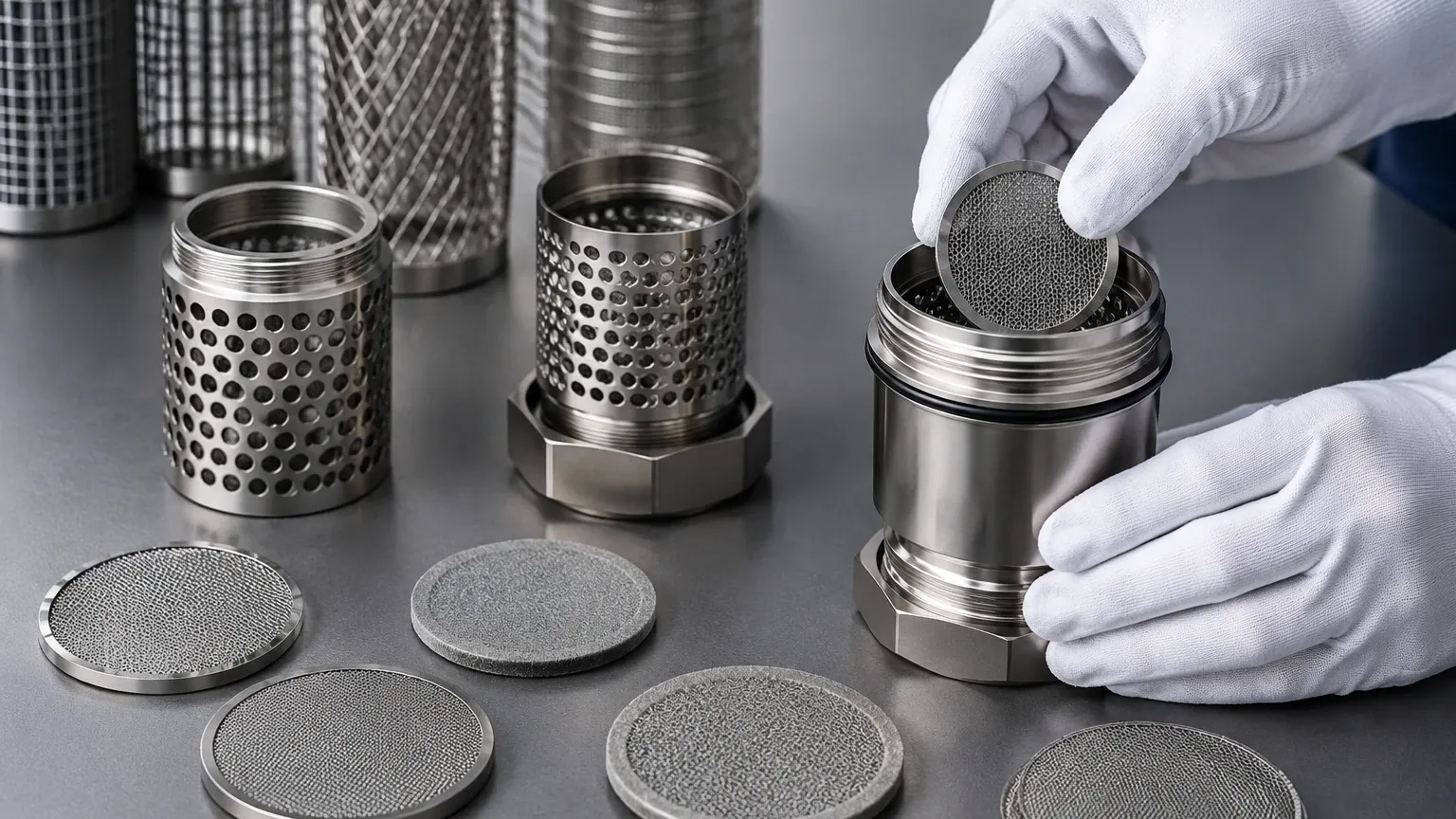
Step 4: Precise Installation of Filter Discs & Packs
New or cleaned Filter Discs & Packs are installed into the housing. It is vital to ensure the correct orientation, especially with multi-layer sintered discs where the flow direction is specified. Misalignment during this step can lead to "crushing" of the media edges or improper sealing, allowing unfiltered bypass.
Step 5: Validation and Re-commissioning
After the housing is sealed, the system is slowly pressurized. Sudden pressure shocks can damage new filter media. The final step of the replacement protocol is to monitor the initial differential pressure and flow rate to confirm that the new filters are performing within the engineered specifications.
Material Engineering: Selecting the Right Alloy for Filter Discs & Packs
The success of a 5 filter replacement depends heavily on selecting the correct material for the application. Stainless steel is the most common choice due to its durability, but different grades offer varying levels of protection.
* SS304: Suitable for general industrial applications where moderate corrosion resistance is required. It is cost-effective for water treatment and basic hydraulic systems.
* SS316L: The "L" stands for low carbon, which provides superior resistance to intergranular corrosion. This is the preferred material for the pharmaceutical and chemical industries, where the filter is exposed to aggressive solvents or acidic environments.
* Specialty Alloys: For extreme conditions, materials like Hastelloy, Monel, or Inconel may be used in the construction of filter packs. These are typically reserved for high-temperature or highly corrosive environments where standard stainless steel would fail prematurely.
When ordering replacements, engineers must confirm that the alloy grade matches the chemical compatibility requirements of the fluid being processed to avoid premature degradation.
Optimizing Filtration Efficiency through Customization
Industrial filtration is rarely a "one-size-fits-all" scenario. Customization of Filter Discs & Packs allows for optimized performance tailored to specific machinery. Key customization factors include:
* Edge Treatment: Filter discs can be supplied with raw edges, or they can be bound with aluminum, stainless steel, or copper rims. Bound edges provide better structural integrity and prevent the fraying of wire mesh, which is essential in high-vibration environments.
* Mesh Combination: Depending on the particulate size distribution, a custom pack may combine different mesh counts (e.g., a 20-mesh support with a 200-mesh filtration layer) to maximize dirt-holding capacity while maintaining a low initial pressure drop.
* Shape and Dimension: While circular discs are standard, many modern filtration systems require rectangular, oval, or kidney-shaped packs. Precision manufacturing ensures that these custom shapes fit perfectly into the OEM equipment.
By working with a manufacturer like Kaifil, purchasing teams can ensure that their 5 filter replacement components are built to the exact tolerances required for their specific industrial application.
Maintenance and Cleaning: Extending the Lifecycle of Metal Filters
One of the primary advantages of using stainless steel Filter Discs & Packs over disposable polymer or paper filters is their cleanability. A well-executed 5 filter replacement strategy often includes a rotation of cleaned components.
Ultrasonic Cleaning
This method uses high-frequency sound waves to create cavitation bubbles in a cleaning solution. These bubbles implode on the surface and within the pores of the mesh, effectively dislodging trapped contaminants without damaging the delicate wire structure.
Chemical Cleaning
For filters used in the chemical or food industry, specific solvents or caustic washes may be required to dissolve organic buildup or mineral scales. It is imperative that the cleaning agents are compatible with the stainless steel grade to prevent pitting or stress corrosion cracking.
Thermal Cleaning (Burn-off)
In polymer and plastic extrusion, filters often become clogged with hardened resins. Thermal cleaning in a controlled vacuum oven can carbonize the polymer, allowing it to be easily removed. However, excessive heat can affect the temper of the stainless steel, so temperature control is vital during this process.
Conclusion: The Strategic Value of Proactive Replacement
Implementing a structured 5 filter replacement program is an investment in process stability. By understanding the multi-layered construction of sintered mesh and adhering to a rigorous five-step replacement protocol, industrial facilities can significantly reduce the risk of unplanned downtime and product loss.
Selecting high-quality Filter Discs & Packs that are engineered for specific micron ratings and environmental conditions ensures that the filtration system operates at peak efficiency. For engineers, the focus remains on technical precision: from the selection of SS316L alloys to the verification of differential pressure limits. With the right components and a disciplined maintenance approach, industrial filtration becomes a reliable, predictable part of the production cycle.
