


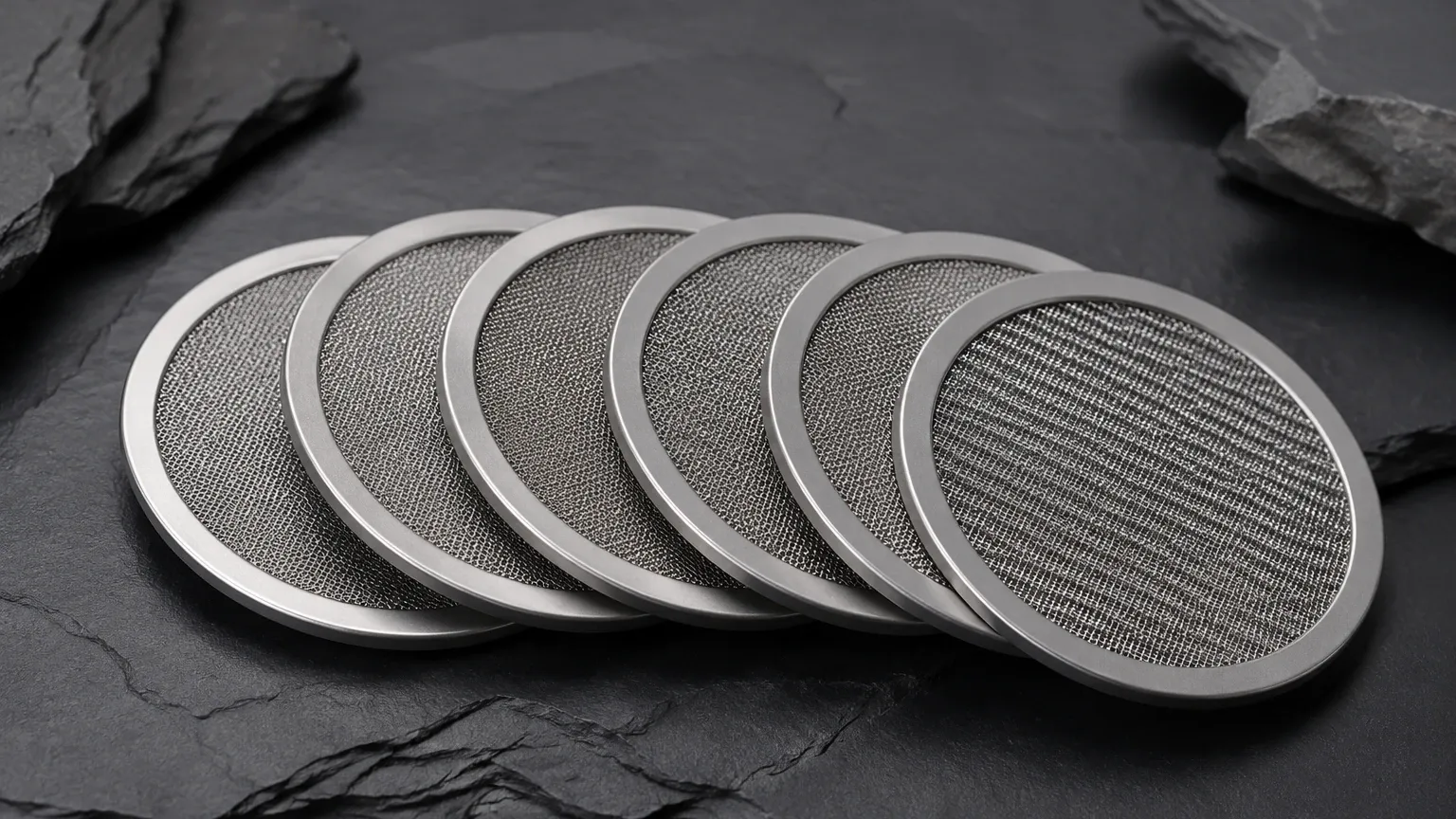
Filter 6 Pack
In high-precision industrial filtration, the reliability of a system often depends on the consistency and quality of its consumable components. For engineers and procurement specialists in the polymer, chemical, and hydraulic sectors, the term "filter 6 pack" frequently refers to a standardized set of multi-layered filter assemblies or discs designed for specific machinery or maintenance cycles. These components, primarily Filter Discs & Packs, are critical for removing contaminants from viscous fluids, molten plastics, and hydraulic oils.
Selecting the right filter pack involves more than just matching dimensions. It requires a deep understanding of material science, mesh geometry, and the mechanical stresses inherent in industrial processing. This guide examines the technical specifications, application logic, and engineering considerations surrounding these essential filtration components.
The Engineering Behind Filter Discs & Packs
Industrial filter packs are rarely single-layer components. To achieve high filtration accuracy while maintaining structural integrity under high pressure, manufacturers like Kaifil utilize multi-layer configurations. These layers are typically composed of stainless steel wire mesh, chosen for its thermal stability and chemical resistance.
Multi-Layer Construction
A standard filter pack usually consists of three to five layers, though specialized applications may require more. The arrangement typically follows a specific functional hierarchy:
1. Support Layer: A coarse mesh with large openings and thick wire diameters. This layer provides the mechanical strength necessary to withstand the differential pressure across the filter.
2. Drainage Layer: Positioned between the support and filtration layers, this ensures even flow distribution across the fine mesh.
3. Filtration Layer: The "working" layer, featuring a fine weave (such as Dutch weave or twill weave) that determines the micron rating of the pack.
4. Protective Layer: A secondary coarse mesh on the upstream side to protect the fine filtration layer from large, abrasive particles or mechanical damage during installation.
Bonding Techniques
To ensure the layers remain aligned and functional under the turbulent flow of an extruder or hydraulic pump, they must be securely bonded. Common methods include:
* Spot Welding: Strategically placed welds hold the layers together without significantly reducing the effective filtration area.
* Aluminum or Stainless Steel Framing: A metal rim is compressed around the edges of the disc stack. This not only keeps the layers together but also provides a superior sealing surface for the filter housing, preventing bypass.
The Technical Rationale for a Filter 6 Pack Procurement Strategy
In a B2B context, purchasing filters in standardized quantities, such as a 6 pack or larger batches, is a strategic decision rooted in operational efficiency and risk management. For critical industrial processes, the cost of the filter is negligible compared to the cost of unplanned downtime.
Maintenance Synchronization
Many industrial systems, particularly multi-cavity injection molding machines or multi-line extrusion setups, operate with parallel filtration stages. A filter 6 pack allows maintenance teams to replace filters across an entire bank of equipment simultaneously. This ensures that all lines have consistent flow characteristics and pressure drops, which is vital for maintaining product uniformity.
Inventory and Lead Time Management
Stainless steel filters are precision-engineered components. Relying on just-in-time delivery for custom-spec mesh can be risky due to fluctuations in raw material availability or manufacturing lead times. Maintaining a 6 pack of standby filters ensures that if a sudden pressure spike indicates a clogged screen, the operator can perform an immediate swap without waiting for a shipment.
Quality Consistency
By ordering filters in a single batch, engineers ensure that all components are manufactured from the same heat of stainless steel and the same roll of wire mesh. This minimizes variables in filtration performance, which is essential for processes governed by strict ISO or FDA standards.
Material Selection: Beyond Basic Stainless Steel
The performance of a filter pack is heavily dictated by the alloy used. While many generic filters use basic grades, industrial applications demand specific properties:
* SS304: The standard for general industrial use. It offers good corrosion resistance and is cost-effective for water treatment or non-acidic chemical processing.
* SS316/316L: Contains molybdenum, which provides significantly better resistance to chlorides and pitting. This is the preferred choice for pharmaceutical, food and beverage, and marine applications. The "L" (low carbon) variant is essential if the filter pack requires extensive welding, as it prevents carbide precipitation that can lead to corrosion.
* High-Nickel Alloys: For extreme environments involving high temperatures (above 400°C) or highly corrosive acids, alloys like Hastelloy or Inconel may be utilized in the pack construction.
Weave Patterns and Their Impact on Performance
The "micron rating" of a filter pack is a result of the weave pattern chosen for the filtration layer. Understanding these patterns is key to optimizing the balance between flow rate and particle retention.
Plain Weave
The simplest pattern where wires cross over and under each other. It provides a high open area and is easy to clean, making it suitable for coarse filtration and support layers.
Twill Weave
Each shute wire passes over and under two warp wires. This allows for a heavier wire diameter for a given mesh count, increasing the strength and durability of the filter disc.
Plain Dutch Weave (PDW)
This weave uses a limited number of warp wires and a maximum number of shute wires driven closely together. This creates a dense, strong mesh with small, curved triangular openings. PDW is the industry standard for high-pressure melt filtration because it offers excellent resistance to deformation.
Reverse Dutch Weave (RDW)
In this configuration, the warp wires are finer and more numerous than the shute wires. This results in a mesh that is exceptionally strong in the direction of the warp, making it ideal for continuous screen changers in plastic extrusion.
Selection Criteria for Industrial Engineers
When specifying a filter 6 pack for a new or existing system, engineers should evaluate the following criteria to ensure long-term reliability:
1. Differential Pressure (ΔP) Tolerance: What is the maximum pressure the pack can withstand before the mesh deforms or the spot welds fail? This is critical for high-viscosity polymer processing.
2. Filtration Accuracy: Is the requirement for absolute or nominal filtration? Absolute ratings ensure that 99% of particles above a certain size are captured, whereas nominal ratings are more of an average.
3. Effective Filtration Area (EFA): The total surface area available for flow. A framed pack may have a slightly lower EFA than a spot-welded pack of the same diameter, but it may offer a better seal.
4. Chemical Compatibility: Does the fluid contain surfactants, acids, or salts that could degrade specific alloys over time?
5. Temperature Limits: Will the filter maintain its structural integrity at the operating temperature of the melt or fluid?
Installation and Maintenance Best Practices
Even the highest quality Filter Discs & Packs will fail prematurely if handled or installed incorrectly. To maximize the value of a filter 6 pack, follow these engineering protocols:
Directional Orientation
Many multi-layer packs are asymmetrical. The coarse support layer must always be on the downstream side (the side the fluid exits). Installing a pack backward can cause the fine filtration mesh to collapse into the support structure, leading to immediate failure and potential downstream contamination.
Sealing Integrity
Ensure that the seating surfaces in the filter housing are free of debris and old gasket material. For framed packs, the frame acts as the seal; for unframed discs, ensure the edges are properly compressed to prevent "bypass," where fluid flows around the filter rather than through it.
Monitoring Pressure Drops
Industrial systems should be equipped with upstream and downstream pressure transducers. A gradual increase in ΔP indicates normal loading. A sudden spike may indicate a process upset (e.g., a batch of contaminated raw material), while a sudden drop could indicate a "blowout" or hole in the mesh.
Cleaning vs. Replacement
While stainless steel is durable, the decision to clean a filter pack depends on the contaminant. Polymers can often be burned off in a pyrolysis oven or removed via ultrasonic cleaning. However, for critical pharmaceutical or hydraulic applications, the risk of residual contamination or mesh fatigue usually dictates that the pack should be replaced with a new unit from the 6 pack inventory.
Customization and OEM Solutions
Standard sizes often do not meet the needs of specialized industrial equipment. Manufacturers like Kaifil specialize in providing customized filtration solutions tailored to specific engineering drawings. Customization options include:
* Non-Standard Diameters: Precision cutting to fit proprietary filter housings.
* Center Holes: For applications where the filter must be mounted on a central shaft or bolt.
* Hybrid Material Packs: Using different alloys for different layers to optimize cost and performance (e.g., a 316L filtration layer with a 304 support layer).
* Specialty Coatings: In some cases, coatings like Teflon can be applied to the mesh to assist in the release of sticky cakes or to reduce friction in high-flow applications.
Conclusion
The "filter 6 pack" is more than just a quantity of parts; it is a component of a disciplined maintenance and procurement strategy. By focusing on the technical nuances of mesh weave, material grade, and multi-layer construction, industrial professionals can significantly improve the efficiency of their filtration processes. Whether you are managing a polymer extrusion line or a complex hydraulic system, selecting high-quality Filter Discs & Packs ensures that your equipment remains protected and your output remains consistent.
For engineers looking to optimize their filtration performance, the next step is to evaluate current pressure drop data and contaminant profiles to determine if a custom-engineered pack configuration could provide longer service life and better product purity.
