


Aquarium Filter Packs
In the professional aquatic and aquaculture industries, filtration requirements far exceed the capabilities of standard consumer-grade equipment. For large-scale public aquariums, commercial fish farming, and specialized laboratory environments, the term "aquarium filter packs" refers to high-precision, industrial-grade components designed to maintain water chemistry and clarity under heavy biological loads. Unlike disposable carbon bags or foam inserts, industrial Filter Discs & Packs provide a robust, reusable, and highly customizable solution for mechanical filtration.
For engineers and facility managers, selecting the right filtration media is a balance of hydraulic performance, material compatibility, and long-term operational costs. This guide examines the technical specifications, engineering considerations, and selection criteria for stainless steel filter components in professional aquatic applications.
Understanding Professional-Grade Aquarium Filter Packs
At the industrial level, aquarium filter packs are typically constructed from multiple layers of stainless steel wire mesh. These packs are engineered to remove suspended solids, uneaten feed, and organic debris from the water column before it reaches biological or chemical treatment stages. The primary goal is to protect the downstream Life Support Systems (LSS) and ensure the health of the aquatic species by maintaining low turbidity.
Industrial filter packs are often integrated into pressurized canister filters, gravity-fed drum filters, or custom intake manifolds. Because these systems operate continuously, the filtration media must withstand constant exposure to water, varying pressure differentials, and frequent cleaning cycles without losing structural integrity or filtration accuracy.
Material Selection: The Engineering Behind Stainless Steel Filter Discs & Packs
The choice of material is the most critical factor in the performance of aquarium filter packs, especially in marine environments where corrosion is a constant threat. Kaifil utilizes high-grade stainless steel to ensure durability and chemical resistance.
Stainless Steel 304 vs. 316L
While Stainless Steel 304 is suitable for freshwater applications due to its excellent strength and cost-effectiveness, marine and brackish water systems require Stainless Steel 316L. The addition of molybdenum in 316L provides superior resistance to chloride-induced pitting and crevice corrosion, which is essential for the longevity of filtration components in saltwater tanks.
Wire Mesh Weave Types
The performance of a filter disc is largely determined by its weave. Common configurations include:
- Plain Weave: Offers a straightforward aperture for high-flow applications with lower pressure drops.
- Dutch Weave: Provides a denser structure with higher filtration precision, ideal for capturing fine particulates.
- Sintered Mesh: For the most demanding applications, multiple layers of mesh are sintered (diffusion bonded) together. This creates a rigid, high-strength filter pack that cannot migrate or deform under high pressure.
Key Performance Indicators for Industrial Filtration Systems
When specifying aquarium filter packs for a B2B project, engineers must evaluate several technical parameters to ensure the system meets the biological and mechanical needs of the environment.
Micron Rating and Filtration Efficiency
Filtration accuracy is measured in microns (μm). In professional aquarium settings, mechanical filtration typically ranges from 20 to 100 microns. A finer micron rating captures more debris but increases the frequency of cleaning and the pressure drop across the filter. Engineers must calculate the "nominal" versus "absolute" rating to understand the percentage of particles the mesh will successfully intercept.
Flow Rate and Pressure Drop (Delta P)
Every filter pack introduces resistance to the water flow. An optimized system minimizes the initial pressure drop to reduce the load on circulation pumps. As the filter pack accumulates debris, the pressure drop increases. Stainless steel Filter Discs & Packs are designed to handle higher pressure differentials than fabric or foam, allowing for longer run times between maintenance intervals.
Structural Integrity and Edge Treatment
In high-flow environments, the edges of a filter disc can be a point of failure. Professional packs often feature specialized edge treatments, such as aluminum or stainless steel rims, spot welding, or resin binding. These reinforcements prevent the mesh from fraying and ensure a bypass-free seal within the filter housing.
Customization and OEM Capabilities for Aquatic Applications
No two large-scale aquatic systems are identical. Customization is often required to fit existing housings or to meet specific flow dynamics. Kaifil provides extensive OEM capabilities to tailor filtration components to precise project requirements.
Multi-Layer Configurations
To achieve progressive filtration, filter packs can be designed with multiple layers of varying mesh sizes. For example, a coarse outer layer can protect a fine inner layer from premature clogging. This "gradient" approach extends the service life of the pack and improves overall water clarity.
Shape and Dimensional Precision
Beyond standard circular discs, filter packs can be manufactured in rectangular, oval, or custom geometric shapes. Precision laser cutting and specialized tooling ensure that every component fits perfectly into the designated filtration chamber, preventing "water tracking" where unfiltered water bypasses the media.
Specialized Coatings
In some pharmaceutical or laboratory aquarium settings, additional surface treatments may be applied to the stainless steel to enhance hydrophobicity or to prevent the adhesion of specific organic compounds, further simplifying the cleaning process.
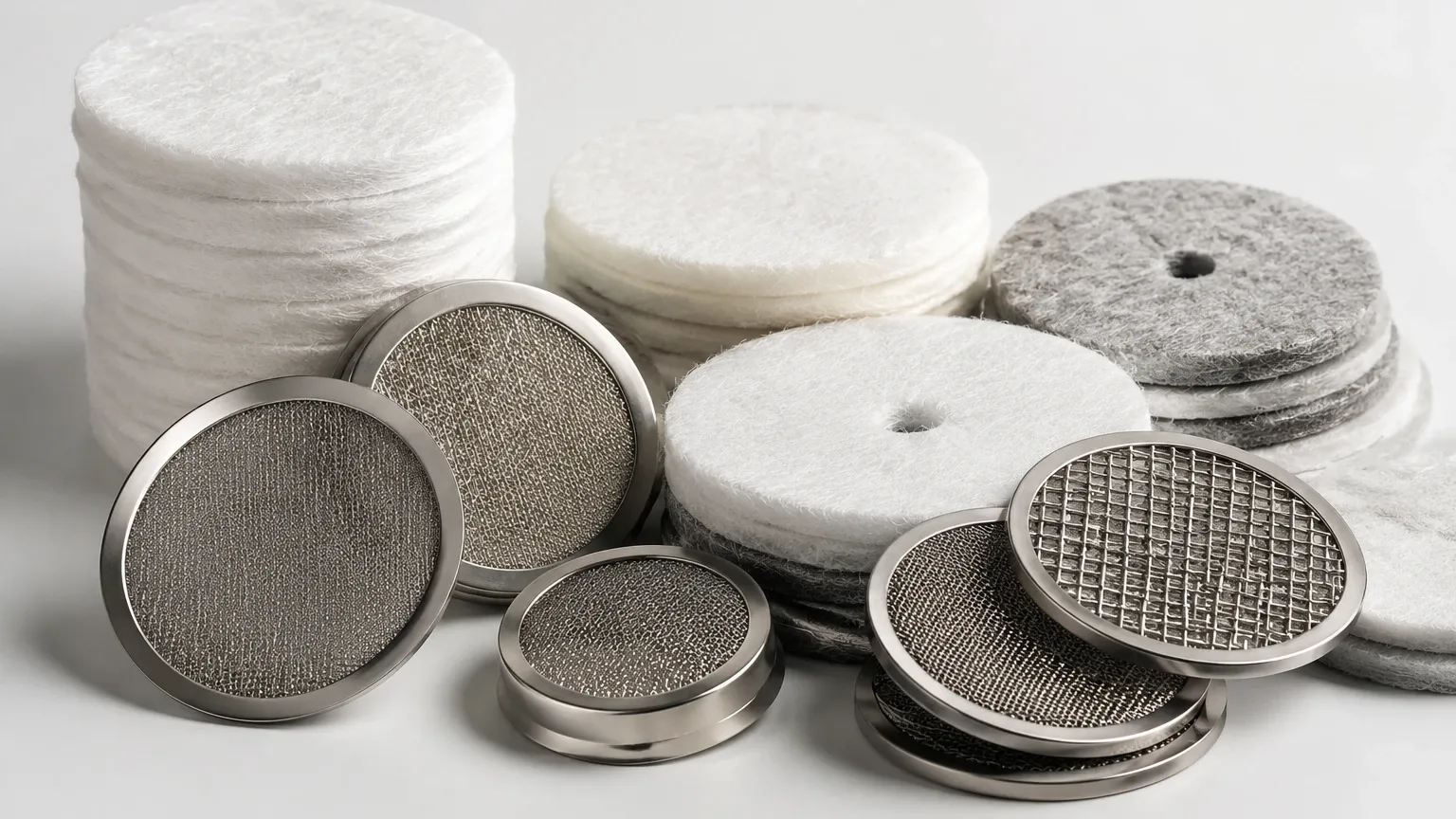
Comparing Stainless Steel Packs with Conventional Media
While the initial investment in stainless steel aquarium filter packs is higher than that of disposable polyester or foam media, the long-term B2B value proposition is significantly stronger.
| Feature | Stainless Steel Filter Packs | Disposable Media (Foam/Fiber) |
| :— | :— | :— |
| Durability | Extremely high; lasts for years | Low; degrades over months |
| Cleaning | Reusable via backwashing/ultrasonics | Usually requires replacement |
| Chemical Stability | Inert; does not leach | May leach binders or microplastics |
| Filtration Precision | Consistent and fixed aperture | Variable; pores stretch under pressure |
| Environmental Impact | Low waste; recyclable | High waste; non-recyclable |
For facility managers, the reduction in recurring procurement costs and the elimination of waste streams make stainless steel the preferred choice for sustainable, large-scale operations.
Maintenance and Longevity: Optimizing Total Cost of Ownership
The total cost of ownership (TCO) for filtration systems is heavily influenced by maintenance requirements. Stainless steel filter discs are designed for easy restoration.
Cleaning Protocols
Unlike disposable packs, metal filter packs can be cleaned using several industrial methods:
- Backwashing: Reversing the flow of water to dislodge trapped particles.
- Ultrasonic Cleaning: Using high-frequency sound waves in a cleaning solution to remove fine organic buildup within the mesh pores.
- Chemical Soaking: Using mild acidic or alkaline solutions to dissolve mineral scale or biofilm without damaging the stainless steel substrate.
Replacement Cycles
While a high-quality stainless steel pack can last for several years, it should be inspected periodically for mechanical wear or "blinding" (permanent clogging). By maintaining a regular cleaning schedule, facilities can maximize the lifespan of their Filter Discs & Packs, ensuring consistent water quality and pump efficiency.
Specification Checklist for Purchasing Teams
Before finalizing a purchase order for aquarium filter packs, technical procurement teams should confirm the following details with the manufacturer:
1. Water Chemistry: Is the system freshwater, saltwater, or chemically treated? (Determines 304 vs. 316L).
2. Micron Requirement: What is the target particle size for removal?
3. Housing Dimensions: What are the exact outer diameter (OD) and thickness constraints for the disc or pack?
4. Operating Pressure: What is the maximum expected pressure differential across the filter?
5. Flow Volume: What is the total GPM (gallons per minute) or m³/h the filter must accommodate?
6. Edge Style: Is a rim or frame required for sealing or structural support?
Conclusion
In the demanding world of professional aquatic management, the reliability of filtration components is non-negotiable. Industrial Filter Discs & Packs provide the precision and durability required to maintain complex life support systems. By moving away from disposable media and toward engineered stainless steel solutions, organizations can achieve better water quality, lower operational risks, and a superior return on investment.
Kaifil continues to support the global aquatic industry by delivering customized, high-performance filtration components that meet the rigorous standards of modern engineering. Whether for a public aquarium, a commercial hatchery, or a specialized research facility, the right filter pack is a foundational element of a successful aquatic environment.
