


Ac Filter Packs
In the demanding landscape of industrial filtration, the efficiency of a process often hinges on the precision of its smallest components. Among these, ac filter packs represent a critical category of multi-layer wire mesh solutions designed to withstand high pressures and temperatures while maintaining strict filtration accuracy. For engineers and procurement specialists, understanding the technical nuances of these packs is essential for optimizing throughput and ensuring the longevity of downstream equipment.
Industrial filtration is rarely a single-stage event. Instead, it relies on the strategic layering of different mesh specifications to achieve a balance between fine particle retention and structural integrity. Whether used in polymer extrusion, chemical processing, or hydraulic systems, the selection of Filter Discs & Packs involves a deep dive into metallurgy, weave patterns, and mechanical design.
Engineering Design and Construction of Filter Packs
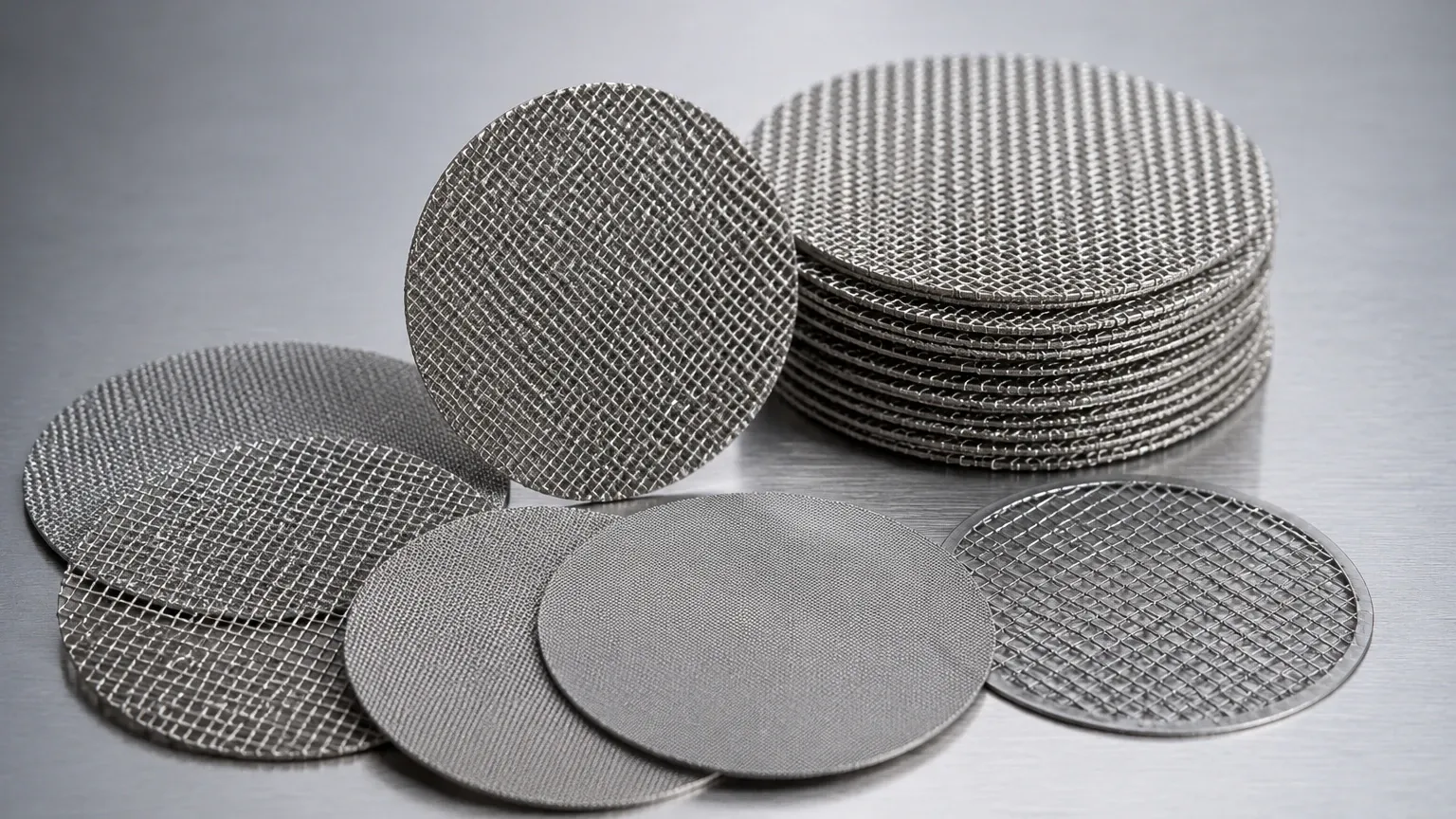
The construction of ac filter packs is an exercise in precision engineering. Unlike a single-layer mesh, these packs are typically composed of multiple layers of stainless steel wire cloth, each serving a specific functional purpose. A standard configuration often follows a coarse-fine-coarse arrangement.
Layering Strategy
1. The Filtration Layer: This is the core of the pack, featuring a fine mesh with a specific micron rating. It is responsible for capturing contaminants of a predetermined size.
2. The Support Layer: Positioned on either side of the filtration layer, the support mesh (usually a coarser weave) prevents the finer mesh from deforming under high differential pressure. It also facilitates the even distribution of fluid across the filtration surface.
3. The Drainage Layer: In more complex multi-layer packs, additional layers are added to improve flow dynamics and ensure that the filtered medium can exit the pack efficiently without creating localized high-pressure zones.
Assembly Techniques
To ensure the layers remain aligned during installation and operation, manufacturers like Kaifil employ various binding techniques. Spot welding is the most common method for ac filter packs, where the layers are fused at specific points along the perimeter. For applications requiring a more robust seal or where bypass must be strictly eliminated, aluminum or stainless steel rims (frames) are crimped around the edges. This framing not only provides structural rigidity but also ensures a flush fit within the filter housing or screen changer.
Material Selection and Chemical Compatibility
The performance of ac filter packs is heavily dictated by the alloy used in their construction. In industrial environments, stainless steel is the gold standard due to its resistance to corrosion, oxidation, and mechanical stress.
* Stainless Steel 304: The most common grade, offering excellent cost-effectiveness and good corrosion resistance for standard industrial applications.
* Stainless Steel 316/316L: Containing molybdenum, these grades provide superior resistance to chlorides and acidic environments, making them ideal for chemical processing and pharmaceutical applications. The "L" (low carbon) variant is preferred for welded assemblies to prevent intergranular corrosion.
* Specialty Alloys: For extreme environments involving high temperatures or highly aggressive chemicals, packs may be manufactured using Monel, Inconel, or Hastelloy. These materials maintain their mechanical properties at temperatures where standard stainless steels might fail.
When selecting materials for ac filter packs, engineers must confirm the chemical compatibility of the medium being filtered. Factors such as pH levels, operating temperature, and the presence of abrasive particles will determine the expected lifespan of the filter pack and the frequency of replacement cycles.
The Role of AC Filter Packs in Polymer Extrusion
One of the primary applications for ac filter packs is in the plastics and polymer industry, specifically within melt filtration systems. In this context, the term "ac filter packs" often refers to the specific configurations used in screen changers to remove impurities from molten resin.
In polymer extrusion, contaminants such as un-melted gels, degraded polymer, or foreign particles can significantly impact the quality of the final product, leading to surface defects in films or structural weaknesses in extruded profiles. The filter pack must be capable of operating under extreme pressures (often exceeding 3,000 PSI) and temperatures (up to 300°C or higher).
Impact on Melt Quality
The use of high-quality filter packs ensures a consistent melt flow. As the pack captures contaminants, the differential pressure across the screen increases. Precision-manufactured packs provide a predictable pressure rise, allowing operators to schedule screen changes without risking sudden drops in production quality or mechanical failure of the extruder.
Performance Metrics: Micron Rating and Throughput
Evaluating the effectiveness of ac filter packs requires an understanding of two primary metrics: absolute versus nominal filtration and the relationship between mesh count and open area.
Micron Rating
* Nominal Rating: This refers to the ability of the filter to retain a majority of particles of a certain size (e.g., 90% of 20-micron particles). It is a general guideline but may allow some larger particles to pass through.
* Absolute Rating: This is the diameter of the largest hard spherical particle that will pass through the filter under specified test conditions. For critical applications in the pharmaceutical or aerospace sectors, absolute ratings are mandatory to ensure process integrity.
Flow Rate and Pressure Drop
The "open area" of a filter pack determines its throughput capacity. A higher mesh count (more wires per inch) generally results in a smaller micron rating but also increases the resistance to flow, leading to a higher initial pressure drop. Engineers must balance the need for fine filtration with the power requirements of the pump or extruder. Using a Dutch weave (where the shute wires are driven tightly together) allows for very fine filtration while maintaining the mechanical strength necessary to handle high pressure drops.
Customization and OEM Specifications
No two industrial processes are identical, which is why customization is a core requirement for ac filter packs. Manufacturers like Kaifil work closely with OEM partners to develop filtration solutions tailored to specific equipment and operating parameters.
Customization Options Include:
* Shape and Size: While circular discs are standard, packs can be manufactured in oval, rectangular, or kidney shapes to fit specialized screen changers.
* Layer Configuration: Depending on the viscosity of the fluid and the nature of the contaminants, the number of layers can range from two to over seven.
* Mesh Weave Types: Options include plain weave, twilled weave, and various Dutch weaves (Plain Dutch, Twilled Dutch, Reverse Dutch). Each offers a different balance of strength and filtration accuracy.
* Edge Finishing: Beyond simple spot welding, edges can be bound with various metals or even high-temperature polymers to suit the sealing requirements of the filter housing.
For purchasing teams, providing detailed specifications—including the exact dimensions, required micron rating, and operating environment—is crucial for obtaining an accurate quote and ensuring the filter pack performs as expected.
Maintenance, Replacement Cycles, and Total Cost of Ownership
While ac filter packs are often seen as consumable items, their impact on the total cost of ownership (TCO) is significant. A low-quality filter pack that fails prematurely or allows bypass can lead to costly downtime, damaged equipment, and product recalls.
Determining Replacement Cycles
The replacement frequency is typically dictated by the pressure differential ($ΔP$). Once the pressure drop across the pack reaches a certain threshold, it must be replaced or cleaned. In continuous extrusion processes, automated screen changers handle this transition, but the quality of the filter pack still determines how often the change occurs.
Cleaning and Reuse
In certain applications, stainless steel filter packs can be cleaned and reused. Methods such as ultrasonic cleaning, chemical bath, or burn-off ovens (for polymer removal) can extend the life of the pack. However, it is important to inspect the mesh for any signs of mechanical fatigue or pore enlargement after cleaning. In many high-precision applications, the risk of using a cleaned pack outweighs the cost of a new, certified replacement.
Cost Considerations
When evaluating the cost of ac filter packs, procurement should look beyond the initial unit price. Factors to consider include:
* Durability: Does the pack hold up under pressure without deforming?
* Consistency: Is the micron rating uniform across different batches?
* Lead Times: How quickly can the manufacturer supply custom or high-volume orders?
* Technical Support: Does the supplier provide engineering guidance on material selection and design optimization?
Conclusion: Selecting the Right Filter Solution
The selection of ac filter packs is a technical decision that directly influences the efficiency and quality of industrial production. By focusing on the structural design, material compatibility, and specific application requirements, engineers can ensure they are using the most effective filtration components for their systems.
Kaifil's expertise in manufacturing custom stainless steel filtration solutions provides the reliability needed for demanding environments. Whether you are seeking to optimize a polymer extrusion line or improve the purity of a chemical process, choosing the right Filter Discs & Packs is the first step toward achieving superior filtration performance and operational stability. Before your next purchase, confirm your micron requirements, pressure limits, and housing dimensions to ensure a seamless integration of these vital components into your workflow.
