


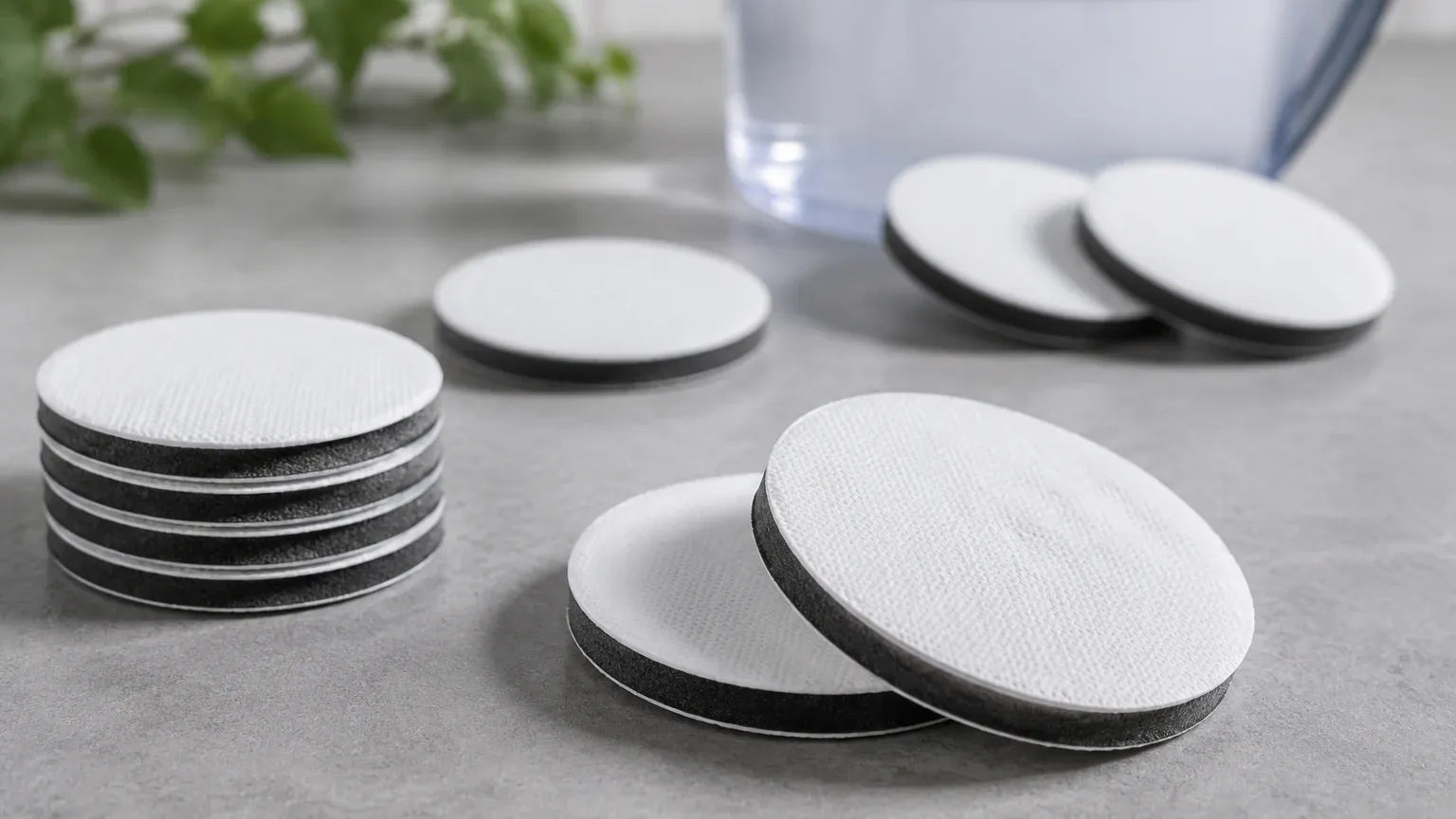
Brita Filter Discs
In the realm of fluid purification, the disc-shaped filter is one of the most recognizable geometries. While many consumers are familiar with the concept through household products like Brita filter discs, the engineering principles behind disc-based filtration extend far beyond residential water pitchers. In industrial environments, the requirements for filtration efficiency, structural integrity, and chemical resistance are significantly more stringent, necessitating a transition from disposable polymer-based media to robust, high-performance metal components.
For engineers and procurement professionals, understanding the technical distinctions between consumer-grade filtration and industrial Filter Discs & Packs is essential for optimizing process performance. This guide explores the mechanics of disc filtration, material considerations, and the engineering variables that dictate the selection of filtration components in demanding industrial applications.
The Evolution of Disc Filtration: From Consumer to Industrial Applications
The popularity of Brita filter discs in the consumer market has made the "disc" format synonymous with accessible water purification. In a household context, these discs typically utilize a combination of activated carbon and ion-exchange resins to reduce chlorine, lead, and organic impurities. They operate primarily through adsorption and ion exchange, designed for low-pressure, gravity-fed systems where the flow rate is relatively low and the fluid is consistently ambient-temperature water.
However, in industrial sectors such as chemical processing, pharmaceuticals, and hydraulic systems, the "disc" serves a much broader range of functions. Industrial filter discs are engineered to handle high-viscosity fluids, aggressive solvents, extreme temperatures, and significant differential pressures. Unlike the plastic-encased, disposable nature of consumer discs, industrial variants are often constructed from multi-layered stainless steel wire mesh or sintered metal fibers.
While the goal of a consumer disc is to improve the taste and safety of drinking water, the goal of an industrial filter disc is to protect sensitive equipment, ensure product purity in large-scale manufacturing, and provide a repeatable, cleanable solution that minimizes downtime. The transition from consumer-level technology to industrial-grade solutions requires a shift in focus from simple adsorption to precise mechanical straining and depth filtration.
Material Integrity: Comparing Activated Carbon and Stainless Steel Mesh
The primary difference between consumer products like Brita filter discs and industrial filtration components lies in the media material. Consumer discs are largely dependent on organic or polymer-based materials which, while effective for specific contaminants, have clear physical limitations.
Polymer and Carbon Media
Standard consumer discs are limited by their thermal and chemical stability. They cannot be used with fluids exceeding a certain temperature (typically 30°C to 40°C) without risking structural failure or the release of adsorbed contaminants. Furthermore, they are essentially "one-way" components; once the media is saturated or the pores are clogged, the entire unit must be discarded.
Stainless Steel and Alloy Media
In contrast, industrial Filter Discs & Packs manufactured by specialists like Kaifil utilize 304, 316, or 316L stainless steel. These materials offer several critical advantages for B2B applications:
* Thermal Resistance: Stainless steel discs can operate in environments ranging from cryogenic temperatures to over 500°C.
* Chemical Compatibility: 316L stainless steel provides excellent resistance to corrosion from acids, alkalis, and various industrial solvents that would dissolve or degrade consumer-grade plastics.
* Mechanical Strength: Metal wire mesh can withstand high differential pressures without deforming, ensuring that the filtration rating remains consistent even under heavy load.
* Reusability: Perhaps the most significant advantage for industrial operations is that stainless steel filter discs are cleanable. Through ultrasonic cleaning, backwashing, or chemical baths, these components can be restored to near-original performance, significantly reducing the total cost of ownership compared to disposable alternatives.
Technical Specifications of Industrial Filter Discs & Packs
When specifying filtration components for an industrial system, engineers must look beyond the surface-level geometry. The performance of a filter disc is determined by its internal structure and the way the layers are bonded together.
Single-Layer vs. Multi-Layer Disks
Single-layer wire mesh discs are often used for simple straining or as pre-filters. However, most industrial processes require "packs"—multiple layers of mesh combined to achieve specific performance goals. These packs often consist of a fine filtration layer protected by coarser support and drainage layers. This multi-layer construction prevents the fine mesh from collapsing under pressure and increases the dirt-holding capacity of the unit.
Sintered Filter Discs
For the most demanding applications, sintering is the preferred manufacturing method. Sintering involves placing multiple layers of wire mesh into a high-temperature vacuum furnace. The heat causes the contact points of the wires to bond at a molecular level without the need for binders or adhesives. The result is a monolithic plate that is incredibly strong, maintains a precise pore size, and is immune to media migration (the shedding of filter fibers into the filtrate).
Weave Types and Micron Ratings
The choice of weave—Plain, Twill, or Dutch—determines the micron rating and flow characteristics. For instance, a Reverse Dutch Weave provides a high-strength mesh with very fine filtration capabilities, ideal for high-pressure hydraulic applications. Industrial discs can be manufactured with precision ratings from 1 micron up to several hundred microns, a level of customization not available in standardized consumer products.
Key Engineering Considerations for High-Performance Filtration
Selecting an industrial alternative to standard disc formats requires a deep dive into the specific variables of the application. Engineers should confirm the following data points before finalizing a purchase order for Filter Discs & Packs:
1. Differential Pressure (ΔP): What is the maximum pressure drop the system can tolerate? Industrial discs must be engineered to provide the required filtration fineness while maintaining a low enough ΔP to prevent pump strain or system failure.
2. Flow Rate and Viscosity: The fluid's characteristics heavily influence the required surface area. High-viscosity fluids like polymers or heavy oils require larger surface areas or coarser mesh to maintain efficient throughput.
3. Contaminant Type: Is the contaminant hard and abrasive (like metal shavings) or soft and deformable (like organic gels)? This dictates whether surface filtration or depth filtration is more appropriate.
4. Edge Treatment: In many industrial housings, the edge of the filter disc must be sealed to prevent bypass. Options include spot welding, aluminum or stainless steel binding, or custom-molded gaskets. This is a critical engineering detail that ensures 100% of the fluid passes through the media.
Industrial Use Cases: Beyond Potable Water Treatment
While Brita filter discs are confined to the kitchen, industrial filter discs are integral to a vast array of global industries. Their versatility allows them to be used in nearly any process involving fluid or gas movement.
Chemical and Petrochemical Processing
In these environments, filter discs are used to remove catalysts from process streams, protect downstream valves from particulates, and filter aggressive chemicals. The ability of stainless steel to resist corrosion is the primary driver for its use here.
Food and Beverage Manufacturing
Similar to the intent of consumer water filters, industrial discs in the F&B sector ensure product safety. However, they operate at a much larger scale, filtering everything from cooking oils and syrups to carbonated beverages. Compliance with FDA standards for food contact materials is a mandatory requirement for these components.
Pharmaceutical and Biotechnology
Precision is paramount in pharma. Sintered filter discs are used in chromatography, tablet manufacturing, and solvent purification. The lack of media migration and the ability to sterilize the components (via autoclaving or SIP) make stainless steel the material of choice for maintaining sterile environments.
Plastics and Polymer Extrusion
In the production of synthetic fibers and plastics, "screen packs" (a specific type of filter disc pack) are used to remove impurities from molten polymer before it is extruded through fine spinnerets. These discs must withstand extreme heat and pressures that would instantly destroy a non-metallic filter.
Optimizing the Replacement Cycle and Total Cost of Ownership
In a B2B context, the purchase price of a filter is only one component of the Total Cost of Ownership (TCO). For companies accustomed to the disposable model of Brita filter discs, the initial investment in stainless steel Filter Discs & Packs may seem higher. However, the long-term economics tell a different story.
Disposable filters incur costs beyond the unit price: they require frequent labor for change-outs, generate significant waste disposal costs, and necessitate higher inventory levels. Furthermore, every time a system is opened for a filter change, there is a risk of contamination and lost production time.
Industrial metal filters offer a sustainable alternative. Because they can be cleaned and reused for hundreds or even thousands of cycles, the cost per gallon of filtrate is significantly lower over the life of the component. Additionally, the predictable performance of a high-quality metal mesh disc allows for better process control and less frequent unplanned maintenance.
Conclusion: Selecting the Right Solution
Whether you are looking for a replacement for a specialized process or designing a new filtration system from the ground up, understanding the technical boundaries of disc filtration is key. While the consumer market has popularized the disc format through products like Brita filter discs, the industrial sector demands a level of precision and durability that only custom-engineered metal solutions can provide.
By focusing on material science, weave technology, and structural integrity, Kaifil provides the industrial sector with filtration components that outperform and outlast standard alternatives. When evaluating your next filtration requirement, ensure you are considering the full spectrum of engineering variables—from micron ratings and pressure tolerances to the long-term benefits of a cleanable, stainless steel solution.
