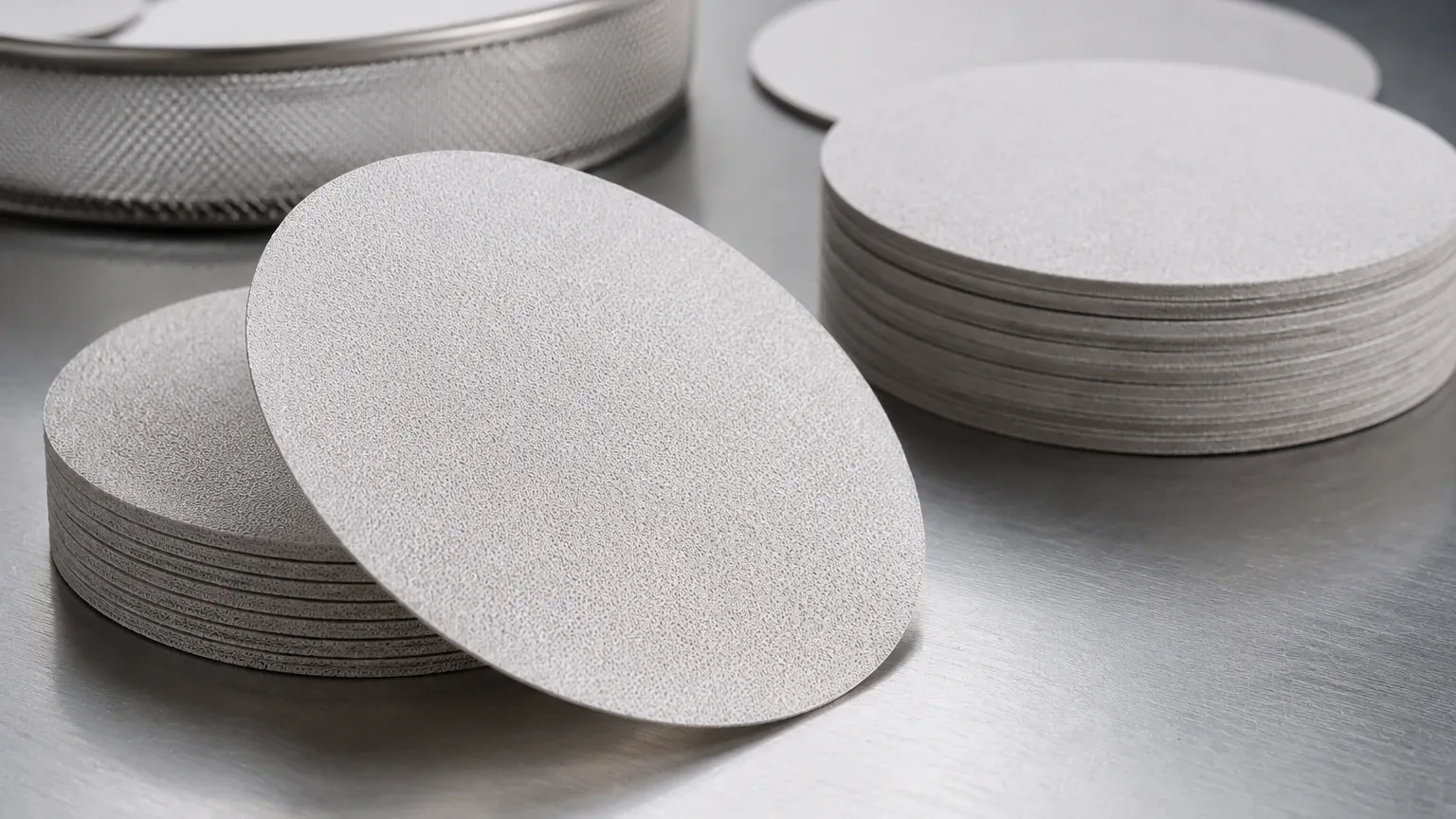
Coffee Filter Discs
In the commercial coffee industry, the precision of extraction is directly linked to the quality of the filtration media. Coffee filter discs, specifically those manufactured from stainless steel wire mesh, have become the standard for high-performance espresso machines, industrial brewing equipment, and large-scale cold brew systems. Unlike disposable paper alternatives, metal filter discs offer a level of consistency, durability, and flow control that is essential for maintaining brand standards in a B2B environment. For engineers and equipment manufacturers, selecting the right filtration component involves understanding the intersection of fluid dynamics, material science, and mechanical design.
Understanding the Engineering Behind Industrial Coffee Filter Discs
The primary function of coffee filter discs is to separate insoluble solids from the liquid extract while managing the flow rate to ensure optimal contact time between water and coffee grounds. In industrial applications, this process is subject to high pressures and temperatures, requiring a filter that maintains its structural integrity over thousands of cycles.
Industrial-grade coffee filter discs are typically constructed from multiple layers of stainless steel wire mesh. This construction allows for a balance between fine filtration (to remove sediment) and high permeability (to allow essential oils and aromatic compounds to pass through). The shift toward metal filtration in the commercial sector is driven by the need for repeatability. Paper filters can vary in thickness and pore distribution, whereas a precision-engineered metal disc provides a constant, measurable filtration area that does not fluctuate under pressure.
Material Selection and Filtration Accuracy
Material choice is the foundation of any high-performance filtration system. For coffee applications, the environment is characterized by acidity (pH levels typically between 4.5 and 5.0) and thermal cycling.
1. Stainless Steel 304: This is the standard grade for most food-grade applications. It offers excellent corrosion resistance and mechanical strength. It is suitable for most standard brewing environments where the equipment is cleaned regularly.
2. Stainless Steel 316L: For more demanding industrial environments or systems that use aggressive chemical cleaning agents (CIP – Clean-in-Place), 316L is preferred. The addition of molybdenum enhances resistance to pitting and chloride-induced corrosion, ensuring a longer service life in high-volume production facilities.
Filtration accuracy is measured in microns. In the context of coffee, the goal is often to block "fines"—particles smaller than 100 microns—that can lead to over-extraction and bitterness. Depending on the brewing method (espresso vs. immersion), Filter Discs & Packs can be customized with specific micron ratings. For example, espresso applications often require discs with a filtration rating between 30 and 60 microns to handle the high-pressure environment of a group head, while cold brew systems might utilize coarser mesh to accommodate longer steep times and gravity-fed flow.
Structural Design: Single-Layer vs. Multi-Layer Packs
The physical architecture of coffee filter discs determines how they handle mechanical stress. Manufacturers like Kaifil provide various configurations to meet specific equipment requirements.
* Single-Layer Discs: These are often used in low-pressure applications or as secondary screens. They are cost-effective and easy to clean but may lack the rigidity required for high-pressure espresso extraction.
* Multi-Layer Sintered Discs: By vacuum-sintering multiple layers of wire mesh together, engineers create a porous metal plate that is incredibly strong. These discs do not deform under the 9-15 bars of pressure common in commercial espresso machines. The internal layers act as a drainage or support structure, while the outer layers provide the precise filtration rating.
* Edge Treatments: To ensure a proper seal within a filter holder or housing, discs are often finished with edge binding. This can involve spot welding the layers together or using a metal rim (often aluminum or stainless steel) to prevent fraying and provide a flat sealing surface. This is critical in preventing "channeling," where water bypasses the coffee bed by flowing around the edges of the filter.
Performance Metrics in Commercial Applications
When evaluating coffee filter discs for B2B procurement, several performance metrics must be considered to ensure the component fits the intended industrial use case.
Flow Rate and Pressure Drop
In any filtration system, the introduction of a filter media creates a pressure drop (differential pressure). In coffee brewing, this pressure drop is a variable that contributes to the extraction profile. A well-designed disc must provide enough resistance to facilitate extraction without causing a backup that could damage pumps or lead to inconsistent brew volumes. Engineers must calculate the open area of the wire mesh to ensure it aligns with the pump specifications of the brewing hardware.
Solids Retention and Clarity
The goal of using high-quality coffee filter discs is to achieve a specific "cup profile." In industrial bottling for Ready-to-Drink (RTD) coffee, clarity is paramount to prevent sediment from settling at the bottom of the bottle. Metal discs allow for the passage of colloidal solids and oils that contribute to body and mouthfeel, which are often trapped by paper. However, the mesh must be fine enough to ensure that the final product meets the visual and sensory requirements of the consumer.
Thermal Stability
Commercial brewing occurs at temperatures ranging from 90°C to 96°C (194°F to 205°F). Unlike plastic or low-grade polymer filters, stainless steel discs do not leach chemicals or undergo thermal expansion that could alter the pore size during the brew cycle. This thermal stability ensures that the first brew of the day is identical to the hundredth.
Maintenance and Longevity of Metal Filter Discs
One of the primary B2B advantages of stainless steel coffee filter discs is the reduction in total cost of ownership (TCO). While the initial investment is higher than paper, the lifecycle of a metal disc can span years if maintained correctly.
Cleaning Protocols:
In a commercial setting, oils and superfine particles can eventually clog the mesh pores, a phenomenon known as blinding. To maintain performance, a regular cleaning schedule is required:
* Backflushing: Common in espresso machines to clear surface debris.
* Ultrasonic Cleaning: The most effective method for multi-layer discs, using high-frequency sound waves to dislodge particles trapped deep within the mesh layers.
* Chemical Soaking: Using food-safe detergents to dissolve polymerized coffee oils.
Replacement Cycles:
Unlike disposable filters, metal discs are replaced based on mechanical wear or permanent blinding rather than single-use. In high-volume environments, it is recommended to inspect discs quarterly for any signs of mesh distortion or edge separation. Replacing a disc before it fails is a critical part of preventative maintenance for industrial brewing equipment.
Customization and OEM Solutions for Equipment Manufacturers
For Original Equipment Manufacturers (OEMs), off-the-shelf components rarely meet the exact specifications of a new machine design. Customization of coffee filter discs is a core service provided by specialized manufacturers like Kaifil.
Dimensional Precision:
Whether the application requires a 58mm disc for a standard espresso group head or a 500mm disc for an industrial extraction tank, laser cutting technology allows for tolerances within microns. This ensures a perfect fit within the housing, which is essential for maintaining pressure seals.
Variable Mesh Combinations:
Engineers can specify different mesh weaves—such as Plain, Twill, or Dutch weave—within a single pack. A Dutch weave layer might be used for its superior filtration fineness, while a plain weave layer provides the necessary mechanical support. This layering can be tailored to the specific grind size and pump pressure of the equipment.
Branding and Integration:
For B2B clients, discs can be produced with integrated gaskets or specific mounting hardware to simplify the assembly process on the factory floor. Custom laser marking for part identification or branding is also a common requirement for high-end commercial equipment.
Conclusion: Selecting the Right Filtration Partner
The selection of coffee filter discs is a technical decision that impacts the efficiency of the brewing process and the quality of the final beverage. For purchasing teams and engineers, the focus should be on material certification, manufacturing precision, and the ability of the supplier to provide customized solutions that stand up to the rigors of industrial use.
By choosing high-performance Filter Discs & Packs, businesses can ensure their equipment operates at peak performance, providing consistent results while minimizing waste and long-term operational costs. Whether you are designing a new commercial brewer or optimizing an existing industrial extraction line, understanding the technical nuances of metal mesh filtration is the key to achieving superior extraction control.