


Decaf Coffee in Filter Packs
In the industrial food and beverage sector, the production and processing of decaffeinated coffee require rigorous attention to filtration precision and material integrity. While many consumers associate the term with individual serving pods, for engineers and plant managers, the focus remains on the industrial-grade components that facilitate extraction, purification, and packaging. Utilizing high-quality Filter Discs & Packs is essential for maintaining the organoleptic properties of coffee while ensuring the efficiency of the decaffeination process.
Decaffeination is a complex chemical and physical operation that involves removing caffeine from green coffee beans before roasting. Whether employing the Swiss Water Process, carbon dioxide extraction, or solvent-based methods, the process relies on sophisticated filtration systems to separate solids, manage fine particulates, and recover processing agents. Stainless steel filtration components are the preferred choice in these environments due to their thermal stability, chemical resistance, and food-grade compliance.
The Role of Precision Filtration in Industrial Coffee Processing
Industrial coffee processing, particularly for decaffeinated varieties, demands a high degree of particulate control. During the extraction phase, green coffee beans are soaked or exposed to high-pressure fluids. This process generates "fines"—microscopic coffee particles that can clog downstream equipment or contaminate the final product if not properly managed.
Filter discs and packs serve as the primary barrier in extraction columns and brewing systems. Their function is two-fold: they must allow for a consistent flow of the extraction medium (water or solvent) while capturing solids with high efficiency. In the context of decaf coffee in filter packs, the industrial filtration stage ensures that the coffee extract remains clear of sediment before it is concentrated or spray-dried. For manufacturers, the selection of the correct micron rating is a critical engineering decision that balances flow rate against filtration depth.
Technical Specifications for Stainless Steel Filter Discs & Packs
When specifying filtration components for coffee processing, engineers must evaluate several technical parameters. Unlike disposable paper or plastic filters, stainless steel wire mesh offers structural rigidity and the ability to withstand high differential pressures without deforming.
Mesh Weave Types
The performance of a filter disc is largely determined by its weave pattern. Common configurations include:
* Plain Square Weave: Offers high flow rates and is easy to clean, making it suitable for primary separation where large volumes of liquid must pass quickly.
* Dutch Weave: Provides a much tighter pore structure, ideal for high-pressure extraction where fine particulate retention is paramount. This weave is often used in multi-layer packs to provide both strength and fine filtration.
* Twill Weave: Allows for a heavier wire diameter in a given mesh count, increasing the mechanical strength of the disc for demanding industrial cycles.
Micron Ratings and Porosity
For decaffeinated coffee processing, micron ratings typically range from 5 to 200 microns depending on the stage of production. Pre-filtration stages may use coarser mesh to remove bean fragments, while final polishing stages require precision discs to ensure the clarity of the liquid extract. Engineering teams must calculate the total open area of the mesh to ensure that the filtration system does not become a bottleneck in the production line.
Material Selection and Food-Grade Compliance
In the food and beverage industry, material safety is non-negotiable. Stainless steel is the industry standard for decaf coffee filtration due to its inert nature and resistance to corrosion.
304 vs. 316L Stainless Steel
While Type 304 stainless steel is adequate for many general-purpose applications, Type 316L is often preferred for decaffeination processes involving solvents or slightly acidic aqueous environments. The addition of molybdenum in 316L provides superior resistance to pitting and crevice corrosion. Furthermore, 316L is easier to weld and finish to a high degree of smoothness, reducing the risk of bacterial growth in the microscopic crevices of the filter media.
Regulatory Standards
Filters used in the production of decaf coffee in filter packs must comply with international food safety standards, such as those set by the FDA or EU food contact regulations. Manufacturers like Kaifil ensure that the wire mesh is free from lubricants, oils, or metallic burrs that could contaminate the coffee. This requires specialized cleaning processes, such as ultrasonic cleaning, following the fabrication of the filter discs.
Optimizing Extraction Efficiency for Decaffeinated Varieties
The decaffeination process often alters the physical structure of the coffee bean, making it more brittle or prone to releasing oils. This change in material behavior requires a specialized approach to filtration. If the filter media is too restrictive, the pressure drop across the system will increase, leading to higher energy consumption and potential equipment failure. Conversely, if the filter is too coarse, the presence of fines can lead to a bitter taste profile or sediment issues in the final packaged product.
By utilizing customized filter packs, processors can achieve a graduated filtration effect. This involves stacking multiple layers of wire mesh with varying pore sizes. The outer layers provide mechanical support and capture larger particles, while the inner layers perform the fine filtration. This design extends the service life of the filter by preventing the fine mesh from becoming blinded (clogged) prematurely.
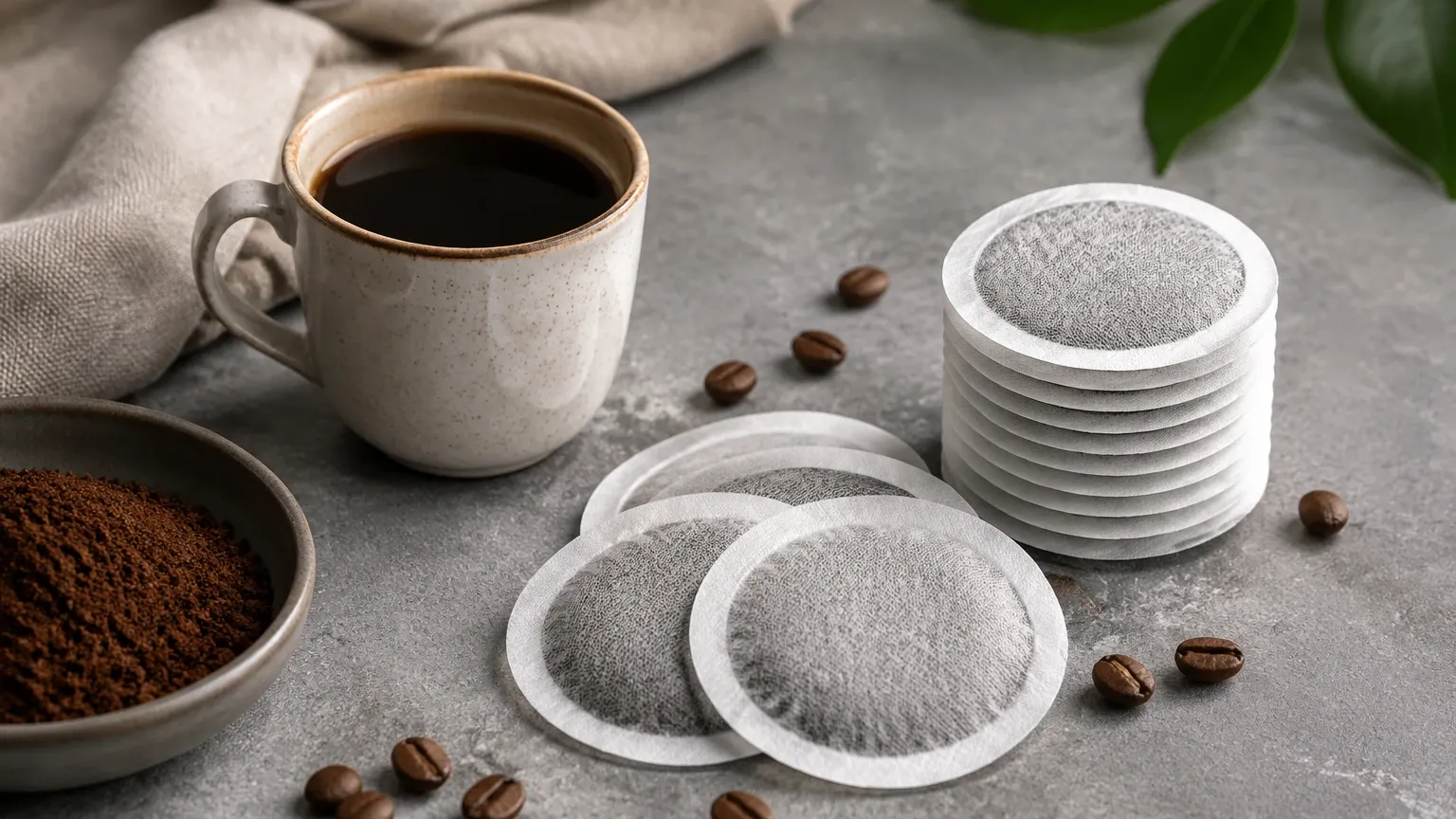
Design Considerations: Single Layer vs. Multi-layer Filter Packs
The structural design of the filter component is as important as the mesh itself. Depending on the machinery used in the coffee plant, engineers may choose between single-layer discs or complex multi-layer packs.
Single-Layer Filter Discs
Single-layer discs are cost-effective and suitable for applications with low pressure and relatively clean fluids. They are often used as support screens or in simple straining operations. However, they lack the depth-loading capacity of multi-layer systems.
Multi-layer and Sintered Packs
For high-pressure decaffeination extraction, multi-layer packs are the standard. These packs can be spot-welded or bound with a metal rim (aluminum or stainless steel) to prevent fraying and ensure a tight seal within the filter housing.
Sintered filter packs take this a step further by thermally bonding multiple layers of mesh together. This creates a monolithic structure that is incredibly strong and maintains precise pore geometry even under extreme stress. For industrial decaf coffee production, sintered packs offer the highest level of reliability and the longest intervals between maintenance cycles.
Maintenance and Durability in Continuous Production
One of the primary advantages of stainless steel filter discs and packs over disposable alternatives is their reusability. In a 24/7 production environment, the ability to clean and reinstall filtration components significantly reduces the total cost of ownership and minimizes waste.
Cleaning Protocols
Coffee oils and fine particulates can be difficult to remove from fine mesh. Industrial facilities typically employ several cleaning methods:
1. Backwashing: Reversing the flow of fluid through the filter to dislodge trapped particles.
2. Ultrasonic Cleaning: Using high-frequency sound waves in a cleaning solution to remove microscopic debris from deep within the weave.
3. Chemical Cleaning: Utilizing food-safe caustic or acidic solutions to dissolve organic buildup and oils.
Monitoring Performance
Engineers should monitor the pressure differential (ΔP) across the filter packs. A steady increase in ΔP indicates that the filter is reaching its loading capacity. By establishing clear thresholds for cleaning or replacement, plants can avoid unscheduled downtime and ensure consistent product quality for their decaf coffee lines.
Customization for OEM and Specialized Applications
Every coffee processing facility has unique requirements based on their specific machinery and throughput goals. Customization is often necessary to achieve optimal performance. When sourcing filtration components, purchasing teams should confirm the following details with their manufacturer:
* Exact Dimensions: Precision in diameter and thickness is required to ensure a bypass-free fit in the filter housing.
* Rim Treatments: Options such as copper, aluminum, or stainless steel edging to provide a secure seal.
* Layer Configuration: Specific combinations of mesh counts to target particular particle sizes while maintaining structural integrity.
* Shape Variations: While circular discs are most common, many systems require oval, rectangular, or ring-shaped filters.
Kaifil specializes in providing these customized solutions, working closely with engineering teams to develop filtration components that meet the specific rigors of industrial coffee extraction and packaging. By focusing on high-quality materials and precision manufacturing, processors can ensure that their decaf coffee in filter packs meets the highest standards of purity and flavor.
Conclusion: Selecting the Right Filtration Partner
The production of decaffeinated coffee is a demanding process that leaves no room for sub-par filtration. The choice of filter discs and packs directly impacts the efficiency of the extraction, the clarity of the final product, and the overall operational costs of the facility. By prioritizing stainless steel components that offer durability, food-grade compliance, and precise micron control, manufacturers can optimize their production lines for long-term success. When evaluating suppliers, technical expertise and the ability to provide customized, high-performance solutions remain the most critical factors for engineering and procurement professionals in the coffee industry.
