


Disc Filter 1 Inch
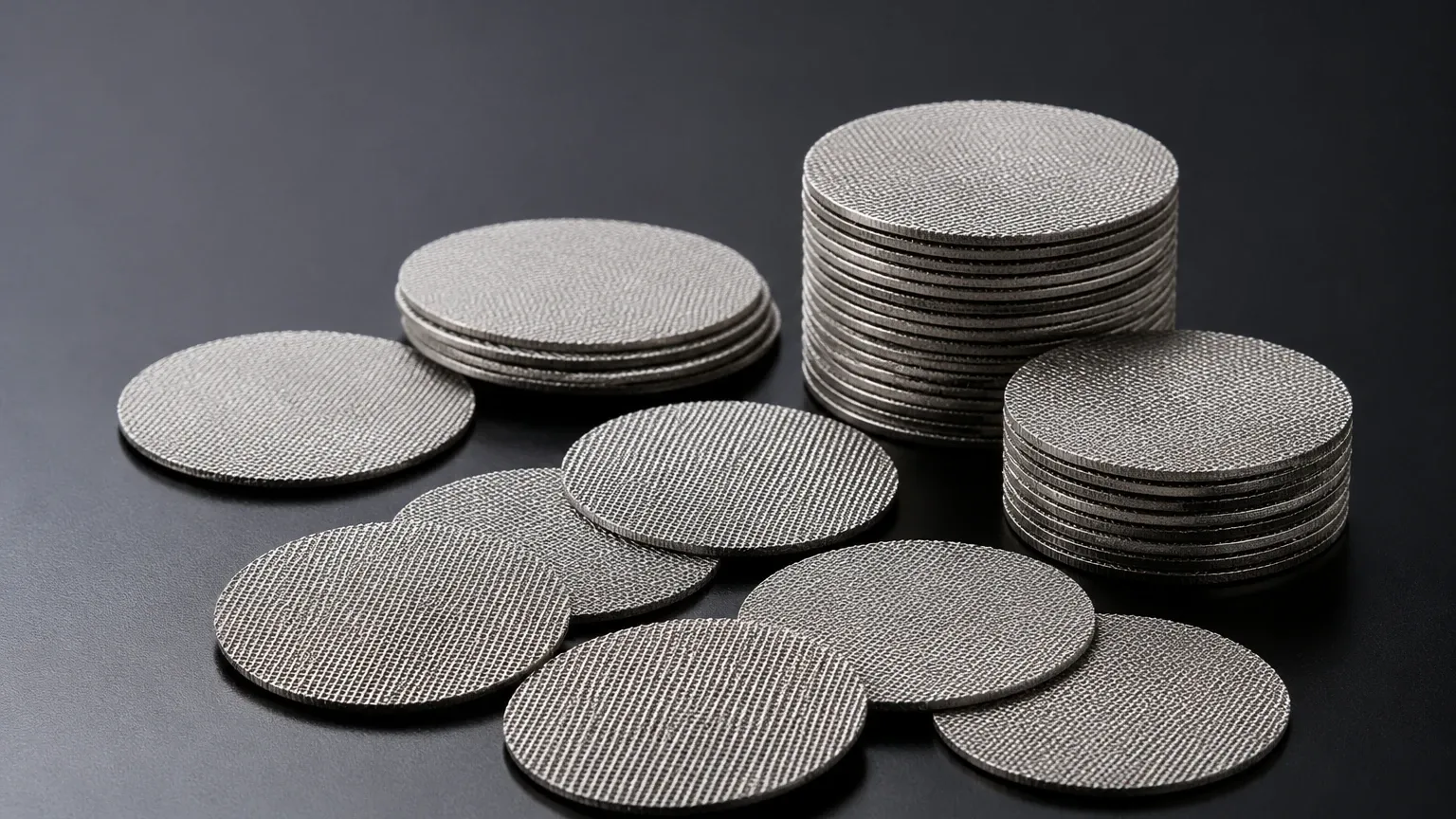
In the landscape of industrial filtration, the precision and reliability of small-format components are often as critical as the performance of large-scale systems. The disc filter 1 inch serves as a fundamental component in numerous high-pressure, high-purity, and precision-dependent applications. Whether used as a standalone element or integrated into complex Filter Discs & Packs, these components are engineered to provide consistent particulate removal while maintaining structural integrity under demanding operating conditions.
For engineers and procurement professionals, selecting a 1-inch disc filter involves more than just specifying a diameter. It requires a deep understanding of material science, weave patterns, and the mechanical stresses inherent in specific industrial processes. This guide examines the technical nuances of these filtration components, providing the factual foundation necessary for informed decision-making.
Understanding the Role of the 1-Inch Disc Filter in Industrial Systems
The 1-inch diameter is a standard specification in many hydraulic systems, chemical dosing lines, and laboratory-scale filtration rigs. Despite its small size, a disc filter 1 inch must often withstand significant differential pressures and corrosive environments. These discs are typically manufactured from stainless steel wire mesh, which offers superior thermal and chemical resistance compared to polymer-based alternatives.
In industrial applications, these discs act as a final barrier against contaminants that could damage sensitive downstream equipment, such as precision nozzles, valves, or sensors. Because the effective filtration area (EFA) is relatively small, the engineering of the mesh—specifically the wire diameter and the aperture size—must be optimized to balance filtration efficiency with a manageable pressure drop. Kaifil specializes in producing these components with high dimensional accuracy to ensure a perfect fit within filter housings, preventing bypass and ensuring 100% of the fluid passes through the media.
Material Selection and Engineering Standards
The performance of a 1-inch disc filter is primarily dictated by its material composition. Stainless steel is the industry standard due to its versatility and longevity.
Stainless Steel Grades
* AISI 304: The most common grade, providing excellent mechanical properties and good resistance to atmospheric corrosion. It is suitable for most general industrial applications where extreme chemical resistance is not required.
* AISI 316/316L: Contains molybdenum, which significantly enhances resistance to pitting and crevice corrosion in chloride environments. This is the preferred choice for pharmaceutical, food and beverage, and marine applications.
* Specialty Alloys: For extreme environments involving high temperatures or highly aggressive chemicals, materials such as Monel, Inconel, or Hastelloy may be utilized to ensure the filter does not degrade or contaminate the process stream.
Weave Types and Their Impact
The weave pattern of the wire mesh determines the filtration characteristics.
* Plain Weave: The simplest and most common weave, where each warp wire crosses over and under each successive shute wire. It provides high flow rates but is generally limited to coarser filtration levels.
* Dutch Weave: This pattern uses a larger diameter warp wire and a smaller diameter shute wire, resulting in a much denser mesh. This is ideal for fine filtration and high-pressure applications where the disc must resist deformation.
* Twill Weave: Allows for a heavier wire to be used for a given mesh count, increasing the strength and durability of the disc.
Structural Variations: Single Layer vs. Multi-Layer Packs
Depending on the application requirements, a disc filter 1 inch can be supplied as a single layer of mesh or as part of a multi-layer assembly. Each configuration serves a specific purpose in fluid dynamics and contaminant loading.
Single Layer Discs
Single-layer discs are cost-effective and easy to clean. They are typically used in applications where the contaminant load is low or where the filter is intended as a safety screen rather than a primary filtration stage. These are often used in simple strainers or as support layers for finer media.
Multi-Layer Filter Packs
In many high-pressure environments, such as polymer extrusion or hydraulic power units, a single layer of mesh lacks the necessary mechanical strength. Multi-layer Filter Discs & Packs are engineered by layering different mesh counts. A typical configuration includes:
1. Filtration Layer: The middle layer(s) that determine the actual micron rating.
2. Support Layers: Coarser mesh layers on either side that provide structural rigidity and protect the fine filtration layer from high-pressure surges.
3. Drainage Layers: Ensure that the fluid is distributed evenly across the filtration surface, preventing localized clogging.
These layers can be spot-welded together or bound with a metal rim (often aluminum or stainless steel) to prevent fraying and ensure a secure seal within the housing.
Performance Metrics: Filtration Accuracy and Flow Dynamics
When evaluating a disc filter 1 inch, engineers must consider the interplay between filtration accuracy (micron rating) and flow resistance.
Micron Rating: Absolute vs. Nominal
* Nominal Rating: Refers to the ability of the filter to retain a majority of particles of a specific size. It is an indication of the "average" pore size.
* Absolute Rating: Refers to the diameter of the largest hard spherical particle that will pass through the filter under specified test conditions. For critical applications in the pharmaceutical or aerospace sectors, absolute ratings are mandatory to ensure process integrity.
Pressure Drop (ΔP)
The pressure drop across a 1-inch disc is a function of the fluid's viscosity, flow rate, and the mesh's open area. A common mistake in filter selection is choosing a mesh that is too fine, leading to a high initial pressure drop and a short service life. Engineering teams must calculate the clean pressure drop to ensure the system pump can handle the resistance throughout the filter's lifecycle.
Key Applications for 1-Inch Filtration Components
The versatility of the 1-inch format makes it a staple in various industrial sectors.
Chemical and Petrochemical Processing
In chemical dosing and sampling systems, small-diameter filters are used to protect sensitive analytical equipment. The 1-inch disc is often integrated into inline filter holders to capture trace particulates that could skew results or damage high-precision valves.
Pharmaceutical and Biotechnology
Stainless steel 316L discs are used in pharmaceutical manufacturing for steam filtration and gas venting. The ability to withstand repeated sterilization cycles (SIP/CIP) without losing structural integrity is a key advantage of metal mesh over disposable plastic filters.
Polymer Extrusion
In the production of synthetic fibers and plastics, melt filtration is essential. Multi-layer packs, including the disc filter 1 inch, are used to remove gels and impurities from the molten polymer before it reaches the spinneret. This prevents fiber breakage and ensures a high-quality end product.
Hydraulics and Lubrication
Precision hydraulic systems in aerospace and industrial machinery utilize these discs to prevent metal shavings or environmental dust from entering sensitive actuators. The high collapse strength of stainless steel mesh is vital in these high-pressure environments.
Selection Guide: Factors to Confirm Before Procurement
To ensure the optimal performance of a disc filter 1 inch, the following technical parameters must be confirmed with the manufacturer:
1. Operating Environment: What is the chemical composition of the fluid? What are the maximum and minimum operating temperatures?
2. Pressure Requirements: What is the maximum operating pressure and the maximum allowable pressure drop before the filter must be cleaned or replaced?
3. Contaminant Characteristics: What is the nature of the solids being removed? Are they hard, abrasive particles or soft, deformable gels?
4. Cleaning Requirements: Is the filter intended to be a single-use component, or must it be cleanable via ultrasonic baths or backflushing?
5. Edge Treatment: Does the application require a rimmed edge to prevent bypass, or is a plain-cut edge sufficient for the housing design?
Maintenance, Cleaning, and Replacement Cycles
One of the primary advantages of stainless steel Filter Discs & Packs is their reusability. Unlike depth filters or polymer membranes, wire mesh can often be restored to near-original performance through professional cleaning methods.
Cleaning Methods
* Ultrasonic Cleaning: High-frequency sound waves create cavitation bubbles that dislodge particles trapped deep within the mesh. This is highly effective for complex multi-layer packs.
* Backflushing: Reversing the flow of fluid can dislodge surface-level contaminants. This is often used in automated systems.
* Chemical Cleaning: Soaking the discs in specific solvents or acids can dissolve organic or mineral deposits that mechanical cleaning cannot reach.
Determining Replacement
Despite their durability, metal filters have a finite lifespan. Replacement is necessary if the mesh shows signs of mechanical fatigue, such as broken wires or distorted weave patterns. Additionally, if the "clean" pressure drop begins to rise significantly after successive cleanings, it indicates that sub-micron particles have become permanently embedded in the mesh structure, necessitating a new component.
Total Cost of Ownership vs. Initial Investment
While the initial cost of a high-quality stainless steel disc filter 1 inch may be higher than a disposable alternative, the total cost of ownership (TCO) is often significantly lower. The durability of metal mesh reduces the frequency of filter changes, which in turn minimizes system downtime and labor costs. Furthermore, the reliability of a precision-engineered disc protects expensive downstream equipment from catastrophic failure, providing a level of insurance that far outweighs the unit price of the filter itself.
Kaifil’s commitment to quality manufacturing ensures that every 1-inch disc meets stringent industrial standards. By focusing on material purity, weave consistency, and precise finishing, we provide filtration solutions that support the long-term efficiency of global industrial operations.
