


Disc Filter 32mm
In the landscape of industrial filtration, precision is often measured in millimeters. The disc filter 32mm represents a specific, standardized dimension frequently utilized in specialized machinery, laboratory equipment, and high-pressure hydraulic systems. As a critical component within the broader category of Filter Discs & Packs, these small-diameter filters are engineered to provide high-efficiency particulate removal while maintaining structural integrity under demanding operational conditions.
For engineers and procurement professionals, selecting a 32mm filter disc involves more than simply matching a diameter. It requires a deep understanding of material science, mesh weave patterns, and the mechanical stresses the filter will encounter. This guide explores the technical nuances of 32mm disc filters, providing the factual foundation necessary for informed industrial selection.
Understanding the Role of 32mm Disc Filters in Industrial Systems
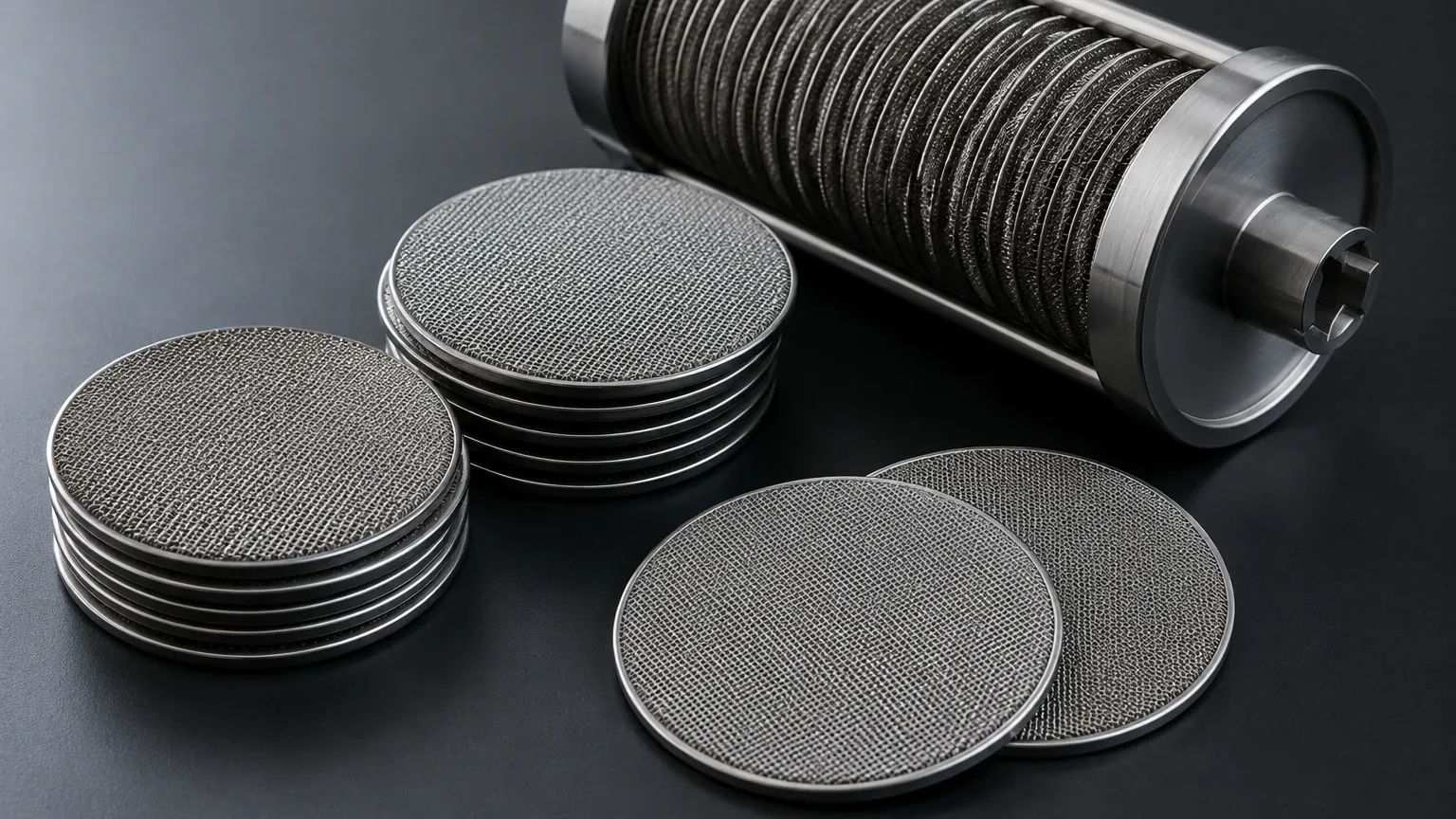
A disc filter 32mm is a circular filtration element typically manufactured from stainless steel wire mesh. While 32mm might seem like a small footprint, these components are essential for protecting sensitive downstream equipment. They are commonly found in polymer melt filtration, chemical processing, and pharmaceutical manufacturing where space is limited but filtration accuracy is paramount.
Within the hierarchy of Filter Discs & Packs, the 32mm variant serves as a bridge between micro-filtration and standard industrial flow rates. Its size is often dictated by the housing dimensions of specific valves, nozzles, or manifold blocks. Because these filters are often the last line of defense before a fluid reaches a precision orifice, their manufacturing tolerances must be exceptionally tight. Any deviation in diameter can lead to "bypass," where unfiltered fluid escapes around the edges of the disc, potentially damaging expensive machinery or contaminating the final product.
Material Selection and Engineering Standards for Filter Discs & Packs
The performance of a disc filter 32mm is primarily determined by the alloy and the weave of the mesh used. In industrial environments, stainless steel is the gold standard due to its thermal stability and chemical resistance.
Stainless Steel Grades
* AISI 304: The most common grade, offering excellent durability and resistance to oxidation. It is suitable for most general industrial applications where extreme chemical corrosion is not a primary concern.
* AISI 316L: Containing molybdenum, this low-carbon grade provides superior resistance to pitting and crevice corrosion in chloride-rich environments. It is the preferred choice for pharmaceutical and marine applications.
* Specialty Alloys: For extreme environments involving high temperatures or highly acidic fluids, alloys like Inconel or Monel may be used, though these are typically reserved for custom OEM specifications.
Weave Types and Filtration Characteristics
The way the wires are interlaced determines the micron rating and the physical strength of the disc. Common weaves include:
* Plain Weave: A simple over-and-under pattern that provides high open area and low pressure drop, ideal for coarse filtration.
* Twill Weave: Allows for heavier wires in a given mesh count, increasing the strength of the disc filter 32mm.
* Dutch Weave (Plain or Twill): This weave uses a higher density of smaller diameter wires in the shute direction, creating a "tortuous path" for particles. This results in very fine filtration ratings (down to 5-10 microns) and high mechanical strength, making it a staple in Filter Discs & Packs intended for high-pressure use.
Performance Evaluation: Flow Rate, Micron Rating, and Pressure Drop
When specifying a disc filter 32mm, engineers must balance three competing factors: the required filtration fineness (micron rating), the allowable resistance to flow (pressure drop), and the total dirt-holding capacity.
Micron Rating and Efficiency
The micron rating defines the size of particles the mesh can effectively intercept. It is important to distinguish between "nominal" and "absolute" ratings. A nominal rating refers to the ability of the mesh to retain a majority of particles at a certain size, whereas an absolute rating indicates the largest spherical particle that can pass through the mesh under laboratory conditions. For critical applications in the chemical or food and beverage sectors, absolute ratings are generally required to ensure consistent quality.
Pressure Drop (ΔP)
As fluid passes through the 32mm disc, the mesh creates resistance. This pressure drop increases as the filter captures contaminants. If the initial ΔP is too high, the system efficiency drops; if the terminal ΔP is reached too quickly, the filter requires frequent replacement. Engineers must calculate the effective filtration area of the 32mm disc—accounting for any rims or bindings—to ensure the flow velocity does not exceed the mechanical limits of the mesh.
Dirt-Holding Capacity
Multi-layer Filter Discs & Packs are often used to improve dirt-holding capacity. By stacking multiple layers of mesh—ranging from a coarse support layer to a fine filtration layer and back to a protective drainage layer—the disc can trap more debris before clogging. This multi-stage approach is particularly effective for the 32mm size, where the surface area is relatively small.
Common Risks and Mitigation in Precision Filtration
Implementing a disc filter 32mm in an industrial process carries inherent risks that must be addressed during the design and procurement phases. Failure to account for these variables can lead to system downtime or product recalls.
1. Media Migration: This occurs when individual wires from the mesh break off and enter the process stream. This is a significant risk in high-vibration environments or with poorly manufactured discs. High-quality Filter Discs & Packs utilize sintering or precision spot-welding to secure the wire ends and prevent migration.
2. Edge Leakage (Bypass): In a 32mm housing, the seal at the circumference is narrow. If the disc is not perfectly flat or if the diameter is slightly undersized, fluid will bypass the filter. Using bound edges (rims) made of aluminum, copper, or stainless steel can provide a compressible gasket-like surface to ensure a tight seal.
3. Mechanical Collapse: Under high differential pressure, a single layer of mesh may deform or burst. Sintered multi-layer packs provide the necessary rigidity to withstand high pressures without sacrificing filtration accuracy.
4. Chemical Incompatibility: Even stainless steel can fail if exposed to incompatible cleaning agents or process chemicals. Verification of the specific alloy grade against the chemical profile of the fluid is a mandatory step in the selection process.
Customization and OEM Considerations for 32mm Disc Filters
Standard catalog items often fail to meet the specific needs of proprietary industrial equipment. This is where the customization of Filter Discs & Packs becomes essential. For a disc filter 32mm, customization options typically include:
* Layer Configuration: Determining the exact sequence of mesh counts to optimize the balance between flow and filtration.
* Binding Materials: Selecting the right rim material to match the housing's sealing requirements. Aluminum is common for its malleability, while stainless steel rims offer the highest corrosion resistance.
* Spot Welding vs. Sintering: For simple applications, spot-welded packs are cost-effective. For high-purity or high-pressure applications, vacuum sintering bonds the layers at every contact point, creating a monolithic structure that is virtually immune to media migration.
* Shape Variations: While the 32mm disc is typically circular, OEM applications may require slight modifications, such as center holes (annular discs) or kidney-shaped profiles to fit specific manifold geometries.
When working with a manufacturer like Kaifil, providing detailed CAD drawings or specifying the exact operating temperature and fluid viscosity allows for the development of a filtration solution tailored to the application's unique stresses.
Final Procurement Checklist for Engineering Teams
Before finalizing an order for a disc filter 32mm, technical teams should confirm the following data points to ensure the longevity and performance of the component:
* Exact Dimensional Tolerances: Confirm the outer diameter (OD) and thickness (T) tolerances. For a 32mm disc, a tolerance of +/- 0.1mm is often required for precision housings.
* Mesh Certification: Request material mill certificates to verify the stainless steel grade (e.g., 304 vs 316L) and mesh count accuracy.
* Operational Limits: Define the maximum operating temperature and the maximum allowable differential pressure (collapse pressure).
* Cleaning Compatibility: Determine if the filter is intended for single use or if it must withstand ultrasonic cleaning or back-flushing for reuse.
* Packaging Requirements: In pharmaceutical or electronics applications, the cleanliness of the filter itself is vital. Confirm if the discs need to be degreased or delivered in cleanroom-compatible packaging.
By treating the disc filter 32mm as a precision-engineered component rather than a simple commodity, industrial operators can significantly enhance the reliability of their systems. Whether used in a hydraulic line, a chemical reactor, or a food processing nozzle, the right combination of material, weave, and construction within the Filter Discs & Packs category ensures optimal performance and a lower total cost of ownership through extended service life and reduced equipment wear.
