


Disc Filter Assembly
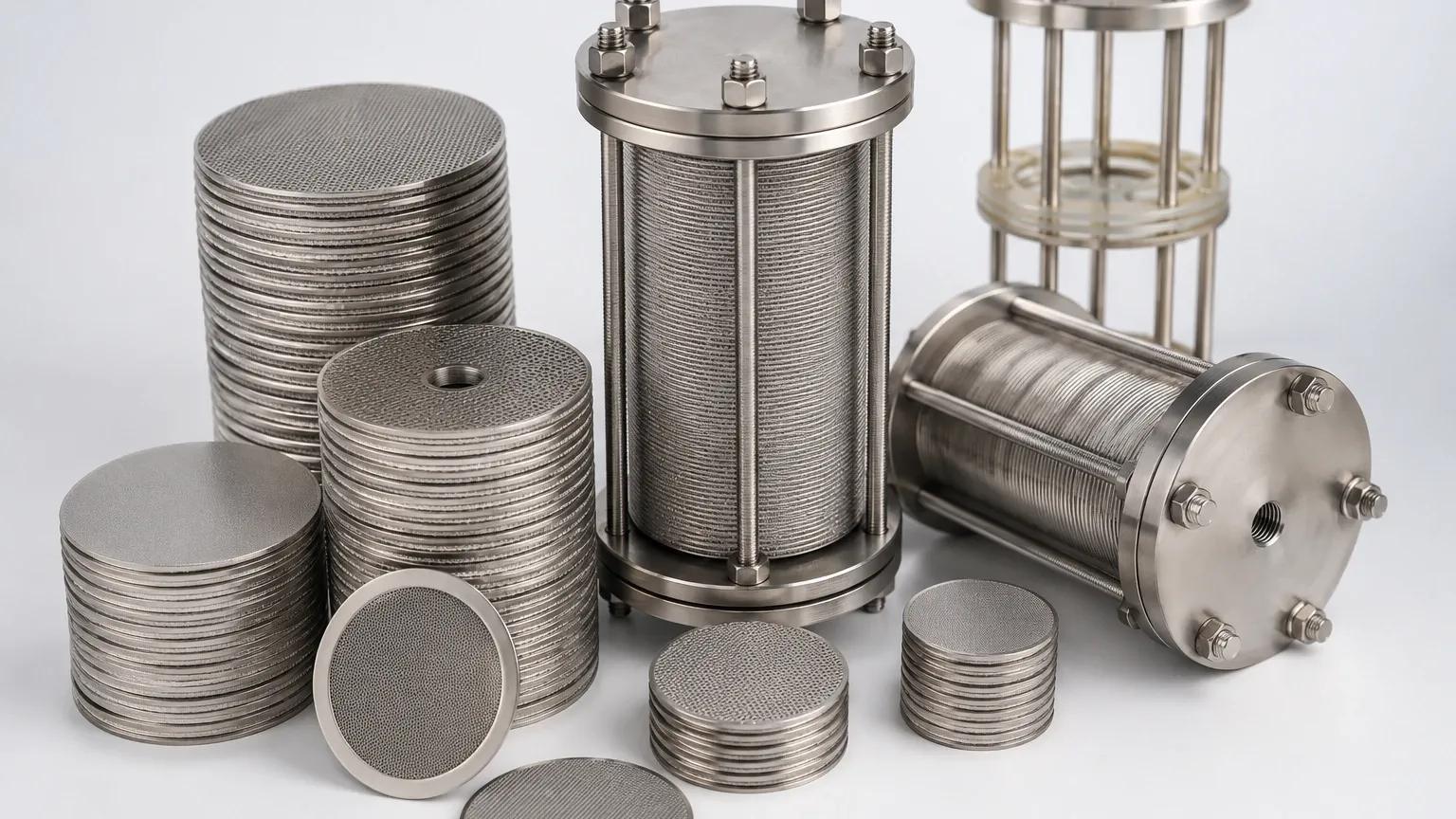
In industrial filtration, the precision of a disc filter assembly determines the efficiency, longevity, and safety of the entire production line. Whether utilized in plastic extrusion, chemical processing, or hydraulic systems, these components must withstand significant mechanical stress while maintaining precise micron ratings. For engineers and procurement specialists, understanding the nuances of how Filter Discs & Packs are designed and assembled is critical to optimizing system performance and reducing the total cost of ownership.
A disc filter assembly typically consists of one or more layers of wire mesh, often reinforced or edged to ensure structural integrity under pressure. This article provides a technical overview of the engineering considerations, material selections, and manufacturing techniques essential for high-performance industrial filtration.
The Core Components of a Disc Filter Assembly
The fundamental building block of any disc filter is the wire mesh. However, a professional disc filter assembly is rarely a single piece of screen. It is a calculated configuration of multiple layers designed to perform specific functions within the filtration cycle.
Wire Mesh Layers
In a multi-layer assembly, the layers are generally categorized into three roles:
1. Filtration Layer: This is the primary mesh responsible for capturing particles at the required micron rating. It is usually a fine weave, such as plain dutch weave or twilled dutch weave, which provides high precision.
2. Support Layer: Because fine filtration mesh is often delicate, a coarser, high-strength mesh is placed behind it. This support layer prevents the filtration mesh from deforming or collapsing under high differential pressure.
3. Drainage/Protective Layer: In some complex assemblies, an additional layer is added to the upstream side to protect the fine mesh from large debris or to ensure even flow distribution across the filter surface.
Rimming and Edging Materials
To prevent the edges of the wire mesh from fraying and to ensure a leak-proof seal within the filter housing, the assembly is often finished with a rim. Common materials for edging include:
* Aluminum: Lightweight and malleable, providing an excellent seal in standard applications.
* Stainless Steel (304/316): Offers superior corrosion resistance and high-temperature stability, essential for chemical and pharmaceutical environments.
* Copper and Brass: Used in specific extrusion applications where a softer metal rim is required to create a gasket-like seal against the machinery walls.
Engineering Considerations for Material Selection
Selecting the right material for a disc filter assembly requires a balance between chemical compatibility, thermal stability, and mechanical strength. Stainless steel remains the industry standard due to its versatility.
Grade 304 vs. Grade 316L
While Grade 304 stainless steel is suitable for many general industrial applications, Grade 316L is preferred for environments involving high acidity, chlorides, or pharmaceutical requirements. The "L" in 316L denotes low carbon content, which improves weldability and reduces the risk of intergranular corrosion at the points where the disc filter assembly is spot-welded or rimmed.
Micron Rating and Porosity
The effectiveness of the assembly is measured by its ability to retain particles of a specific size. Engineers must distinguish between nominal and absolute micron ratings. A nominal rating refers to the ability to retain a majority of particles, whereas an absolute rating indicates that no particles larger than the specified size can pass through the mesh. The assembly design must also account for porosity—the ratio of open area to the total surface area—which directly impacts flow rates and pressure drop.
Manufacturing Techniques for Disc Filter Assembly
The method used to join the mesh layers and secure the edges defines the durability of the filter. There are several primary techniques employed in the production of high-quality filter packs.
Spot Welding
For multi-layer packs that do not require a solid metal rim, spot welding is used to fuse the layers at specific points. This keeps the layers aligned during installation and operation. Precise control over the welding current and pressure is necessary to ensure a strong bond without damaging the delicate wires of the filtration mesh.
Compressed Edging and Rimmed Packs
In high-pressure applications, such as polymer extrusion, a rimmed disc filter assembly is often required. The mesh layers are placed inside a metal U-channel rim, which is then compressed using specialized hydraulic presses. This creates a rigid, flat component that can withstand the clamping forces of a screen changer without bypassing fluid around the edges.
Sintered Mesh Assemblies
For the most demanding environments, individual layers of wire mesh are vacuum-sintered together. This process uses heat and pressure to fuse the contact points of the wires without the use of binders. The result is a monolithic disc filter assembly that offers exceptional mechanical strength, heat resistance, and permanent pore geometry. Sintered discs are ideal for high-viscosity fluids and applications requiring frequent backwashing.
Evaluating Performance and Quality Standards
When sourcing Filter Discs & Packs, engineers must verify that the assembly meets specific performance criteria. Failure to do so can lead to premature filter blinding, media migration, or downstream contamination.
Pressure Drop (ΔP)
The pressure drop across the disc filter assembly is a critical metric. A high initial pressure drop indicates that the mesh may be too dense for the required flow rate, leading to shortened service life. Conversely, a very low pressure drop might suggest a breach in the mesh or an incorrect micron rating. The assembly must be designed to maintain a stable ΔP for as long as possible.
Mechanical Integrity and Flatness
In automated screen changers, the flatness of the disc filter assembly is paramount. If the disc is warped or has uneven thickness, it can jam the machinery or allow bypass. Quality control processes must include thickness gauging and flatness testing to ensure compatibility with precision industrial equipment.
Cleanliness and Passivation
For pharmaceutical and food-grade applications, the assembly must be free of manufacturing oils, burrs, and contaminants. Passivation treatments are often applied to stainless steel assemblies to enhance the protective oxide layer, ensuring that the filter does not introduce impurities into the process stream.
Common Applications and Industry Use Cases
The versatility of the disc filter assembly makes it a staple in various sectors, each with unique technical requirements.
* Plastic and Rubber Extrusion: Filter packs are used in screen changers to remove impurities from molten polymers. These assemblies must handle temperatures exceeding 300°C and pressures up to 5,000 PSI.
* Chemical Processing: Used for the filtration of aggressive solvents and catalysts. The focus here is on chemical compatibility and the ability to withstand corrosive cleaning cycles.
* Hydraulic and Lubrication Systems: Disc filters protect sensitive valves and pumps from particulate wear. These often require high-strength support layers to handle sudden pressure surges.
* Food and Beverage: Stainless steel discs are used for clarifying liquids and removing solids. The assemblies must comply with sanitary standards and be easy to clean.
Total Cost of Ownership and Replacement Cycles
While the initial purchase price of a disc filter assembly is a factor, the total cost of ownership (TCO) is influenced by the filter’s lifespan and its impact on the production process. A cheaper, poorly assembled filter may lead to:
* Frequent Downtime: If the filter blinds quickly or fails structurally, the production line must be stopped for replacement.
* Product Waste: Inconsistent filtration can lead to off-spec batches, especially in the chemical and polymer industries.
* Equipment Damage: Media migration (where wires from the filter break off and enter the system) can cause catastrophic failure of downstream components.
Investing in a high-quality disc filter assembly with the correct support structures and edging ensures longer intervals between replacements and more consistent product quality.
Technical Confirmation Before Purchasing
Before finalizing a specification for a disc filter assembly, technical teams should confirm the following details with their manufacturer:
1. Exact Layer Configuration: Specify the mesh count and wire diameter for each layer, not just the primary micron rating.
2. Material Certification: Request mill test reports (MTRs) to verify the grade of stainless steel or rimming material.
3. Dimensional Tolerances: Confirm the outer diameter (OD) and thickness tolerances, especially for rimmed packs used in tight-tolerance housings.
4. Operating Conditions: Provide the manufacturer with the maximum operating temperature, pressure, and the chemical composition of the fluid being filtered.
By focusing on these technical parameters, engineers can ensure that the selected Filter Discs & Packs provide the reliability and precision required for their specific industrial application. Whether it is a simple single-layer mesh or a complex sintered disc filter assembly, the quality of the manufacturing process is the ultimate safeguard for the integrity of the industrial process.
