


Disc Filter Auto Backwash
In modern industrial filtration, the transition from manual maintenance to automated systems has become a necessity for maintaining operational efficiency and reducing long-term costs. One of the most effective solutions for continuous liquid filtration is the disc filter auto backwash system. This technology relies on the precision and durability of specialized filtration media to remove suspended solids from fluid streams while providing a self-cleaning mechanism that ensures the process remains uninterrupted.
For engineers and facility managers, understanding the mechanics of how these systems interact with Filter Discs & Packs is essential for optimizing filtration performance. This article examines the technical principles, engineering considerations, and selection criteria for implementing a disc filter auto backwash solution in demanding industrial environments.
Understanding the Mechanics of Disc Filter Auto Backwash
The fundamental principle behind a disc filter auto backwash system is the ability to clean the filter media without halting the flow of the process fluid. Unlike traditional batch filters that require manual disassembly, an automated backwash system utilizes a pressure differential trigger or a timed interval to initiate a cleaning cycle.
During the standard filtration phase, fluid passes through the stack of filter discs from the outside in or vice versa, depending on the specific housing design. Contaminants are trapped on the surface or within the depth of the mesh. As the "filter cake" builds up, the resistance to flow increases, leading to a rise in differential pressure (ΔP).
When the system reaches a pre-set pressure threshold, the auto backwash sequence begins. This typically involves a reversal of flow or the activation of internal nozzles. In many high-performance systems, the discs are momentarily separated or the flow is concentrated through a small section of the media at high velocity. This high-energy spray or reverse flow dislodges the accumulated particles, which are then flushed out through a dedicated drain or reject port. Once the pressure differential returns to the baseline, the system automatically reverts to its standard filtration mode.
Engineering Considerations for Automatic Cleaning Systems
Designing a system capable of withstanding the stresses of a disc filter auto backwash cycle requires careful engineering. The filtration media must not only be precise in its micron rating but also structurally robust enough to handle the rapid pressure shifts and mechanical forces involved in backwashing.
Material Selection and Durability
While plastic or polymer discs are common in irrigation and low-pressure water treatment, industrial applications involving chemicals, high temperatures, or high pressures demand stainless steel components. Stainless steel 304 and 316L are the industry standards due to their corrosion resistance and mechanical strength. In a disc filter auto backwash setup, the filter discs must resist deformation during the high-pressure cleaning phase. Sintered multi-layer mesh is often preferred because the layers are diffusion-bonded, ensuring the mesh does not delaminate or shift under the force of the backwash fluid.
Filtration Accuracy vs. Flow Rate
Engineers must balance the required filtration fineness with the desired flow rate. A finer micron rating captures smaller particles but leads to more frequent backwash cycles. If the backwash frequency is too high, the system may consume excessive amounts of cleaning fluid or experience accelerated wear on valves and seals. Proper sizing of the Filter Discs & Packs ensures that the surface area is sufficient to maintain a manageable cleaning frequency even during peak contaminant loading.
Advantages of Auto Backwash in Industrial Filtration
Implementing a disc filter auto backwash system offers several strategic advantages for B2B operations, particularly in sectors where downtime is prohibitively expensive.
1. Continuous Operation: The primary benefit is the elimination of downtime. Because the system cleans itself while remaining online (often by cleaning one module at a time in a multi-pod system), the downstream process receives a constant supply of filtered fluid.
2. Reduced Labor Costs: Manual cleaning of industrial filters is labor-intensive and carries risks of human error, such as improper reassembly or damage to the delicate mesh. Automation removes the need for frequent manual intervention.
3. Consistent Pressure and Flow: By maintaining a stable differential pressure through regular cleaning cycles, the system ensures that downstream equipment—such as spray nozzles, heat exchangers, or high-pressure pumps—operates under consistent conditions, preventing damage and improving overall system longevity.
4. Waste Minimization: Modern auto backwash systems are designed to use a minimal amount of fluid for the cleaning cycle, reducing the volume of wastewater that needs to be treated or disposed of.
Key Components and Design Variations
The efficacy of a disc filter auto backwash system is largely determined by its internal architecture and the quality of its filtration components. There are several design variations tailored to specific industrial needs.
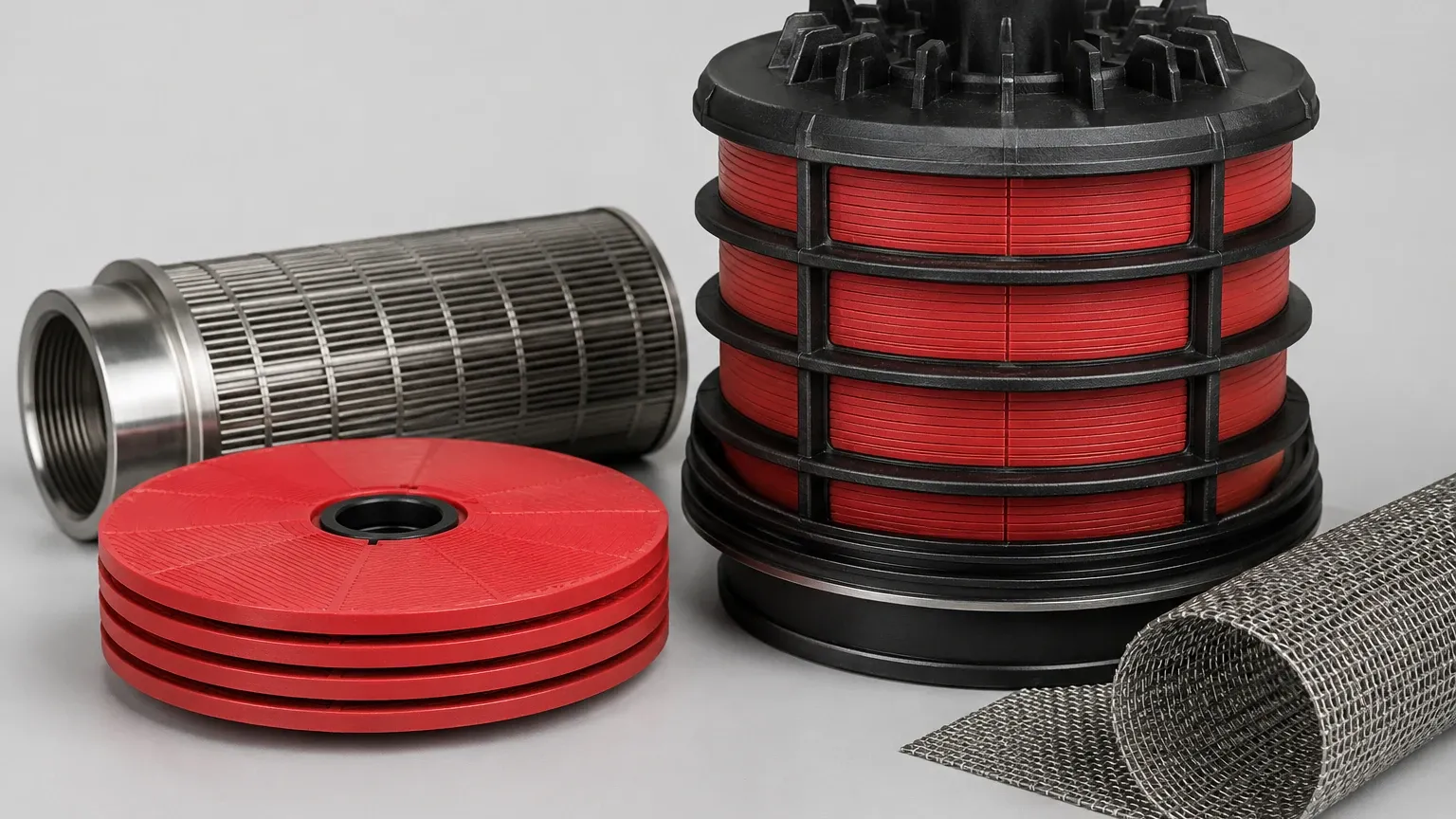
Sintered Mesh Discs
For precision applications, sintered mesh discs are the gold standard. These consist of multiple layers of stainless steel wire cloth bonded together through heat and pressure. This structure provides excellent pore size control and high mechanical strength, making it ideal for the repetitive stress of backwashing. Unlike simple wire mesh, sintered discs do not allow for "wire migration," ensuring that no metal fragments enter the process stream.
Pleated Filter Packs
In applications where a large surface area is required within a compact footprint, pleated filter packs are utilized. Pleating the stainless steel mesh increases the available filtration area by several times compared to a flat disc. This design is particularly useful in systems with high flow rates or high solids loading, as it extends the time between backwash cycles.
The Control System
The "intelligence" of the system resides in the PLC (Programmable Logic Controller). The controller monitors the pressure sensors and manages the timing of the backwash valves. Advanced systems can be programmed with "smart" logic that adjusts the backwash duration based on how quickly the pressure drops, further optimizing fluid usage.
Selection Criteria and Performance Evaluation
When specifying a disc filter auto backwash system for a new project or an upgrade, technical professionals should evaluate several critical factors to ensure compatibility and performance.
* Particle Characterization: Is the contaminant organic, inorganic, fibrous, or abrasive? Fibrous materials can sometimes become entangled in certain types of mesh, requiring specific backwash nozzle designs or coarser media.
* Fluid Viscosity and Temperature: High-viscosity fluids require higher pressure to push through the filter media, which affects the baseline differential pressure and the force required for effective backwashing. Similarly, temperature affects the expansion of metal components and the choice of gaskets and seals.
* System Pressure and Backwash Pressure: The system must have sufficient line pressure to drive the backwash process, or an auxiliary pump must be integrated. It is vital to confirm that the Filter Discs & Packs are rated for the maximum burst and collapse pressures they will encounter.
* Total Cost of Ownership (TCO): While the initial capital expenditure (CapEx) for an automated system is higher than a manual one, the operating expenditure (OpEx)—including labor, replacement parts, and downtime—is significantly lower. A thorough TCO analysis often justifies the investment in high-quality stainless steel filtration components.
Troubleshooting and Maintenance of Automatic Systems
While disc filter auto backwash systems are designed for low maintenance, they are not "set and forget" devices. Regular inspection is necessary to ensure long-term reliability.
Common issues include the fouling of the backwash valves or the gradual accumulation of "stubborn" contaminants that the backwash cycle cannot fully remove. This is often referred to as "permanent fouling." In such cases, a periodic deep clean using ultrasonic baths or chemical cleaning may be required to restore the discs to their original permeability.
Furthermore, the seals and gaskets within the filter housing should be inspected for wear. In a backwashing environment, these components are subjected to frequent movement and pressure pulses. Using high-quality elastomers compatible with the process fluid is essential to prevent bypass—where unfiltered fluid leaks into the clean stream.
Conclusion
The integration of a disc filter auto backwash system is a proven method for enhancing the reliability of industrial processes. By utilizing high-quality Filter Discs & Packs, manufacturers can achieve precise filtration while benefiting from the efficiencies of automation. Whether in chemical processing, water treatment, or hydraulic systems, the choice of filtration media and the engineering of the backwash mechanism are the deciding factors in system performance.
For engineers looking to optimize their filtration stages, focusing on the structural integrity of the stainless steel components and the precision of the automated controls will yield the best results in terms of durability and cost-effectiveness. As industrial requirements continue to evolve toward higher levels of automation, the role of robust, self-cleaning filtration solutions will only become more critical.
