


Disc Filter Bokela
In the realm of industrial solid-liquid separation, the efficiency of a filtration system is often determined by the synergy between advanced mechanical engineering and high-precision filter media. Large-scale rotary disc filters, such as those utilized in a disc filter bokela setup, are engineered to handle high solids concentrations and large volume flows. These systems are critical in industries ranging from mining and metallurgy to chemical processing and wastewater treatment. However, the operational success of these complex machines relies heavily on the quality, durability, and specification of the internal filtration components.
For engineers and procurement professionals, understanding the technical nuances of Filter Discs & Packs is essential for maintaining system uptime and optimizing the total cost of ownership. This guide examines the engineering considerations, material requirements, and performance factors associated with high-performance disc filtration components.
Engineering Principles of Rotary Disc Filtration
Rotary disc filters operate on the principle of continuous filtration. Unlike batch processes, these systems utilize a series of rotating discs mounted on a central shaft, partially submerged in a slurry. As the shaft rotates, vacuum or pressure is applied to the interior of the disc sectors, drawing liquid through the filter media while solids form a "cake" on the exterior surface.
In a disc filter bokela application, the design often emphasizes high specific filtration capacity. This is achieved through optimized hydraulic flow within the disc sectors and efficient cake discharge mechanisms. Because the filtration media is subjected to constant pressure differentials and mechanical scraping or blow-back for cake removal, the structural integrity of the filter discs is paramount. If the media fails or deforms, the entire process loses efficiency, leading to increased moisture in the filter cake or poor filtrate clarity.
The Role of Precision Filter Discs & Packs
The filtration media serves as the primary barrier in the separation process. In industrial disc filters, this media is typically organized into sectors that form the complete disc. These sectors must be manufactured to precise tolerances to ensure a leak-proof fit within the machine's frame.
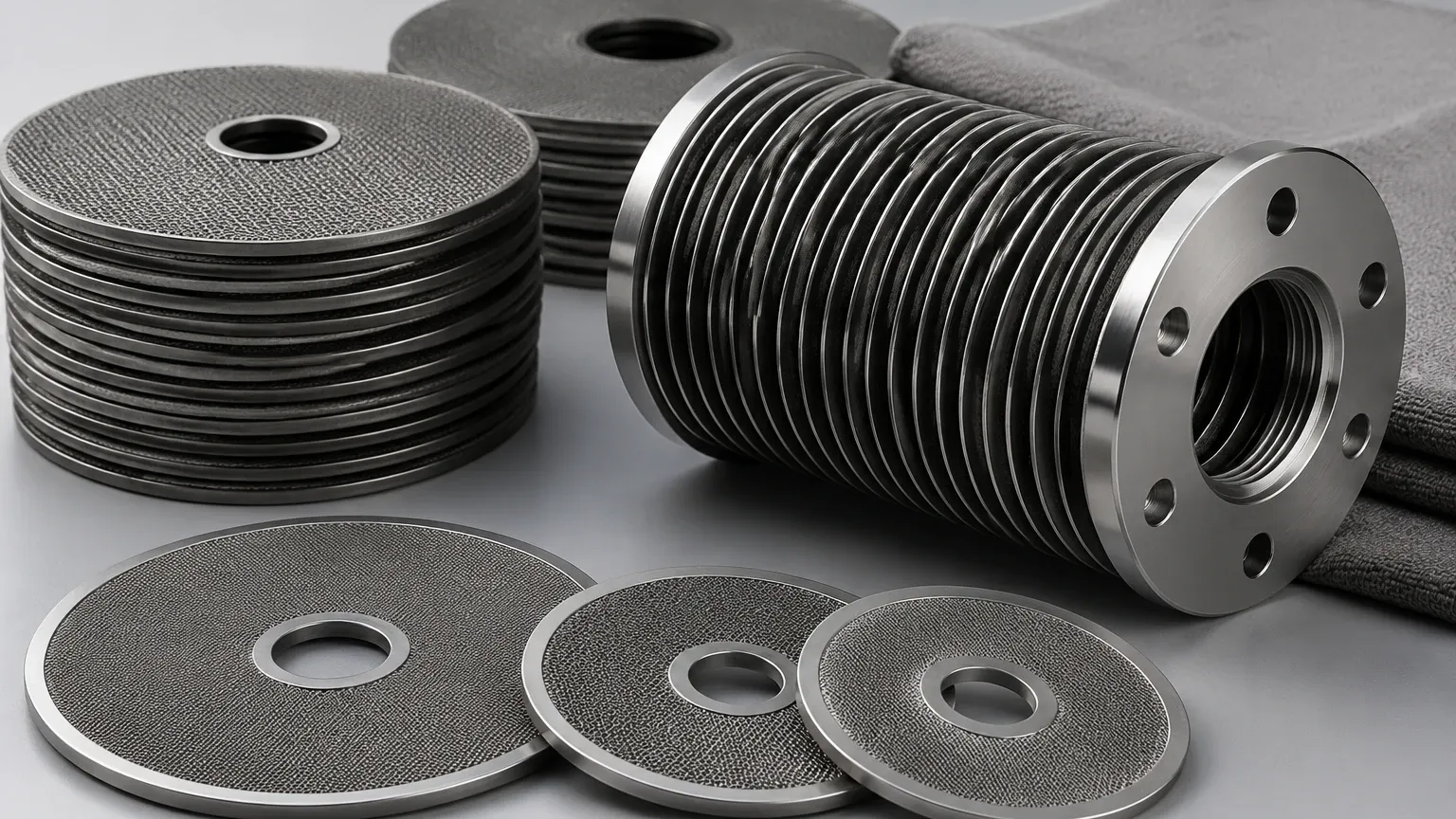
High-quality Filter Discs & Packs are often constructed from multiple layers of stainless steel wire mesh. This multi-layer approach allows for a combination of functions:
1. Filtration Layer: A fine mesh layer that determines the filtration rating (micron size).
2. Support Layer: A coarser mesh that provides mechanical strength to the filtration layer, preventing it from collapsing under vacuum or pressure.
3. Drainage Layer: A heavy-duty mesh or perforated plate that facilitates the flow of filtrate toward the central shaft.
By sintering these layers together, manufacturers create a monolithic structure that maintains its pore geometry even under extreme mechanical stress, a critical requirement for the demanding environments where a disc filter bokela is typically deployed.
Material Selection and Chemical Compatibility
Material selection is perhaps the most critical decision for engineers specifying replacement components for disc filters. The process environment—including pH levels, temperature, and abrasive particle characteristics—dictates the choice of alloy.
* Stainless Steel 304/304L: Suitable for general industrial applications where corrosion risk is low.
* Stainless Steel 316L: The industry standard for chemical processing and food-grade applications due to its superior resistance to pitting and crevice corrosion.
* 904L and Duplex Steels: Utilized in highly aggressive environments, such as phosphoric acid production or seawater filtration, where standard austenitic steels would fail prematurely.
* Specialty Alloys (Hastelloy, Monel): Reserved for extreme chemical environments where temperature and acidity exceed the limits of stainless steel.
For a disc filter bokela system handling abrasive mineral slurries, the wire mesh must also possess high wear resistance. Specialized weaving patterns and surface treatments can be applied to extend the service life of the discs, reducing the frequency of maintenance shutdowns.
Performance Optimization: Flow Rates and Cake Discharge
The performance of a disc filter is measured by its throughput (kg/h/m²) and the residual moisture of the discharged cake. Several factors regarding the filter media influence these metrics:
Pore Geometry and Permeability
The weave pattern of the wire mesh—whether plain, twilled, or Dutch weave—affects how easily liquid passes through the media. A higher permeability reduces the energy required for vacuum pumps or compressors, directly impacting the operational cost of the disc filter bokela.
Surface Smoothness
Efficient cake discharge is vital for continuous operation. If the filter cake adheres too strongly to the media, it can lead to "blinding," where the pores become permanently blocked. Sintered mesh discs often undergo surface calendering to create a smooth, flat surface that facilitates clean cake release during the blow-back or scraping phase.
Structural Rigidity
In pressure disc filters, the media must withstand significant mechanical force. Any flexing of the filter sectors can cause the cake to crack prematurely, leading to air bypass and a loss of filtration efficiency. Precision-engineered Filter Discs & Packs provide the necessary stiffness to maintain a uniform cake thickness across the entire disc surface.
Maintenance and Replacement Cycles
Even the most robust filtration components have a finite lifespan. In a disc filter bokela system, the replacement cycle is influenced by the abrasiveness of the slurry and the effectiveness of the cleaning protocols.
Engineers should monitor the following indicators to determine when to replace filter sectors:
* Increased Pressure Drop: A steady rise in the differential pressure across the discs suggests deep-seated blinding that cannot be removed by standard backwashing.
* Filtrate Contamination: The presence of solids in the filtrate usually indicates a mechanical breach in the mesh or a failure of the sector seals.
* Reduced Throughput: If the system can no longer meet production targets despite optimized vacuum/pressure settings, the media has likely reached the end of its effective life.
To minimize downtime, it is recommended to maintain a stock of custom-manufactured replacement sectors that match the exact OEM specifications of the equipment. This ensures that replacements can be performed rapidly during scheduled maintenance windows.
Customization and OEM Solutions for Industrial Filtration
Every industrial process has unique requirements that off-the-shelf solutions may not satisfy. When dealing with specialized equipment like a disc filter bokela, customization of the filtration media is often necessary to achieve peak performance.
Customization options include:
* Bespoke Micron Ratings: Fine-tuning the filtration layer to capture specific particle size distributions while maximizing flow.
* Edge Reinforcement: Adding specialized frames or reinforced borders to the filter sectors to prevent bypass and improve mechanical seating.
* Layer Configuration: Designing specific sintered mesh laminates (e.g., 3-layer, 5-layer, or 7-layer) to balance permeability and structural strength.
By working with a manufacturer that understands the complexities of industrial filtration, engineering teams can develop Filter Discs & Packs that are specifically optimized for their unique slurry characteristics and equipment configurations.
Total Cost of Ownership Considerations
While the initial purchase price of filter components is a factor, the total cost of ownership (TCO) is a more accurate measure of value. For a disc filter bokela, the TCO includes the cost of the replacement parts, the labor for installation, the cost of lost production during downtime, and the energy consumption of the system.
Investing in high-quality, precision-engineered stainless steel filter discs often leads to a lower TCO by:
* Extending the intervals between replacements.
* Reducing energy consumption through improved permeability.
* Improving product quality through more consistent filtration performance.
* Protecting downstream equipment from particle contamination.
Conclusion
The operational success of high-capacity systems like the disc filter bokela is inextricably linked to the quality of the filtration media. By selecting the appropriate materials, mesh structures, and customization options, industrial operators can ensure their systems run at peak efficiency with minimal interruption. Understanding the technical requirements of Filter Discs & Packs allows engineers to make informed decisions that enhance process reliability and long-term profitability.
