


Disc Filter Catalogue
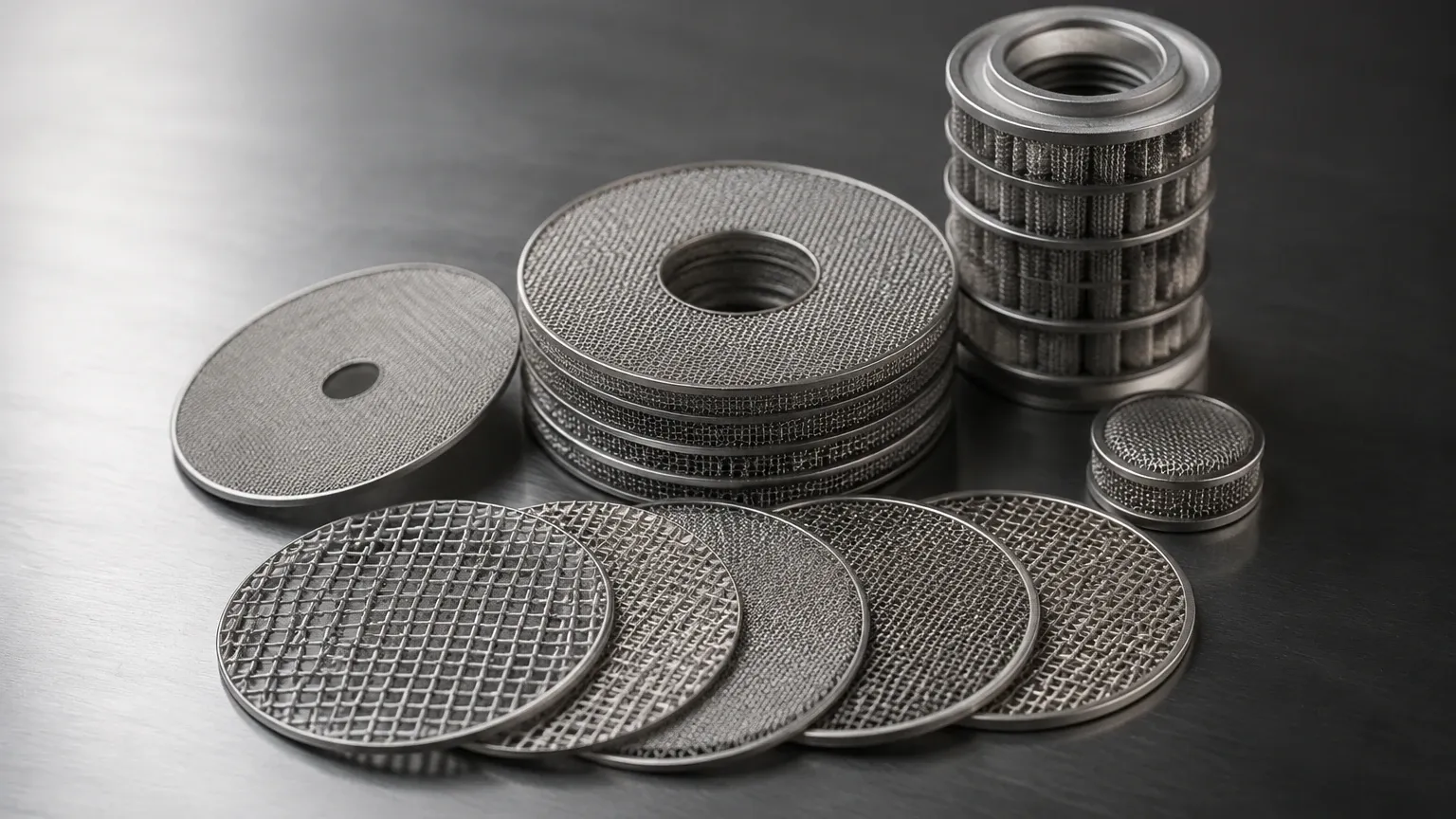
In the landscape of industrial filtration, the selection of precise components is critical to maintaining process integrity and equipment longevity. A comprehensive disc filter catalogue serves as more than just a product list; it is a technical roadmap for engineers and procurement specialists seeking to optimize filtration efficiency in demanding environments. Whether used in polymer extrusion, chemical processing, or hydraulic systems, Filter Discs & Packs represent a fundamental category of precision-engineered metal mesh components designed to withstand high pressures and corrosive conditions.
Kaifil, as a specialized manufacturer, provides a wide array of stainless steel filtration solutions. Understanding the technical nuances within a disc filter catalogue allows technical teams to move beyond generic specifications and select components tailored to specific flow rates, particle retention requirements, and mechanical stresses.
Technical Fundamentals of Filter Discs & Packs
Filter discs are circular filtration components typically manufactured from stainless steel wire mesh. Depending on the application, these can be single-layered or multi-layered (packs). The primary function is to remove solid contaminants from liquid or gaseous media. In a professional disc filter catalogue, these products are categorized by their construction method, material grade, and filtration accuracy.
Single-Layer Discs
Single-layer discs are often used in applications where the pressure differential is low and the primary goal is coarse filtration or support for finer media. These are cost-effective and easy to clean, making them suitable for repeatable processes where high-frequency maintenance is standard.
Multi-Layer Filter Packs
Multi-layer packs consist of several layers of wire mesh, often with varying mesh counts, bonded together. The layers are typically arranged in a sequence: a coarse support mesh, a fine filtration layer, and another coarse protective layer. This "sandwich" construction provides superior mechanical strength and allows for finer filtration (down to 2 microns) without the risk of the mesh deforming under high-pressure loads. In a standard disc filter catalogue, these are often available as spot-welded packs or rimmed packs with aluminum or stainless steel edges.
Navigating a Disc Filter Catalogue: Key Parameters
When reviewing a disc filter catalogue, engineers must evaluate several critical parameters to ensure compatibility with their existing housing and process requirements. Selecting the wrong specification can lead to premature clogging, bypass of contaminants, or mechanical failure.
1. Mesh Count and Micron Rating
The mesh count refers to the number of openings per linear inch. However, for precision engineering, the micron rating (pore size) is the more critical metric. It defines the smallest particle size the disc can reliably capture. A comprehensive catalogue will list both nominal and absolute micron ratings to help engineers understand the efficiency of the filter under different operating conditions.
2. Diameter and Dimensional Tolerances
Industrial filtration systems often have tight tolerances. Standard catalogues typically offer diameters ranging from 5mm to over 600mm. It is essential to confirm the tolerance levels—Kaifil ensures high-precision cutting to prevent edge leakage, which is a common failure point in poorly manufactured discs.
3. Weave Types
The performance of the disc is heavily influenced by the weave of the wire mesh:
* Plain Weave: The most common type, offering high flow rates and standard filtration.
* Twill Weave: Allows for thicker wires and finer mesh counts, providing better durability.
* Dutch Weave: Features a dense structure that provides excellent filtration accuracy and high strength, ideal for high-pressure applications.
Material Selection and Chemical Compatibility
Material science is at the heart of industrial filtration. A disc filter catalogue must specify the alloys used, as chemical compatibility and temperature resistance are non-negotiable in sectors like chemical processing or oil and gas.
Stainless Steel 304 and 304L
Grade 304 is the standard industrial choice, offering good corrosion resistance and mechanical properties. It is suitable for most water treatment and food-grade applications where extreme acidity is not present.
Stainless Steel 316 and 316L
For more aggressive environments, 316L stainless steel is preferred. The addition of molybdenum enhances resistance to pitting and crevice corrosion in chloride-rich environments. This is a staple in pharmaceutical and marine applications. The "L" denotes low carbon content, which is crucial if the filter packs require welding, as it prevents carbide precipitation.
Specialty Alloys
In extreme cases involving high temperatures or highly corrosive chemicals, catalogues may include options for Monel, Inconel, or Hastelloy. These materials ensure that the filter disc maintains its structural integrity even when exposed to harsh industrial catalysts or extreme thermal cycling.
Structural Configurations and Edging Options
How a filter disc is finished determines its ease of installation and its ability to prevent "bypass"—where fluid escapes around the edges of the filter rather than passing through the mesh. A technical disc filter catalogue will usually detail three main finishing styles:
Spot-Welded Packs
Multiple layers of mesh are joined at specific points using resistance welding. This keeps the layers aligned during handling and installation while maintaining a low profile. Spot-welded packs are ideal for internal placement within cylindrical housings.
Rimmed or Framed Discs
The edges of the mesh disc are enclosed in a metal rim, typically made of aluminum, stainless steel, or copper. This rim serves two purposes: it provides a rigid structure that prevents the mesh from fraying and acts as a gasket to ensure a tight seal against the filter housing. This is a critical feature for high-pressure polymer extrusion where even a minor leak can ruin a production batch.
Compressed Edges
In some specialized applications, the edges of the multi-layer pack are compressed under high pressure to form a solid metal border. This is often used when a low-clearance seal is required without the added thickness of a separate rim.
Engineering Considerations for Industrial Integration
Selecting from a disc filter catalogue requires an understanding of the fluid dynamics within the system. Engineers should consider the following factors before finalizing a purchase order:
* Pressure Drop (ΔP): Every filter creates resistance. A fine mesh disc will have a higher pressure drop than a coarse one. It is vital to ensure the system pump can handle the initial ΔP and the subsequent increase as the filter loads with contaminants.
* Effective Filtration Area (EFA): The total surface area available for filtration. In multi-layer packs, the EFA is determined by the finest layer. Maximizing EFA extends the time between replacement cycles.
* Flow Velocity: High-velocity flows can cause wire migration or mesh deformation if the disc is not properly supported. In such cases, a reinforced multi-layer pack is necessary.
Quality Assurance and Manufacturing Standards
Reliability in filtration is a product of manufacturing consistency. When sourcing from a disc filter catalogue, it is important to verify the manufacturer's quality control processes. Kaifil utilizes advanced manufacturing capabilities to ensure that every disc meets the specified micron rating and dimensional accuracy.
Key quality checks include:
* Bubble Point Testing: To verify the pore size and integrity of the mesh.
* Material Certification: Ensuring the stainless steel grade matches the industrial requirement (e.g., ASTM standards).
* Visual Inspection: Checking for weave defects, wire crossovers, or irregularities in the rimming process.
Application-Specific Selection Criteria
Different industries have unique demands that dictate which section of the disc filter catalogue is most relevant:
Polymer and Plastic Extrusion
In this sector, filters must withstand extreme pressures and temperatures. Multi-layer rimmed packs are the standard, often referred to as "screen packs." They remove gels and un-melted particles from the polymer melt to ensure the quality of the final fiber or film.
Hydraulic and Lube Oil Systems
These systems require high-strength discs that can handle fluctuating pressures. The focus here is on protecting sensitive valves and pumps from particulate wear. Stainless steel discs are preferred over paper or synthetic media due to their ability to be cleaned and reused.
Food and Beverage Processing
Filtration components must be made from FDA-compliant materials. Stainless steel 316L discs are the primary choice here, providing a hygienic surface that is resistant to the caustic cleaning agents used in CIP (Clean-In-Place) cycles.
Maintenance and Replacement Cycles
While stainless steel filter discs are durable, they are not infinite. A well-managed filtration system relies on a predictable replacement or cleaning schedule.
* Cleaning Methods: Many stainless steel discs can be cleaned using ultrasonic baths, high-pressure water jets, or chemical solvents. However, if the mesh has been deformed by high pressure or if the pores are blinded by carbonized material (common in extrusion), replacement is necessary.
* Total Cost of Ownership: When evaluating a disc filter catalogue, consider the lifespan of the product. A higher-quality multi-layer pack may have a higher initial cost but can offer significantly more cleaning cycles and less downtime than cheaper, single-layer alternatives.
Conclusion: Selecting the Right Solution
A disc filter catalogue is a vital tool for any technical professional tasked with maintaining industrial efficiency. By understanding the relationship between mesh weave, material grade, and structural configuration, engineers can select Filter Discs & Packs that provide the optimal balance of filtration precision and mechanical durability.
Kaifil’s expertise in custom manufacturing ensures that if a standard catalogue item does not meet a specific requirement, a tailored solution can be engineered. From material selection to final edge finishing, every detail is managed to provide dependable filtration performance in the most demanding industrial environments.
