Disc Filter Drip
In industrial fluid management and precision irrigation, the efficiency of a system often hinges on the quality of its primary filtration components. The concept of a "disc filter drip" system refers to the integration of specialized disc-based filtration units within drip-style delivery networks. Whether these networks are used for agricultural micro-irrigation, chemical dosing, or precision cooling in manufacturing, the objective remains the same: to protect sensitive emitters and nozzles from particulate-induced clogging. For engineers and procurement specialists, selecting the correct Filter Discs & Packs is a critical decision that influences system uptime, maintenance frequency, and overall operational costs.
Fundamentals of Disc Filtration in Drip Applications
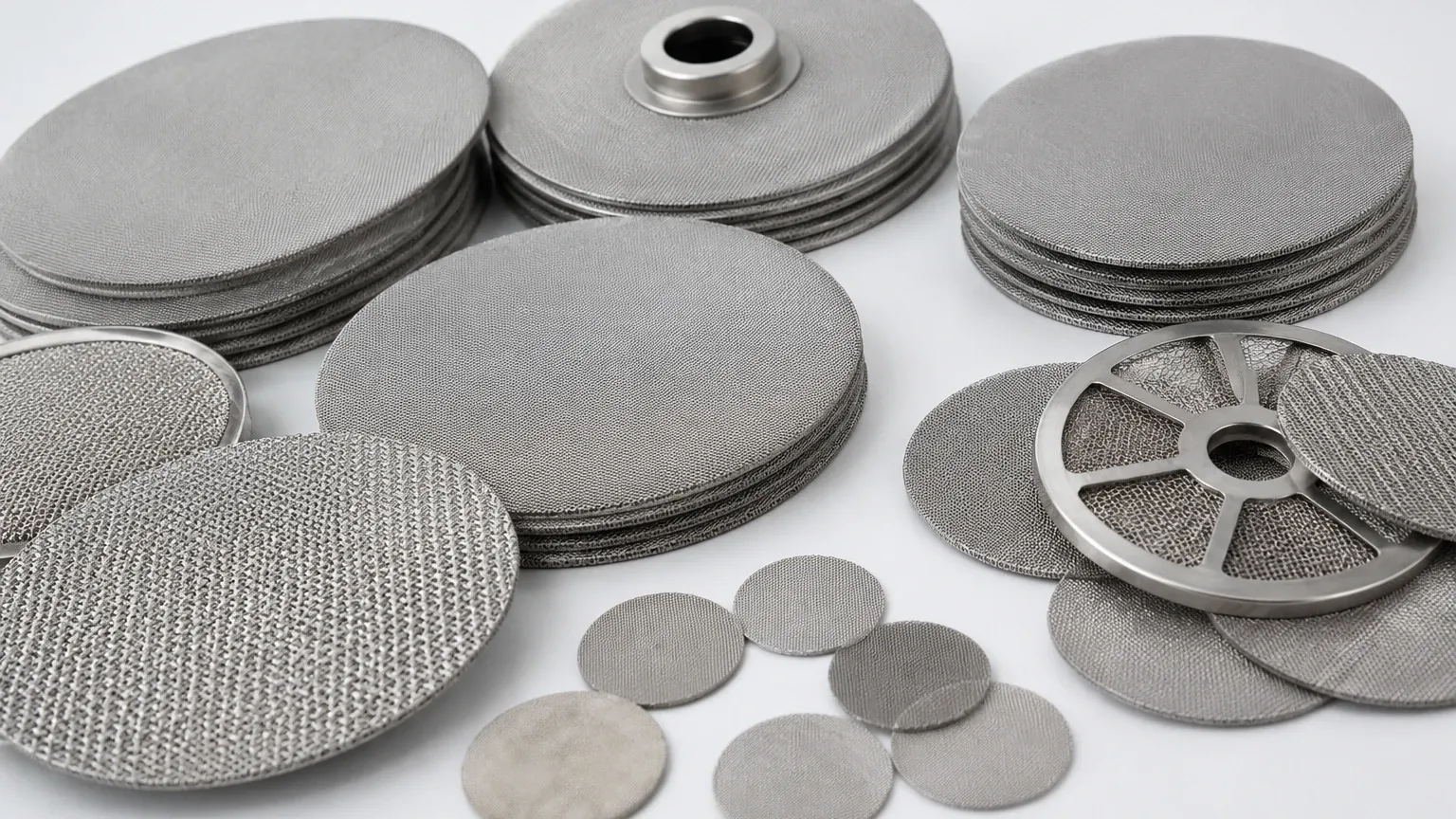
Disc filtration operates on a principle that combines surface filtration with depth filtration. Unlike traditional screen filters, which primarily capture particles on a single plane, a disc filter utilizes a stack of individual discs. In polymer-based systems, these discs have grooves of specific micron sizes; however, in high-pressure or chemically aggressive industrial environments, stainless steel mesh discs are often employed to provide the necessary structural integrity and chemical resistance.
In a disc filter drip configuration, the fluid is forced through the gaps or pores between the compressed discs. This creates a three-dimensional filtration path. Larger particles are trapped on the outer surface, while smaller contaminants are captured within the depth of the disc stack. This multi-layered approach is particularly effective for removing organic matter, sand, and scale—contaminants that would quickly blind a standard screen filter. For industrial drip systems, where the emitters (drip heads) may have apertures as small as 100 microns, the reliability of the disc stack is the first line of defense against system failure.
Comparative Analysis: Disc vs. Screen Filtration
When evaluating components for a drip system, engineers must choose between screen, sand, and disc filtration. Screen filters are often the most economical but have a limited surface area and can be prone to "slugs" of debris bypassing the mesh if the screen tears. Sand media filters offer excellent depth filtration but require a large footprint and significant volumes of water for backwashing.
Disc filters, specifically those utilizing high-quality metal mesh or sintered packs, offer a middle ground with distinct advantages:
1. Depth Filtration Capability: The stacked nature of the discs allows for the capture of varying particle shapes, including filamentous algae or elongated mineral deposits that might otherwise "needle" through a flat screen.
2. Structural Rigidity: Stainless steel Filter Discs & Packs can withstand high differential pressures without deforming. This is essential in industrial drip applications where pump pressures can fluctuate significantly.
3. Space Efficiency: Disc filters provide a high effective filtration area (EFA) within a compact housing, making them ideal for modular or skid-mounted industrial systems.
4. Backwash Efficiency: The design of disc stacks often allows for centrifugal or mechanical separation during the cleaning cycle, which uses less fluid than media-based systems.
Engineering Specifications for High-Performance Filter Packs
To optimize a disc filter drip system, several technical parameters must be defined during the specification phase. These parameters ensure that the filter pack can handle the specific solids loading of the source fluid.
Micron Rating and Aperture Size
The micron rating is the most vital specification. For drip emitters, the general rule of engineering is to filter to at least 1/7th to 1/10th the size of the emitter's smallest opening. If a drip nozzle has a 1.0mm (1000 micron) opening, the filter should ideally be rated at 100 to 130 microns. Using a finer mesh than necessary can lead to excessive pressure drop and frequent cleaning cycles, while a coarser mesh risks emitter clogging.
Effective Filtration Area (EFA)
The EFA determines the velocity of the fluid as it passes through the media. Lower velocities generally result in higher filtration efficiency and less particle "breakthrough." By using multi-layer Filter Discs & Packs, manufacturers can increase the available surface area within the same physical footprint, allowing for higher flow rates without compromising filtration quality.
Pressure Differential ($ΔP$)
Engineers must monitor the pressure drop across the filter. A clean disc stack will have a baseline $ΔP$. As contaminants accumulate, the $ΔP$ increases. In automated disc filter drip systems, a pressure differential switch triggers the backwash cycle once a pre-set threshold (typically 0.5 to 0.7 bar) is reached.
Material Science in Corrosive and High-Temperature Environments
While plastic disc filters are common in standard landscape irrigation, industrial drip applications—such as those found in mining, chemical processing, and wastewater treatment—demand more robust materials. This is where stainless steel and specialized alloys become necessary.
Stainless Steel 304 vs. 316L:
For most water-based drip applications, Grade 304 stainless steel provides sufficient corrosion resistance. However, if the system involves brackish water, fertilizers with high chloride content, or acidic cleaning agents, Grade 316L is preferred. The addition of molybdenum in 316L enhances resistance to pitting and crevice corrosion, ensuring the longevity of the disc filter drip components.
Sintered vs. Mesh Discs:
In demanding environments, single-layer mesh may not be enough. Sintered Filter Discs & Packs involve bonding multiple layers of wire mesh together using heat and pressure without the use of adhesives. This process creates a porous metal filter that is incredibly strong, easy to clean, and capable of maintaining precise pore sizes even under extreme mechanical stress. Sintered discs are particularly useful in "drip" applications involving high-viscosity fluids or high-temperature steam injection.
Maintenance and Backwashing Optimization
The longevity of a disc filter drip system is directly tied to its maintenance protocol. Clogging is the primary failure mode, and it can occur in two ways: gradual accumulation or catastrophic loading.
Manual vs. Automatic Cleaning:
In smaller industrial setups, manual cleaning of the disc stack may be feasible. This involves depressurizing the system, removing the stack, and rinsing the individual discs. However, for continuous processes, automatic backwashing is standard. During an automatic cycle, the compression on the disc stack is released, and a high-velocity spray of filtered fluid (or air) is directed from the inside out, spinning the discs and flushing trapped debris to a waste line.
Chemical Cleaning:
Over time, mineral scale (such as calcium carbonate) or biological films may accumulate on the metal surfaces that backwashing cannot remove. In these instances, the Filter Discs & Packs can be soaked in a mild acid or caustic solution. Because stainless steel is highly resistant to a wide range of pH levels, these components can be restored to near-original performance multiple times, providing a lower total cost of ownership compared to disposable polymer filters.
Customization and OEM Considerations for Industrial Systems
Every industrial drip application has unique requirements based on flow rate, fluid chemistry, and space constraints. Working with a manufacturer capable of providing customized filtration solutions is essential for achieving optimal performance.
Customization options often include:
* Layer Configuration: Combining coarse and fine mesh layers within a single pack to provide graduated filtration.
* Edge Treatment: Options such as spot welding, aluminum rims, or stainless steel binding to ensure the discs fit perfectly within the housing and prevent bypass.
* Geometric Variety: While circular discs are standard, custom shapes (rings, squares, or multi-segment packs) can be engineered to fit specialized filtration housings.
* Reinforcement: Adding perforated metal backing to the mesh discs to support high-pressure surges without the risk of mesh rupture.
For OEM manufacturers of drip irrigation equipment or industrial dosing skids, sourcing high-quality Filter Discs & Packs ensures that the end-user experiences fewer maintenance issues and higher reliability. Factual data regarding the wire diameter, weave type (plain, twill, or dutch), and permeability should be confirmed with the supplier to ensure the component meets the system's hydraulic requirements.
Selection Guide for Procurement and Engineering Teams
When specifying components for a disc filter drip project, use the following checklist to ensure all technical bases are covered:
1. Fluid Characteristics: What is the viscosity, temperature, and pH of the fluid? This dictates the material (304, 316, or exotic alloys).
2. Contaminant Profile: Is the debris organic, inorganic, or a mix? This determines whether a simple mesh disc or a multi-layer sintered pack is required.
3. Flow Rate (GPM/LPM): Ensure the total surface area of the disc stack can handle the peak flow without exceeding the maximum allowable pressure drop.
4. Target Micron Rating: Confirm the emitter size and select a filtration grade that provides a safety factor of at least 5:1.
5. Operating Pressure: Verify that the mechanical construction of the filter pack can withstand the system's maximum operating and surge pressures.
By focusing on these factual engineering boundaries, organizations can implement a disc filter drip solution that maximizes efficiency and minimizes downtime. High-quality metal filtration components represent a significant upgrade over standard solutions, providing the durability required for modern industrial applications.