


Disc Filter for Irrigation Systems
In the realm of industrial-scale agriculture and landscape management, the efficiency of an irrigation system is directly proportional to the quality of its filtration. A disc filter for irrigation systems serves as a critical defense mechanism, protecting sensitive downstream components such as drip emitters, micro-sprinklers, and valves from clogging and abrasive wear. Unlike simple screen filters, disc filtration technology offers a unique combination of surface and depth filtration, making it particularly effective at handling water sources with high organic loads or varying particulate sizes.
For engineers and procurement specialists, selecting the right Filter Discs & Packs involves understanding the interplay between flow rates, pressure differentials, and the specific physical characteristics of the suspended solids within the water supply. This guide examines the technical nuances of disc filtration, material engineering, and the selection criteria essential for maintaining high-performance irrigation infrastructure.
The Engineering Principles of Disc Filtration
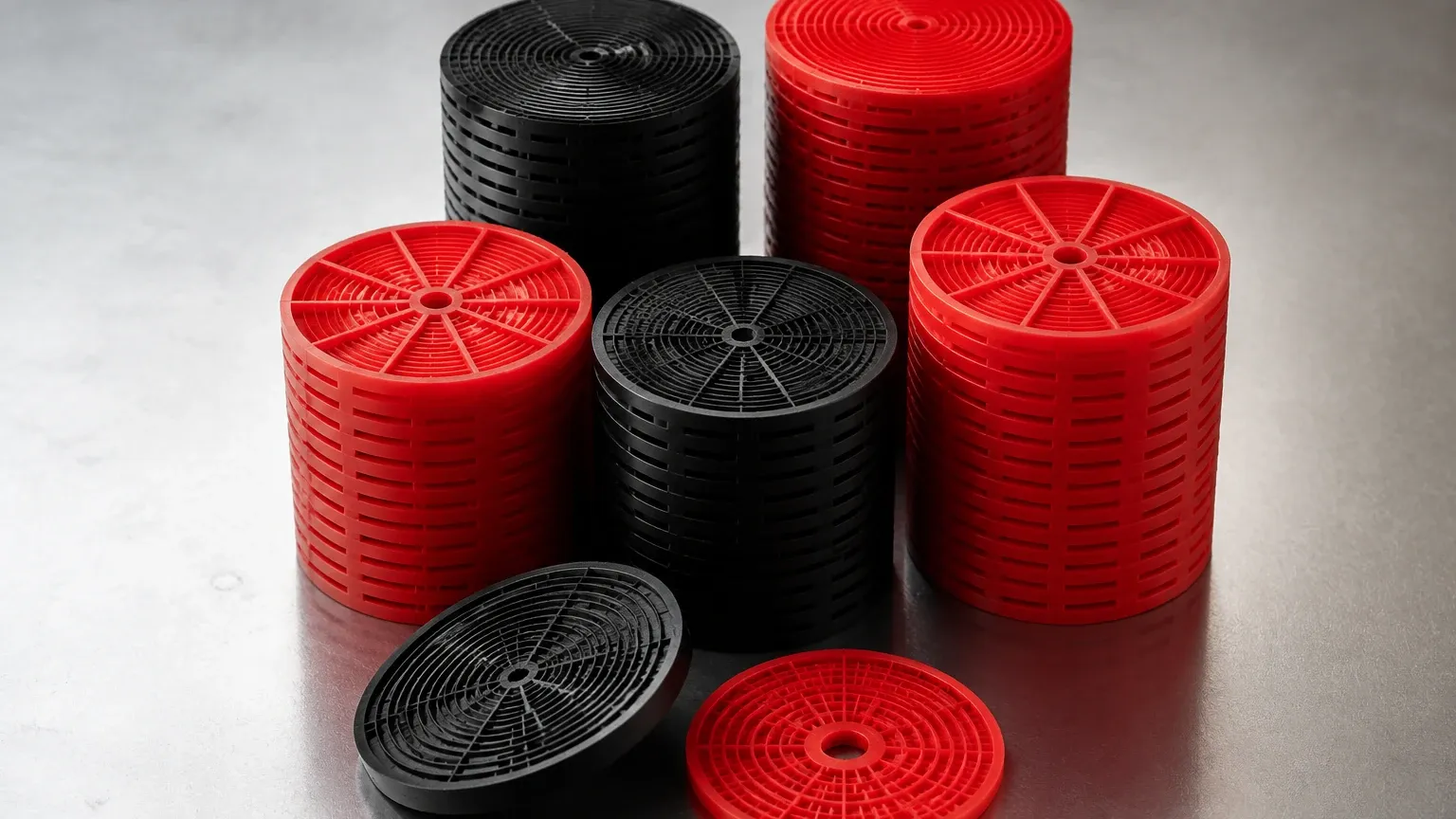
The core functionality of a disc filter relies on a stack of individual discs compressed together. Each disc is typically manufactured with precise grooves or a specific mesh structure. When these discs are stacked and tightened, the grooves or mesh openings intersect, creating a complex network of channels that trap debris.
Depth vs. Surface Filtration
While a standard screen filter captures particles on a single plane (surface filtration), a disc stack forces water to travel through multiple intersections. This creates a three-dimensional filtration environment. Large particles are trapped on the outer surface of the stack, while finer contaminants are captured within the internal channels. This "depth" capability allows the system to hold a significantly higher volume of solids before requiring a cleaning cycle, which is vital for irrigation systems drawing from open reservoirs, rivers, or reclaimed water sources.
Flow Dynamics and Particle Retention
As water moves from the outside of the disc stack toward the center, the velocity and pressure change according to the geometry of the filtration media. High-quality Filter Discs & Packs are designed to minimize head loss while maximizing the effective filtration area. For irrigation applications, the goal is to achieve a balance where the pressure drop across the filter remains within operational limits for the longest possible duration between backwashing or manual cleaning.
Technical Specifications of Filter Discs & Packs
When specifying filtration components for irrigation, technical professionals must evaluate several key parameters to ensure system compatibility and longevity.
Micron Ratings and Mesh Counts
Filtration accuracy is generally measured in microns or mesh sizes. In irrigation, common requirements range from 80 mesh (approx. 200 microns) for large sprinklers to 200 mesh (approx. 75 microns) for high-efficiency drip tapes.
* 80-100 Mesh: Suitable for protecting larger nozzles and valves in landscape irrigation.
* 120-150 Mesh: The industry standard for most drip irrigation applications using well or surface water.
* 200 Mesh: Required for ultra-fine emitters or systems utilizing water with extremely fine silt or biological growth.
Structural Integrity and Compression
The performance of a disc filter is contingent upon the compression of the stack. If the discs are not held together with sufficient force, the channels can bypass, allowing unfiltered water to enter the system. In industrial irrigation, stainless steel housings and high-strength compression bolts are often employed to maintain the integrity of the Filter Discs & Packs under fluctuating hydraulic pressures.
Material Engineering: Stainless Steel vs. Synthetic Media
While polymer-based discs are common in residential and small-scale commercial irrigation, industrial and large-scale agricultural operations often require the durability of metal components. Kaifil specializes in stainless steel filtration solutions that offer distinct advantages in demanding environments.
Corrosion Resistance in Fertigation
Modern irrigation often involves "fertigation"—the injection of fertilizers and chemicals directly into the water stream. Many of these chemicals are corrosive to standard plastics and low-grade metals. Utilizing stainless steel 304 or 316L for Filter Discs & Packs ensures that the filtration media does not degrade when exposed to acidic fertilizers or chlorine-based water treatments.
Temperature and Pressure Stability
In regions with extreme ambient temperatures or in systems where high-pressure pumps are utilized, synthetic discs may warp or lose their structural tolerances. Stainless steel wire mesh discs provide superior mechanical strength, maintaining precise filtration gaps even under significant physical stress. This stability is crucial for ensuring that the micron rating remains consistent throughout the life of the filter.
Selection Criteria for Industrial Irrigation Systems
Selecting a disc filter for irrigation systems requires a comprehensive analysis of the water source and the downstream requirements. Engineers should consider the following factors during the design phase:
1. Water Source Analysis
* Well Water: Often contains sand and inorganic minerals. Disc filters are excellent at trapping sharp-edged sand particles that might otherwise tear a thin screen.
* Surface Water (Rivers/Ponds): Typically high in algae, moss, and organic debris. The depth filtration of a disc stack is far superior to screens in these scenarios, as organic matter tends to "slime" over a screen quickly.
* Reclaimed/Treated Water: May contain a variety of suspended solids and biological contaminants. Multi-layer Filter Discs & Packs can be customized to target specific particle sizes found in municipal discharge.
2. Flow Rate and Sizing
Under-sizing a filter is a common error that leads to excessive pressure drops and frequent maintenance. The total surface area of the disc stack must be calculated based on the maximum flow rate of the pump and the anticipated dirt load. It is generally recommended to size the filter so that the initial pressure drop is less than 2-3 psi (0.14-0.21 bar).
3. Backwashing Requirements
Automated irrigation systems often utilize backwashing disc filters. During the backwash cycle, the compression on the disc stack is released, and water flow is reversed, spinning the discs and flushing trapped debris. The durability of the Filter Discs & Packs is paramount here; they must withstand repeated mechanical cycles without deformation.
Customization and OEM Solutions for Large-Scale Systems
In many industrial irrigation projects, off-the-shelf filtration units may not meet specific footprint or performance requirements. This is where custom manufacturing becomes essential. Kaifil provides OEM services to develop filtration components tailored to unique system architectures.
Multi-Layer Sintered Discs
For high-pressure applications, sintered wire mesh discs offer the highest level of durability. By diffusion-bonding multiple layers of stainless steel mesh, a single, robust filter disc is created. These are often used in the central filtration hubs of massive agricultural projects where downtime is not an option.
Precision Spot Welding and Edging
Custom Filter Discs & Packs can be manufactured with specific edging treatments—such as aluminum or stainless steel rims—to ensure a perfect seal within the filter housing. This precision prevents "leakage" of unfiltered water, which is a common failure point in lower-quality filtration units.
Maintenance and Total Cost of Ownership (TCO)
While the initial investment in high-quality stainless steel Filter Discs & Packs may be higher than plastic alternatives, the total cost of ownership is often lower due to extended service life and reduced maintenance frequency.
Cleaning Procedures
In manual systems, the disc stack must be removed and cleaned periodically. Stainless steel discs can be cleaned using high-pressure water jets or even chemical baths without damaging the filtration media. In contrast, synthetic discs can become brittle over time, leading to cracked edges and lost filtration efficiency.
Replacement Cycles
In a well-maintained system, stainless steel filter components can last for several years, even in harsh conditions. Monitoring the pressure differential (ΔP) across the filter is the most effective way to determine when the Filter Discs & Packs need servicing or eventual replacement. A sudden drop in ΔP may indicate a breach in the stack, while a permanent high ΔP suggests that the media is blinded and requires deep cleaning.
Conclusion
The integration of a high-performance disc filter for irrigation systems is a fundamental requirement for modern water management. By moving beyond basic screen filtration and embracing the depth-filtration capabilities of Filter Discs & Packs, engineers can ensure the longevity of their irrigation assets and the consistency of water delivery. Whether dealing with the corrosive nature of fertigation or the heavy organic loads of surface water, selecting the appropriate material and technical specification for filtration components is the key to operational success.
Kaifil continues to support the global irrigation and industrial sectors by providing precision-engineered stainless steel filtration solutions that meet the rigorous demands of today's environmental and agricultural challenges.
