


Disc Filter for Irrigation
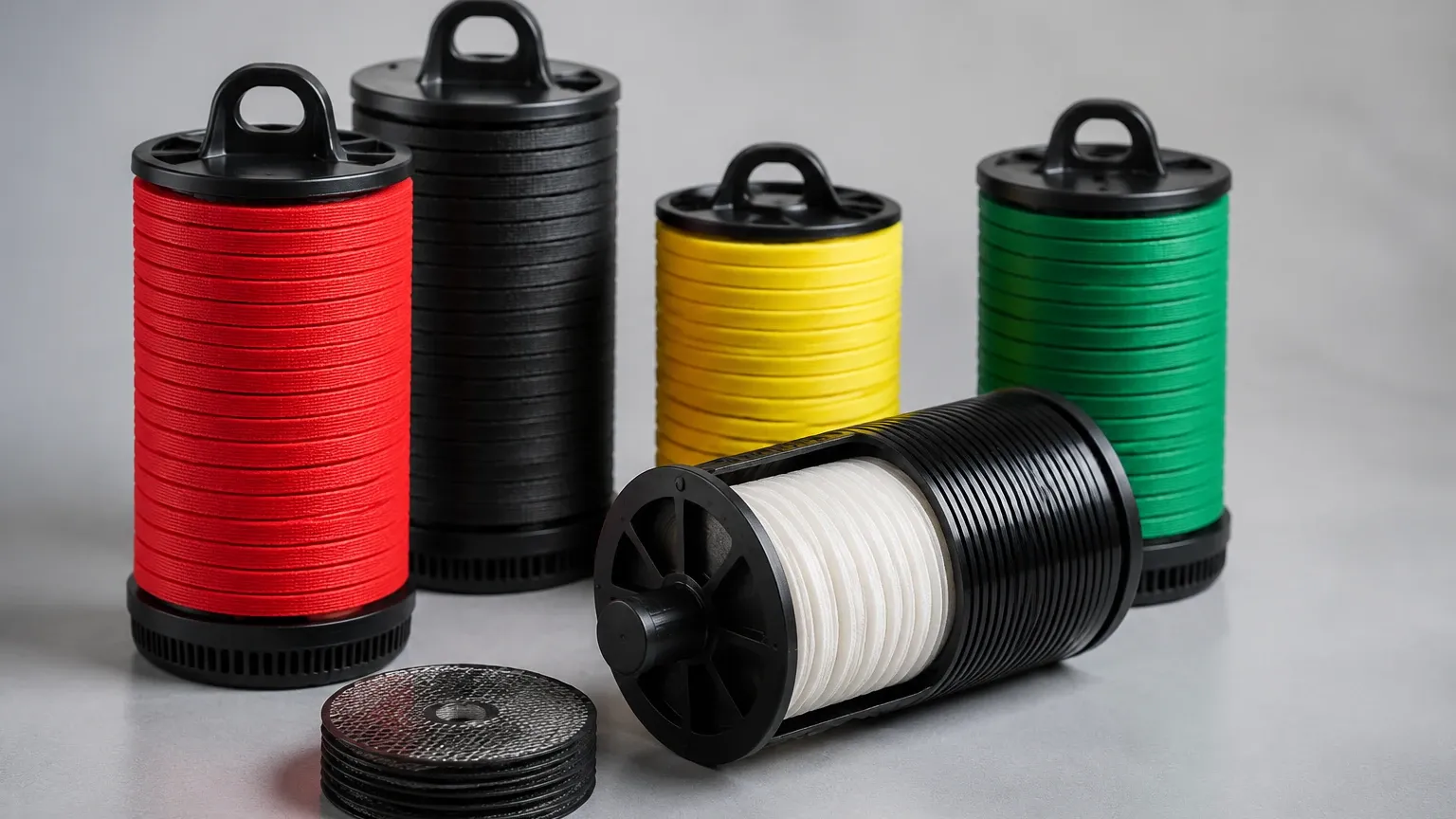
In modern agricultural and landscaping operations, the efficiency of an irrigation system is directly tied to the quality of its filtration. As water sources become more varied—ranging from deep wells to surface ponds and reclaimed wastewater—the demand for robust, high-precision filtration components has increased. A disc filter for irrigation serves as a critical line of defense against particulate matter that can clog emitters, damage valves, and reduce the overall lifespan of the distribution network. While many off-the-shelf solutions exist, engineering teams are increasingly turning to specialized Filter Discs & Packs to achieve the durability and filtration accuracy required for industrial-scale applications.
The Role of Filtration in Modern Irrigation Infrastructure
Irrigation systems, particularly drip and micro-sprinkler configurations, rely on small orifices to deliver water precisely to the root zones of plants. These orifices are highly susceptible to clogging from sand, silt, algae, and organic debris. Without effective filtration, the uniformity of water distribution is compromised, leading to uneven crop growth and increased labor costs for manual cleaning and component replacement.
Traditional filtration methods often struggle with the variable nature of irrigation water. Sand media filters are effective but occupy a large footprint and require significant backwash water. Screen filters are compact but can be prone to structural failure under high pressure or heavy sediment loads. The disc filter for irrigation bridges this gap by offering a three-dimensional filtration process. By utilizing stacked media or multi-layered mesh configurations, these filters capture particles throughout the depth of the filter element, rather than just on the surface. This design extends the time between cleaning cycles and ensures a more consistent flow rate across the system.
Technical Principles of Disc Filter for Irrigation
To understand the performance of a disc filter for irrigation, one must examine the mechanics of particle entrapment. In a standard disc-based system, water is forced through a series of compressed discs with grooved surfaces or fine mesh layers. The filtration occurs as the water travels from the outer diameter of the disc stack to the inner core.
Depth vs. Surface Filtration
Unlike simple screen filters that provide surface filtration, a high-quality disc filter provides a degree of depth filtration. As water moves through the channels created by the stacked discs or the interstitial spaces of sintered mesh, larger particles are trapped on the outer edges, while finer particles are caught deeper within the media. This multi-stage capture mechanism is essential for handling organic contaminants, such as algae or slime, which tend to deform and "bleed" through single-layer screens.
Pressure Differential and Flow Dynamics
Engineers must closely monitor the pressure differential (ΔP) across the filter. A clean disc filter for irrigation should ideally operate with a minimal pressure drop to maximize energy efficiency. As contaminants accumulate, the ΔP increases. In automated systems, this pressure change triggers a backwash cycle. The structural integrity of the filter discs is paramount here; they must withstand the compressive forces of the operating pressure as well as the reverse-flow stresses during cleaning without deforming or losing their micron-rated accuracy.
Material Engineering: Why Stainless Steel Filter Discs & Packs Excel
While plastic disc filters are common in light commercial applications, industrial and large-scale agricultural projects often require the superior physical properties of metal. Stainless steel Filter Discs & Packs provide several engineering advantages that plastic alternatives cannot match.
Corrosion and Chemical Resistance
Irrigation water is rarely pure H2O. It often contains dissolved minerals, fertilizers (fertigation), and occasionally harsh chemicals used for line cleaning or pH adjustment. Stainless steel, particularly Grade 304 or 316L, offers exceptional resistance to corrosion. This is vital for maintaining the precise geometry of the filtration openings over years of service. Plastic components can degrade when exposed to UV radiation or certain chemical additives, leading to a loss of filtration integrity.
Mechanical Strength and Thermal Stability
In outdoor environments, temperature fluctuations can cause materials to expand and contract. Stainless steel maintains its structural dimensions across a wide temperature range, ensuring that the micron rating remains constant. Furthermore, metal mesh discs can handle significantly higher operating pressures than plastic equivalents. This allows for the design of more compact filtration units that can process higher volumes of water without the risk of housing or element failure.
Precision Mesh Weaves
The filtration accuracy of a disc filter for irrigation is determined by the mesh weave. Options include:
* Plain Weave: Suitable for general-purpose filtration with high flow rates.
* Twill Weave: Allows for heavier wire diameters in finer meshes, increasing durability.
* Dutch Weave: Provides the highest level of precision and strength, often used in multi-layer packs for fine sediment removal.
Critical Selection Parameters for Engineering Teams
Selecting the right disc filter for irrigation requires a detailed analysis of the application’s specific parameters. Purchasing teams and engineers should evaluate the following criteria before finalizing a specification.
1. Micron Rating and Particle Size Distribution
The micron rating must be matched to the most sensitive component in the irrigation system. For example, drip tape typically requires filtration down to 100–130 microns (120–150 mesh). However, if the source water contains a high percentage of fine volcanic ash or silt, a tighter micron rating may be necessary to prevent gradual accumulation within the lines. It is essential to perform a water quality analysis to determine the particle size distribution (PSD) of the source water.
2. Flow Rate and Velocity
The filter must be sized to handle the peak flow rate of the irrigation zone without exceeding the recommended face velocity. If the velocity is too high, particles can be forced through the mesh, or the pressure drop will become excessive, leading to frequent backwashing and wasted water. Engineers should calculate the total surface area of the Filter Discs & Packs to ensure it meets the required flux (flow per unit area).
3. Backwash Efficiency
In automated irrigation systems, the ability of the filter to clean itself is a major factor in total cost of ownership (TCO). Stainless steel discs are particularly effective in backwash scenarios because their rigid structure allows for high-pressure reverse flows that can dislodge stubborn organic matter more effectively than flexible plastic components.
Operational Efficiency and Maintenance Cycles
The longevity of a disc filter for irrigation is not just a matter of material choice but also of operational management. A well-specified filter reduces the frequency of maintenance interventions, which is a significant cost driver in remote agricultural sites.
Monitoring Total Cost of Ownership (TCO)
While the initial capital expenditure for stainless steel filtration components may be higher than for plastic, the TCO is often lower. This is due to:
* Reduced Replacement Frequency: Metal discs do not warp or crack like plastic.
* Lower Water Waste: Efficient backwashing uses less water to achieve a clean state.
* System Protection: Better filtration prevents the costly replacement of clogged drip lines and emitters.
Maintenance Best Practices
Even the most advanced disc filter for irrigation requires periodic inspection. Engineers should look for signs of "channeling," where water finds a path of least resistance through a damaged section of the filter. Regular chemical cleaning may also be required if the water source has high levels of calcium carbonate or iron, which can cause scaling on the filter surface. Because stainless steel is chemically robust, it can withstand more aggressive cleaning agents than many polymers.
Customization and OEM Integration for Irrigation Equipment
Every irrigation project has unique constraints, from the footprint of the pump station to the specific chemistry of the water source. This is where customized manufacturing becomes essential. For original equipment manufacturers (OEMs) building specialized irrigation skids, the ability to specify the exact dimensions, layering, and material grade of their filtration components is a competitive advantage.
Custom Filter Discs & Packs can be engineered to fit existing housings or to meet proprietary flow dynamics. This includes varying the number of mesh layers, incorporating support grids for high-pressure applications, and selecting specific alloys for brackish water or high-salinity environments. By working closely with a manufacturer that understands the nuances of industrial filtration, irrigation engineers can ensure their systems operate at peak efficiency with minimal downtime.
Conclusion
The transition toward more precise and sustainable water management in agriculture necessitates a higher standard of filtration. The disc filter for irrigation, particularly when utilizing high-performance stainless steel media, provides the reliability and accuracy needed to protect complex distribution networks. By focusing on material integrity, micron precision, and structural durability, engineers can design systems that not only conserve water but also reduce the long-term operational costs of large-scale irrigation. When evaluating components, confirming the technical specifications of the filter media—including its resistance to local water chemistry and its performance under variable pressure—is the most critical step in ensuring long-term project success.
