


Disk Filter Kernel
In the landscape of industrial filtration, the term "disk filter kernel" refers to the central functional component—the core media and structural assembly—that dictates the performance of a filter disc or pack. While the outer frame or housing provides the interface for the machinery, the kernel is where the actual separation of solids from fluids occurs. For engineers and procurement specialists in sectors such as polymer processing, chemical manufacturing, and hydraulic systems, understanding the technical nuances of the disk filter kernel is essential for optimizing system uptime and ensuring product purity.
At Kaifil, we recognize that the efficiency of an industrial process often hinges on the integrity of these precision components. The design of a Filter Discs & Packs assembly must account for fluid dynamics, thermal expansion, and mechanical stress, all of which are managed by the internal kernel structure.
The Anatomy of a High-Performance Disk Filter Kernel
A disk filter kernel is rarely a single layer of material. In demanding industrial environments, it is typically a multi-layered composite designed to balance filtration fineness with structural rigidity. The construction generally involves three distinct functional zones:
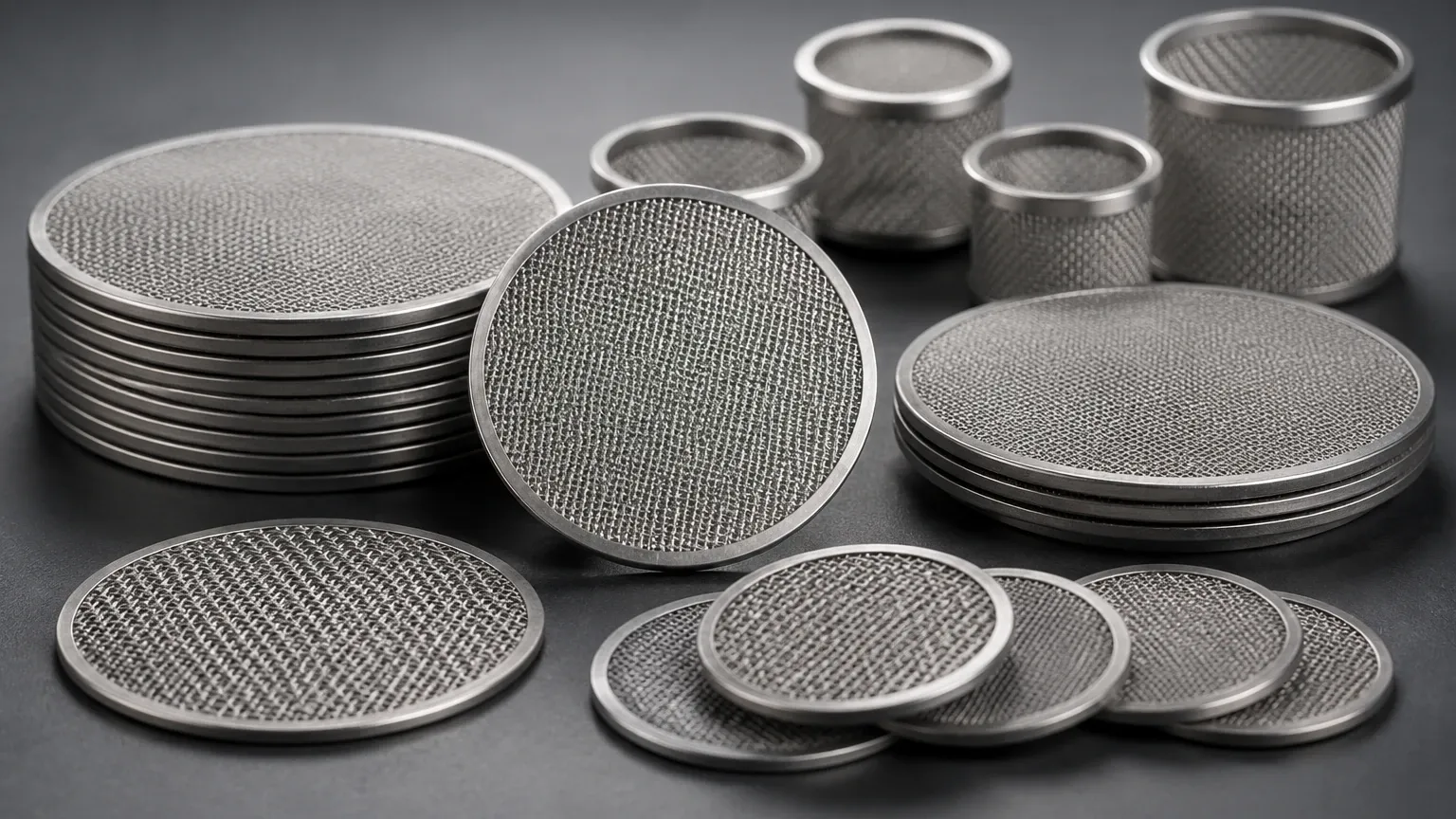
1. The Filtration Layer: This is the "heart" of the kernel. It consists of fine stainless steel wire mesh, often in a Dutch weave or twilled Dutch weave, which provides the specific micron rating required for the application. This layer determines the particle size cutoff.
2. The Support Layer: Because fine filtration mesh is inherently delicate, it requires a sturdier backing. The support layer consists of coarser mesh that prevents the filtration layer from deforming or collapsing under the differential pressure of the flow.
3. The Drainage Layer: In multi-layer sintered kernels, a drainage layer ensures that once the fluid has passed through the filtration media, it can flow freely toward the outlet without creating localized high-pressure zones that could lead to premature clogging or mechanical failure.
By integrating these layers through processes like sintering or spot welding, the disk filter kernel becomes a singular, robust unit capable of operating in environments where polymer melts or high-pressure oils are the norm.
Engineering Considerations for Kernel Selection
When specifying a disk filter kernel for a new or existing system, several engineering parameters must be evaluated to ensure the component meets the operational demands of the application.
Material Compatibility and Corrosion Resistance
Most industrial kernels are manufactured from stainless steel, specifically grades 304, 316, or 316L. The choice of material is dictated by the chemical composition of the filtrate. For instance, 316L is preferred in pharmaceutical and marine applications due to its superior resistance to pitting and crevice corrosion. In high-temperature environments, such as polymer extrusion, the thermal stability of the alloy ensures that the pore geometry remains consistent even as the metal expands.
Micron Rating and Pore Geometry
The micron rating of the disk filter kernel is not just a measure of the largest hole in the mesh; it is a reflection of the pore distribution. A "nominal" rating suggests the filter will trap a high percentage of particles of a certain size, while an "absolute" rating guarantees that no particle larger than the specified micron size will pass through. Engineers must decide between these based on the sensitivity of the downstream equipment or the purity requirements of the final product.
Pressure Drop and Flow Rates
The "clean pressure drop" is the initial resistance the kernel offers to the fluid flow. A well-designed disk filter kernel minimizes this resistance to reduce the energy load on pumps and motors. As the filter accumulates debris, the pressure drop increases. The kernel's design must allow for a predictable rise in pressure, providing operators with a clear window for scheduled maintenance or replacement before the system reaches a critical bypass state.
The Role of Sintering in Kernel Integrity
One of the most significant advancements in disk filter kernel technology is the application of vacuum sintering. Sintering is a metallurgical process where multiple layers of wire mesh are heated to a temperature just below their melting point in a controlled atmosphere. This causes the wires at every contact point to fuse together.
For a Filter Discs & Packs assembly, a sintered kernel offers several advantages over traditional mesh discs:
* No Media Migration: In non-sintered filters, individual wires can occasionally shift or break off under high pressure, contaminating the filtrate. Sintering eliminates this risk by creating a monolithic structure.
* Stable Pore Size: Because the wires are fused, the pores cannot enlarge under pressure. This ensures consistent filtration performance throughout the entire lifecycle of the filter.
* Enhanced Cleanability: Sintered kernels can withstand aggressive cleaning methods, such as ultrasonic baths or high-pressure backwashing, allowing them to be reused multiple times in many applications.
Application-Specific Requirements
The requirements for a disk filter kernel vary significantly across different industrial sectors. Understanding these nuances is key to selecting the right OEM partner.
Polymer and Plastic Extrusion
In the plastics industry, the kernel must handle extremely high viscosities and temperatures. The "screen pack" used in extruders often utilizes a disk filter kernel that can withstand pressures exceeding 5,000 PSI. Here, the focus is on removing "black specks" and un-melted resin particles that could ruin the finish of a film or fiber.
Food and Beverage Processing
For food-grade applications, the disk filter kernel must be manufactured to strict hygienic standards. This includes ensuring that the mesh is free of manufacturing oils and that the assembly has no "dead zones" where bacteria could proliferate. Stainless steel 316L is the standard here, often accompanied by electrolytic polishing to ensure a smooth, easy-to-clean surface.
Hydraulic and Lubrication Systems
In hydraulic systems, the kernel's primary job is to protect sensitive valves and actuators from wear-inducing particles. These kernels are often designed for high-frequency pressure pulsations, requiring a high fatigue strength in the wire mesh and the surrounding frame.
Customization and OEM Capabilities
Standard off-the-shelf filters rarely meet the precise needs of specialized industrial machinery. This is where customization becomes a critical factor. A disk filter kernel can be customized in several ways:
* Shape and Dimension: While circular discs are common, kernels can be manufactured in oval, rectangular, or ring shapes to fit specific housing geometries.
* Layer Configuration: Depending on the dirt-holding capacity required, a kernel might consist of anywhere from two to seven layers of mesh.
* Edge Finishing: To prevent bypass and ensure a secure fit, the edges of the kernel can be bound with aluminum, stainless steel, or copper rims. Alternatively, the edges can be left raw or spot-welded depending on the sealing mechanism of the filter holder.
Kaifil works closely with engineering teams to develop these customized solutions, providing prototypes and technical consultation to ensure the kernel integrates seamlessly into the larger filtration system.
Maintenance and Total Cost of Ownership
While the initial purchase price of a disk filter kernel is an important factor, the Total Cost of Ownership (TCO) is a more accurate metric for B2B decision-making. TCO includes the cost of the filter, the labor required for replacement, the cost of downtime, and the potential for cleaning and reuse.
High-quality stainless steel kernels, particularly those that are sintered, offer a lower TCO because they last longer and can be cleaned more effectively than lower-grade alternatives. In many chemical processing plants, a robust kernel can be cleaned and returned to service dozens of times, significantly reducing the per-gallon filtration cost over the long term.
Indicators for Replacement
Operators should monitor the differential pressure (ΔP) across the filter. A sudden drop in ΔP may indicate a breach in the kernel (media failure), while a rapid, non-linear increase suggests that the deep layers of the mesh are permanently fouled and the kernel has reached the end of its functional life.
Conclusion
The disk filter kernel is the silent workhorse of industrial filtration. By selecting a kernel that is engineered for the specific chemical, thermal, and mechanical demands of an application, companies can protect their downstream equipment, improve product quality, and reduce operational costs. Whether you are looking for a standard replacement or a custom-engineered solution for a new project, focusing on the quality of the kernel is the surest way to achieve reliable filtration performance.
For more information on technical specifications and custom design options, Filter Discs & Packs provide a versatile foundation for a wide range of industrial filtration challenges.
