


Disc Filter Near Me
In the industrial procurement landscape, the search for a "disc filter near me" often stems from an immediate technical need or a requirement for a reliable supply chain partner. For engineers and maintenance professionals, proximity is rarely just about geographic distance; it is about the speed of technical support, the reliability of lead times, and the ability to source precision-engineered components that meet exact operational specifications.
When evaluating sources for Filter Discs & Packs, it is essential to look beyond simple availability and focus on the engineering nuances that dictate filtration efficiency, mechanical integrity, and long-term cost of ownership. This guide examines the technical considerations, material requirements, and procurement strategies necessary for selecting high-performance disc filters in demanding industrial environments.
The Technical Anatomy of Filter Discs & Packs
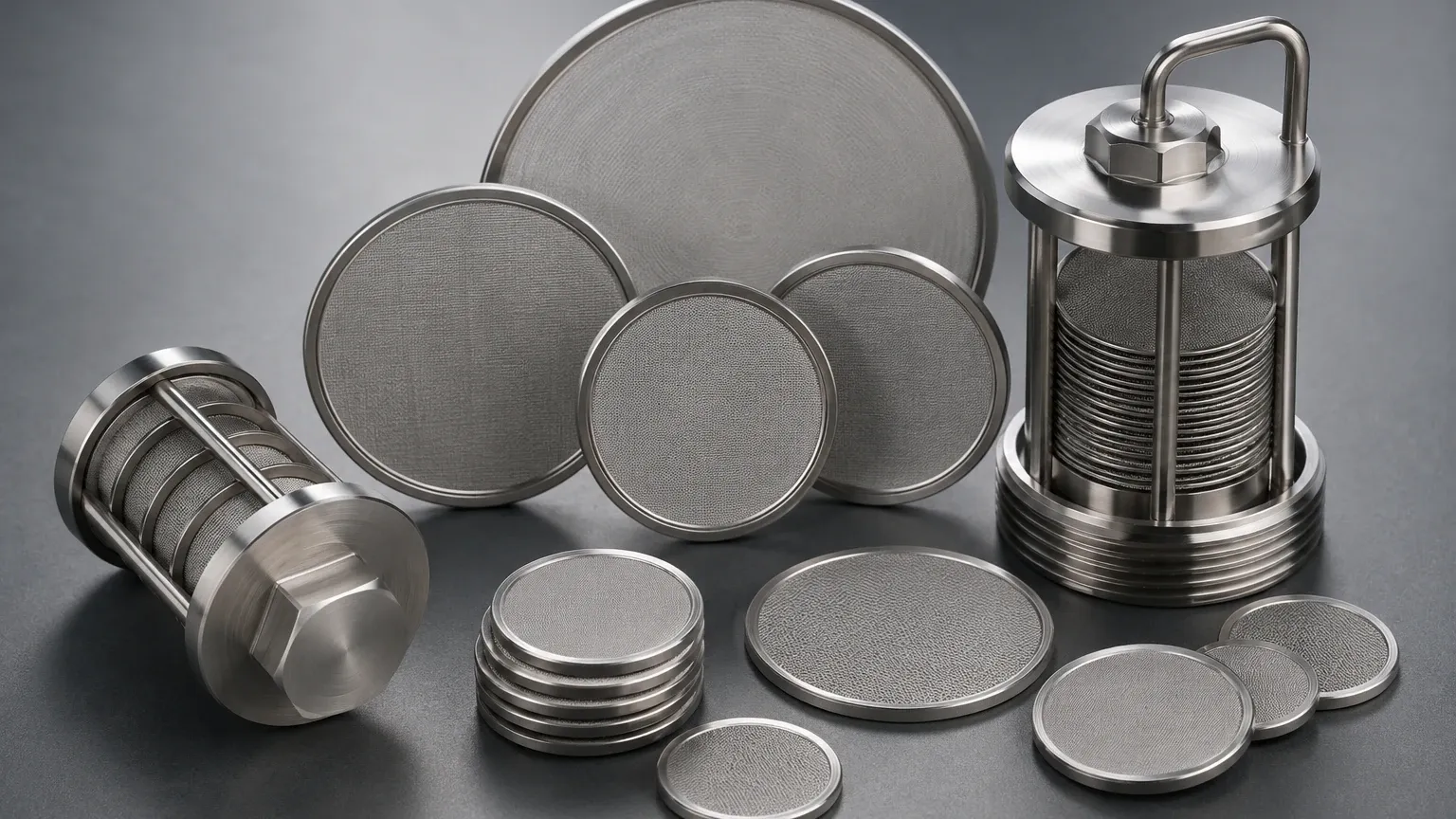
Industrial filter discs are precision-cut filtration components typically manufactured from stainless steel wire mesh, sintered metal, or expanded metal. They are used extensively in industries such as chemical processing, polymer extrusion, pharmaceutical manufacturing, and oil and gas. Understanding the construction of these components is the first step in moving beyond a generic search for a "disc filter near me."
Single-Layer vs. Multi-Layer Construction
Filter discs are generally categorized by their layer configuration. Single-layer discs are often used in low-pressure applications where simple straining is required. However, in more complex industrial processes, multi-layer packs are the standard. These packs consist of several layers of wire mesh—often varying in weave type and micron rating—bonded together to provide both fine filtration and structural support.
In a multi-layer configuration, the "filtration layer" is usually a fine Dutch weave or square weave mesh, while the "support layers" consist of coarser meshes that provide rigidity and protect the fine mesh from deformation under high pressure. These layers can be joined through spot welding or by binding the edges with a metal rim (often aluminum, copper, or stainless steel) to prevent bypass and ensure a secure fit within the filter housing.
Weave Types and Their Functions
The performance of Filter Discs & Packs is largely determined by the weave of the wire cloth used. Common weaves include:
- Plain Weave: The most straightforward weave, offering high flow rates and easy cleaning, suitable for coarse filtration.
- Twill Weave: Allows for a heavier wire diameter in a given mesh count, providing increased strength for high-pressure applications.
- Dutch Weave (Plain and Twill): These weaves feature a higher density of wires in one direction, creating a tortuous path for particles. This results in superior filtration accuracy and high mechanical strength, making them ideal for fine-particle separation.
Engineering Considerations for Selection
When searching for a "disc filter near me," engineers must define the specific parameters of their application to ensure the sourced component can withstand the operational environment. Selecting a filter based solely on diameter or general mesh count often leads to premature failure or insufficient filtration.
Micron Rating and Filtration Efficiency
Filtration accuracy is measured in microns (μm). It is critical to distinguish between "nominal" and "absolute" micron ratings. A nominal rating indicates the ability of the filter to retain the majority of particles of a certain size, while an absolute rating indicates the size of the largest particle that can pass through the mesh under specific test conditions. For critical pharmaceutical or chemical applications, absolute ratings are typically required to ensure process integrity.
Pressure Drop (ΔP) and Flow Rate
Every filter media introduces a resistance to flow, known as pressure drop. An optimized disc filter must balance filtration fineness with an acceptable pressure drop. A high initial pressure drop reduces the service life of the filter and increases energy consumption in pumping systems. Engineers must evaluate the open area of the mesh and the total surface area of the disc pack to ensure it meets the required flow rates without exceeding the system's pressure limits.
Mechanical Strength and Differential Pressure
In applications like polymer melt filtration or hydraulic systems, filter discs are subjected to significant differential pressure. If the disc lacks sufficient mechanical support, the mesh may "balloon" or rupture, leading to downstream contamination. Sintered multi-layer discs are often preferred in these scenarios because the diffusion-bonding process fuses the wires at every contact point, creating a rigid structure that maintains its pore geometry even under extreme stress.
Why "Near Me" Logistics Matter in B2B Procurement
The intent behind searching for a "disc filter near me" is often related to reducing downtime. In the context of industrial manufacturing, a local supplier or a manufacturer with a robust global logistics network offers several advantages:
1. Reduced Lead Times: For standard sizes used in screen changers or common hydraulic housings, local inventory can mean the difference between a few hours of downtime and several days of lost production.
2. Technical Consultation: High-performance filtration often requires on-site evaluation. A partner who can provide engineering support—whether through local representatives or rapid digital prototyping—ensures that the filter design is optimized for the specific fluid dynamics of the plant.
3. Customization Capability: Most industrial applications require custom dimensions. A manufacturer like Kaifil, specializing in Filter Discs & Packs, can provide the precision die-cutting and edge-binding services that generic hardware suppliers cannot offer.
4. Regulatory Compliance: Localized knowledge of industry standards (such as FDA requirements for food contact or ASME standards for pressure vessels) ensures that the sourced filters are compliant with regional safety and quality regulations.
Material Selection for Demanding Environments
Material compatibility is a non-negotiable factor in filter selection. While a "disc filter near me" search might yield various options, the metallurgy must match the chemical and thermal profile of the process fluid.
- Stainless Steel 304: The standard for general industrial use, offering good corrosion resistance and durability at a cost-effective price point.
- Stainless Steel 316L: Contains molybdenum, which provides superior resistance to pitting and crevice corrosion in chloride-rich environments. The "L" denotes low carbon content, which improves weldability and prevents sensitization in high-temperature applications.
- Specialty Alloys: For highly corrosive environments involving strong acids or high-temperature oxidation, alloys such as Inconel, Monel, or Hastelloy may be required. These materials ensure that the filter disc does not degrade and introduce metallic contaminants into the process stream.
Common Risks in Sourcing Industrial Filter Discs
Procurement teams must be wary of several risks when sourcing filter discs, especially when prioritizing speed or local availability over technical verification.
Media Migration
In lower-quality filter discs, individual wires may become detached from the weave, especially at the cut edges. This is known as media migration. If these wires enter the downstream flow, they can damage precision equipment like pumps, valves, or injection nozzles. High-quality Filter Discs & Packs utilize advanced welding or binding techniques to encapsulate the edges and eliminate this risk.
Inconsistent Pore Size
Poor manufacturing tolerances can lead to variations in pore size across the surface of the disc. This results in "channeling," where the fluid takes the path of least resistance through the largest pores, rendering the filtration ineffective. Sourcing from a manufacturer with ISO-certified quality management systems ensures that the wire mesh is inspected for uniformity and that the cutting process does not distort the mesh geometry.
Chemical Incompatibility of Binding Materials
While the mesh itself might be stainless steel, the rim or binding material (such as aluminum or certain polymers) might react with the process fluid. It is vital to confirm that all components of the filter pack—including the solder or adhesive used in spot welding—are compatible with the chemicals and temperatures involved in the application.
Application-Specific Requirements
The requirements for a disc filter vary significantly across different industrial sectors. A successful "disc filter near me" search should lead to a solution tailored to these specific needs:
Polymer and Plastic Extrusion
In the plastics industry, filter discs (often called extruder screens) are used to remove gels and un-melted particles from the polymer melt. These discs must withstand extremely high temperatures and pressures. Multi-layer packs are typically used to provide the necessary depth filtration and structural support to prevent the screen from breaking under the force of the extruder screw.
Pharmaceutical and Biotechnology
Filtration in these sectors requires high levels of cleanliness and traceability. Filter discs must be manufactured from medical-grade stainless steel and often require passivation to enhance corrosion resistance. Documentation, including material test reports (MTRs) and certificates of compliance, is mandatory to meet cGMP (current Good Manufacturing Practice) standards.
Food and Beverage Processing
Filters used in food production must be easy to clean and resistant to the caustic chemicals used in CIP (Clean-In-Place) cycles. Stainless steel mesh is the preferred material due to its non-leaching properties and ability to withstand high-pressure steam sterilization.
Evaluating Total Cost of Ownership (TCO)
When selecting a partner for Filter Discs & Packs, the purchase price is only one component of the total cost. Engineers should consider:
- Service Life: A higher-quality sintered disc may cost more upfront but last significantly longer than a single-layer disc, reducing the frequency of replacements and associated labor costs.
- Cleanability: Many stainless steel filter discs are reusable. Evaluating the effectiveness of ultrasonic cleaning or chemical backwashing can lead to substantial long-term savings compared to disposable filters.
- Operational Efficiency: A filter with a lower pressure drop reduces the energy required to maintain flow, contributing to lower utility costs over the life of the system.
Conclusion: Moving Beyond the Local Search
While the search for a "disc filter near me" is a practical starting point for addressing urgent filtration needs, the complexities of industrial processes demand a more rigorous selection process. Technical expertise, material integrity, and customization capabilities are the true hallmarks of a reliable filtration partner.
By focusing on the engineering fundamentals—such as weave type, micron rating, and mechanical construction—procurement teams can ensure they receive Filter Discs & Packs that not only fit their equipment but also optimize their entire production process. Whether you are dealing with high-viscosity polymers, corrosive chemicals, or sensitive pharmaceuticals, the right filter disc is defined by its performance under pressure, not just its proximity to the plant.
