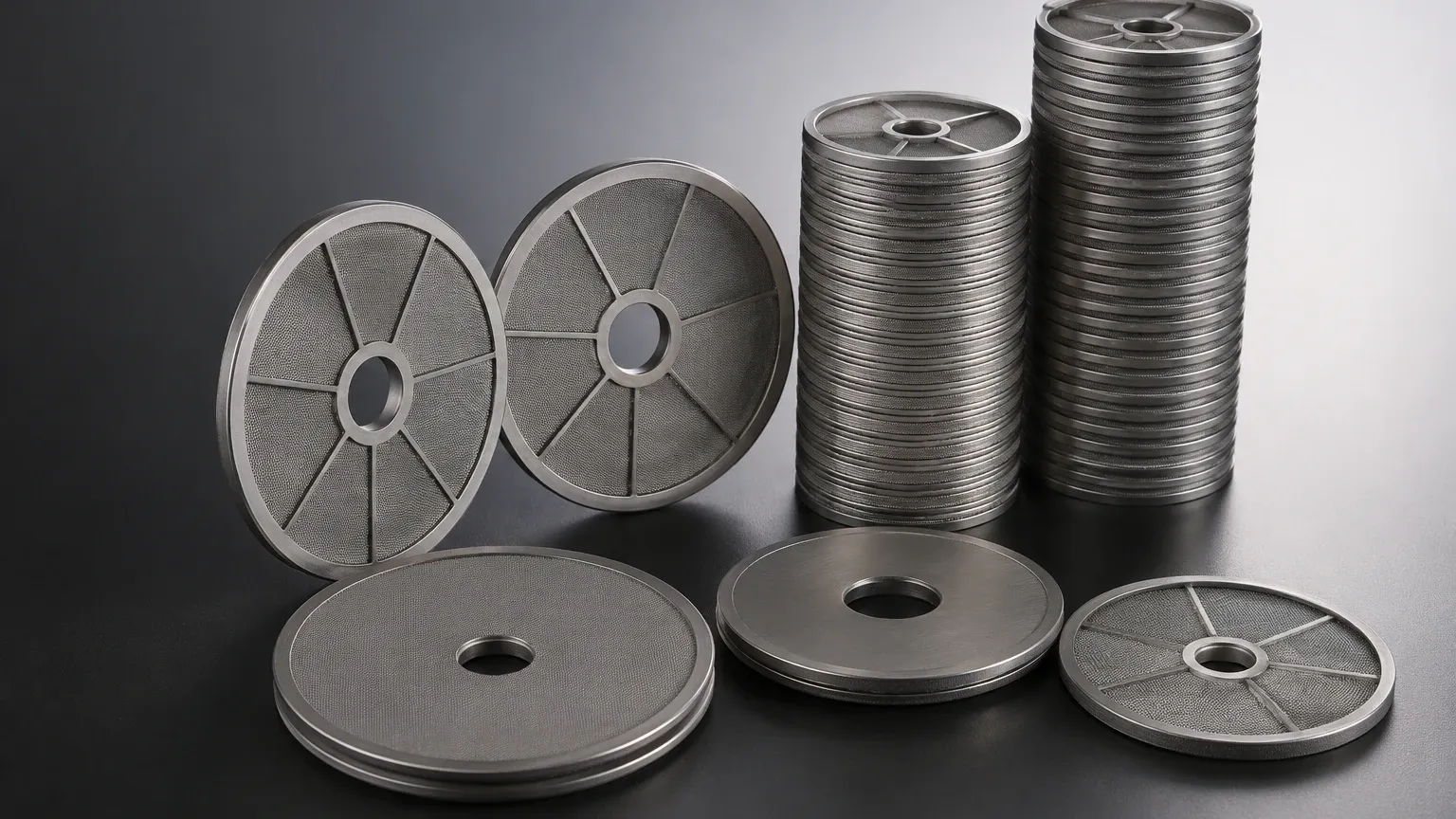
Disk Filter Za Vodu
In the landscape of industrial water treatment and fluid processing, the efficiency of filtration systems often dictates the longevity of downstream equipment and the quality of the final output. The term "disk filter za vodu" (water disk filter) refers to a specialized category of filtration technology designed to remove suspended solids, particulates, and impurities from water streams. While many commercial applications utilize plastic or synthetic media, industrial-grade requirements necessitate the use of robust materials and precision engineering. Specifically, stainless steel Filter Discs & Packs have become the gold standard for high-pressure, high-temperature, and chemically aggressive environments.
Understanding the Role of Disk Filtration in Industrial Water Systems
Disk filtration operates on the principle of surface or depth filtration, depending on the configuration of the media. In a typical industrial water system, a disk filter serves as a critical barrier against contaminants that could cause scaling, clogging, or mechanical wear in pumps and valves. Unlike traditional sand filters or bag filters, disk-based systems offer a compact footprint and the ability to handle high flow rates with relatively low maintenance requirements.
When engineers evaluate a "disk filter za vodu," they are looking for a solution that balances filtration accuracy (micron rating) with structural integrity. In B2B sectors such as chemical processing, pharmaceuticals, and power generation, the filtration media must withstand significant differential pressures. This is where metal wire mesh discs outperform synthetic alternatives, providing a rigid structure that does not deform under stress, ensuring consistent pore sizes throughout the filtration cycle.
Materials and Construction: The Advantage of Stainless Steel
Material selection is the most critical factor in the performance of a disk filter. For industrial water applications, stainless steel is preferred due to its inherent resistance to corrosion and oxidation. Kaifil specializes in utilizing high-grade alloys to meet specific environmental challenges:
1. AISI 304 Stainless Steel: The standard choice for general water filtration, offering excellent durability and cost-effectiveness in non-corrosive or mildly corrosive environments.
2. AISI 316L Stainless Steel: Featuring a higher molybdenum content, this alloy is essential for water containing chlorides or in applications where the filter is exposed to acidic cleaning agents. Its low carbon content also improves weldability and resistance to intergranular corrosion.
3. Specialty Alloys: For extreme conditions, such as seawater filtration or high-temperature steam, alloys like 904L or Hastelloy may be employed to prevent pitting and stress corrosion cracking.
The construction of these filters involves precision cutting and often the layering of multiple mesh screens. A single-layer disc provides simple surface filtration, while multilayer packs—often spot-welded or framed with aluminum or stainless steel rims—provide increased mechanical strength and a degree of depth filtration. This multilayer approach is particularly effective in "disk filter za vodu" applications where fine particles must be captured without rapidly blinding the filter surface.
Technical Specifications: Micron Ratings and Mesh Structures
The performance of Filter Discs & Packs is defined by the weave type and the resulting pore size. Understanding these technical nuances is vital for engineers during the selection process:
* Plain Weave: The most common mesh type where wires cross over and under each other. It provides a straight-through flow path and is easy to clean.
* Dutch Weave (Plain and Twilled): These weaves utilize different diameters for warp and weft wires, resulting in a much denser mesh. Dutch weave discs are ideal for fine filtration (down to 5–10 microns) in water systems where high pressure is present.
* Sintered Wire Mesh: For the most demanding applications, multiple layers of mesh are sintered together—bonded by heat and pressure without the use of adhesives. This creates a monolithic structure that is incredibly strong and maintains precise filtration ratings even under extreme hydraulic shock.
Micron ratings for a "disk filter za vodu" can range from 2 microns to over 1,000 microns. Selecting the correct rating requires a balance: a mesh that is too fine will clog prematurely, increasing the frequency of backwashing or manual cleaning, while a mesh that is too coarse will fail to protect downstream components.
Industrial Applications for Disk Filter Za Vodu
The versatility of stainless steel filter discs allows them to be integrated into various stages of industrial water management:
1. Pre-filtration for Reverse Osmosis (RO)
RO membranes are sensitive to particulate fouling. Using high-precision metal filter packs as a pre-filtration stage removes silt and larger organic matter, significantly extending the life of the expensive RO membranes.
2. Cooling Tower Water Filtration
Cooling towers are prone to accumulating atmospheric dust and biological growth. A robust disk filter system removes these solids from the recirculating water, preventing the clogging of heat exchangers and reducing the need for chemical dispersants.
3. Food and Beverage Processing
In this sector, water is often an ingredient or used for thorough cleaning (CIP). Stainless steel discs are preferred here because they are non-leaching, easy to sterilize, and compliant with stringent hygiene standards.
4. Hydraulic and Lubrication Systems
Water used in hydraulic cooling or as a component in water-glycol fluids must be free of metallic particles. Precision-engineered filter packs ensure that even microscopic contaminants are removed to prevent component failure.
Engineering Considerations: Pressure Drop and Flow Dynamics
When integrating a "disk filter za vodu" into an existing system, engineers must calculate the expected pressure drop ($ΔP$). A high initial pressure drop indicates that the filter area may be insufficient for the required flow rate.
Factors influencing flow dynamics include:
* Open Area Percentage: A higher open area reduces resistance but may compromise the structural strength of the mesh.
* Viscosity of the Fluid: While we are discussing water, temperature fluctuations can affect viscosity and, consequently, how easily the fluid passes through the mesh.
* Contaminant Loading: The nature of the solids (hard vs. soft/deformable) dictates how quickly the pressure drop will increase over time.
To optimize performance, Kaifil provides customized designs where the number of layers and the mesh density are tailored to the specific flow requirements of the client’s facility. This ensures that the system operates within its optimal efficiency window for longer periods.
Customization and OEM Solutions for Specialized Filtration
One of the primary advantages of working with a professional manufacturer like Kaifil is the ability to customize Filter Discs & Packs to fit proprietary equipment. Many industrial machines require non-standard diameters, central holes, or specific edge treatments.
Customization options include:
* Shape and Geometry: Beyond standard circles, filters can be produced as rings, squares, or complex polygons.
* Edge Finishing: To prevent fraying and ensure a tight seal within the filter housing, edges can be hemmed, spot-welded, or encased in a metal frame.
* Multi-Stage Packs: Combining different mesh counts into a single pack allows for progressive filtration—larger particles are caught by the outer layers, while the inner layers perform the final polish.
For B2B buyers and OEMs, these customized components are essential for maintaining the competitive advantage of their own machinery, ensuring that the "disk filter za vodu" integrated into their system meets the exact performance metrics promised to their end-users.
Maintenance, Cleaning, and Operational Longevity
The total cost of ownership (TCO) of a filtration system is heavily influenced by the cleanability of the media. Unlike disposable cartridges, stainless steel filter discs are designed for long-term reuse.
Cleaning methods for industrial water filters include:
* Backwashing: Reversing the flow of water to dislodge particles trapped on the surface of the mesh.
* Ultrasonic Cleaning: For fine Dutch weave or sintered discs, ultrasonic baths can remove deeply embedded particles that backwashing cannot reach.
* Chemical Cleaning: Using mild acids or bases to dissolve mineral scaling or organic biofilms, provided the stainless steel grade is compatible with the cleaning agents.
A well-maintained stainless steel disk filter can last for years, even in continuous operation. This durability reduces waste and lowers the long-term operational costs compared to synthetic filters that require frequent replacement and disposal.
Conclusion: Selecting the Right Partner for Water Filtration
Choosing a "disk filter za vodu" involves more than just selecting a micron rating. It requires a deep understanding of material science, fluid dynamics, and the specific demands of the industrial environment. High-quality Filter Discs & Packs are an investment in the reliability and efficiency of the entire water treatment process.
Kaifil’s commitment to precision manufacturing and engineering support ensures that global industrial customers receive filtration solutions that are not only durable but also optimized for their specific applications. By focusing on high-grade stainless steel and customizable designs, Kaifil helps engineers solve complex filtration challenges, ensuring clean water and protected equipment across various sectors.