


Fass Filter Pack Xl
In industrial fluid management, the efficiency of a filtration system is often determined by the surface area and the structural integrity of the filter media used. High-capacity solutions, such as the fass filter pack xl, represent a critical component in systems where maintaining high flow rates and extended service intervals is paramount. For engineers and procurement specialists, understanding the technical nuances of these large-capacity filter packs is essential for optimizing system performance and reducing the total cost of ownership.
Industrial filtration requires a balance between fine particulate removal and the physical ability to withstand high pressure and corrosive environments. Whether utilized in fuel air separation systems, hydraulic circuits, or chemical processing lines, the design of the filter pack determines how effectively a system can operate before requiring maintenance. This guide explores the engineering principles, material considerations, and selection criteria for high-performance Filter Discs & Packs, providing the technical foundation needed for informed industrial purchasing.
The Role of High-Capacity Filter Packs in Industrial Systems
The designation "XL" in filtration components typically refers to an extended life or extra-large surface area design. In the context of the fass filter pack xl, the focus is on maximizing the volume of fluid processed while minimizing the frequency of filter changes. This is particularly vital in heavy-duty applications where downtime directly translates to significant operational losses.
High-capacity filter packs are engineered to handle higher contaminant loads without a proportional increase in pressure drop. By increasing the effective filtration area, these packs allow for a more gradual accumulation of debris. This is achieved through multi-layer construction, where different mesh counts are combined to provide graduated filtration—trapping larger particles on the outer layers while the finer inner layers perform the final polishing of the fluid.
Engineering Principles of Filter Discs & Packs
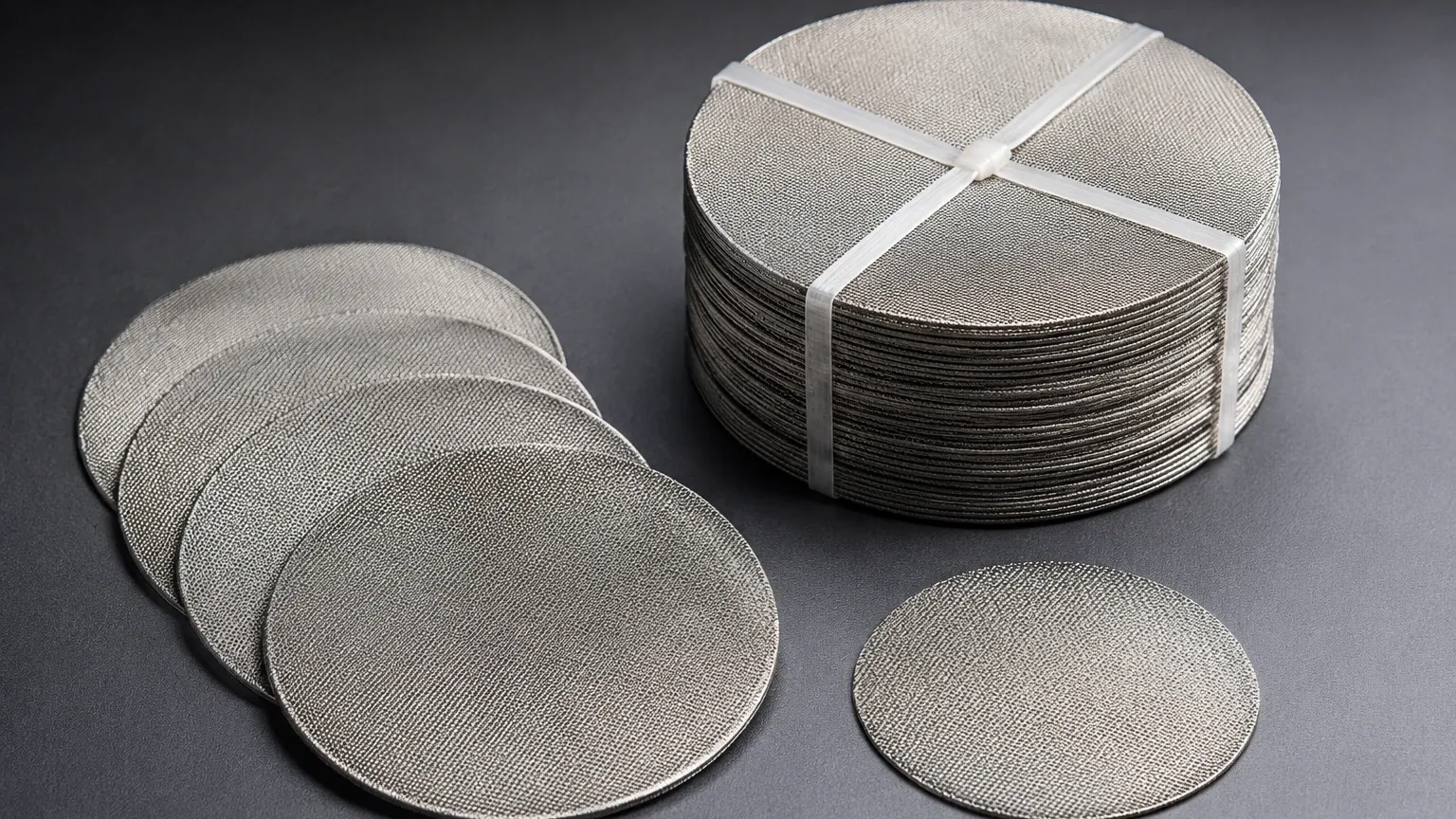
When evaluating Filter Discs & Packs, engineers must look beyond simple dimensions. The performance of these components is a result of precise manufacturing techniques, including wire weaving, layering, and bonding.
Multi-Layer Construction
Most industrial filter packs are not single sheets of mesh. Instead, they are composite structures consisting of several layers:
1. Filtration Layer: The primary layer that determines the micron rating. This is usually a fine stainless steel wire mesh.
2. Support Layers: Coarser mesh layers placed on either side of the filtration layer to provide mechanical strength and prevent the fine mesh from deforming under high pressure.
3. Drainage Layers: Layers designed to facilitate the even distribution of fluid across the entire surface of the filter, ensuring that no single area becomes prematurely clogged.
Bonding and Edge Treatment
To ensure that the individual layers act as a single unit, they are often joined through spot welding or rimming. For high-pressure applications, the edges of the fass filter pack xl may be encased in a metal frame (often aluminum, copper, or stainless steel). This framing prevents bypass—where fluid escapes around the edges of the filter—and provides a secure sealing surface for installation within the filter housing.
Material Selection: Durability and Compatibility
The choice of material is perhaps the most critical factor in the longevity of a filter pack. Stainless steel is the industry standard due to its exceptional resistance to heat, corrosion, and mechanical stress.
Stainless Steel 304 vs. 316L
* SS 304: Suitable for general industrial applications where basic corrosion resistance is required. It is cost-effective and performs well in most hydraulic and fuel filtration scenarios.
* SS 316L: The "L" stands for low carbon, which improves weldability and resistance to intergranular corrosion. SS 316L contains molybdenum, making it significantly more resistant to chlorides and acidic environments. This is the preferred material for pharmaceutical, food and beverage, and aggressive chemical processing.
In systems requiring the fass filter pack xl, using high-grade stainless steel ensures that the filter does not degrade when exposed to additives in fuels or cleaning agents used in sterilized environments. Furthermore, metal mesh filters are inherently more stable than polymer-based filters, maintaining their pore size even when subjected to temperature fluctuations.
Performance Evaluation: Micron Ratings and Flow Rates
For an engineer, the two most important metrics are the micron rating and the clean pressure drop.
Understanding Micron Ratings
Filter packs are categorized by their ability to trap particles of a specific size.
* Nominal Rating: Indicates the filter's ability to retain the majority of particles of a certain size (e.g., 95%).
* Absolute Rating: Refers to the diameter of the largest hard spherical particle that will pass through the filter under specified test conditions. For critical applications, an absolute rating is necessary to guarantee fluid purity.
Pressure Drop and Flow Dynamics
The fass filter pack xl is designed to maintain a low initial pressure drop. As fluid passes through the mesh, resistance is created. If the filter area is too small for the required flow rate, the velocity of the fluid increases, leading to higher turbulence and a rapid rise in differential pressure. By utilizing an "XL" design, the fluid velocity across the mesh is reduced, which not only lowers the initial pressure drop but also prevents particles from being forced through the mesh pores.
Customization and OEM Requirements
Industrial filtration is rarely a one-size-fits-all field. Customization is often required to fit specific housing geometries or to meet unique filtration challenges. When sourcing Filter Discs & Packs, technical teams should confirm the following customization options:
* Shape and Geometry: While circular discs are common, rectangular, oval, or custom-shaped packs can be manufactured to fit proprietary equipment.
* Layer Configuration: Depending on the viscosity of the fluid and the nature of the contaminants, the number and sequence of mesh layers can be adjusted. For example, a pack might require a very coarse 20-mesh outer layer to protect a 5-micron inner layer.
* Welding Techniques: Precision spot welding ensures that layers remain aligned during installation and operation, while ultrasonic welding may be used for specific clean-room requirements.
For those seeking a fass filter pack xl equivalent or a custom variation, working with a manufacturer that understands the interplay between mesh geometry and fluid dynamics is essential. OEM services allow for the development of filtration components that are perfectly matched to the pump or housing specifications, ensuring optimal seal integrity.
Maintenance, Cleaning, and Total Cost Considerations
One of the primary advantages of stainless steel filter packs over disposable cartridges is their cleanability. While the initial investment in a high-quality fass filter pack xl may be higher than a synthetic alternative, the long-term savings are substantial.
Cleaning Methods
Stainless steel mesh can be cleaned using several industrial methods:
* Backwashing: Reversing the flow of fluid to dislodge accumulated particles.
* Ultrasonic Cleaning: Using high-frequency sound waves in a solvent bath to remove fine particulates trapped deep within the mesh layers.
* Chemical Cleaning: Using compatible solvents to dissolve organic or inorganic deposits without damaging the stainless steel structure.
Replacement Cycles
Despite being cleanable, filter packs eventually reach a point where the structural integrity of the mesh is compromised or the pressure drop remains high even after cleaning. Monitoring the differential pressure across the filter is the most reliable way to determine the replacement cycle. A sudden drop in pressure may indicate a media rupture, while a persistent high pressure indicates that the mesh is "blinded" by sub-micron particles or scale.
Selection Guide: Questions for Purchasing Teams
Before finalizing a purchase for Filter Discs & Packs, engineers and purchasing agents should verify the following technical details with their supplier:
1. What is the maximum operating pressure and temperature? Ensure the mesh and the bonding method (welding or framing) can withstand the system's peak conditions.
2. Is the micron rating absolute or nominal? This distinction is critical for meeting industry-specific purity standards.
3. What is the chemical composition of the fluid? Confirm that the stainless steel grade (304, 316, or 316L) is compatible with all fluids and cleaning agents.
4. Are there specific flow rate requirements? Ensure the surface area of the fass filter pack xl is sufficient to prevent excessive pressure drop at maximum flow.
5. What are the tolerances for the outer diameter? Precise fitment is required to ensure a proper seal within the housing and prevent bypass.
Conclusion
The fass filter pack xl and similar high-capacity Filter Discs & Packs are foundational to the reliability of industrial fluid systems. By selecting the correct materials, understanding the multi-layer engineering, and prioritizing surface area, facilities can achieve higher filtration efficiency and lower maintenance costs. For demanding applications in the chemical, hydraulic, and fuel processing sectors, custom-engineered stainless steel filtration solutions provide the durability and precision necessary to protect sensitive downstream equipment and ensure consistent product quality.
