


Filter 8x8x1
In industrial filtration, precision in dimensions is as critical as the filtration media itself. The specification "filter 8x8x1" typically refers to a nominal size of 8 inches by 8 inches with a 1-inch thickness or depth. While this footprint is common in various commercial air systems, its application in heavy industrial sectors—such as polymer extrusion, chemical processing, and hydraulic systems—requires a transition from disposable materials to high-performance stainless steel. For engineers and procurement specialists, selecting a filter with these dimensions involves understanding the interplay between mechanical strength, flow rates, and material compatibility.
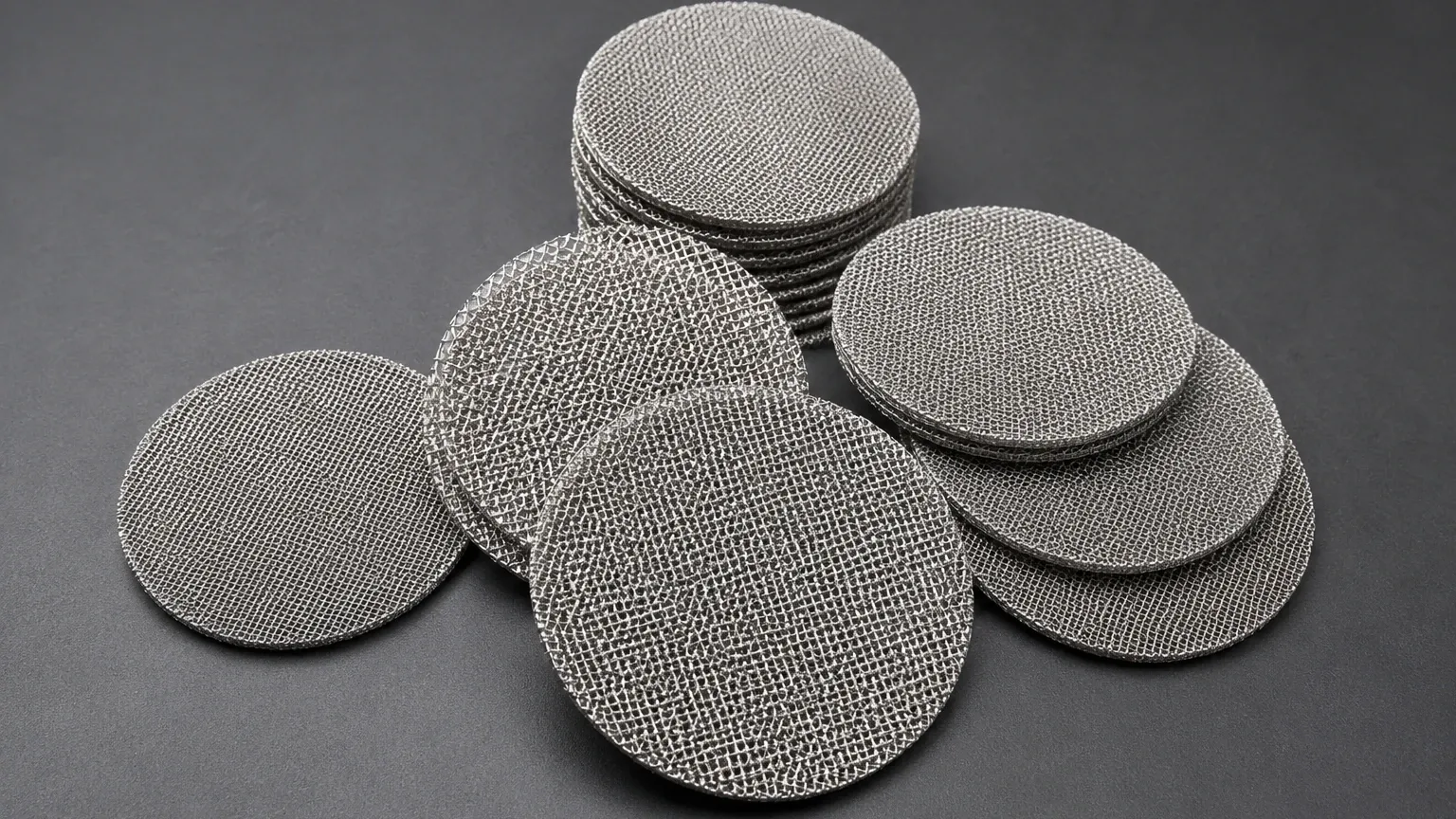
At Kaifil, we specialize in translating these dimensional requirements into durable, high-precision Filter Discs & Packs designed to withstand the rigors of demanding industrial environments. When a standard 8x8x1 filter is insufficient for high-temperature or corrosive applications, custom-engineered metal mesh solutions become the industry standard.
Understanding the 8x8x1 Specification in Industrial Contexts
The "8x8x1" designation is a dimensional shorthand. In the context of metal filtration, these dimensions define the outer boundary of the filter housing or the support frame. However, the internal architecture of the filter is what determines its performance.
For industrial applications, an 8x8x1 filter is rarely a single sheet of mesh. Instead, it is often a multi-layered assembly or a pleated cartridge housed within a frame. The 1-inch depth provides significant volume for pleating, which exponentially increases the effective filtration area compared to a flat disc. This increased surface area is vital for reducing the pressure drop across the system and extending the service life between cleaning cycles.
Dimensional Tolerance and Fit
In precision engineering, a nominal 8x8x1 size may have actual dimensions that vary by fractions of an inch to ensure a snug fit within a filter housing. When ordering stainless steel variants, specifying the exact decimal dimensions (e.g., 7.875" x 7.875" x 0.95") is crucial to prevent bypass—a condition where unfiltered fluid or gas escapes around the edges of the filter element.
Material Selection: Beyond Standard Mesh
When moving to a stainless steel 8x8x1 filter, material selection is the first technical hurdle. The choice between different alloys impacts the filter’s resistance to corrosion, temperature, and mechanical stress.
1. AISI 304 Stainless Steel: The most common choice for general industrial use. It offers excellent strength and basic corrosion resistance, suitable for food and beverage applications or non-corrosive hydraulic fluids.
2. AISI 316L Stainless Steel: Containing molybdenum, 316L provides superior resistance to chlorides and acids. This is the preferred material for pharmaceutical and chemical processing where the filter is exposed to aggressive cleaning agents or harsh process fluids.
3. Specialty Alloys: For extreme environments involving high-temperature oxidation or highly acidic conditions, alloys such as Inconel or Monel may be integrated into the 8x8x1 framework.
Kaifil’s expertise in material science ensures that the wire mesh used in these filters maintains structural integrity even under the thermal expansion and contraction cycles typical of industrial ovens or high-pressure extrusion lines.
Engineering Multi-Layer Filter Packs
A single layer of wire mesh is often too fragile to handle the differential pressures found in industrial pumps. To achieve the 1-inch thickness required by an 8x8x1 specification, engineers often utilize multi-layer Filter Discs & Packs.
The Layering Strategy
* The Filtration Layer: This is the fine mesh (often Dutch weave) that determines the micron rating. It is the "heart" of the filter.
* Support Layers: Coarser mesh layers are placed on either side of the filtration layer. These provide mechanical rigidity, preventing the fine mesh from deforming or "bursting" under pressure.
* Drainage Layers: In pleated 8x8x1 configurations, drainage layers ensure that the fluid can flow freely out of the pleat folds, maximizing the use of the entire surface area.
Binding and Framing
To maintain the 8x8x1 shape, the layers must be secured. This is achieved through spot welding or by using a metal binding (rim). A rimmed pack provides a clean, compressed edge that acts as a gasket surface, ensuring a leak-proof seal when installed in the filter assembly.
Performance Criteria: Micron Ratings and Flow Rates
When specifying a filter 8x8x1, the micron rating is the most critical performance metric. This defines the size of the smallest particle the filter is guaranteed to capture.
* Absolute vs. Nominal: Industrial engineers must distinguish between these two. A nominal rating refers to the ability to retain a percentage of particles, while an absolute rating (common in Kaifil’s precision mesh) indicates the size of the largest spherical particle that can pass through the mesh.
* Permeability: The 1-inch depth of an 8x8x1 filter allows for various weave types. A Plain Dutch Weave offers high strength and reasonable flow, while a Twilled Dutch Weave allows for much finer filtration (down to 5-10 microns) within the same physical footprint.
Calculating the expected pressure drop (ΔP) is essential. If the mesh is too fine for the viscosity of the fluid, the 8x8x1 filter will clog prematurely, leading to system downtime. Conversely, a mesh that is too coarse will fail to protect downstream components like high-pressure nozzles or sensitive valves.
Customization and OEM Capabilities
While "8x8x1" may sound like a standard off-the-shelf size, industrial requirements often demand customization. Standard commercial filters are rarely designed for the pressures found in hydraulic systems or the sanitary requirements of the pharmaceutical industry.
Tailored Solutions for Equipment Manufacturers
Original Equipment Manufacturers (OEMs) often require specific modifications to the 8x8x1 footprint:
* Integrated Gaskets: Adding Viton or PTFE seals directly to the metal frame.
* Handle Attachments: For easy removal in high-heat environments where manual handling is difficult.
* Reinforced Centers: For applications where the center of the filter faces the highest velocity of fluid impact.
Kaifil works closely with engineering teams to develop these customized Filter Discs & Packs, ensuring that the final product meets the exact technical specifications of the machinery it is intended for.
Maintenance, Cleaning, and Total Cost of Ownership
One of the primary advantages of a stainless steel 8x8x1 filter over a disposable variant is cleanability. In many industrial processes, the total cost of ownership (TCO) is significantly lower for metal filters despite a higher initial investment.
Cleaning Methods
Stainless steel mesh can be cleaned using several industrial methods:
* Ultrasonic Cleaning: Effective for removing fine particles lodged deep within the mesh pores.
* Backwashing: Utilizing reverse flow to dislodge surface cake.
* Chemical Cleaning: Using solvents or acids (specifically with 316L) to dissolve organic or mineral buildup.
* Burn-off (Pyrolysis): For polymer applications, heating the filter to high temperatures to carbonize and remove plastic residue.
Replacement Cycles
While metal filters are durable, they are not infinite. Engineers should monitor the "clean pressure drop" after each cleaning cycle. If the baseline pressure drop begins to rise, it indicates that the mesh pores are becoming permanently blinded or that the wire structure is fatiguing. Establishing a clear replacement cycle based on these metrics prevents catastrophic failure and maintains process efficiency.
Technical Checklist for Purchasing 8x8x1 Filters
Before finalizing a purchase or RFQ for an 8x8x1 filter, engineers should confirm the following technical details:
1. Operating Temperature: Will the filter operate in ambient conditions or at 500°C?
2. Fluid Compatibility: Is the medium water-based, oil-based, or a corrosive chemical?
3. Maximum Differential Pressure: What is the highest pressure the filter must withstand before it is cleaned or replaced?
4. Micron Rating: Is an absolute or nominal rating required for the process?
5. Flow Rate: What is the required liters-per-minute (LPM) or gallons-per-minute (GPM) through the 8x8x1 area?
By addressing these factors, procurement teams can ensure they receive a filtration solution that optimizes performance and minimizes downtime.
Conclusion
The specification of a filter 8x8x1 serves as the foundation for a wide range of industrial filtration solutions. Whether used as a pre-filter in a complex system or as the primary barrier in a high-pressure line, the quality of the mesh and the precision of the construction are paramount. Stainless steel Filter Discs & Packs provide the durability and accuracy required for modern industrial processes, offering a sustainable and high-performance alternative to standard disposable media.
Kaifil remains committed to providing the engineering expertise and manufacturing precision necessary to deliver these components to global standards. By focusing on material integrity and customized design, we help our partners achieve reliable and cost-effective filtration across all sectors.
