


Filter Bag Sizes
In industrial liquid filtration, the selection of filter bag sizes is a critical engineering decision that directly impacts the efficiency, throughput, and operational lifespan of a filtration system. While the primary function of a filter bag is to remove contaminants from a process stream, the physical dimensions of the bag determine the effective filtration area (EFA), the maximum allowable flow rate, and the frequency of maintenance cycles.
For engineers and procurement professionals, understanding the standardization of filter bag sizes—and knowing when to deviate from these standards—is essential for optimizing system performance. This guide examines the technical specifications of standard filter bag dimensions, the engineering considerations for size selection, and the role of specialized components like Filter Discs & Packs in comprehensive filtration strategies.
Standard Industrial Filter Bag Dimensions
The global industrial filtration market has largely standardized four primary filter bag sizes. These standards ensure compatibility between bags from various manufacturers and the filter housings installed in chemical plants, food processing facilities, and water treatment works.
Size 1 Filter Bags
Size 1 bags are designed for medium-flow applications. They typically feature a diameter of 7 inches (178 mm) and a length of 16.5 inches (420 mm). The surface area provided by a Size 1 bag is approximately 2.0 square feet (0.19 m²). These are often used in batch processing where flow rates do not necessitate the larger capacity of a Size 2 bag but require more surface area than the smaller Size 3 or 4 options.
Size 2 Filter Bags
Size 2 is the most common filter bag size in heavy industrial applications. With a diameter of 7 inches (178 mm) and a length of 32 inches (813 mm), it provides roughly 4.4 square feet (0.41 m²) of filtration surface area. Because it offers more than double the surface area of a Size 1 bag within the same diameter housing footprint, it is the preferred choice for high-volume continuous flow systems.
Size 3 Filter Bags
Size 3 bags are intended for low-flow or pilot-scale applications. They have a diameter of 4 inches (102 mm) and a length of 8 inches (203 mm), offering approximately 0.5 square feet (0.05 m²) of surface area. These are frequently found in laboratory settings or small-scale specialty chemical production.
Size 4 Filter Bags
Size 4 bags share the 4-inch (102 mm) diameter of Size 3 but feature an extended length of 14 inches (356 mm). This results in a surface area of approximately 1.0 square foot (0.09 m²). Size 4 filters are often used in side-stream filtration or applications with very low solids loading.
Engineering Considerations: Flow Rate and Surface Area
When specifying filter bag sizes, the relationship between flow rate and surface area is the most significant technical factor. Engineers must calculate the "flux rate," which is the volume of fluid passing through a specific area of filter media over time (typically measured in GPM/ft² or LPM/m²).
Impact of Fluid Viscosity
The nominal flow ratings provided by manufacturers are usually based on water at ambient temperature. As fluid viscosity increases, the resistance to flow through the filter media also increases. To maintain a manageable pressure drop (ΔP), engineers must either reduce the flow rate or increase the filter bag size. For high-viscosity fluids, such as oils or resins, it is common to use multiple Size 2 bags in a multi-bag housing to provide sufficient surface area to keep the initial clean pressure drop below 2 PSI.
Solids Loading and Dirt-Holding Capacity
The physical size of the bag determines its dirt-holding capacity. A larger bag can accumulate a greater volume of solids before the pressure drop reaches the terminal limit (usually 15–25 PSI). If a bag is undersized for the solids loading of the process stream, the frequency of change-outs will increase, leading to higher labor costs and increased production downtime. In applications with high solids loading, utilizing a Size 2 bag is almost always more cost-effective than a Size 1, provided the housing can accommodate the length.
The Role of Ring and Flange Designs in Sizing
While the diameter and length define the bag's capacity, the top ring or flange design defines its fit and sealing integrity. Even if the bag dimensions are correct, an improper seal can lead to fluid bypass, rendering the filtration process ineffective.
* Snap-Band Rings: Typically made of carbon steel or stainless steel, these rings rely on a tension fit against the housing's internal rim. They are common in standard applications but may be susceptible to bypass if the housing is slightly out of round.
* Plastic Flanges (SDS/Sentinel): These are molded plastic headers that feature a pressure-activated sealing lip. As the internal pressure increases, the seal tightens against the housing. These are essential for high-purity applications in the pharmaceutical and food industries.
* Custom Metal Rings: For high-temperature or chemically aggressive environments, custom stainless steel rings may be required to ensure the bag maintains its shape and seal under thermal expansion.
Material Selection and Its Effect on Effective Size
The material of the filter bag—whether felt, mesh, or high-efficiency membrane—affects the "effective" size in terms of performance.
* Needle Felts: Materials like polypropylene and polyester felt provide depth filtration. Because these materials are relatively thick, they can slightly reduce the internal volume of the bag, though they offer superior dirt-holding capacity for deformable particles.
* Monofilament Mesh: Stainless steel or nylon mesh bags provide surface filtration. These are often used for precise straining. Because mesh is thinner than felt, it allows for maximum internal volume. In demanding environments, stainless steel mesh bags are often preferred for their durability and ability to be cleaned and reused.
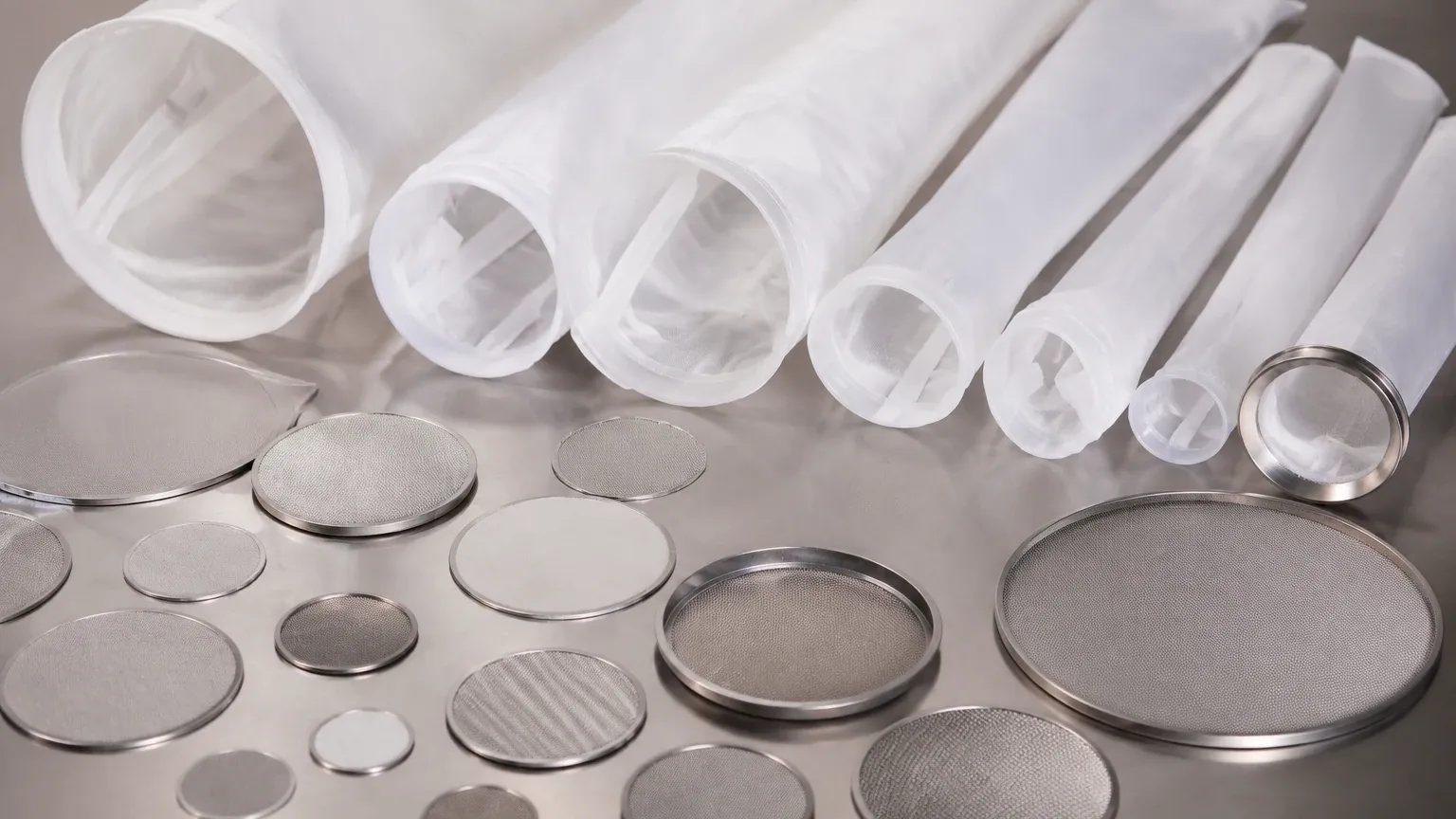
In complex systems where standard bags may not meet the precision requirements, engineers often integrate secondary filtration stages. For example, Filter Discs & Packs made from multi-layer stainless steel wire cloth can be used downstream of a bag filter to capture any fine particulates or provide a final safety barrier in high-pressure hydraulic or chemical lines.
Custom Filter Bag Sizes and OEM Solutions
While the four standard sizes cover the majority of industrial needs, specialized equipment often requires custom dimensions. OEM manufacturers frequently design proprietary housings that necessitate bespoke filter bag sizes to ensure that replacement parts must be sourced through specific channels or to meet unique spatial constraints within a machine.
Customization options include:
* Extended Lengths: Increasing the length of a Size 2 bag to 40 inches or more to maximize surface area in a narrow footprint.
* Multi-Layered Construction: Combining different micron ratings within a single bag to create a graduated density filter.
* Reinforced Bottoms: Adding heavy-duty mesh or specialized stitching to the bottom of the bag to prevent bursting under high-pressure surges.
Kaifil specializes in these types of custom metal filtration solutions, providing the engineering expertise required to design components that withstand extreme temperatures and corrosive environments where standard polymer bags would fail.
Evaluating the Total Cost of Ownership (TCO)
Selecting the correct filter bag size is a balance between initial capital expenditure (CAPEX) and ongoing operational expenditure (OPEX).
1. Housing Cost: Larger housings (Size 2) cost more initially than smaller ones (Size 4). However, the cost difference is often recouped within the first year of operation through reduced filter consumption.
2. Disposal Costs: In many industries, the cost of disposing of a used, contaminated filter bag exceeds the cost of the bag itself. Using a larger bag that lasts four times longer than a smaller one significantly reduces disposal volume.
3. Product Loss: Every time a filter bag is changed, the fluid contained within the bag and the housing may be lost or require recycling. Larger bags and housings contain more "hold-up volume," which must be considered if the process fluid is high-value (e.g., expensive chemicals or pharmaceutical intermediates).
Integration with Precision Filtration Components
In many advanced industrial processes, bag filters serve as the primary or "pre-filter" stage. To achieve the high levels of purity required in modern manufacturing, these systems are often paired with precision metal components.
For instance, in a polymer extrusion line, a large-scale bag filter might remove bulk contaminants, while Filter Discs & Packs are used at the point of extrusion to ensure no microscopic particles mar the final product. The synergy between different filtration formats—bags for high dirt-holding capacity and metal discs for absolute precision—allows for a robust and reliable filtration train.
Conclusion: Confirming Specifications Before Purchase
Before finalizing a purchase of filter bags or housings, technical teams should confirm the following data points:
* Actual Housing Dimensions: Measure the internal diameter and the distance from the bag seat to the bottom of the housing to ensure clearance.
* Operating Temperature and Pressure: Ensure the bag material and the ring type are rated for the maximum process conditions.
* Chemical Compatibility: Verify that the bag media, sewing thread, and gasket/ring material are compatible with the process fluid.
* Micron Rating vs. Efficiency: Distinguish between nominal and absolute micron ratings, as this will affect the pressure drop and the required bag size.
By carefully matching filter bag sizes to the specific flow and contaminant profiles of an application, engineers can ensure efficient operation, protect downstream equipment, and minimize the total cost of filtration.
