


Filter Disc Coffee
In the commercial and industrial food and beverage sector, the precision of liquid-solid separation is a critical factor in product consistency and equipment longevity. When discussing a filter disc for coffee applications, the focus shifts from simple consumer-grade mesh to highly engineered stainless steel components designed for high-pressure extraction, repeated thermal cycling, and stringent hygiene standards. For engineers and procurement teams, selecting the right filtration media involves a deep understanding of material science, fluid dynamics, and mechanical durability.
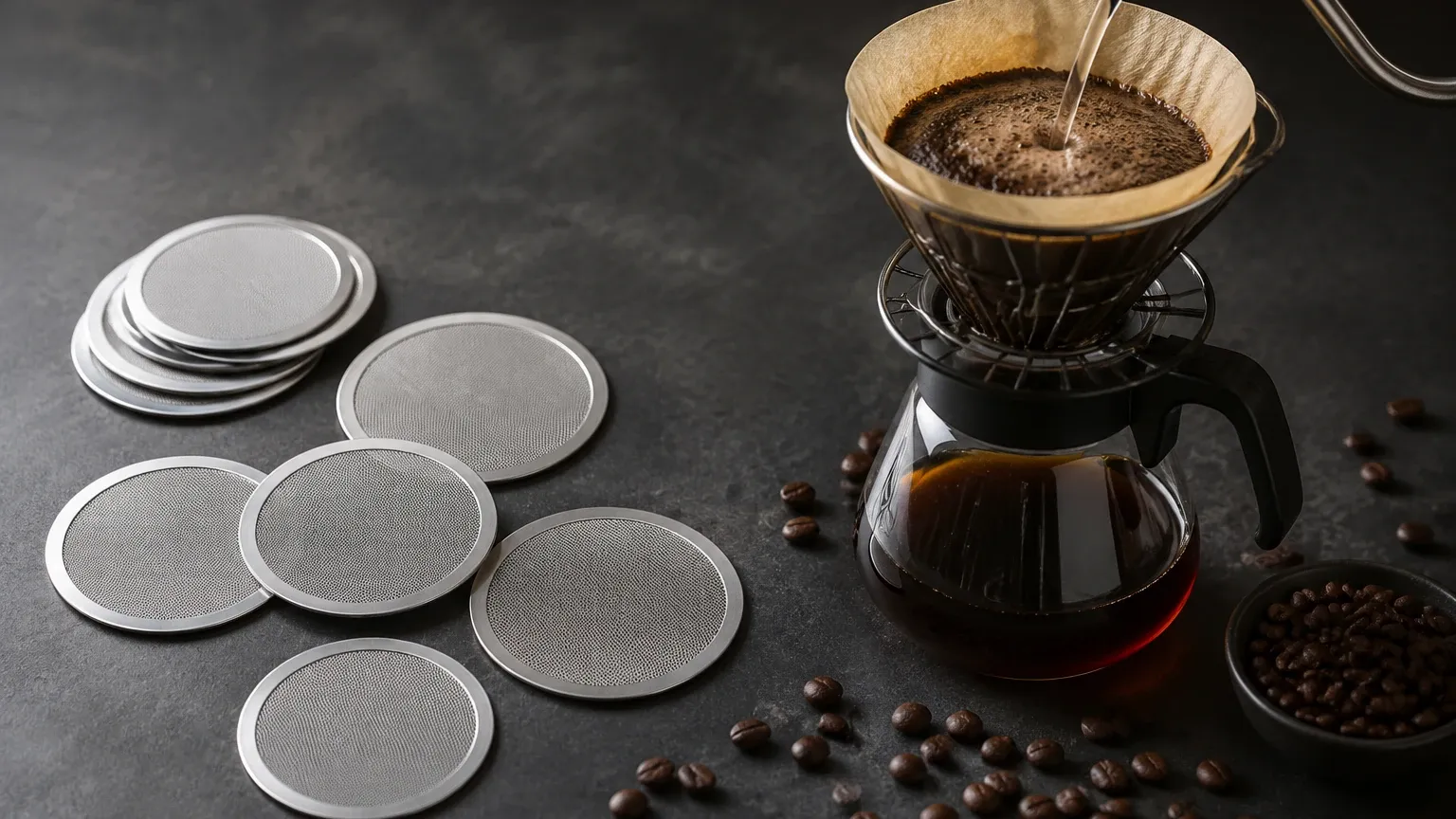
Stainless steel filter discs have become the benchmark for professional brewing equipment, including espresso machines, cold brew systems, and industrial liquid coffee concentrate processing. Unlike disposable paper alternatives, these metal components offer precise control over the filtration threshold, allowing for the retention of essential oils and aromatics while effectively managing the migration of fine particulates.
Understanding the Role of Stainless Steel Filter Discs in Commercial Brewing
In industrial coffee processing, the filtration stage is responsible for more than just removing grounds. It defines the body, clarity, and chemical profile of the final beverage. A stainless steel filter disc serves as a permanent, high-strength barrier that must withstand significant hydraulic pressure without deforming.
In espresso applications, for instance, the filter disc (often referred to as a shower screen or basket filter) must distribute water evenly across the coffee bed. Any inconsistency in the mesh pore distribution can lead to "channeling," where water finds the path of least resistance, resulting in uneven extraction. In larger-scale industrial extraction, such as the production of ready-to-drink (RTD) coffee, Filter Discs & Packs are utilized to clarify extracts, ensuring that the final bottled product remains sediment-free over its shelf life.
Material Science: Why Stainless Steel is the Standard
The choice of material for coffee filtration is dictated by the chemical environment of the brewing process. Coffee is naturally acidic, with a pH typically ranging from 4.85 to 5.10. Furthermore, the extraction process involves high temperatures—often between 90°C and 96°C—and, in the case of espresso, pressures exceeding 9 bars.
Grade 304 vs. Grade 316L
While Grade 304 stainless steel is common in many food-grade applications, Grade 316L is frequently preferred for high-end industrial filtration. The addition of molybdenum in 316L provides superior resistance to pitting and corrosion, especially when exposed to the organic acids and oils found in coffee. Furthermore, 316L’s low carbon content makes it more resistant to sensitization during welding processes, ensuring that the structural integrity of the filter remains intact during long-term service.
Food Safety and Compliance
For B2B buyers, ensuring that the filter media meets international food safety standards (such as FDA or EU 1935/2004) is non-negotiable. Stainless steel is inert, meaning it does not leach chemicals into the beverage, nor does it absorb flavors or odors. This ensures that the sensory profile of the coffee remains untainted across different batches.
Technical Specifications: Mesh Count, Micron Rating, and Flow Dynamics
The performance of a filter disc is primarily defined by its mesh characteristics. Engineers must balance the need for fine filtration against the requirement for an acceptable flow rate (flux).
1. Micron Rating: This indicates the size of the particles the mesh will retain. For coffee filtration, this typically ranges from 10 microns for fine clarification to 150 microns for primary separation. A lower micron rating provides a cleaner cup but requires higher pressure to maintain flow.
2. Mesh Count: This refers to the number of wires per linear inch. A higher mesh count generally indicates a finer filtration capability. However, the diameter of the wire also plays a role in determining the "open area" percentage, which directly impacts the flow velocity.
3. Weave Types:
* Plain Weave: The most common and cost-effective, offering a straightforward aperture for general filtration.
* Dutch Weave: Uses larger diameter warp wires and smaller shute wires, resulting in a much denser, stronger mesh with higher filtration accuracy. This is often used in high-pressure environments where mechanical strength is paramount.
Design Variations: Single Layer vs. Multilayer Filter Packs
Depending on the complexity of the brewing equipment, a single layer of wire mesh may not be sufficient. This is where the engineering of multilayer filter packs becomes essential.
Single-Layer Discs
These are typically used in applications where the pressure is moderate and the cleaning cycle is frequent. They are easy to rinse and offer the lowest profile, making them ideal for standard commercial espresso baskets.
Sintered Multilayer Packs
In industrial extraction systems, multiple layers of mesh are often sintered together. Sintering is a process where the layers are bonded at their contact points through heat and pressure without melting. This creates a porous metal structure that is incredibly rigid. A typical 3-layer or 5-layer pack might include a fine filtration layer protected by coarser support layers. This design prevents the fine mesh from stretching or tearing under high differential pressure.
Edging and Rimming
To ensure a proper seal within the brewing hardware, filter discs are often finished with a metal rim or a specialized edge treatment. This prevents the bypass of unfiltered liquid and protects the edges of the mesh from fraying, which could otherwise introduce metal fragments into the fluid stream.
Engineering for Durability: Mechanical Strength and Pressure Resistance
One of the primary failure modes for industrial coffee filters is mechanical fatigue. In a commercial environment, a filter disc may undergo hundreds of pressure cycles per day. If the mesh is not properly supported or if the wire diameter is too thin for the application, the mesh can "blind" (clog permanently) or undergo plastic deformation.
When specifying Filter Discs & Packs, engineers must calculate the maximum expected differential pressure ($ΔP$). This is the difference in pressure between the upstream and downstream sides of the filter. As the filter accumulates coffee fines, the $ΔP$ increases. The filter must be robust enough to withstand this pressure until the cleaning cycle is initiated. Using high-tensile stainless steel wire and reinforced structures ensures that the filter maintains its geometry over thousands of cycles.
Maintenance and Operational Efficiency in Industrial Coffee Processing
Total Cost of Ownership (TCO) is a major consideration for B2B purchasers. While stainless steel filter discs have a higher upfront cost than paper or plastic components, their longevity and reusability offer significant long-term savings.
Cleaning Protocols
Unlike paper filters, stainless steel discs can be cleaned and sanitized. In industrial settings, this often involves:
* Backwashing: Reversing the flow of water to dislodge trapped particles.
* Ultrasonic Cleaning: Using high-frequency sound waves in a cleaning solution to remove microscopic oils and fines from deep within the mesh pores.
* Chemical Cleaning: Using food-safe detergents to dissolve coffee oils (lipids) that can become rancid and affect flavor.
Replacement Cycles
Even the most durable stainless steel filter will eventually require replacement. Signs that a filter disc has reached the end of its service life include permanent blinding that cannot be resolved by cleaning, visible physical damage to the mesh, or a noticeable drop in flow rate that impacts production efficiency.
Sourcing Custom Filtration Solutions for OEM Equipment
Original Equipment Manufacturers (OEMs) in the coffee industry often require bespoke filtration components tailored to their specific machine designs. Standard off-the-shelf discs may not provide the exact flow characteristics or fitment required for a proprietary brewing technology.
When partnering with a manufacturer like Kaifil, engineers can specify exact dimensions, micron ratings, and material grades. Customization options often include:
* Variable Diameters: Precision-cut discs ranging from a few millimeters to several hundred millimeters.
* Specific Shapes: Beyond standard circles, filters can be produced in oval, rectangular, or complex geometric shapes to fit unique brewing chambers.
* Integrated Gaskets: Some designs incorporate polymer or silicone edges to simplify the assembly process for the end-user.
By working closely with a specialized manufacturer, companies can ensure that their filtration components are optimized for both performance and manufacturability. This collaborative approach helps in reducing waste, improving extraction yields, and delivering a superior end-product to the consumer.
Conclusion: Selecting the Right Filter for the Application
Selecting a filter disc for coffee applications is an exercise in balancing technical variables. From the micron rating that determines the clarity of the brew to the mechanical structure that ensures durability under pressure, every specification matters. For industrial and commercial stakeholders, investing in high-quality stainless steel Filter Discs & Packs is a strategic decision that impacts product quality, operational costs, and brand reputation. By prioritizing material integrity and precision engineering, businesses can achieve a reliable and efficient filtration process that meets the demanding standards of the modern coffee industry.
