


Filter Disc for Kiss
In the landscape of industrial filtration, the term "KISS" (Keep It Simple, Stupid) often translates to engineering designs that prioritize reliability, ease of maintenance, and high-performance efficiency. When sourcing a filter disc for kiss applications—whether referring to simplified filtration assemblies, specific machinery interfaces, or streamlined polymer processing—engineers must balance technical precision with operational durability. Selecting the right components within the category of Filter Discs & Packs is critical for maintaining system integrity and optimizing production uptime.
Industrial filtration demands more than just a physical barrier; it requires a deep understanding of fluid dynamics, material compatibility, and mechanical stress. For technical professionals and purchasing teams, evaluating a filter disc involves looking beyond the surface dimensions to the metallurgical properties and weaving techniques that define its performance.
Technical Fundamentals of Filter Discs and Packs
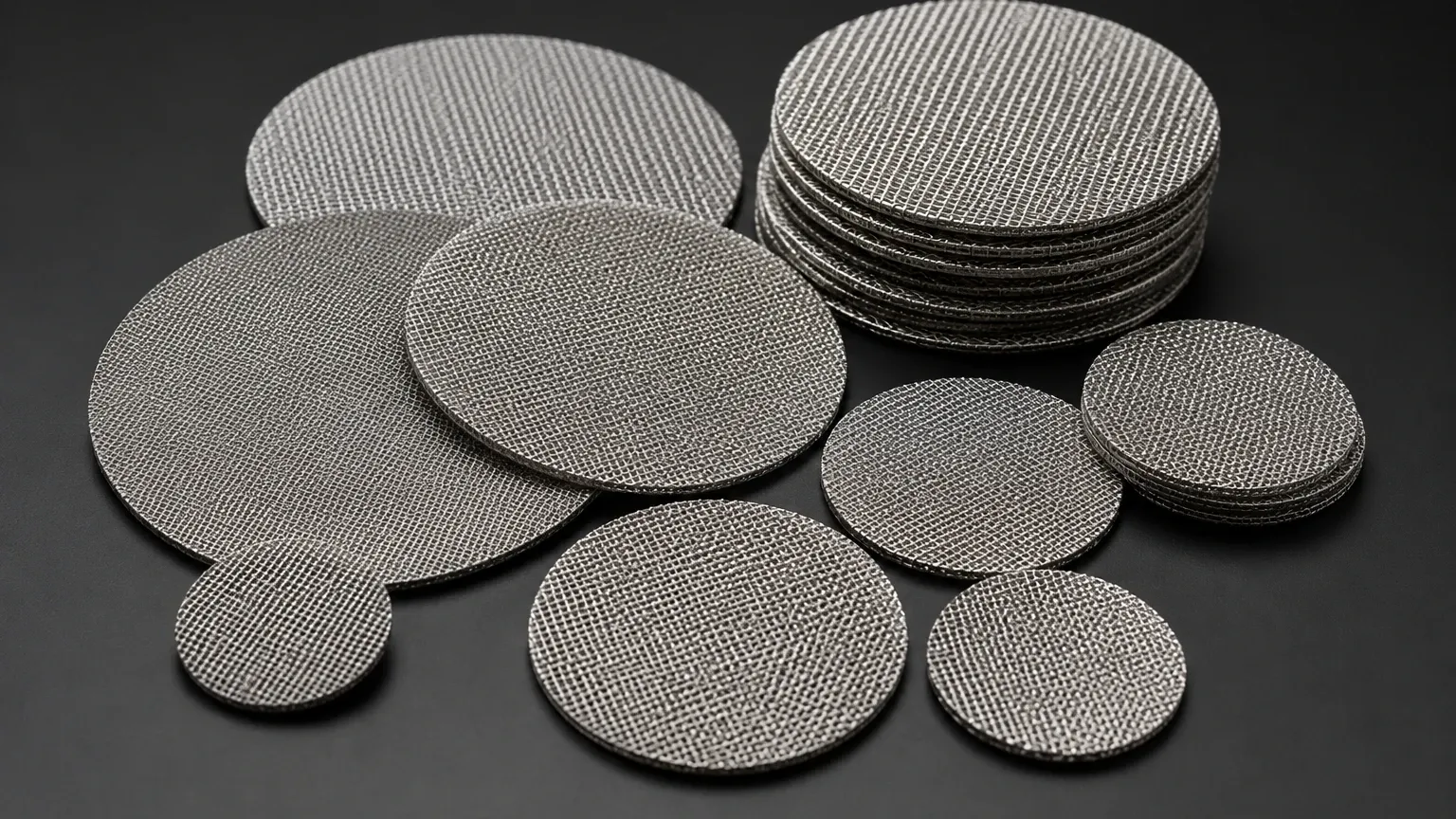
Filter discs are precision-engineered components typically manufactured from stainless steel wire mesh. Their primary function is to remove contaminants from liquid or gaseous media under varying pressures and temperatures. In the context of a "kiss" design philosophy, the focus is on a component that fits perfectly, performs predictably, and is easily replaceable or cleanable.
Material Selection: 304 vs. 316L Stainless Steel
The choice of material is the first engineering hurdle. While both 304 and 316L stainless steel offer excellent mechanical strength, their chemical resistance profiles differ significantly:
* Grade 304: Suitable for general industrial applications where high-temperature resistance and basic corrosion protection are required. It is a cost-effective choice for many food and beverage or hydraulic applications.
* Grade 316L: The "L" stands for low carbon, which enhances weldability and resistance to intergranular corrosion. The addition of molybdenum makes 316L the standard for chemical processing, pharmaceutical manufacturing, and marine environments where acidic or saline exposure is common.
For a filter disc for kiss applications, using 316L ensures that the filter does not become the weak point in a high-purity or corrosive system.
Structural Design: Single-Layer vs. Multi-Layer Packs
Depending on the filtration fineness required and the pressure levels of the system, filter discs are supplied in several structural configurations. Understanding these is essential for matching the filter to the specific "kiss" application requirements.
Single-Layer Filter Discs
These are simple, precision-cut discs used for coarse filtration or as support layers. They are favored in applications where the flow rate is high and the particle size distribution is relatively uniform. Their simplicity aligns with the KISS principle, offering the lowest pressure drop and easiest cleaning.
Multi-Layer Mesh Packs
In more demanding environments, such as polymer extrusion or fine chemical synthesis, a single layer may not provide sufficient depth or strength. Multi-layer packs combine different mesh counts to create a gradient filtration effect.
1. Support Layer: A coarse mesh that provides mechanical rigidity.
2. Filtration Layer: The fine mesh that determines the actual micron rating.
3. Drainage Layer: Often placed on the downstream side to ensure the fluid exits the filter evenly.
These layers can be spot-welded or bound with a metal rim (aluminum or stainless steel) to prevent fraying and ensure a tight seal within the filter housing.
Engineering Considerations for Filter Disc Selection
When specifying a filter disc for kiss systems, engineers must evaluate several performance metrics to ensure the component meets the operational lifespan of the machinery.
Micron Rating and Weave Types
The micron rating defines the smallest particle the mesh will reliably capture. This is determined by the weave type:
* Plain Weave: The most common, where wires cross over and under each other. It provides a high open area and low pressure drop.
* Dutch Weave: Uses larger diameter wires in the warp and smaller wires in the shute (weft). This creates a dense, strong mesh capable of very fine filtration (down to 5-10 microns) and high pressure resistance.
Flow Rate and Pressure Drop (ΔP)
A common mistake in filter selection is choosing a mesh that is too fine for the application, leading to a high initial pressure drop. This forces the pump to work harder, increasing energy costs and the risk of a "blowout" where the mesh deforms or ruptures. The goal for a filter disc for kiss application is to maximize the effective filtration area while maintaining a ΔP that allows for a long service cycle.
Applications of Precision Filter Discs
Customized filtration solutions are utilized across diverse sectors, each with unique challenges. The versatility of Filter Discs & Packs allows them to be adapted to the following environments:
Polymer and Plastic Extrusion
In the plastics industry, filter discs (often called screen packs) are used to remove "gels" and un-melted particulates from the polymer melt. The high temperatures and pressures in extrusion require discs that can withstand mechanical stress without losing their pore structure.
Pharmaceutical and Chemical Processing
Precision is paramount here. Filter discs must be manufactured to strict tolerances to ensure batch consistency. Stainless steel's ability to be sterilized (via autoclaving or SIP) makes it the material of choice for these high-purity "kiss" applications.
Hydraulic and Fuel Systems
In hydraulic systems, even microscopic contaminants can cause catastrophic component failure. Filter discs serve as last-chance filters, protecting sensitive valves and actuators from debris that may have bypassed primary filtration stages.
Customization and Manufacturing Precision
One size rarely fits all in industrial filtration. A filter disc for kiss application often requires specific customization to integrate seamlessly into existing hardware. Key customization options include:
* Edge Finishing: Rimmed edges (using aluminum, copper, or stainless steel) provide a superior seal and prevent the bypass of unfiltered media. This is critical in high-pressure "kiss" seal designs.
* Shape and Dimension: Beyond standard circular discs, manufacturers can produce oval, rectangular, or ring-shaped filters using laser cutting or precision stamping to meet exact housing specifications.
* Spot Welding: For multi-layer packs, spot welding ensures the layers remain aligned during installation and operation, preventing internal bypass.
Maintenance and Total Cost of Ownership
While the initial purchase price of a filter disc is an important factor, the Total Cost of Ownership (TCO) is driven by durability and cleanability. Stainless steel filter discs are often reusable, which aligns with the KISS objective of reducing waste and simplifying supply chains.
Cleaning Methods
* Ultrasonic Cleaning: Highly effective for removing fine particles trapped within the mesh pores without damaging the wire structure.
* Chemical Cleaning: Using compatible solvents to dissolve organic or inorganic buildup.
* Burn-off (Pyrolysis): Common in the polymer industry to remove hardened resins, though this must be done carefully to avoid altering the metallurgical properties of the steel.
Replacement Cycles
Engineers should monitor the pressure differential across the filter. A steady increase in ΔP indicates that the filter is reaching its dirt-holding capacity. In a well-designed "kiss" system, the filter disc should be easily accessible for rapid change-outs, minimizing downtime during maintenance intervals.
Conclusion: Selecting the Right Partner
Choosing a filter disc for kiss applications requires a partner who understands the nuances of wire mesh engineering. From selecting the correct alloy to determining the optimal layering for a multi-mesh pack, technical expertise is the bridge between a component that merely fits and one that enhances the entire filtration process.
By focusing on high-quality materials, precision manufacturing, and application-specific designs, engineers can ensure their filtration systems remain simple, effective, and durable. Whether you are dealing with high-viscosity polymers or sensitive chemical reagents, the right filter disc is a fundamental building block of operational success. For those looking to optimize their filtration performance, exploring specialized Filter Discs & Packs provides the technical foundation needed to meet the most demanding industrial standards.
