


Filter Disc Paper
In industrial filtration, the selection of media is a critical engineering decision that directly impacts process efficiency, product purity, and operational costs. Filter disc paper, often composed of cellulose, glass fiber, or synthetic polymers, serves as a primary or secondary filtration layer in various liquid and gas separation processes. While often categorized as a consumable, the technical specifications of these discs must be precisely matched to the mechanical and chemical requirements of the application.
For engineers and procurement professionals, understanding the nuances of filter disc paper—ranging from pore size distribution to burst strength—is essential when designing filtration systems or selecting replacement components. In many high-pressure or high-temperature environments, these paper elements are integrated with or replaced by more robust Filter Discs & Packs constructed from stainless steel wire mesh to ensure long-term reliability.
Technical Fundamentals of Filter Disc Paper
Filter disc paper is a depth or surface filtration medium designed to remove particulate matter from a fluid stream. Unlike woven metal meshes, which provide precise geometric apertures, paper media rely on a complex network of fibers to trap contaminants. The performance of the paper is governed by several physical properties:
Fiber Composition
* Cellulose: The most common material, derived from wood pulp or cotton linters. It is highly absorbent and suitable for general-purpose aqueous and organic solvent filtration.
* Glass Microfiber: These discs offer higher flow rates and finer particle retention (down to sub-micron levels) compared to cellulose. They are often used for air monitoring and high-purity liquid filtration.
* Synthetic Fibers (Polyester/Polypropylene): Used when specific chemical resistance or hydrophobic/hydrophilic properties are required.
Structural Integrity
Industrial filter disc paper must maintain its structural integrity under hydraulic pressure. This is measured by "burst strength"—the maximum pressure the paper can withstand before rupturing. In applications where the pressure differential ($ΔP$) is expected to be high, the paper is often supported by a rigid metal plate or integrated into multi-layered Filter Discs & Packs to prevent media migration or failure.
Material Science and Chemical Compatibility
One of the primary considerations for engineers is how the filter disc paper will react with the process fluid. Chemical incompatibility can lead to fiber shedding, swelling, or complete dissolution of the medium, which contaminates the filtrate.
Solvent and Acid Resistance
Standard cellulose paper is generally compatible with weak acids and bases, as well as most organic solvents. However, concentrated acids or strong oxidizing agents require specialized glass fiber or synthetic media. For instance, in pharmaceutical manufacturing, where aggressive solvents are common, the extraction of "extractables and leachables" from the paper must be strictly controlled and documented.
Thermal Stability
Cellulose-based filter disc paper typically has an upper operating temperature limit of approximately 100°C to 120°C. Beyond this, the fibers begin to degrade and lose mechanical strength. Glass fiber discs can withstand significantly higher temperatures, often up to 500°C, making them suitable for stack gas sampling or high-temperature industrial exhausts. When temperatures exceed the limits of organic or glass fibers, engineers must transition to metallic Filter Discs & Packs made from 304 or 316L stainless steel.
Performance Metrics: Pore Size and Flow Dynamics
Selecting the correct filter disc paper requires a balance between filtration efficiency (retention) and flow rate (permeability).
Retention Ratings
Filter paper is usually rated by its "nominal" pore size, which indicates the ability to retain a high percentage (typically 60% to 90%) of particles of a specific size. This differs from the "absolute" rating found in precision wire mesh filters, which guarantees 100% retention of particles above the rated micron size. Engineers must determine if the process can tolerate the statistical variance inherent in paper media.
Ash Content and Purity
In analytical and high-precision industrial processes, the ash content of the filter disc paper is vital. "Ashless" grades (typically <0.01% ash) are used in gravimetric analysis where the filter is burned away to weigh the remaining precipitate. In B2B industrial settings, low-ash paper reduces the risk of inorganic contaminants leaching into the product stream.
Permeability and Pressure Drop
The thickness and density of the paper determine its resistance to flow. A thicker paper provides a more tortuous path for particles, increasing retention through depth filtration, but it also results in a higher initial pressure drop. Monitoring the rate of pressure increase during operation is the standard method for determining the replacement cycle of the disc.
Industrial Applications and Process Integration
Filter disc paper is utilized across a spectrum of industries, often serving as a sacrificial pre-filter to protect more expensive downstream equipment or as a final polishing stage.
Chemical and Petrochemical Processing
In these sectors, filter discs are used to remove catalysts, salts, or carbon fines from liquid streams. Because of the high volume of fluid processed, these discs are often used in large-scale plate-and-frame filter presses. The paper acts as the primary barrier, while the metal frame provides the necessary mechanical support.
Food and Beverage Industry
Filtration in the food industry requires compliance with FDA or equivalent food-safety standards. Filter disc paper is used for clarifying juices, oils, and syrups. Here, the focus is on removing turbidity without stripping away essential flavors or colors. The paper must be free of binders or resins that could migrate into the food product.
Pharmaceutical and Biotech
In laboratory-scale production and pilot plants, filter disc paper is essential for clarifying cell cultures or removing precipitates after chemical synthesis. The requirement for sterility often means these discs must be autoclavable or available in pre-sterilized packaging.
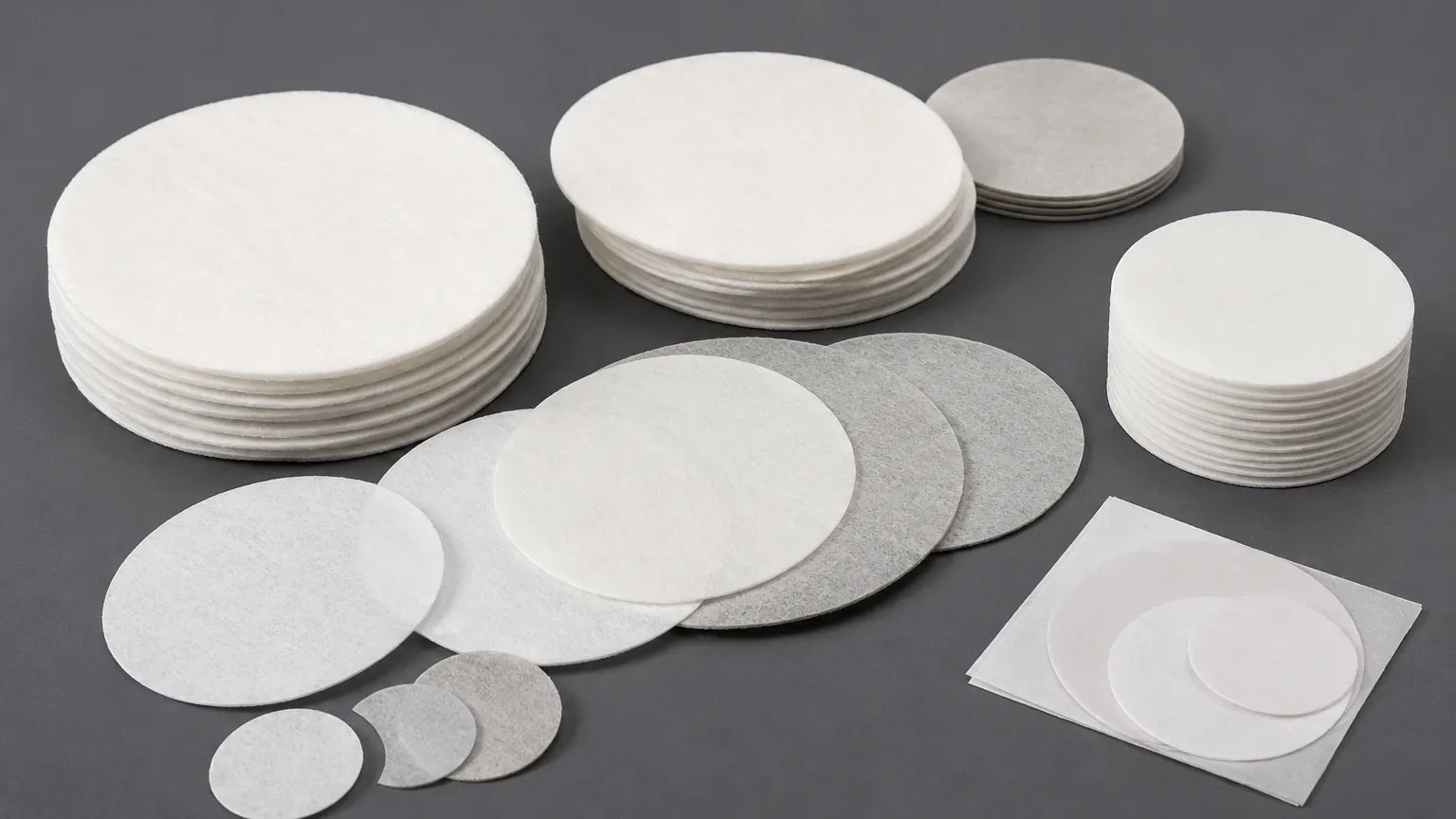
Comparative Analysis: Disposable Paper vs. Permanent Metal Discs
A critical decision for plant engineers is whether to use disposable paper media or invest in permanent, cleanable stainless steel Filter Discs & Packs. Each has distinct advantages depending on the operational context.
| Feature | Filter Disc Paper (Cellulose/Glass) | Stainless Steel Filter Discs |
| :— | :— | :— |
| Initial Cost | Low | High |
| Reusability | Disposable (Single-use) | Cleanable and Reusable |
| Micron Rating | Nominal (Variable) | Absolute (Precise) |
| Mechanical Strength | Low (Requires support) | High (Self-supporting) |
| Chemical Resistance | Limited by fiber type | Excellent (316L Stainless) |
| Waste Generation | High (Used media disposal) | Low |
Disposable paper is often preferred in batch processes where cross-contamination must be avoided at all costs, as the entire medium is discarded after each run. Conversely, in continuous flow operations or high-pressure hydraulic systems, the durability and consistent performance of stainless steel Filter Discs & Packs provide a lower total cost of ownership (TCO) by eliminating frequent downtime for media replacement.
Selection Criteria for Engineering and Procurement
Before finalizing a purchase order for filter disc paper or integrated filtration components, technical teams should confirm the following parameters with their manufacturer:
1. Operating Pressure and Differential Pressure (ΔP): Will the paper require a mesh backing to prevent rupture?
2. Fluid Viscosity: Higher viscosity fluids require paper with higher permeability to maintain acceptable flow rates.
3. Particle Loading: If the fluid has a high concentration of solids, a depth-loading paper or a multi-layered pack may be necessary to prevent premature blinding.
4. Regulatory Compliance: Does the application require USP Class VI, FDA, or REACH compliance?
5. Housing Compatibility: Ensure the disc diameter and thickness match the tolerances of the filter holder or housing to prevent bypass.
Customization and Multi-Layer Configurations
In complex industrial environments, a single layer of filter disc paper may not suffice. Manufacturers like Kaifil specialize in creating customized filtration solutions where paper or synthetic media are sandwiched between layers of stainless steel wire mesh. These Filter Discs & Packs combine the fine filtration capabilities of paper or felt with the structural rigidity and edge-sealing capabilities of metal.
Customized edge bonding—such as aluminum, stainless steel, or copper rimming—ensures that the filter disc sits securely in the housing, preventing fluid from bypassing the media. This is particularly important in polymer filtration and hydraulic systems where even minor bypass can lead to equipment damage or product defects.
By carefully evaluating the relationship between the filter media and the mechanical housing, engineers can optimize their filtration cycles, reduce waste, and ensure the purity of their industrial outputs.
