


Filter Discs Microbiology
In industrial microbiology and sterile processing, the selection of filtration components is a critical engineering decision that impacts product purity, batch consistency, and equipment longevity. While many laboratory applications rely on polymer membranes, industrial-scale microbiological control often necessitates the use of robust, high-precision metal components. Understanding the technical nuances of filter discs microbiology involves evaluating how various filter media interact with microbial populations, sterilization protocols, and high-pressure fluid dynamics.
For engineers and technical professionals in the pharmaceutical, food and beverage, and chemical processing sectors, filter discs serve as the primary barrier or support structure in complex filtration systems. These components must provide predictable performance under demanding conditions, ensuring that microbial contaminants are effectively managed without compromising the flow characteristics of the system.
The Role of Filter Discs in Microbiological Control
Microbiological filtration is defined by the removal of microorganisms from a fluid stream through physical entrapment or adsorption. In an industrial context, filter discs microbiology refers to the application of these components in processes such as air venting, steam filtration, and liquid clarification where microbial integrity is paramount.
Pre-filtration and Protection
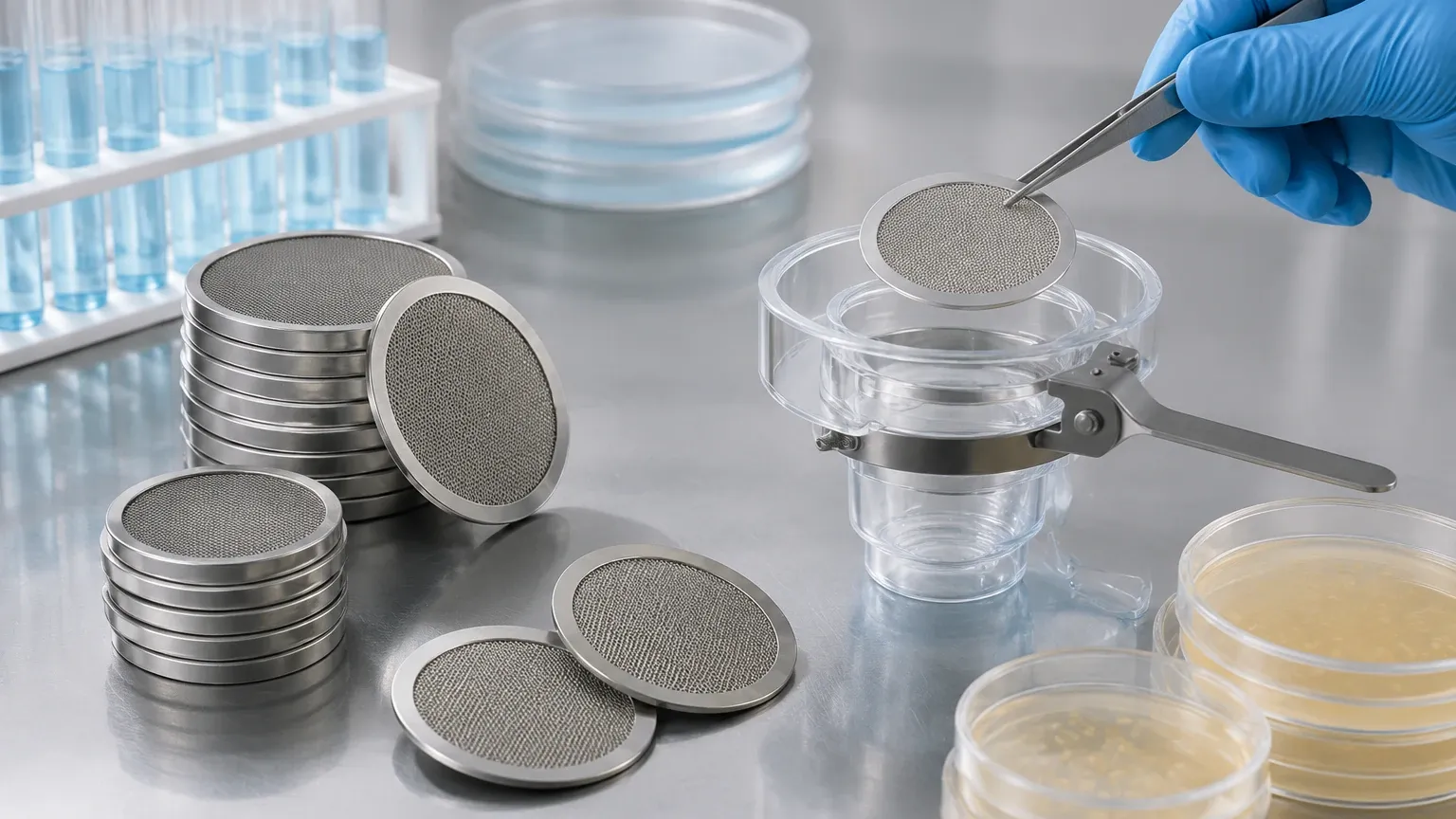
In many sterile systems, expensive high-efficiency membrane filters are used for final sterilization. However, these membranes are susceptible to premature fouling by larger particles or high bioburden. Stainless steel Filter Discs & Packs are frequently employed as pre-filters. By removing the bulk of suspended solids and larger microbial aggregates, these metal discs extend the service life of the final sterile-grade filters, significantly reducing the total cost of ownership for the filtration system.
Support for Fragile Media
Polymer membranes used in microbiology are often thin and mechanically weak. In high-pressure applications, these membranes require rigid support to prevent rupture or bypass. Precision-engineered wire mesh discs provide the necessary structural reinforcement, ensuring the membrane remains flat and functional even under fluctuating pressure differentials.
Engineering Considerations for Material Selection
When selecting materials for filter discs microbiology applications, the chemical and thermal environment of the process must be the primary guide. Stainless steel, particularly Grade 316L, is the industry standard for several technical reasons.
Corrosion Resistance and Inertness
Microbiological processes often involve culture media, cleaning agents, or acidic/alkaline bypasses. 316L stainless steel offers superior resistance to pitting and crevice corrosion. Furthermore, metal filters are inert; they do not leach plasticizers, surfactants, or other extractables into the process stream, which is a critical requirement in pharmaceutical and high-purity food production.
Thermal Stability and Sterilization
Unlike polymer-based filters, metal filter discs can withstand repeated sterilization cycles without degradation. Whether using Autoclaving, Steam-in-Place (SIP), or dry heat sterilization, stainless steel components maintain their structural integrity and pore geometry. This durability is essential for maintaining consistent microbial retention over hundreds of cycles, whereas disposable filters must be replaced after every batch.
Mechanical Strength
In industrial microbiology, filters may be subjected to hydraulic shock or high-viscosity fluids. Sintered wire mesh and multi-layer filter packs offer the mechanical strength to resist deformation. This ensures that the pore size remains constant, preventing "pore migration" or the breakthrough of microorganisms during pressure spikes.
Filtration Accuracy and Pore Structure
The effectiveness of filter discs microbiology is largely determined by the micron rating and the distribution of the pores. In metal filtration, there are two primary types of structures used for microbial control: surface filtration and depth filtration.
1. Surface Filtration (Wire Mesh): Woven wire mesh discs provide a precise, two-dimensional filtration surface. This is ideal for applications where the size of the contaminant is known and consistent. In microbiology, these are often used for the removal of larger yeast cells or as protective screens for downstream components.
2. Depth Filtration (Sintered Metal Fiber): Sintered metal fiber felt provides a three-dimensional tortuous path. This structure is highly effective at trapping smaller microorganisms and particles throughout the thickness of the media. Depth filters offer a higher dirt-holding capacity, making them suitable for fluids with a high bioburden.
Engineers must confirm the "absolute" vs. "nominal" micron rating when specifying these components. For microbiological safety, an absolute rating is typically required to ensure that 100% of particles above a specific size are retained.
Performance Evaluation in Industrial Applications
To optimize a filtration system for microbiology, several performance metrics must be analyzed during the design phase. These metrics help in selecting the appropriate configuration of Filter Discs & Packs.
Differential Pressure (ΔP)
The pressure drop across the filter disc is a function of the fluid viscosity, flow rate, and the filter’s open area. In microbiological applications, a low initial ΔP is desirable to maximize the throughput before the filter reaches its terminal pressure drop. High-quality stainless steel mesh provides a high percentage of open area, which facilitates efficient flow while maintaining precise filtration limits.
Flow Velocity and Shear Stress
In some microbiological processes, such as the filtration of sensitive enzymes or shear-sensitive organisms, the flow velocity through the filter pores must be carefully controlled. Engineering the disc diameter and the number of layers in a pack allows for the adjustment of the effective filtration area (EFA), thereby managing the velocity and reducing the risk of biological degradation during the filtration process.
Biofouling Resistance
Biofouling occurs when microorganisms adhere to the filter surface and multiply, creating a biofilm that restricts flow. The surface finish of the metal filter disc plays a role here. Smooth, passivated stainless steel surfaces are less prone to microbial attachment and are significantly easier to clean using Clean-in-Place (CIP) protocols.
Customization and Multi-Layer Configurations
Standard single-layer discs may not meet the complex requirements of high-performance industrial microbiology. Custom-engineered filter packs allow for a graduated filtration approach within a single component.
* Graded Density Packs: These packs combine multiple layers of different micron ratings. A coarse outer layer removes large debris, while progressively finer inner layers handle smaller microbial loads. This design maximizes the dirt-holding capacity and extends the interval between cleanings.
* Reinforced Edges and Framing: To ensure a bypass-free installation, filter discs can be supplied with aluminum, stainless steel, or copper rims. In microbiological applications, a secure seal is mandatory to prevent the bypass of unfiltered fluid, which could lead to batch contamination.
* Custom Geometries: Depending on the housing design—whether it is a simple Y-strainer, a complex filter press, or a specialized centrifugal separator—filter discs can be manufactured in various shapes, including pleated designs to increase surface area within a compact footprint.
Maintenance, Cleaning, and Replacement Cycles
One of the primary advantages of utilizing metal filter discs in microbiology is their cleanability. However, a rigorous maintenance schedule is required to ensure long-term performance.
Cleaning Protocols
Unlike disposable filters, stainless steel discs can be cleaned using ultrasonic baths, chemical solvents, or back-pulsing with high-pressure steam or water. For microbiological applications, the cleaning process must not only remove physical debris but also eliminate any residual biological matter. The use of caustic or acidic cleaners is common, and the 316L stainless steel construction ensures the filter remains undamaged by these harsh chemicals.
Monitoring and Integrity Testing
Engineers should monitor the differential pressure across the filter discs continuously. A sudden drop in pressure may indicate a breach in the filter media or a failed seal, while a rapid increase suggests heavy biofouling. In critical pharmaceutical applications, integrity tests such as the Bubble Point test can be performed on metal filters to verify that the pore structure has not been compromised during service or cleaning.
Total Cost of Ownership (TCO)
While the initial investment in stainless steel Filter Discs & Packs is higher than that of disposable polymer filters, the TCO is often lower in high-volume industrial environments. The reduction in waste, the elimination of frequent replacement labor, and the ability to withstand rigorous sterilization make metal discs a more sustainable and cost-effective choice for long-term microbiological control.
Conclusion
In the field of industrial microbiology, the reliability of filtration components is non-negotiable. Filter discs microbiology requires a balance between precise particle retention, mechanical durability, and the ability to withstand repeated sterilization. By selecting high-quality stainless steel filter discs and packs, engineers can ensure a robust process that protects both the product and the downstream equipment.
When specifying these components, it is essential to work with a manufacturer that understands the technical demands of your specific application—from the chemical compatibility of the alloys to the precision of the weave patterns. Proper selection and maintenance of these filters not only safeguard against microbial contamination but also optimize the overall efficiency of the industrial process.
