


Filter Mesh Discs
In industrial filtration, the precision and reliability of a filtration component directly impact the quality of the final product and the efficiency of the production line. Filter mesh discs are among the most versatile and widely utilized components for fine particulate removal in liquid and gas streams. Typically manufactured from high-quality stainless steel wire cloth, these discs are engineered to withstand high pressures, corrosive environments, and extreme temperatures while maintaining consistent pore sizes.
For engineers and procurement professionals, selecting the appropriate Filter Discs & Packs involves a deep understanding of material science, weave patterns, and mechanical structural requirements. This guide explores the technical specifications and engineering considerations necessary for optimizing filtration performance using filter mesh discs.
Understanding the Fundamentals of Filter Mesh Discs
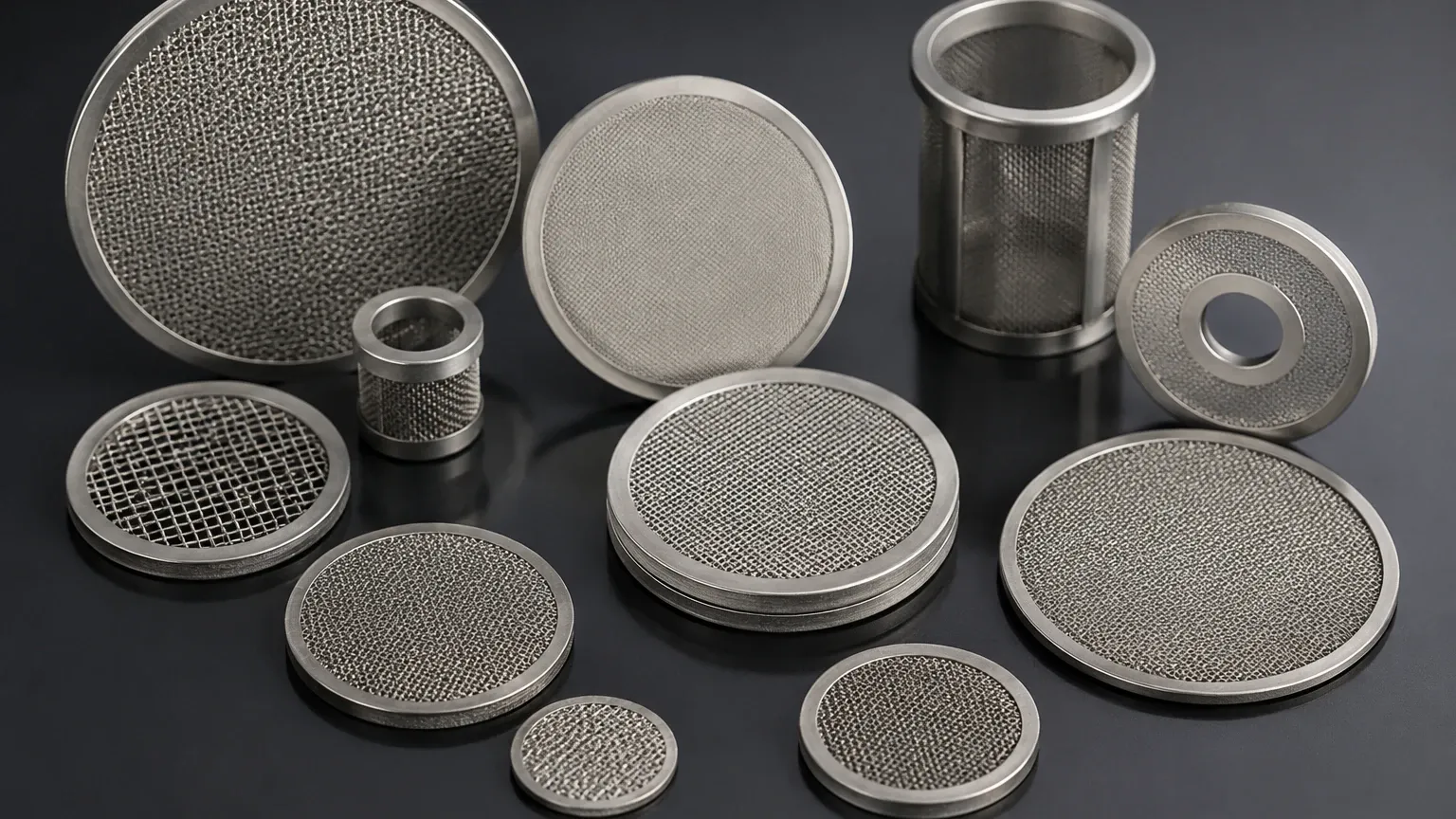
Filter mesh discs are circular (or custom-shaped) components cut from woven wire mesh. They serve as the primary barrier in a filtration system, designed to capture particles of a specific size while allowing the carrier fluid to pass through with minimal resistance. Unlike disposable paper or fabric filters, stainless steel filter mesh discs offer superior mechanical strength and are often reusable after proper cleaning.
In industrial applications, these discs are rarely used in isolation without careful consideration of their housing. They are frequently integrated into extruders, hydraulic systems, and chemical processing units. The performance of these discs is defined by their micron rating, which indicates the largest particle size that can pass through the mesh, and their effective filtration area, which dictates the flow capacity and pressure drop across the media.
Material Selection: Stainless Steel Grades and Their Properties
The choice of material is the first critical decision in the engineering process. Because filter mesh discs are often exposed to aggressive chemicals or high-temperature steam sterilization, stainless steel is the industry standard. The three most common grades used by manufacturers like Kaifil include:
* Stainless Steel 304: This is the most common grade for general-purpose industrial applications. It offers good corrosion resistance and excellent mechanical properties at a cost-effective price point. It is suitable for food processing, water treatment, and general industrial air filtration.
* Stainless Steel 316: Containing molybdenum, 316 stainless steel provides significantly higher resistance to chlorides and acids. This makes it the preferred choice for marine environments, chemical processing plants, and pharmaceutical applications where chemical stability is paramount.
* Stainless Steel 316L: The "L" stands for low carbon. This grade is essential when the filter mesh discs must be welded into packs or onto rims. The lower carbon content prevents carbide precipitation during the welding process, ensuring the corrosion resistance of the mesh remains intact at the heat-affected zones.
Beyond these, specialized alloys like Monel, Inconel, or Hastelloy may be used for extreme environments involving highly concentrated acids or temperatures exceeding 500°C.
Weave Types and Their Impact on Filtration Performance
The geometry of the weave determines how the filter mesh discs interact with the fluid stream. Different weave patterns provide different balances of strength, flow rate, and filtration accuracy.
Plain Weave
In a plain weave, each warp wire crosses over and under each shute wire. This creates a simple, square aperture. Plain weave filter mesh discs are ideal for high-flow applications where the filtration requirement is relatively coarse (typically above 50 microns). They are easy to clean and provide a high percentage of open area.
Twill Weave
Twill weave involves wires crossing over two and under two wires. This allows for the use of heavier wires for a given mesh count, resulting in a stronger mesh that can support finer filtration tasks. Twill weaves are often used when the pressure differential across the disc is expected to be high.
Dutch Weave (Plain and Twill)
Dutch weaves utilize different diameters for warp and shute wires. The shute wires are driven close together, creating a dense, wedge-shaped opening rather than a square one. This results in "depth filtration" characteristics within a single layer. Dutch weave filter mesh discs are capable of very fine filtration (down to 2–5 microns) and possess exceptional mechanical strength, making them the standard for high-pressure hydraulic and polymer filtration.
Single-Layer vs. Multi-Layer Filter Discs & Packs
Depending on the application, a single layer of mesh may not provide sufficient structural integrity or dirt-holding capacity. This is where multi-layer Filter Discs & Packs become necessary.
Single-Layer Discs
These are used in low-pressure applications or as secondary safety filters. They are lightweight and economical but can be prone to deformation if the pressure drop increases due to particle loading.
Multi-Layer Packs (Sintered or Spot-Welded)
Multi-layer packs combine different mesh counts to achieve specific performance goals. A typical configuration includes:
1. Filtration Layer: The fine mesh that determines the micron rating.
2. Support Layer: A coarser, heavier mesh that provides mechanical rigidity to prevent the fine mesh from collapsing under pressure.
3. Drainage Layer: Often placed on the downstream side to facilitate fluid flow away from the filtration surface.
These layers can be spot-welded at the edges or sintered (diffusion-bonded) together. Sintered filter mesh discs are the most robust, as the wires are fused at every contact point, ensuring no wire migration and a permanent, fixed pore structure.
Engineering Considerations for Industrial Integration
When specifying filter mesh discs for a project, engineers must evaluate several technical parameters to ensure system longevity and performance.
Pressure Drop (ΔP)
The pressure drop is the difference in pressure between the upstream and downstream sides of the filter. An optimized filter mesh disc should provide the required filtration efficiency with the lowest possible initial ΔP. As the disc captures contaminants, the ΔP will rise. Engineers must define the "terminal pressure drop"—the point at which the disc must be cleaned or replaced to prevent system failure or bypass.
Micron Rating: Absolute vs. Nominal
* Nominal Rating: Refers to the ability of the mesh to retain a certain percentage (e.g., 90%) of particles of a specific size. It is an approximation of the pore size.
* Absolute Rating: Refers to the diameter of the largest hard spherical particle that will pass through the mesh under specified test conditions. For critical pharmaceutical or aerospace applications, absolute-rated filter mesh discs are mandatory.
Mechanical Stability
In high-viscosity applications, such as polymer melt filtration, the discs are subjected to immense shear forces. The mesh must be engineered to resist "blinding" (permanent clogging) and structural failure. This often requires the use of reinforced rims or multi-layer sintered constructions.
Customization Options and Manufacturing Techniques
Industrial filtration is rarely a one-size-fits-all field. Customization is a core requirement for OEM equipment manufacturers. Filter mesh discs can be customized in several ways:
* Edge Treatment: Discs can be supplied with raw cut edges, or they can be finished with rims. Rims are typically made of aluminum, stainless steel, or copper. A rimmed edge provides a better seal within the filter housing and prevents the fraying of wires at the periphery.
* Shape Geometry: While circular discs are standard, advanced CNC cutting and die-stamping allow for the production of oval, rectangular, or complex geometric shapes to fit specific machinery footprints.
* Layer Sequencing: In multi-layer packs, the sequence of mesh sizes can be tailored to the specific particle size distribution of the process fluid, effectively creating a graduated density filter that extends the service life.
Kaifil specializes in these customized solutions, ensuring that the dimensions and tolerances of the filter mesh discs meet the exact specifications of the customer's equipment.
Maintenance, Cleaning, and Replacement Cycles
One of the primary advantages of stainless steel filter mesh discs is their cleanability. However, the cleaning method must be compatible with both the contaminant and the mesh structure.
Cleaning Methods
* Ultrasonic Cleaning: High-frequency sound waves create cavitation bubbles that dislodge fine particles from deep within the mesh pores. This is highly effective for Dutch weave and multi-layer packs.
* Backwashing: Reversing the flow of fluid through the filter can dislodge surface-level contaminants. This is common in automated self-cleaning systems.
* Chemical Cleaning: Using solvents or acids to dissolve organic or mineral deposits. It is critical to ensure the chemical agent does not compromise the stainless steel grade (e.g., avoiding high concentrations of hydrochloric acid on 304 mesh).
* Burn-off/Pyrolysis: For polymer applications, the discs may be placed in a high-temperature oven to carbonize the plastic residue, which is then removed via ultrasonic cleaning.
Determining Replacement
Despite their durability, filter mesh discs are not permanent. They should be replaced if there is evidence of "pore enlargement" due to erosion, mechanical deformation (cupping), or if the pressure drop remains high even after thorough cleaning. Establishing a regular inspection and replacement cycle is essential for maintaining process integrity.
Conclusion: Selecting the Right Filtration Component
Filter mesh discs are critical components that require a balance of filtration precision and mechanical durability. By selecting the correct stainless steel grade, weave pattern, and layer configuration, industrial operators can achieve efficient particulate removal while minimizing downtime and maintenance costs.
When sourcing these components, it is vital to partner with a manufacturer that understands the nuances of wire mesh engineering. Whether you require a standard single-layer disc for water treatment or a complex, rimmed multi-layer pack for chemical processing, the technical specifications must be verified against the operational demands of the application. For those seeking high-performance, customized solutions, exploring the range of Filter Discs & Packs provided by experienced manufacturers like Kaifil ensures that your filtration system operates at peak efficiency.
