


Filter Pack for 40000 and 41000
In the demanding field of polymer extrusion and industrial fluid processing, the integrity of the filtration system directly dictates the quality of the final product and the operational lifespan of downstream equipment. Among the various components used to maintain purity, the filter pack for 40000 and 41000 series equipment stands out as a critical consumable. These specific configurations are engineered to withstand high-pressure differentials while providing precise micron-level separation. For engineers and procurement teams, understanding the technical nuances of these filter packs is essential for optimizing throughput and minimizing unplanned downtime.
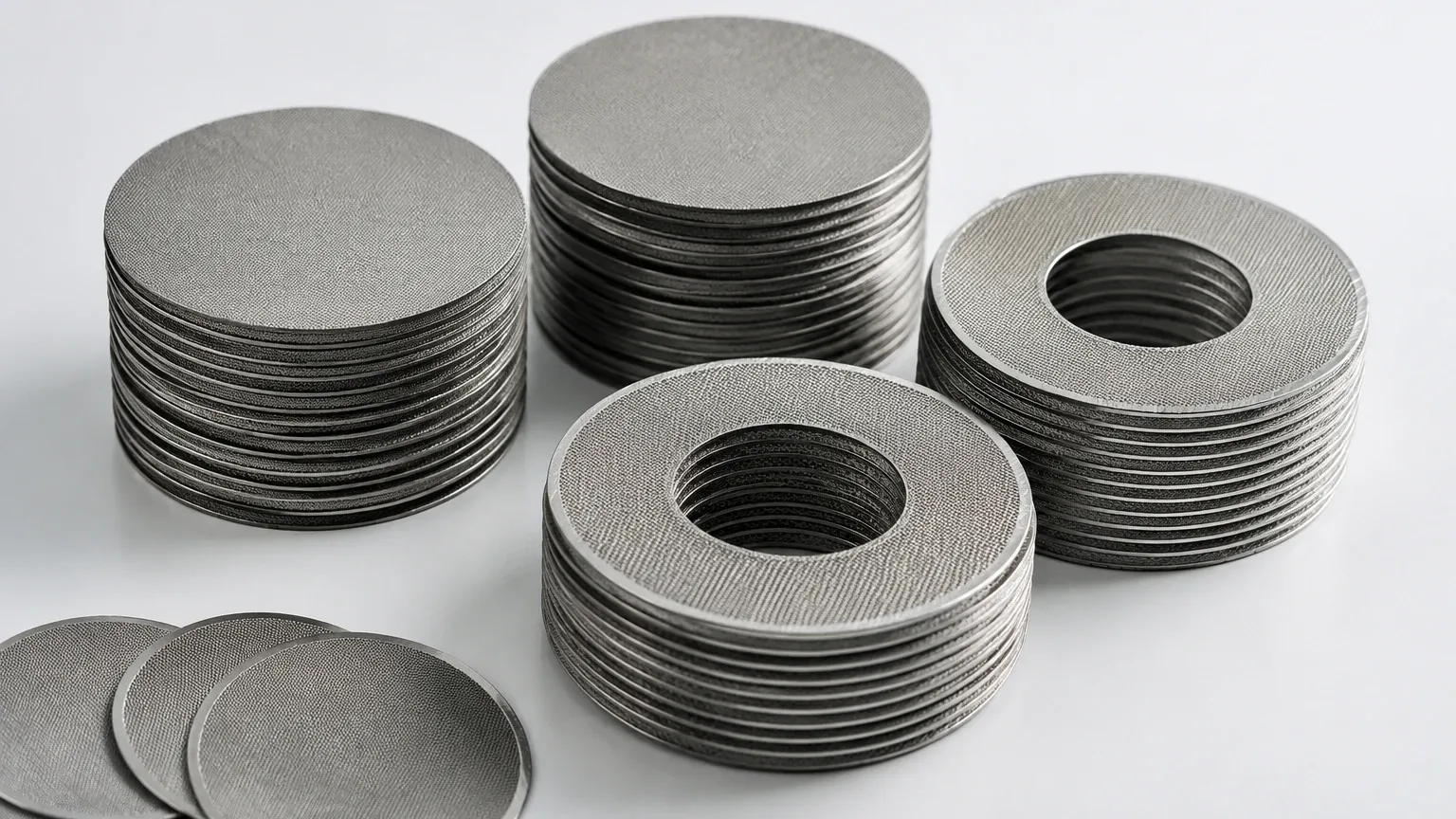
Industrial filtration is not merely about blocking contaminants; it is about managing fluid dynamics under extreme conditions. The 40000 and 41000 series specifications typically refer to high-capacity screen changers or melt filtration systems used in the production of plastics, resins, and chemical intermediates. These systems require Filter Discs & Packs that are built to exact tolerances to ensure a perfect seal within the machine housing, preventing bypass and ensuring consistent flow rates.
Technical Configuration of the Filter Pack for 40000 and 41000
The filter pack for 40000 and 41000 applications is rarely a single layer of mesh. Instead, it is a sophisticated multi-layer assembly designed to balance filtration fineness with structural rigidity. In high-viscosity applications like polymer melt filtration, a single fine mesh would collapse under the immense pressure required to force the material through. Therefore, these packs are constructed using a graduated density approach.
A typical configuration includes a fine filtration layer—often a Dutch weave or a high-density square weave—sandwiched between coarser support layers. The support layers, often referred to as "breaker" or "drainage" layers, provide the mechanical strength necessary to prevent the fine mesh from deforming into the holes of the breaker plate. For the 40000 and 41000 series, the total thickness of the pack and the specific sequence of mesh counts are critical parameters that must align with the equipment's recessed plate or slide plate dimensions.
Material Selection and Durability in High-Pressure Environments
Material science plays a pivotal role in the performance of industrial filters. For the filter pack for 40000 and 41000, stainless steel is the industry standard due to its combination of mechanical strength, thermal stability, and corrosion resistance. Kaifil utilizes high-grade alloys to meet different environmental demands:
* SS304: The most common choice for general industrial applications, offering excellent strength and basic corrosion resistance at a cost-effective price point.
* SS316/316L: Preferred for pharmaceutical, food-grade, or highly corrosive chemical processes. The addition of molybdenum in 316 stainless steel enhances resistance to pitting and crevice corrosion, particularly in chloride-rich environments.
* High-Temperature Alloys: In specialized extrusion processes where temperatures exceed standard operating ranges, specialized alloys may be employed to prevent oxidation and maintain the structural integrity of the wire mesh.
Selecting the right material ensures that the filter pack does not introduce metallic contaminants into the process stream through corrosion or mechanical failure, which is a primary concern in high-purity industries.
Comparing Rimmed vs. Spot-Welded Filter Discs & Packs
When specifying a filter pack for 40000 and 41000 systems, engineers must decide between different assembly methods, primarily spot-welded packs and rimmed (or bound) packs. Each has distinct advantages depending on the machine's design and the process requirements.
Spot-Welded Packs
Spot-welded packs consist of multiple layers of mesh joined at specific points using resistance welding. This method is highly effective for keeping the layers aligned during installation and operation. Because there is no external rim, spot-welded packs offer a slightly larger effective filtration area. They are often used in applications where the pack is held firmly in place by the internal geometry of the screen changer.
Rimmed/Bound Packs
Rimmed packs feature an aluminum, stainless steel, or copper border compressed around the edges of the mesh layers. This rim serves two purposes: it provides a robust mechanical seal against the housing of the 40000 or 41000 series equipment and protects the edges of the mesh from fraying. In high-pressure systems, the rim acts as a gasket, ensuring that all fluid is forced through the filtration media rather than leaking around the edges. This is often the preferred choice for systems where bypass prevention is the highest priority.
Performance Metrics: Filtration Accuracy and Pressure Stability
The primary function of any filter pack is to remove particles of a specific size. For the 40000 and 41000 series, filtration ratings can range from 5 microns to several hundred microns. However, filtration accuracy must be balanced against the "Clean Pressure Drop" ($ΔP$).
An overly dense filter pack will result in a high initial pressure drop, reducing the available "headroom" before the system reaches its maximum operating pressure. This leads to shorter production cycles and more frequent screen changes. Conversely, a pack that is too coarse will fail to protect downstream components like gear pumps or extrusion dies from abrasive wear. Engineering the ideal filter pack for 40000 and 41000 involves calculating the optimal mesh combination that provides the required purity with the lowest possible resistance to flow.
Furthermore, pressure stability is vital. As the filter cake builds up on the surface of the mesh, the differential pressure increases. A high-quality pack must maintain its shape and pore size throughout this cycle. If the mesh layers shift or the wires "screen out" (distort), the filtration rating becomes inconsistent, potentially allowing oversized particles to pass through—a phenomenon known as unloading.
Optimizing Filtration Efficiency and Replacement Cycles
In a B2B manufacturing context, the total cost of ownership (TCO) for filtration is determined not just by the unit price of the filter pack, but by the frequency of replacement and the impact on production uptime. For users of 40000 and 41000 series equipment, optimizing the replacement cycle is a key lever for profitability.
Signs that a filter pack requires replacement include:
1. Pressure Spikes: A rapid increase in upstream pressure indicates that the mesh is blinded or the filter cake has become impermeable.
2. Reduced Flow Rate: If the pump speed must be increased significantly to maintain output, the filter is likely reaching the end of its effective life.
3. Product Impurities: Visual or laboratory confirmation of contaminants in the extrudate suggests a breach in the filter media or a bypass issue.
By utilizing precision-manufactured Filter Discs & Packs, operators can ensure more predictable pressure curves. Kaifil’s focus on uniform wire diameter and consistent weave patterns ensures that each pack performs identically to the last, allowing engineers to schedule maintenance based on reliable data rather than guesswork.
Engineering Considerations for Custom OEM Solutions
While standard sizes for the 40000 and 41000 series exist, many industrial processes require customized solutions to address specific challenges. These might include unique chemical additives that react with standard stainless steel or ultra-high-pressure environments that require reinforced support structures.
When partnering with a manufacturer like Kaifil for custom filtration components, engineers should be prepared to confirm the following technical details:
* Fluid Viscosity and Temperature: Influences the choice of mesh weave and material grade.
* Contaminant Type: Is the debris hard and abrasive, or soft and gel-like? This determines whether a surface filtration or depth filtration approach is needed.
* Housing Dimensions: Precise measurements of the screen changer’s cavity are necessary to ensure a leak-proof fit.
* Operating Pressure: Determines the number of support layers required to prevent mesh deformation.
Kaifil’s advanced manufacturing capabilities allow for the production of bespoke filter pack for 40000 and 41000 configurations that meet these specific demands. From material selection to the final assembly method, every aspect of the filter is engineered to provide reliable performance in the most demanding industrial environments. By focusing on precision and durability, Kaifil helps global customers achieve efficient, cost-effective filtration that protects their equipment and ensures the quality of their output.
