


Filter Pack for Desktop Air Purifier
In the landscape of precision air filtration, the demand for compact yet highly efficient systems has grown significantly. While large-scale HVAC systems and industrial scrubbers handle massive volumes of air, specialized desktop air purifiers and localized fume extractors play a critical role in laboratory settings, electronics manufacturing, and chemical processing. At the heart of these compact systems lies the filtration media, often configured as specialized metal components. Understanding the engineering behind a filter pack for desktop air purifier applications is essential for OEMs and facility engineers who require durability and precision beyond what standard synthetic filters can provide.
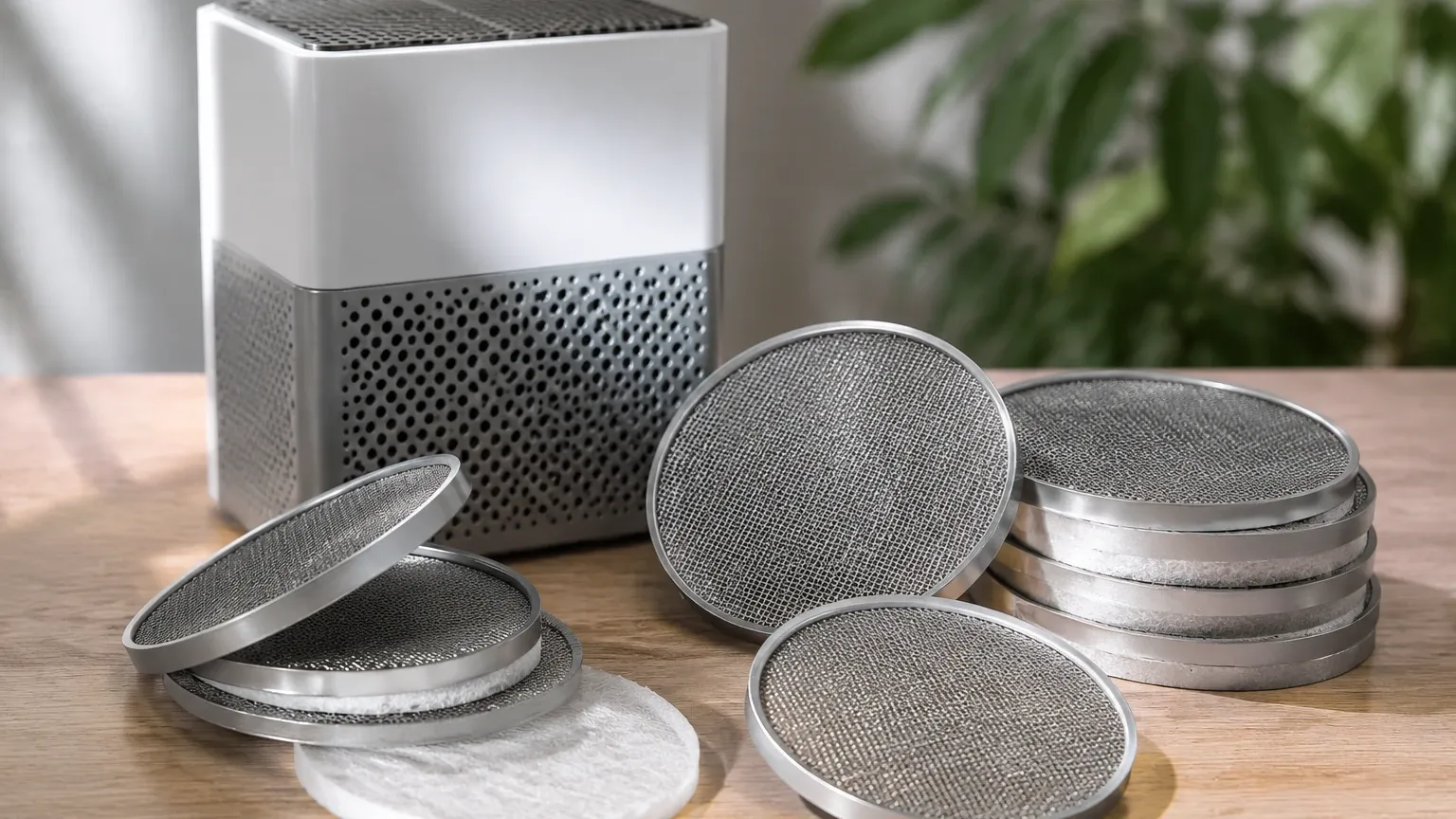
Industrial-grade desktop air purifiers often move away from disposable paper or plastic-based media in favor of robust metal solutions. These systems frequently utilize Filter Discs & Packs constructed from stainless steel wire mesh. These components serve as either primary filtration stages for coarse particles or as protective pre-filters for sensitive HEPA and ULPA stages, ensuring the longevity and reliability of the entire purification unit.
The Engineering of Metal Filter Discs & Packs
When designing a filter pack for desktop air purifier units intended for industrial or technical use, the construction of the filter media is the most critical factor. Unlike single-layer screens, a filter pack typically consists of multiple layers of wire mesh, each serving a specific mechanical purpose.
Multi-Layer Construction
Most high-performance filter packs are composed of several layers of stainless steel wire mesh. A common configuration includes:
* The Filtration Layer: A fine-mesh layer (often Dutch weave or high-count plain weave) that determines the actual micron rating and particle retention capability.
* Support Layers: Coarser mesh layers placed on either side of the filtration layer to provide mechanical strength and prevent the fine mesh from deforming under air pressure.
* Drainage Layers: In some specialized air purifiers used in environments with high humidity or oil mist, these layers help coalesce droplets and allow them to drain away from the airflow path.
Binding and Edging Techniques
To ensure the integrity of the filter pack for desktop air purifier systems, the layers must be securely bound. In industrial B2B applications, this is achieved through two primary methods:
1. Spot Welding: The layers are welded together at specific points along the circumference. This is cost-effective and suitable for packs that will be housed within a tight-fitting internal frame.
2. Rimmed Edging: The mesh layers are enclosed within a metal rim, typically made of aluminum or stainless steel. This provides a smooth, rigid edge that facilitates easy installation and replacement while preventing bypass—a common issue where air leaks around the edges of the filter rather than passing through the media.
Material Selection for Demanding Environments
One of the primary reasons engineers specify metal Filter Discs & Packs for desktop units is material compatibility. Standard synthetic filters are often susceptible to chemical degradation, high temperatures, and moisture.
Stainless Steel 304 and 316
Stainless steel is the industry standard for high-performance filtration. SS304 offers excellent strength and basic corrosion resistance, making it suitable for general-purpose air purification. However, for desktop units used in chemical laboratories or pharmaceutical cleanrooms where corrosive vapors may be present, SS316 is preferred due to its superior resistance to pitting and chloride-induced corrosion.
Specialized Alloys
In extreme cases—such as desktop units used in high-heat soldering stations or specialized gas processing—alloys like Monel or Inconel may be utilized. These materials maintain their structural integrity at temperatures that would melt or ignite standard synthetic filter packs.
Performance Criteria: Micron Rating and Pressure Drop
For an engineer selecting a filter pack for desktop air purifier integration, two technical metrics are paramount: filtration accuracy and pressure drop.
Balancing Filtration Accuracy
The micron rating of a filter pack determines the size of particles it can effectively capture. In air purification, metal mesh packs are often used for pre-filtration (capturing particles from 20 to 100 microns) or as secondary filters for larger airborne debris. By selecting the correct mesh count, engineers can protect downstream components, such as activated carbon beds or HEPA filters, from premature clogging.
Managing Pressure Drop (ΔP)
Desktop air purifiers typically use smaller, lower-power fans compared to industrial HVAC systems. Therefore, the "pressure drop"—the resistance the filter offers to the airflow—must be carefully managed. A high-density filter pack might offer excellent particle capture but could restrict airflow so severely that the purifier’s motor overheats or its Clean Air Delivery Rate (CADR) drops below acceptable levels. Engineering the right balance between mesh density and surface area is critical for maintaining system efficiency.
Advantages of Metal Packs in Desktop Air Purification
Why choose a metal filter pack for desktop air purifier applications over disposable alternatives? The decision usually comes down to the total cost of ownership (TCO) and operational reliability.
Cleanability and Reusability
Unlike synthetic filters, which must be discarded once they reach their dust-holding capacity, stainless steel filter packs can often be cleaned and reused. Methods such as ultrasonic cleaning, back-flushing with air, or chemical soaking can restore the filter's original permeability. This is particularly valuable in B2B environments where minimizing waste and reducing recurring procurement costs are priorities.
Structural Rigidity
In compact desktop units, space is at a premium. Metal filter discs are self-supporting and do not require the bulky plastic frames or pleated structures that synthetic filters do. This allows for a more streamlined internal design of the air purifier, potentially reducing the overall footprint of the device.
Fire and Heat Resistance
In applications involving soldering, laser marking, or 3D printing, the air being filtered may contain hot embers or high-temperature gases. Metal Filter Discs & Packs provide an inherent safety barrier, as they are non-combustible and can act as flame arrestors, protecting the internal electronics of the desktop unit.
Customization for OEM Applications
Most industrial desktop air purifiers are designed for specific niche markets, meaning off-the-shelf filtration solutions are rarely sufficient. Customization is often required to meet the exact dimensions and performance specs of a proprietary housing.
Geometry and Dimensions
While "discs" are common, filter packs can be manufactured in various shapes, including rectangular, oval, or annular (ring-shaped). Precision die-cutting ensures that each filter pack for desktop air purifier fits perfectly within its designated slot, preventing the bypass of unfiltered air.
Layer Configuration
Engineers can specify the exact sequence of mesh layers. For example, a three-layer pack might consist of a 50-mesh support layer, a 200-mesh filtration layer, and another 50-mesh support layer. This "sandwich" construction provides a balanced profile of strength and filtration efficiency tailored to the specific fan curve of the desktop unit.
Maintenance and Replacement Cycles
Even the most durable metal filter pack requires a maintenance schedule to ensure optimal performance. In a B2B context, this is typically handled through a preventative maintenance program.
1. Monitoring Pressure Drop: Many high-end desktop air purifiers include a pressure sensor. When the ΔP across the filter pack increases beyond a set threshold, it indicates that the mesh is loaded with particulates and requires cleaning or replacement.
2. Visual Inspection: In environments with heavy particulate loading, regular visual checks can identify surface buildup that might not yet trigger a pressure alarm but could still reduce airflow velocity.
3. Cleaning Protocols: For reusable stainless steel packs, establishing a standardized cleaning protocol—such as a 15-minute ultrasonic bath followed by compressed air drying—ensures that the filtration performance remains consistent over many cycles.
Conclusion: Selecting the Right Partner for Filtration Solutions
Choosing the correct filter pack for desktop air purifier systems is an engineering decision that impacts the efficiency, safety, and operational cost of the equipment. By opting for high-quality metal Filter Discs & Packs, manufacturers can provide their customers with a product that is not only effective at capturing contaminants but also durable enough to withstand harsh industrial or laboratory environments.
When evaluating a supplier for these components, engineers should confirm the manufacturer's ability to provide precise micron ratings, high-grade materials like SS316, and the capability to produce custom shapes and rimmed edges. A well-engineered filter pack does more than just clean the air; it protects the integrity of the entire purification system, ensuring long-term performance and user safety in the most demanding localized air filtration applications.
