


Filter Pack Well
In industrial filtration and well construction, the integrity of the filtration system is paramount to the longevity of the equipment and the purity of the output. The term "filter pack well" encompasses the strategic design and implementation of filtration media—specifically stainless steel mesh and multilayered packs—within a wellbore or a cylindrical industrial housing. For engineers and procurement specialists, understanding how to optimize a filter pack well involves a deep dive into material science, fluid dynamics, and mechanical engineering.
Whether the application involves groundwater extraction, oil and gas recovery, or high-pressure polymer extrusion, the "well" or housing that contains the filter pack must be engineered to withstand significant differential pressures while maintaining precise filtration accuracy. This guide explores the technical considerations necessary to ensure a filter pack performs reliably in demanding industrial environments.
Understanding the Role of Filter Packs in Industrial and Well Applications
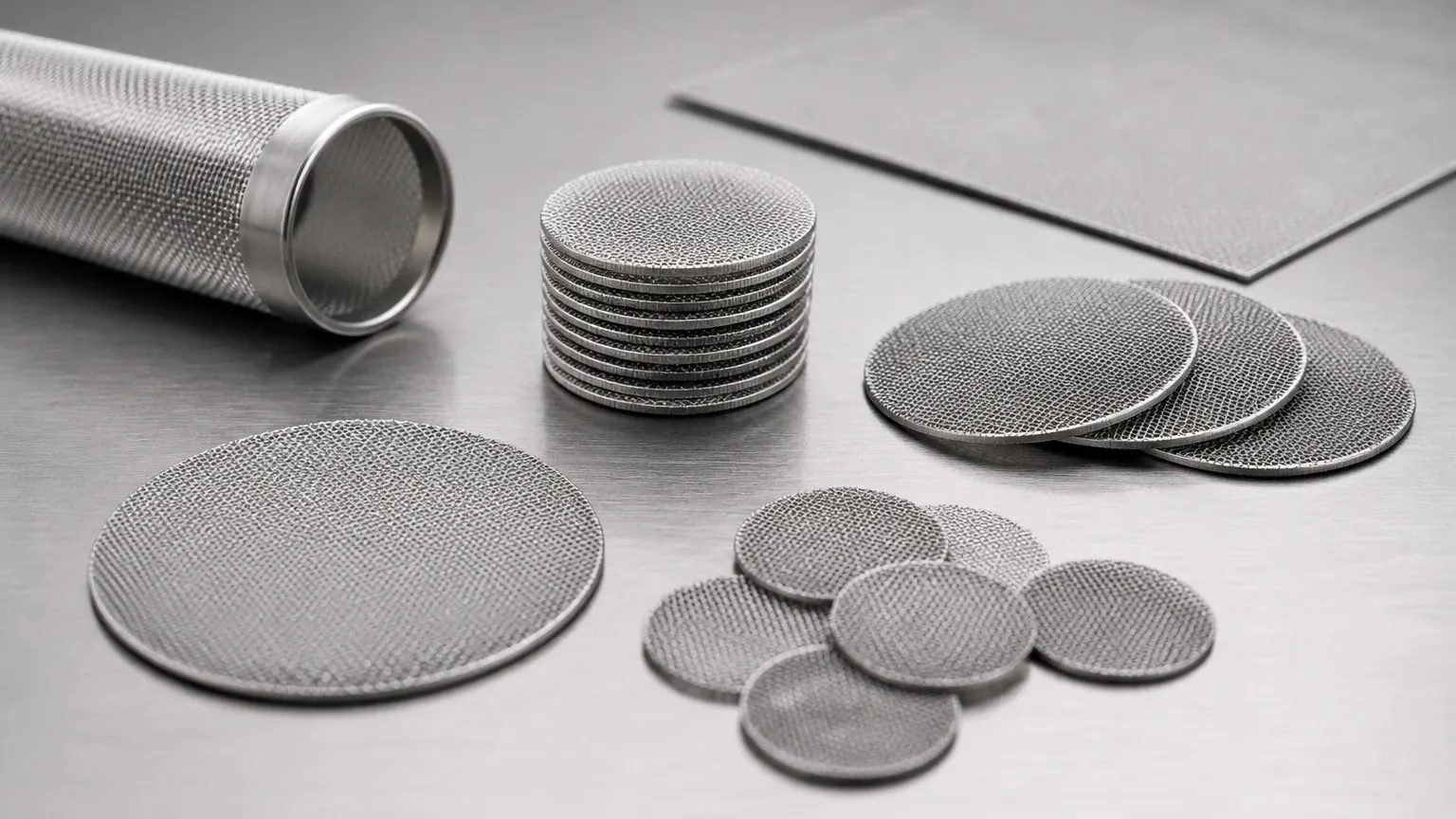
A filter pack serves as the primary barrier against particulate contamination. In the context of a well, it refers to the media placed between the formation and the screen to prevent sand and silt from entering the system. In broader industrial terms, a filter pack well refers to the assembly of Filter Discs & Packs within a machine's filtration chamber.
The primary objective of a filter pack is to provide a controlled environment where fluid can pass through with minimal resistance (low pressure drop) while trapping solids of a specific micron size. For stainless steel solutions, this is achieved through the layering of different mesh counts. A typical configuration might include a fine filtration layer protected by coarser support layers on both sides. This graduated density ensures that the pack does not clog prematurely, extending the operational life of the system.
Engineering Considerations for Stainless Steel Filter Pack Design
When designing a filter pack for a well or industrial housing, several engineering variables must be balanced. The selection of wire mesh is not merely about the hole size; it involves the geometry of the weave and the mechanical strength of the wire.
Weave Types and Their Impact
1. Plain Weave: The most common and cost-effective, where each warp wire crosses over and under each weft wire. It provides high flow rates but limited mechanical strength for high-pressure well applications.
2. Twill Weave: Each wire passes over two and under two wires, allowing for a heavier wire diameter for a given mesh count. This is ideal for filter packs that must withstand high physical stress.
3. Dutch Weave (Plain and Twill): These weaves use different diameters for warp and weft wires, resulting in a much tighter, more robust mesh. Dutch weaves are the standard for precision filtration in a filter pack well, as they offer superior cake release and high-pressure resistance.
Sintering vs. Spot Welding
For multilayered packs, the method of bonding the layers is critical. Spot-welded packs are economical and effective for applications where the pack is replaced frequently. However, for high-pressure environments or where fiber migration must be zero, sintered filter packs are preferred. Sintering uses heat and pressure to fuse the wires at every contact point without the use of binders, creating a monolithic structure that maintains its pore size even under extreme mechanical loads.
Material Selection: Why Stainless Steel Outperforms Traditional Media
In many traditional well applications, gravel or sand packs are used. However, in modern industrial and high-depth well environments, stainless steel has become the authoritative choice. The transition to stainless steel filter packs is driven by three factors: chemical compatibility, thermal stability, and mechanical durability.
Chemical Compatibility
Industrial fluids, particularly in chemical processing and oil recovery, can be highly corrosive. Type 304 stainless steel is suitable for general-purpose filtration, but for environments involving chlorides or high acidity, Type 316L is required. The "L" stands for low carbon, which improves weldability and prevents intergranular corrosion, ensuring the filter pack well remains intact over years of service.
Thermal Stability
Unlike synthetic or organic filter media, stainless steel packs can operate at temperatures exceeding 400°C (752°F). This is essential for polymer extrusion and steam filtration, where the filter must maintain its structural integrity while the fluid's viscosity changes rapidly.
Installation and Seating: Ensuring the Filter Pack Sits Well in the Housing
A common failure point in filtration systems is not the media itself, but the bypass of fluid around the media. To ensure a filter pack sits well in its housing, the rim or edge construction must be precise.
Rim Options
* Aluminum Rims: Provide a soft, deformable seal that is excellent for high-pressure seating in extruders.
* Stainless Steel Rims: Offer maximum durability and are often used in permanent or semi-permanent well installations.
* Copper Rims: Used in specific chemical environments where aluminum might react with the process fluid.
The diameter of the Filter Discs & Packs must be manufactured to tight tolerances. If the pack is even a fraction of a millimeter too small, "edge leakage" occurs, allowing unfiltered fluid to contaminate the downstream flow. Conversely, a pack that is too large may buckle during installation, creating gaps in the mesh layers.
Performance Metrics and Maintenance Cycles
To manage a filter pack well, engineers must monitor two primary metrics: Differential Pressure (ΔP) and Flow Velocity.
Monitoring Differential Pressure
As the filter pack captures particles, the resistance to flow increases. A well-designed system will have a predictable "clean" pressure drop. When the ΔP reaches a pre-defined limit (the terminal pressure drop), the pack must be cleaned or replaced. In well applications, a sudden spike in pressure often indicates "blinding," where the surface of the mesh is covered in a thin layer of fine sediment.
Cleaning and Reuse
One of the greatest advantages of stainless steel filter packs is their cleanability. Depending on the contaminant, packs can be cleaned using:
* Ultrasonic Cleaning: High-frequency sound waves create cavitation bubbles that dislodge particles from deep within the mesh.
* Backwashing: Reversing the flow of fluid to push contaminants out of the mesh pores.
* Chemical Cleaning: Using solvents or acids to dissolve organic or mineral buildup without damaging the stainless steel.
Understanding the total cost of ownership involves weighing the initial higher cost of stainless steel packs against the savings realized through multiple cleaning cycles and reduced downtime.
Customization Options for Demanding Environments
No two filtration applications are identical. A filter pack well in a pharmaceutical line has vastly different requirements than one in a deep-water oil well. Customization is the key to optimization.
Layer Configuration
Engineers can specify the exact sequence of mesh layers. For example, a five-layer sintered pack might consist of a drainage layer, a support layer, a fine filtration layer, and two outer protective layers. This specific "recipe" is tailored to the particle size distribution of the fluid and the expected flow rate.
Shape and Geometry
While circular discs are standard, filter packs can be manufactured in oval, rectangular, or complex kidney shapes to fit specific machine manifolds. Advanced manufacturing techniques like laser cutting and precision stamping ensure that even complex shapes maintain the structural integrity of the mesh edges.
Common Risks and Mitigation Strategies
When implementing a filter pack well, certain risks must be mitigated through careful selection and engineering:
1. Media Migration: In low-quality packs, individual wires can break and enter the fluid stream. Using high-quality, sintered stainless steel eliminates this risk.
2. Compressive Failure: Under high pressure, the layers of a pack can compress, reducing the effective pore size and causing premature clogging. Support layers with high wire diameters are used to prevent this.
3. Galvanic Corrosion: If a stainless steel pack is placed in a housing of a different metal in a conductive fluid, corrosion can occur. Selecting compatible alloys or using specialized coatings can prevent this electrochemical reaction.
Conclusion: Selecting the Right Partner for Filter Pack Well Solutions
Optimizing a filter pack well requires more than just buying a commodity component; it requires a partnership with a manufacturer that understands the nuances of industrial filtration. From selecting the correct alloy to determining the ideal layer configuration and rim material, every decision impacts the efficiency and reliability of your operation.
When evaluating suppliers for Filter Discs & Packs, engineers should confirm the manufacturer's ability to provide detailed material certifications, micron rating verifications, and custom design support. By focusing on precision engineering and high-quality stainless steel media, industrial operations can achieve longer maintenance cycles, higher product purity, and a lower total cost of ownership in their filtration processes.
