


V Filter Replacement
In industrial filtration, the efficiency of a system is heavily dependent on the structural integrity and cleanliness of its core components. Whether used in chemical processing, polymer extrusion, or hydraulic systems, V-shaped filtration elements—often characterized by their pleated or high-surface-area geometry—play a vital role in maintaining fluid purity. Executing a timely and technically sound v filter replacement is not merely a maintenance task; it is a critical engineering intervention that prevents equipment downtime, protects downstream components, and ensures consistent product quality.
For engineers and procurement teams, understanding the technical nuances of these components is essential. This guide explores the engineering considerations, material requirements, and performance indicators associated with replacing high-performance metal filtration elements, specifically focusing on how Filter Discs & Packs and pleated stainless steel assemblies function within demanding industrial environments.
Technical Indicators for V Filter Replacement
The decision to perform a v filter replacement should be driven by empirical data rather than arbitrary schedules. In industrial fluid dynamics, several key indicators signal that a filter has reached the end of its effective service life.
Differential Pressure (Delta P)
The most reliable metric for filter health is the pressure drop across the element. As contaminants accumulate on the surface or within the depth of the wire mesh, the effective flow area decreases, leading to an increase in differential pressure. Most industrial systems are designed with a maximum allowable Delta P. Exceeding this limit can result in "media migration," where the pressure forces contaminants through the mesh, or structural failure of the filter element itself.
Reduced Flux and Flow Rates
In gravity-fed or constant-pressure systems, a noticeable reduction in flow rate (flux) indicates significant blinding of the filter media. For processes like polymer extrusion or chemical synthesis, inconsistent flow can lead to thermal degradation of the product or imbalances in chemical reactions. Monitoring flux helps determine if the internal geometry of the V-shaped filter is compromised by irreversible fouling.
Contaminant Bypass and Quality Fluctuations
If downstream sensors detect an increase in particulate matter despite the filter being in place, it often suggests that the filter media has been breached. This is common in aged stainless steel filters where fatigue from pressure cycles has caused micro-cracks in the wire mesh or the weld points of the filter pack.
Material Engineering in Replacement Components
When selecting materials for a v filter replacement, engineering teams must evaluate the chemical and thermal environment of the application. Stainless steel is the industry standard due to its durability, but the specific grade significantly impacts performance.
* Stainless Steel 304: Suitable for general industrial applications where moisture is present but corrosive chemicals are limited. It offers excellent mechanical strength and cost-effectiveness for standard hydraulic and water treatment tasks.
* Stainless Steel 316L: The "L" denotes low carbon content, which provides superior resistance to intergranular corrosion after welding. This is the preferred material for pharmaceutical, food and beverage, and aggressive chemical processing. Its high molybdenum content provides resistance to pitting in chloride-heavy environments.
* Specialty Alloys: In extreme cases involving high-temperature acids or high-salinity fluids, alloys like Hastelloy or Inconel may be integrated into the filter discs and packs to ensure longevity.
Beyond the alloy, the type of weave used in the replacement element dictates the filtration characteristics. Plain weave provides a straight-through flow path, while Dutch weave (Plain or Twill) offers a more complex, tortuous path that allows for finer micron ratings and higher mechanical stability under pressure.
Structural Variations: Filter Discs & Packs
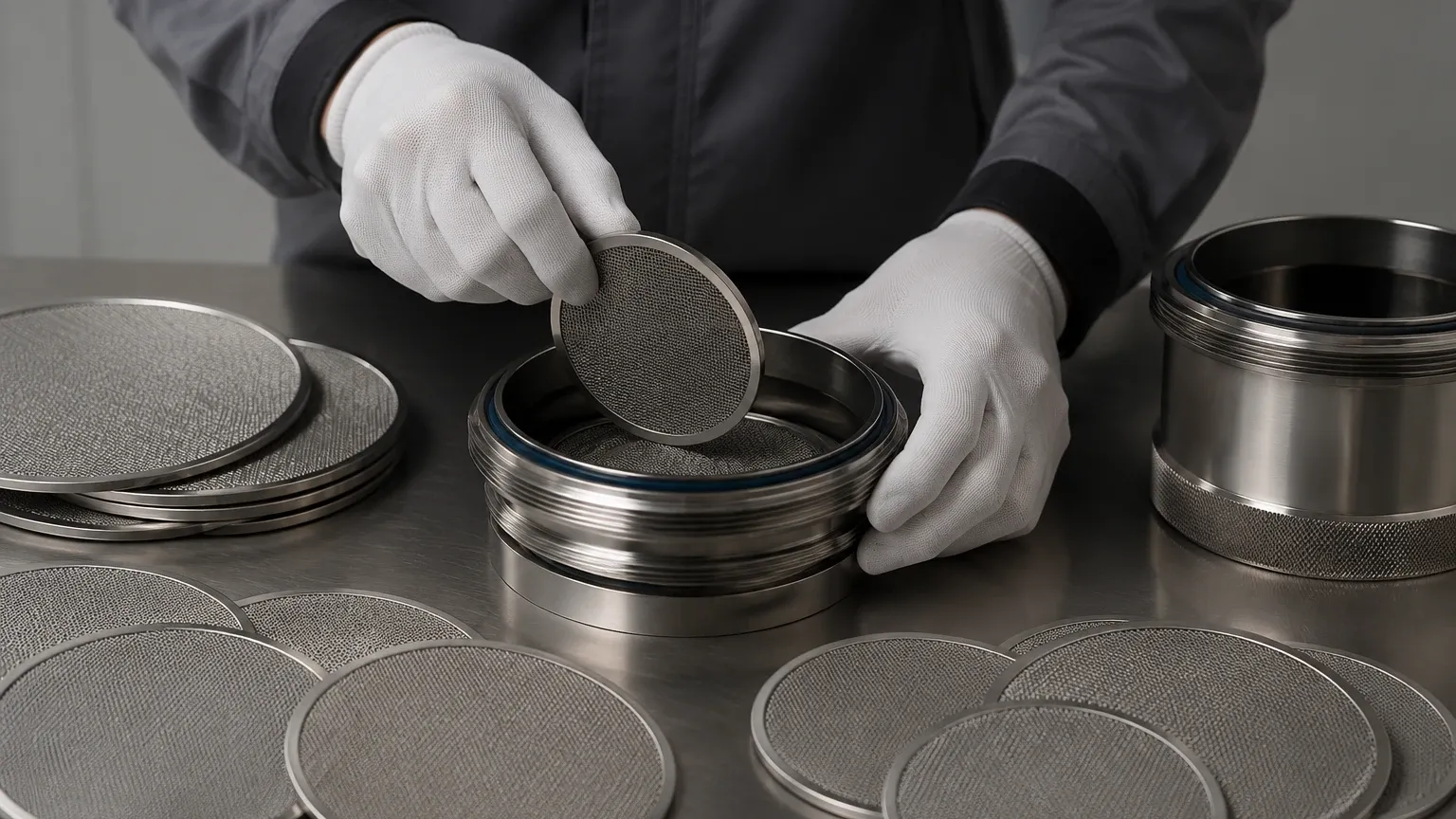
Many systems requiring a v filter replacement utilize a combination of pleated elements and specialized Filter Discs & Packs. These components are often engineered as multi-layer structures to balance filtration fineness with structural rigidity.
Multi-Layer Sintered Mesh
For high-pressure applications, single layers of wire mesh may deform. Replacement elements often use sintered mesh, where multiple layers of wire cloth are bonded together through a heat-treatment process. A typical configuration includes a fine filtration layer protected by coarser support layers on both sides. This structure ensures that the V-shaped pleats maintain their geometry even when subjected to high-viscosity fluids.
Rimmed and Framed Designs
To ensure a leak-proof seal during replacement, filter discs are often finished with aluminum, stainless steel, or copper rims. These rims provide a compression surface for gaskets, ensuring that fluid cannot bypass the filter media. When specifying a replacement, the thickness and material of the rim must match the original housing specifications to prevent mechanical interference.
The Role of Micron Rating and Porosity
One of the most common mistakes in v filter replacement is selecting a micron rating that is either too fine or too coarse for the application. The micron rating defines the size of particles the mesh is intended to intercept.
* Absolute vs. Nominal Rating: An absolute rating implies that 99.9% of particles above a certain size will be captured, whereas a nominal rating is more of an average. For critical pharmaceutical or hydraulic applications, absolute-rated stainless steel mesh is required to prevent sensitive component damage.
* Porosity and Dirt-Holding Capacity: High porosity allows for lower initial pressure drops and longer service intervals. Pleated V-filters increase the available surface area compared to flat discs, significantly improving the dirt-holding capacity. During replacement, engineers should verify if an upgrade to a higher-surface-area design is possible within the existing housing to extend the time between maintenance cycles.
Best Practices for Executing a V Filter Replacement
Replacing industrial filtration components requires a systematic approach to ensure system integrity and operator safety.
1. System De-pressurization: Before opening any filter housing, the system must be fully de-pressurized and drained. This is especially critical in hydraulic and high-temperature chemical lines.
2. Inspection of the Housing: Once the old filter is removed, the internal surfaces of the housing should be inspected for signs of erosion, corrosion, or bypass tracking. Any damage to the seating surface will render a new filter ineffective.
3. Seal and Gasket Replacement: It is a best practice to replace all elastomeric seals or metal gaskets during the filter change-out. Reusing old seals is a primary cause of external leaks and internal bypass.
4. Proper Orientation: Many V-shaped filters are directional. Installing a filter backwards can lead to the collapse of the pleats or the mesh, as the support structures are usually designed to withstand pressure from one specific direction.
5. Ultrasonic Cleaning of Reusable Elements: If the system uses cleanable stainless steel filters, the replacement cycle may involve rotating in a cleaned spare. Ultrasonic cleaning is the most effective method for removing deeply embedded particulates from complex wire mesh structures without damaging the delicate wires.
Customization and OEM Considerations
In many industrial settings, standard off-the-shelf filters do not meet the precise requirements of specialized machinery. Customization is often necessary during a v filter replacement to optimize performance. Engineering teams should consider the following when ordering custom components:
* Dimensional Accuracy: Precise outer and inner diameters are required to ensure a snug fit within the filter stack.
* Mesh Layer Configuration: Depending on the debris profile (e.g., gelatinous vs. crystalline), the sequence of mesh layers in a filter pack can be customized to prevent premature surface blinding.
* Welding Techniques: For high-purity applications, TIG or plasma welding is preferred over spot welding to eliminate crevices where bacteria or contaminants could accumulate.
By working with a manufacturer that specializes in custom stainless steel solutions, purchasing teams can ensure that the replacement parts meet or exceed the original equipment manufacturer (OEM) specifications, often at a more competitive total cost of ownership.
Total Cost of Ownership (TCO) and Maintenance Cycles
While the initial cost of a stainless steel v filter replacement may be higher than disposable synthetic alternatives, the long-term economic benefits are substantial. Stainless steel elements offer high thermal stability, chemical resistance, and the ability to be cleaned and reused multiple times.
When calculating TCO, engineers should factor in:
* Reduced Frequency of Replacement: Durable metal mesh lasts significantly longer than polymer fibers.
* Waste Reduction: Reusable filters contribute to corporate sustainability goals by reducing the volume of contaminated waste sent to landfills.
* Protection of Downstream Assets: High-quality Filter Discs & Packs protect expensive pumps, valves, and nozzles, preventing costly repairs that far outweigh the price of the filtration element.
Conclusion
A successful v filter replacement strategy relies on a deep understanding of fluid dynamics, material science, and mechanical design. By monitoring differential pressure, selecting the appropriate stainless steel grades, and ensuring precise structural specifications, industrial facilities can maintain peak operational efficiency. Whether you are managing a complex chemical reactor or a high-pressure hydraulic system, the quality of your filtration components is the first line of defense against process instability and equipment failure.
