


Filter Replacement Pack
In high-precision industrial filtration, the reliability of a filtration system is often determined by the quality and specifications of its consumable components. For engineers and procurement teams managing polymer extrusion, chemical processing, or hydraulic systems, the selection of a filter replacement pack is a critical decision that impacts both product purity and equipment longevity. These packs, often comprised of multiple layers of stainless steel wire mesh, are designed to withstand high pressures and temperatures while maintaining strict micron-level accuracy.
Industrial filtration demands more than just a physical barrier; it requires a deep understanding of fluid dynamics, material science, and mechanical engineering. When sourcing Filter Discs & Packs, technical professionals must evaluate the structural integrity of the mesh, the compatibility of the alloys used, and the precision of the assembly process to ensure that the replacement components match or exceed the performance of the original equipment.
Technical Anatomy of Filter Discs and Packs
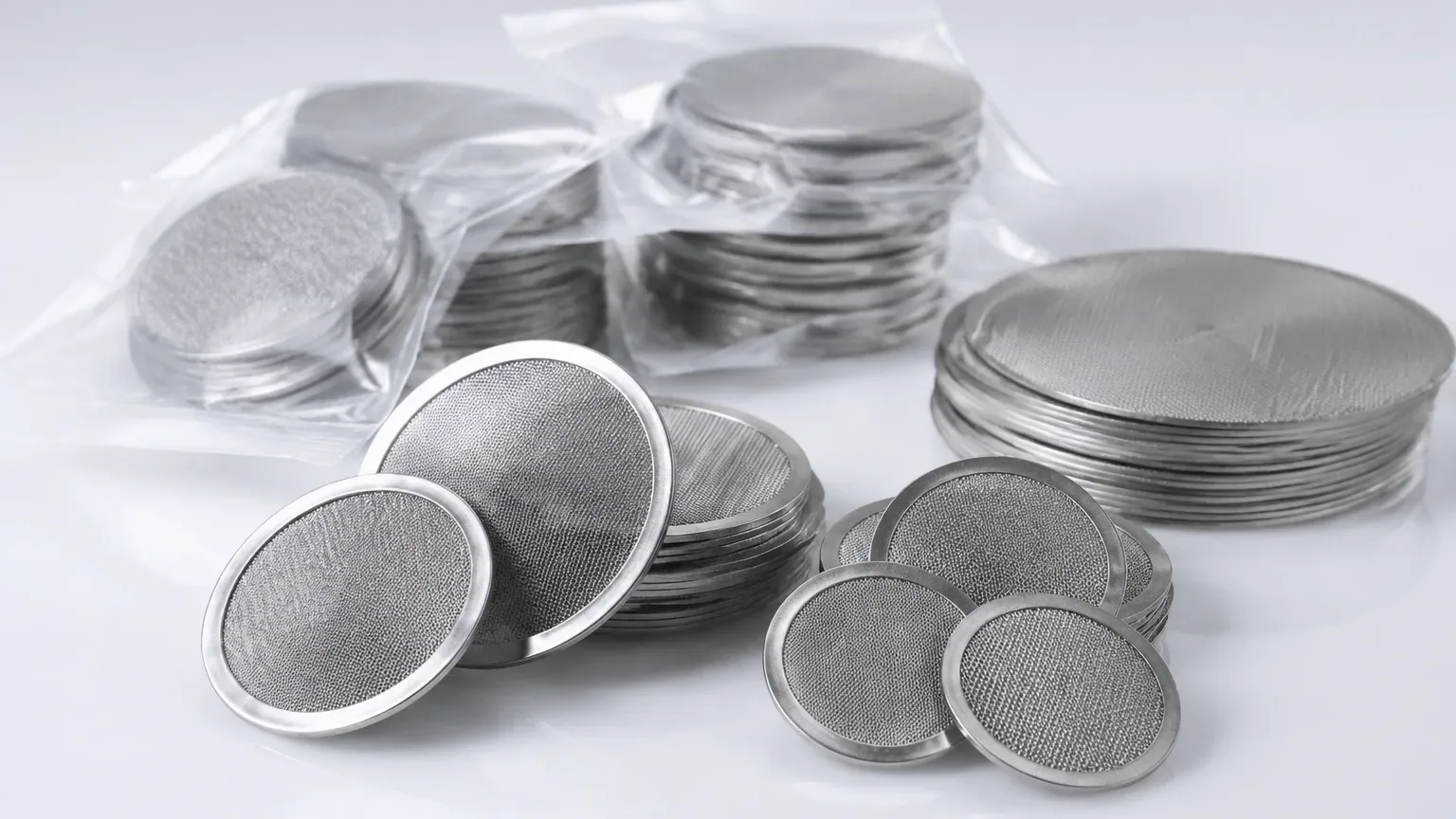
A standard filter replacement pack is rarely a single sheet of mesh. In most industrial applications, especially those involving high-viscosity fluids like molten plastics or resins, a multi-layer configuration is necessary. This "sandwich" structure typically consists of a fine filtration layer supported by coarser mesh layers on both sides.
Layering Strategy
1. Filtration Layer: This is the core of the pack, determined by the required micron rating. It is usually a fine weave, such as a Dutch weave or a high-density plain weave, designed to capture specific particle sizes.
2. Support Layers: Because fine mesh lacks the structural rigidity to withstand high differential pressures, coarser mesh layers are added. These provide mechanical strength and prevent the filtration layer from deforming or collapsing under the force of the flow.
3. Drainage/Protection Layers: In some configurations, outer layers are added to protect the inner mesh from mechanical damage during installation or to facilitate the even distribution of the fluid across the entire surface area of the disc.
By combining different mesh counts and wire diameters, manufacturers can customize the pack to achieve an optimal balance between filtration precision and flow resistance. The layers are typically joined through spot welding at the edges or encased in a metal rim to ensure they remain a cohesive unit during operation.
Material Selection for Demanding Environments
The choice of material for a filter replacement pack is dictated by the chemical composition of the fluid being filtered and the operating temperature of the system. Stainless steel is the industry standard due to its excellent mechanical properties and resistance to corrosion.
Stainless Steel 304
SS 304 is the most common material for general industrial applications. It offers good corrosion resistance and is cost-effective for environments where the fluid is not highly acidic or alkaline. It is widely used in food and beverage processing and standard hydraulic systems.
Stainless Steel 316 and 316L
For more demanding applications, such as chemical processing or pharmaceutical manufacturing, SS 316 or its low-carbon variant, 316L, is preferred. The addition of molybdenum in these alloys significantly enhances resistance to pitting and crevice corrosion, particularly in chloride-rich environments. 316L is also easier to weld and less susceptible to intergranular corrosion, making it ideal for sintered filter packs or components subject to frequent cleaning cycles.
Specialty Alloys
In extreme cases involving highly corrosive chemicals or temperatures exceeding the limits of standard stainless steel, specialty alloys like Monel, Inconel, or Hastelloy may be required. These materials are selected based on their specific resistance to oxidation or chemical attack at elevated temperatures.
Weave Patterns and Their Impact on Performance
The geometry of the wire mesh weave determines the filtration characteristics of the pack. Engineers must select a weave that provides the necessary micron rating while minimizing the pressure drop across the filter.
* Plain Weave: The simplest weave where each warp wire crosses over and under each weft wire. It provides clear, square openings and is ideal for high-flow, low-pressure applications.
* Twill Weave: Each warp wire passes over and under two weft wires. This allows for thicker wires and a heavier mesh, providing greater strength for a given micron rating.
* Plain Dutch Weave: This weave uses a larger diameter warp wire and a smaller diameter weft wire. The result is a dense, strong mesh with small, triangular openings that offer high filtration accuracy and excellent pressure resistance.
* Twill Dutch Weave: Combining the benefits of twill and Dutch weaves, this pattern allows for the finest filtration ratings, often down to 5-10 microns, while maintaining the structural integrity required for high-pressure systems.
Engineering Considerations for Filter Replacement
When specifying a filter replacement pack, several engineering factors must be confirmed to ensure the component performs reliably in the field. A mismatch in any of these parameters can lead to premature failure, bypass of contaminants, or excessive energy consumption due to high pressure drops.
Micron Rating and Efficiency
It is essential to distinguish between nominal and absolute micron ratings. A nominal rating indicates the ability of the filter to retain a percentage of particles of a certain size, while an absolute rating indicates the size of the largest spherical particle that can pass through the mesh. For critical applications, such as the production of optical-grade plastics or sterile pharmaceuticals, absolute ratings are mandatory.
Pressure Drop (Delta P)
The pressure drop across a clean filter pack is a function of the mesh density, the fluid viscosity, and the flow rate. A high initial pressure drop reduces the available service life of the filter, as the system will reach its maximum allowable pressure sooner as the filter becomes loaded with contaminants. Optimizing the layer configuration can help maintain a lower Delta P without sacrificing filtration quality.
Dirt-Holding Capacity
This refers to the total amount of contaminants a filter can retain before the pressure drop reaches a critical level. A well-designed multi-layer pack uses the outer layers to capture larger particles, preventing the fine filtration layer from clogging prematurely. This "depth filtration" effect significantly extends the replacement cycle.
Customization and Assembly Methods
Industrial filtration systems often require unique shapes and assembly methods to fit specific housing designs. A professional manufacturer must provide a range of customization options to meet these needs.
Shapes and Dimensions
While circular discs are the most common, filter packs can be manufactured in various shapes, including ovals, rectangles, kidney shapes, and rings. Precision cutting, often using CNC or laser technology, ensures that the dimensions are accurate to within tight tolerances, preventing gaps where fluid could bypass the filter.
Edge Finishing
* Spot Welded: The layers are joined at several points around the perimeter. This is a cost-effective method that keeps the layers together for easy handling and installation.
* Rimmed/Bound Edges: The layers are encased in a metal rim, usually made of aluminum, copper, or stainless steel. This provides a superior seal against the filter housing, prevents edge leakage, and adds significant mechanical strength to the disc.
* Sintered Packs: In high-pressure or high-flow applications, the mesh layers may be sintered—bonded together using heat and pressure without the use of binders. This creates a monolithic structure that is exceptionally strong and cannot be delaminated.
Evaluating Total Cost of Ownership (TCO)
In a B2B procurement context, the price of a single filter replacement pack is only one component of the total cost. Engineers and purchasing managers should consider the following factors when evaluating suppliers:
* Service Life: A higher-quality filter pack that lasts 20% longer can significantly reduce the annual cost of consumables and the labor costs associated with filter changes.
* Downtime Costs: In industries like polymer extrusion, stopping the line to change a clogged filter is extremely expensive. Reliable filters that provide predictable performance help in scheduling maintenance and avoiding unplanned outages.
* Product Quality: The cost of a single batch of contaminated product often far exceeds the annual spend on filtration components. Investing in high-precision filter packs is a form of insurance against quality failures.
* Cleaning and Reuse: Some stainless steel filter packs can be cleaned (via ultrasonic baths or chemical cleaning) and reused. The durability of the mesh and the quality of the edge binding determine how many cleaning cycles a pack can withstand before it must be scrapped.
Selecting the Right Partner for Filtration Solutions
Choosing a supplier for industrial filtration components requires more than just looking at a product catalog. It requires a partner with the manufacturing expertise to produce consistent, high-quality mesh and the engineering knowledge to help select the right specifications for a given application.
Before placing an order for a filter replacement pack, technical teams should confirm the following with their manufacturer:
1. Material Certification: Ensure the stainless steel grades are verified and meet the required standards (e.g., ASTM).
2. Micron Verification: Ask for technical data sheets that confirm the filtration accuracy of the specific weave patterns used.
3. Prototyping Capabilities: For custom designs, the ability to produce small batches for testing is crucial before moving to full-scale production.
4. Quality Control: Inquire about the inspection processes, such as bubble point testing or visual inspection under magnification, to ensure every pack is free of defects.
By focusing on these technical details, industrial operators can ensure that their filtration systems remain efficient, their products remain pure, and their operational costs remain optimized. Whether for a standard hydraulic system or a complex chemical reactor, the right filter pack is a fundamental component of industrial success.
