


Carbon Filter Refill Packs
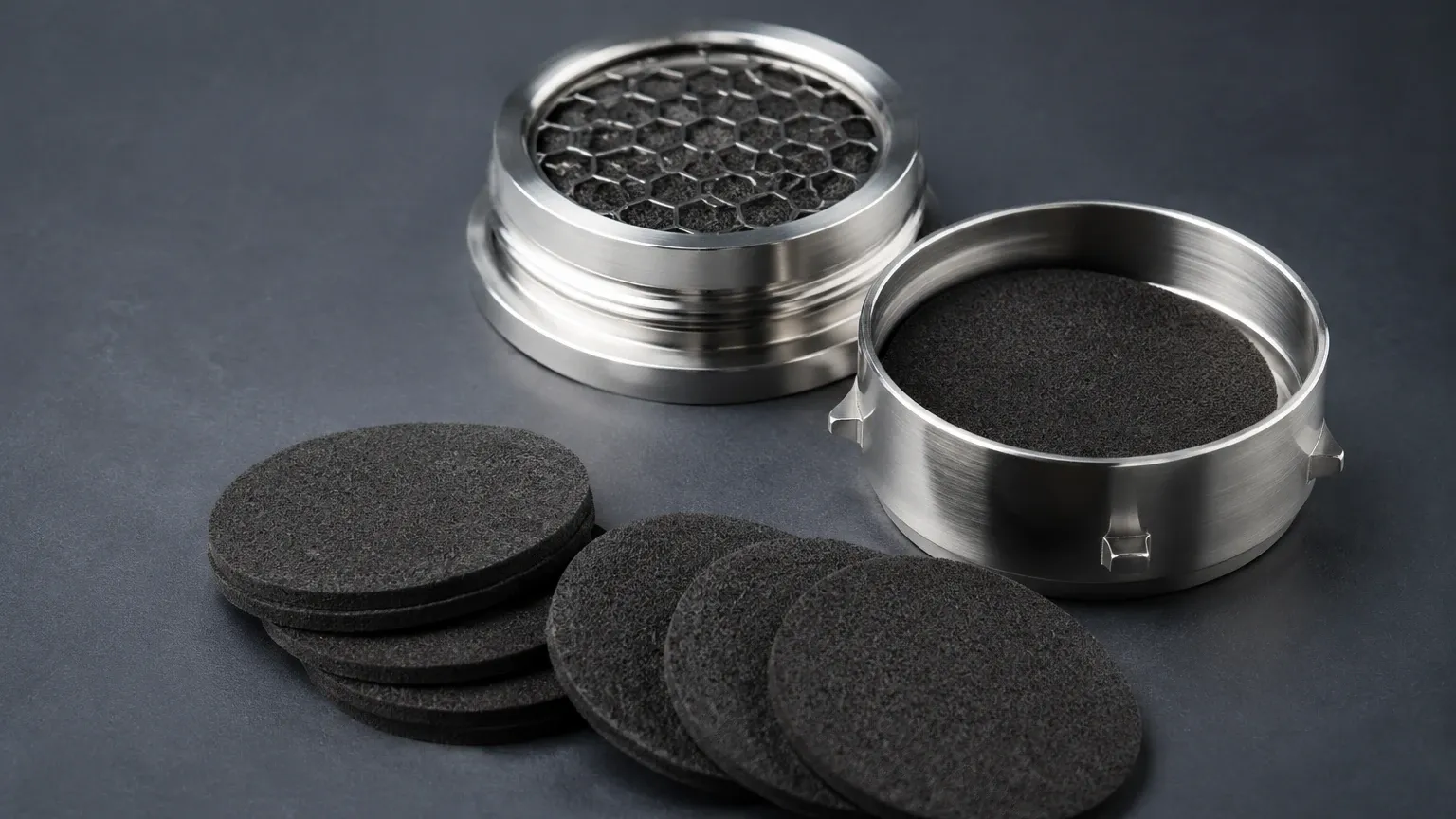
In industrial filtration, the efficiency of adsorption processes depends not only on the quality of the activated carbon media but also on the structural integrity of the containment system. Carbon filter refill packs are essential components in chemical processing, water treatment, and pharmaceutical manufacturing, where they serve to remove impurities, odors, and contaminants through adsorption. However, for engineers and procurement specialists, the term "refill pack" encompasses more than just the granular or powdered carbon; it includes the precision-engineered Filter Discs & Packs that retain the media while allowing for optimal fluid flow.
Selecting the correct components for a carbon filtration system requires a deep understanding of material science, fluid dynamics, and the specific requirements of the application. This guide examines the technical considerations involved in specifying carbon filter refill systems, focusing on the role of stainless steel wire mesh in ensuring long-term performance and reliability.
Understanding Carbon Filter Refill Packs in Industrial Applications
Industrial carbon filtration operates on the principle of adsorption, where molecules of a gas or liquid adhere to the surface of the activated carbon. Because activated carbon has an incredibly high surface-area-to-volume ratio, it is highly effective at capturing organic compounds and chlorine. In a B2B context, carbon filter refill packs are typically used in large-scale canisters, deep-bed filters, or specialized housings designed for continuous operation.
The "refill" process involves replacing spent carbon media once its adsorption sites are saturated. However, a critical engineering challenge during this process is media migration. If the carbon particles—often referred to as "fines"—escape the containment vessel, they can contaminate downstream equipment, damage pumps, or compromise the purity of the final product. This is why the design of the retention discs and packs is just as vital as the carbon itself.
The Role of Stainless Steel Filter Discs & Packs in Carbon Containment
To prevent media migration, industrial systems utilize multi-layer Filter Discs & Packs. These components act as the physical barrier between the carbon bed and the effluent stream. Kaifil specializes in manufacturing these precision metal components, ensuring they meet the rigorous demands of industrial environments.
Media Retention and Micron Ratings
Activated carbon comes in various forms, including Granular Activated Carbon (GAC) and Powdered Activated Carbon (PAC). The mesh size of the retention disc must be precisely calibrated to the particle size of the carbon. For example, if a system uses 8×30 mesh carbon, the supporting filter disc must have an opening smaller than the smallest carbon particle to prevent bypass. Engineering teams must calculate the minimum particle size and select a micron rating that balances retention with the need for low pressure drop.
Structural Support
In deep-bed filtration, the weight of the carbon media, combined with the hydraulic pressure of the fluid, exerts significant force on the filter assembly. A single layer of fine mesh is often insufficient to withstand these stresses. Therefore, industrial refill packs often incorporate a heavy-duty support mesh or a perforated metal plate. This multi-layer approach ensures that the fine filtration layer remains flat and functional under high-pressure conditions.
Engineering Considerations for Media Retention and Flow
When designing or sourcing carbon filter refill packs, engineers must evaluate several technical parameters to ensure the system operates within its designed specifications.
1. Pressure Drop (Delta P)
Every layer of filtration adds resistance to the flow. In carbon systems, an excessive pressure drop can lead to reduced throughput and increased energy consumption for pumps. By utilizing high-precision stainless steel wire mesh, manufacturers can achieve high open-area percentages, which minimizes resistance while maintaining strict particle retention. Engineers should request flow-rate versus pressure-drop data when selecting filter packs for refill systems.
2. Edge Sealing and Bypass Prevention
One of the most common failure points in carbon filtration is bypass at the edges of the filter disc. If the disc does not fit perfectly within the housing, or if the edges are frayed, carbon media will leak around the perimeter. Professional-grade Filter Discs & Packs are often finished with specialized edge treatments, such as:
* Rim Binding: A metal U-binding (usually aluminum or stainless steel) is crimped around the edge of the multi-layer pack to provide a rigid, leak-proof seal.
* Spot Welding: Layers are fused together at the perimeter to ensure they act as a single unit.
* Sintering: In high-pressure applications, the mesh layers may be sintered (diffusion-bonded) to create a porous metal plate that is virtually indestructible.
3. Weave Types for Specific Media
The type of weave used in the wire mesh significantly impacts performance. Plain weave is common for general retention, while Dutch weave (Plain Dutch or Twilled Dutch) offers higher strength and finer filtration capabilities. For carbon refill packs used in pharmaceutical or food-grade applications, the weave must be tight enough to prevent any fiber shedding or media migration into the process stream.
Customization Options for Multi-Layer Filter Packs
No two industrial filtration systems are identical. Customization is often required to adapt carbon filter refill packs to existing hardware or unique process conditions. Kaifil provides extensive OEM capabilities to address these specific needs.
Layer Configuration
A typical high-performance filter pack might consist of three to five layers:
* The Filtration Layer: The innermost or primary layer that dictates the micron rating.
* The Drainage Layer: A slightly coarser mesh that helps distribute the fluid flow evenly across the filtration surface.
* The Support Layer: A heavy-gauge mesh or expanded metal that provides structural rigidity.
Shape and Geometry
While circular discs are standard, many industrial housings require rectangular, oval, or custom-shaped packs. Precision laser cutting or die-cutting ensures that these components meet tight dimensional tolerances, which is critical for maintaining a proper seal within the filter housing.
Material Selection: Why Stainless Steel is Essential
In the context of carbon filter refill packs, the choice of material for the retention hardware is non-negotiable. Stainless steel, specifically grades 304, 316, and 316L, is the industry standard for several reasons:
* Chemical Compatibility: Activated carbon can sometimes create a corrosive environment, especially in water treatment or chemical processing. 316L stainless steel provides superior resistance to pitting and crevice corrosion.
* Temperature Resistance: Many industrial processes involve high-temperature fluids or steam cleaning (SIP). Stainless steel maintains its mechanical properties at temperatures where synthetic filters would fail.
* Durability and Longevity: Unlike plastic or fabric retention screens, stainless steel discs can be cleaned and reused through multiple carbon refill cycles, reducing the total cost of ownership.
* Hygiene and Compliance: In food, beverage, and pharmaceutical sectors, materials must be non-leaching and easy to sterilize. Stainless steel meets FDA and other regulatory requirements for food contact.
Maintenance and Replacement Cycles
A common question among maintenance engineers is how often the metal components of the carbon filter refill packs should be replaced. While the carbon media itself has a predictable lifespan based on the contaminant load, the metal filter discs are designed for longevity. However, they are not infinite.
Signs of Wear in Filter Packs
During each carbon refill, the metal packs should be inspected for:
* Mechanical Deformation: Any bowing or warping of the disc suggests that the system is operating at pressures exceeding the component's design limit.
* Blinding/Clogging: If the mesh pores become permanently lodged with carbon fines or scale that cannot be removed through ultrasonic cleaning, the pressure drop will remain high even with fresh carbon.
* Erosion: In high-velocity systems, the abrasive nature of carbon particles can eventually wear down the wire mesh, enlarging the openings and leading to media migration.
Establishing a routine inspection protocol during carbon changeouts is the best way to prevent catastrophic filter failure and ensure the continued purity of the process stream.
Selecting the Right Filter Discs & Packs for Your System
When sourcing components for carbon filter refill packs, procurement teams should work closely with manufacturers who understand the technical nuances of filtration. To receive an accurate quote and a component that performs as expected, be prepared to provide the following information:
1. Media Specification: What is the particle size distribution of the carbon being used?
2. Flow Characteristics: What is the required flow rate, and what is the maximum allowable pressure drop?
3. Operating Environment: What are the temperature, pressure, and chemical composition of the fluid?
4. Housing Dimensions: What are the exact inner diameters or dimensions of the filter housing where the disc will be seated?
5. Regulatory Requirements: Does the application require specific certifications (e.g., food-grade or medical-grade materials)?
By focusing on these technical details, engineers can ensure that their carbon filter refill packs provide reliable, efficient, and cost-effective performance over the long term. High-quality stainless steel Filter Discs & Packs are an investment in process stability, protecting downstream equipment and ensuring product quality in the most demanding industrial environments.
For more information on custom filtration solutions and to explore technical specifications for your next project, review the available options for precision-engineered metal components that support industrial carbon systems.
