


Filter Tubes and Discs
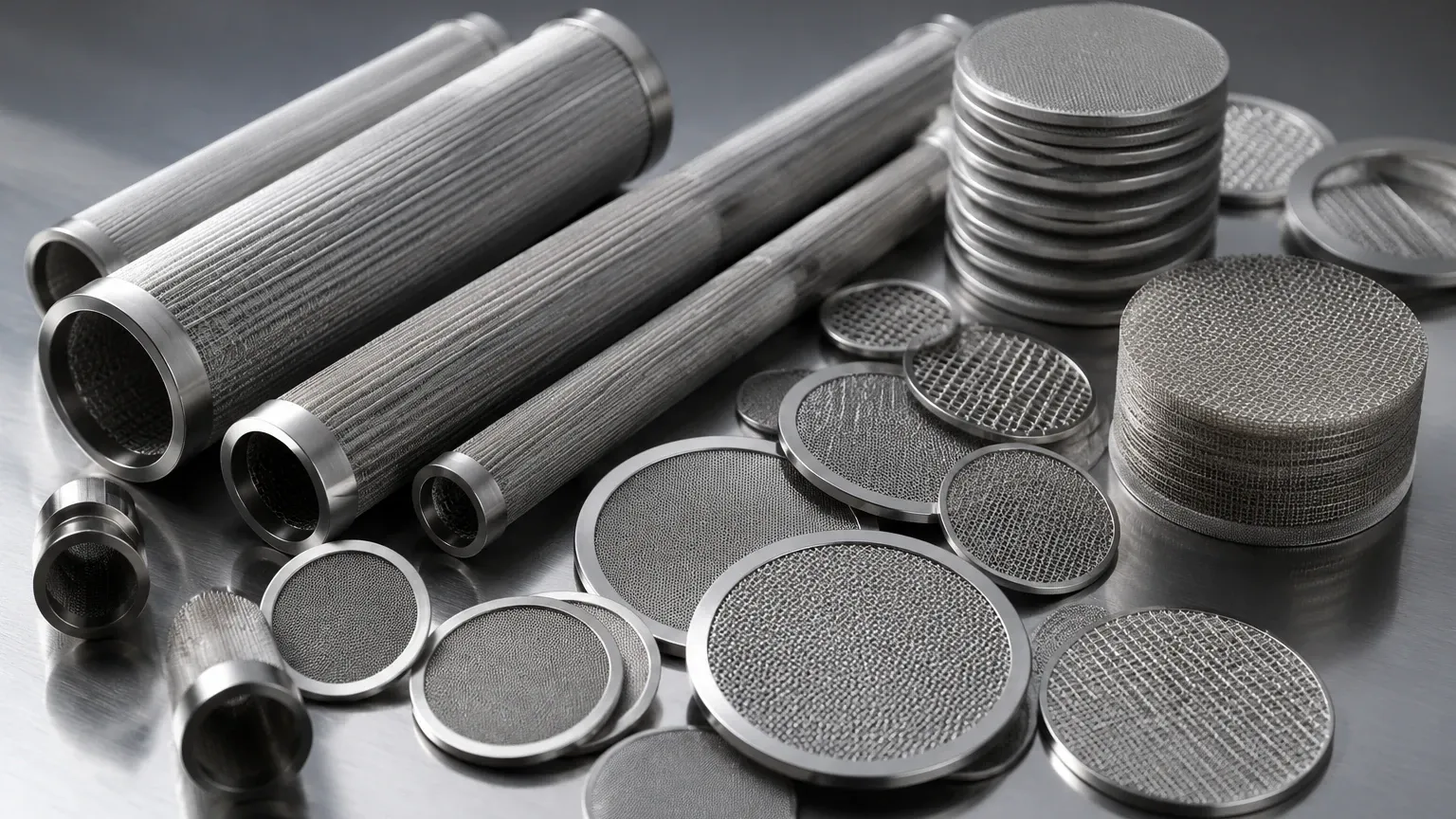
In industrial filtration, the selection of media geometry and material composition is a critical engineering decision that directly impacts process efficiency, product purity, and equipment longevity. Filter tubes and discs represent two of the most versatile configurations for mechanical separation in demanding environments. While their shapes differ to accommodate specific housing designs—cylindrical for tubes and planar for discs—their fundamental purpose remains the focus: providing a precise, durable barrier against contaminants while maintaining optimal flow characteristics.
For engineers and procurement specialists, understanding the technical nuances of these components is essential. Stainless steel, particularly in woven wire mesh or sintered forms, has become the industry standard for high-performance applications due to its thermal stability, chemical resistance, and mechanical strength. This guide examines the engineering considerations, manufacturing processes, and selection criteria for Filter Discs & Packs and tubes in industrial settings.
The Fundamentals of Metallic Filtration Media
The performance of any filter tube or disc is primarily determined by the media used in its construction. In the B2B industrial sector, stainless steel wire mesh is the most common choice. Unlike synthetic fibers or paper media, metallic mesh offers a fixed pore structure that does not migrate or deform under high differential pressures.
Woven Wire Mesh
Industrial wire mesh is produced through precise weaving processes, resulting in various patterns such as plain weave, twill weave, and Dutch weave. Plain weave provides a simple over-under pattern suitable for high-flow, low-pressure applications. In contrast, Dutch weave (including Plain Dutch and Twilled Dutch) utilizes different wire diameters for the warp and shute, creating a denser, more complex pore structure that allows for much finer filtration ratings, often down to the sub-10-micron range.
Sintered Metal Media
For applications involving extreme pressures or the need for ultra-fine filtration, sintered metal media is often employed. Sintering involves bonding multiple layers of wire mesh or metal fibers through a high-temperature diffusion process. This creates a monolithic structure that combines high porosity with exceptional mechanical integrity. Sintered filter tubes and discs are often used in polymer filtration and high-pressure hydraulic systems where the risk of media deformation must be eliminated.
Engineering Parameters for Filter Discs & Packs
When specifying Filter Discs & Packs, engineers must balance several competing technical parameters. A filter is not merely a screen; it is a precision-engineered component designed to operate within a specific fluid dynamic profile.
Filtration Accuracy (Micron Rating)
Filtration accuracy is defined by the size of the smallest particle the media can reliably intercept. It is categorized into nominal and absolute ratings. A nominal rating refers to the ability of the filter to retain a certain percentage (usually 60-90%) of particles of a specific size. An absolute rating, typically verified through bubble point testing, indicates the pore size where 99.9% of particles are retained. For critical pharmaceutical or chemical processes, absolute-rated filter tubes and discs are mandatory to ensure process consistency.
Pressure Drop and Flow Rate
The "clean pressure drop" is the initial resistance the filter offers to the fluid flow. As contaminants accumulate, this pressure drop increases. Engineers must calculate the effective filtration area (EFA) to ensure the system can handle the required flow rate without exceeding the pump's capacity or causing premature filter failure. Multi-layer packs are often designed with coarse outer layers to act as pre-filters, protecting the fine inner layer and extending the overall service life.
Mechanical Strength and Burst Pressure
In high-viscosity applications, such as plastic extrusion or heavy oil processing, filter discs are subjected to immense pressure. The mechanical strength of the disc, often reinforced with support mesh or perforated metal plates, must exceed the maximum system pressure to prevent "blow-through" or structural collapse.
Material Science in Filter Tube Construction
The choice of alloy for filter tubes and discs is dictated by the chemical and thermal environment of the application. While stainless steel 304 is suitable for general-purpose use, more aggressive environments require specialized alloys.
* Stainless Steel 316L: The "L" stands for low carbon, which improves weldability and resistance to intergranular corrosion. This is the standard for pharmaceutical and food-grade applications due to its superior resistance to chlorides and organic acids.
* Stainless Steel 904L: Used in highly corrosive chemical processing where 316L may fail due to pitting or stress corrosion cracking.
* Hastelloy and Inconel: These nickel-based superalloys are reserved for extreme temperatures (up to 1000°C) and highly acidic or alkaline environments where standard stainless steels would oxidize or dissolve.
Manufacturing Processes: From Wire Mesh to Precision Components
Converting raw wire mesh into functional filter tubes and discs requires specialized manufacturing techniques to ensure dimensional accuracy and structural integrity.
Cutting and Shaping
Precision cutting is vital to ensure that discs fit perfectly within their housings. Laser cutting and CNC stamping are the preferred methods, as they provide clean edges and tight tolerances. For multi-layer packs, the layers must be perfectly aligned before being joined to prevent bypass—where fluid flows around the filtration media rather than through it.
Edging and Binding
Filter discs are often provided with specialized edging to facilitate sealing and prevent fraying of the mesh. Common edging materials include aluminum, stainless steel, or copper rims. These rims are crimped or welded onto the circumference of the disc, providing a rigid sealing surface for the filter housing. In some cases, spot welding is used to bond multiple layers of a pack together without the need for an external rim.
Tube Fabrication (Welding and Seaming)
Filter tubes are typically manufactured by rolling a sheet of wire mesh or sintered metal into a cylinder and joining the edges. TIG (Tungsten Inert Gas) welding and plasma welding are the standard processes for creating high-strength, leak-proof longitudinal seams. The ends of the tubes may be fitted with threaded connectors, flanges, or end caps to integrate with existing piping systems.
Performance Evaluation: Flow Rate, Pressure Drop, and Dirt Holding Capacity
An effective filtration system is measured by its Dirt Holding Capacity (DHC). This refers to the total mass of contaminants the filter can retain before the pressure drop reaches a terminal limit. Filter tubes and discs with high DHC require less frequent maintenance, reducing the Total Cost of Ownership (TCO).
Engineers often utilize the following formula to estimate the required filtration area:
A = (Q × μ) / (ΔP × K)
Where:
* A is the filtration area.
* Q is the flow rate.
* μ is the fluid viscosity.
* ΔP is the allowable pressure drop.
* K is the permeability constant of the specific mesh type.
By optimizing these variables, manufacturers can design custom Filter Discs & Packs that maximize throughput while maintaining strict particle retention standards.
Application Landscapes for Filter Tubes and Discs
The versatility of filter tubes and discs allows them to be deployed across a wide spectrum of industrial sectors, each with unique technical requirements.
Chemical and Petrochemical Processing
In this sector, filters are used for catalyst recovery, solvent purification, and the removal of impurities from corrosive feedstocks. The high temperature and chemical resistance of stainless steel filter tubes make them ideal for continuous processing lines where downtime is costly.
Food and Beverage Production
Hygiene is the primary concern here. Filter discs used in the filtration of oils, syrups, and beverages must be made from FDA-compliant materials. The smooth surface of stainless steel mesh prevents bacterial growth and allows for Clean-in-Place (CIP) procedures using steam or caustic chemicals.
Hydraulic and Lubrication Systems
Hydraulic fluids must be kept free of metallic particles and silt to prevent wear on pumps and valves. Filter tubes are often used in return-line or suction-line filters to maintain ISO cleanliness codes for hydraulic oil.
Pharmaceutical Manufacturing
Precision is non-negotiable in pharmaceutical production. Sintered filter discs are used for the sterile filtration of gases and the separation of active pharmaceutical ingredients (APIs) from solvents. These components must undergo rigorous validation to ensure they do not leach any metallic ions into the product.
Maintenance, Longevity, and Cleaning Protocols
One of the primary advantages of stainless steel filter tubes and discs over disposable alternatives is their reusability. With proper cleaning, these components can serve for several years, significantly reducing waste and long-term procurement costs.
Cleaning Methods
* Ultrasonic Cleaning: High-frequency sound waves create cavitation bubbles that dislodge deeply embedded particles from the mesh pores. This is the most effective method for fine Dutch weave and sintered media.
* Backwashing: Reversing the flow of fluid through the filter can flush out surface-level contaminants. This is often integrated into automated filtration systems.
* Chemical Cleaning: Soaking the filters in solvents, acids, or alkalis can dissolve organic or mineral deposits. It is crucial to ensure the cleaning agent is compatible with the filter's alloy.
* Burn-off (Pyrolysis): For filters used in polymer processing, high-temperature ovens are used to burn off plastic residue, followed by ultrasonic cleaning to remove the resulting ash.
Predicting Replacement Cycles
While reusable, metallic filters eventually reach a point where they can no longer be effectively cleaned, or where mechanical fatigue leads to mesh failure. Monitoring the "recovered pressure drop" (the pressure drop after cleaning) is the best way to track the filter's health. When the recovered pressure drop exceeds 150% of the original clean pressure drop, replacement is typically recommended.
Procurement Guidelines: Technical Data Requirements for Custom Orders
When requesting a quote for filter tubes and discs, providing comprehensive technical data ensures that the manufacturer can deliver a product that meets the application's demands. Procurement teams should confirm the following details:
1. Dimensions: For discs, specify the outer diameter (OD) and thickness. For tubes, specify the OD, inner diameter (ID), and overall length.
2. Mesh Specification: Define the mesh count (wires per inch) or the required micron rating. Specify the weave type (e.g., Plain, Dutch, Sintered).
3. Material Grade: Specify the exact alloy (e.g., SS304, SS316L, SS310).
4. Layer Configuration: For Filter Discs & Packs, detail the sequence of layers (e.g., 100 mesh / 400 mesh / 100 mesh).
5. Operating Conditions: Provide the maximum operating temperature, pressure, and the chemical composition of the fluid being filtered.
6. End Fittings: For tubes, specify the type of connection required (e.g., NPT thread, flange, or open ends).
By focusing on these technical boundaries, engineers can ensure that their filtration systems operate with maximum reliability, protecting downstream equipment and maintaining the highest standards of product quality.
