


Glass Fiber Filter Discs
In the landscape of industrial filtration, selecting the appropriate media is a balance between particle retention efficiency, chemical compatibility, and structural integrity. Glass fiber filter discs represent a critical component in many high-precision filtration systems, offering depth filtration capabilities that differ significantly from the surface filtration provided by traditional woven wire mesh. While stainless steel components are often preferred for their extreme durability and cleanability, glass fiber media is indispensable for applications requiring high dirt-holding capacity and the capture of sub-micron particulates.
For engineering and procurement teams, understanding the technical nuances of glass fiber filter discs is essential for optimizing process efficiency and ensuring the longevity of downstream equipment. This guide examines the material science, performance characteristics, and engineering considerations associated with integrating glass fiber media into industrial filtration workflows.
Technical Composition and Material Science
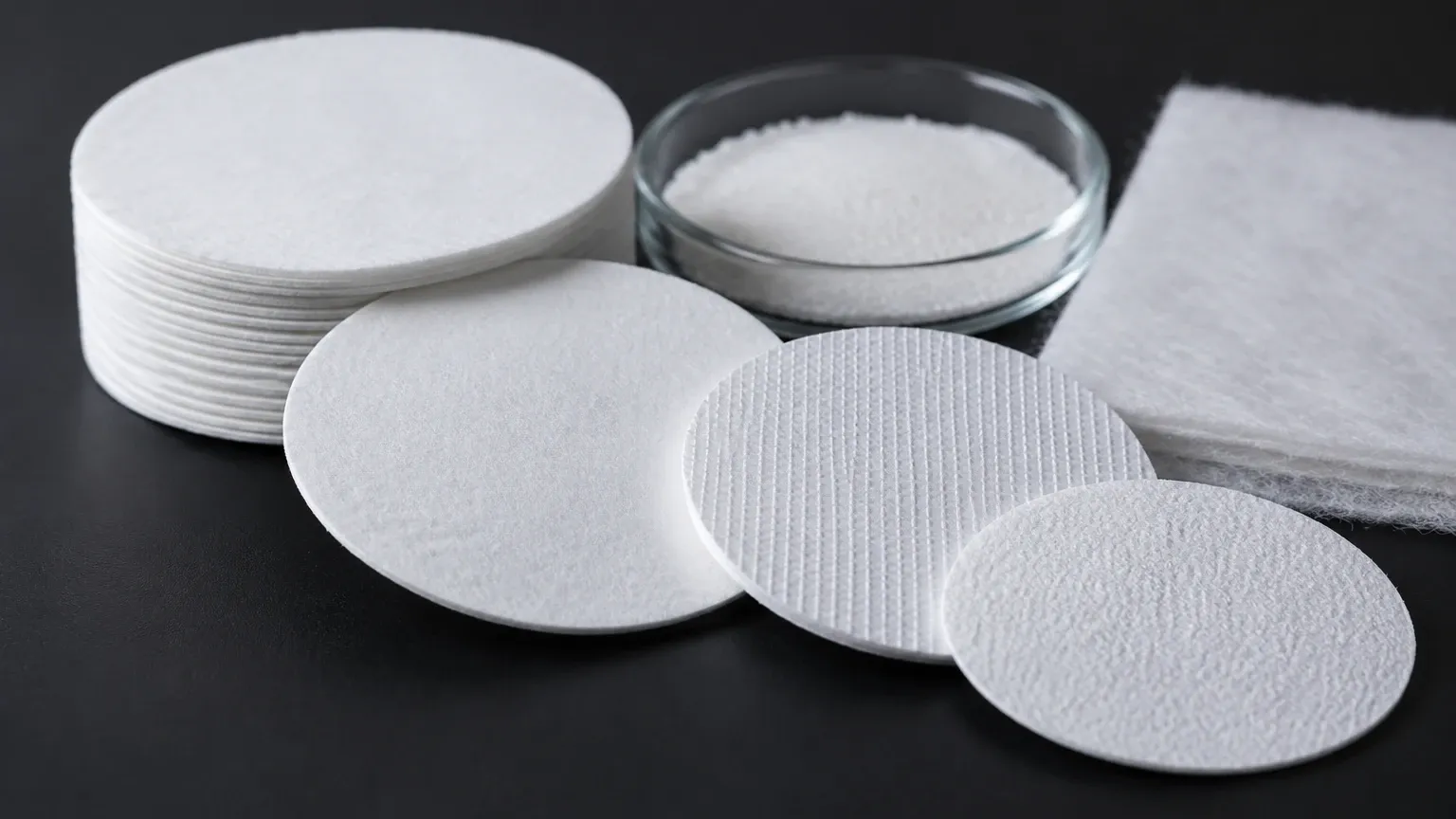
Glass fiber filter discs are primarily manufactured from 100% borosilicate glass microfibers. The manufacturing process involves a wet-laid technique, similar to papermaking, which creates a complex, three-dimensional matrix. This structure is what defines "depth filtration," where particles are trapped throughout the thickness of the media rather than just on the surface.
Binder vs. Binder-Free Media
There are two primary categories of glass fiber media used in industrial discs:
1. Binder-Free Glass Fiber: These discs consist purely of glass microfibers. They are preferred for high-temperature applications (up to 500°C or higher) and analytical processes where chemical purity is paramount. Because they contain no organic binders, there is zero risk of extractables leaching into the filtrate. However, they are naturally more fragile and often require mechanical support from stainless steel mesh or specialized housings.
2. Binder-Treated Glass Fiber: To improve mechanical strength and handling, certain grades are treated with organic binders (such as acrylic or epoxy resins). These binders provide the disc with higher burst strength and resistance to pleating or mechanical stress. While they are more robust, their temperature range is limited by the binder’s thermal stability, and they may not be suitable for applications involving aggressive solvents that could dissolve the resin.
Performance Characteristics of Glass Fiber
The adoption of glass fiber filter discs in industrial settings is driven by several unique performance advantages that distinguish them from synthetic membranes or metallic filters.
High Dirt-Holding Capacity
Due to the random orientation of microfibers and the high void volume (often exceeding 90%), glass fiber discs can load a significant mass of contaminants before reaching a critical pressure drop. This makes them ideal as pre-filters for expensive membrane filters or as primary filters in high-solids applications.
Low Pressure Drop and High Flow Rates
The high porosity of glass fiber allows for rapid fluid or gas throughput. In air filtration, this translates to lower energy consumption for fans and blowers. In liquid filtration, it allows for smaller filter housings to handle the same flow volume compared to denser media.
Thermal and Chemical Stability
Borosilicate glass is naturally resistant to most acids and organic solvents (with the exception of hydrofluoric acid and high-concentration alkaline solutions). This stability ensures that the filter media does not degrade or swell when exposed to aggressive process chemicals, maintaining consistent pore geometry throughout the filtration cycle.
Engineering Comparison: Glass Fiber vs. Stainless Steel Mesh
When designing a filtration system, engineers must decide between depth media (like glass fiber) and surface media (like stainless steel wire mesh). Often, the most effective solution is a hybrid approach.
Stainless steel filters are valued for their absolute pore ratings, high pressure resistance, and the ability to be cleaned and reused. Conversely, glass fiber is generally a disposable media that excels at capturing fine, deformable, or irregularly shaped particles that might bypass a rigid wire mesh.
In many demanding industrial environments, Filter Discs & Packs are engineered to combine these materials. A typical configuration might involve a glass fiber disc sandwiched between two layers of stainless steel wire mesh. The mesh provides the structural support and protects the fragile glass fibers from high differential pressures, while the glass fiber core provides the high-efficiency depth filtration required for the process.
Key Evaluation Criteria for Selection
Selecting the right glass fiber filter disc requires a technical assessment of the specific process conditions. Engineers should confirm the following parameters before finalizing a specification:
Pore Size and Retention Rating
Unlike wire mesh, which has a defined aperture, glass fiber pore sizes are often expressed as "nominal" ratings. This refers to the ability of the filter to retain a certain percentage (usually 90-98%) of particles of a specific size. For critical applications, engineers must distinguish between nominal and absolute ratings to ensure downstream components are protected from bypass.
Thickness and Basis Weight
The thickness of the disc directly correlates to its depth-loading capacity. A thicker disc will generally have a longer service life in high-loading applications but may introduce a higher initial pressure drop. Basis weight (grams per square meter) is another metric used to define the density and consistency of the fiber matrix.
Burst Strength and Handling
In high-pressure liquid systems, the burst strength of the media is a limiting factor. If the process involves frequent pressure surges, a binder-treated disc or a reinforced pack is necessary. For vacuum filtration or low-pressure air monitoring, binder-free discs are usually sufficient.
Industrial Applications and Use Cases
Glass fiber filter discs are utilized across a broad spectrum of industries where precision and reliability are non-negotiable.
Chemical and Petrochemical Processing
In the chemical industry, these discs are used for the clarification of solvents and the removal of fine catalysts. Their ability to withstand high temperatures makes them suitable for hot gas filtration and the sampling of stack emissions in environmental monitoring.
Food and Beverage Production
While stainless steel is the standard for sanitary applications, glass fiber discs are often used in laboratory testing and quality control to analyze total suspended solids (TSS) in water or to clarify samples before HPLC (High-Performance Liquid Chromatography) analysis.
Hydraulic and Lube Oil Filtration
In hydraulic systems, ultra-fine glass fiber media is used to maintain oil cleanliness levels according to ISO 4406 standards. By removing silt-sized particles (1-5 microns), these filters prevent premature wear on valves, pumps, and actuators.
Environmental Air Monitoring
Glass fiber is the standard media for high-volume air sampling. It captures airborne particulates with high efficiency while maintaining the low resistance required for long-duration sampling pumps. Binder-free versions are specifically used for gravimetric analysis of air pollutants.
Common Risks and Mitigation Strategies
Despite their advantages, glass fiber filter discs present certain risks that must be managed through proper engineering and installation.
1. Media Migration: In high-velocity flows or under mechanical vibration, individual glass fibers can break loose and enter the filtrate. This is known as media migration. To mitigate this, engineers often specify a "downstream support" layer, such as a fine stainless steel mesh or a non-woven polymer scrim, to catch any shed fibers.
2. Brittleness: Glass fiber is inherently brittle. Improper handling during installation can cause micro-cracks or edge fraying. Using Filter Discs & Packs with protective metal rims or ultrasonic bonding can eliminate edge leakage and simplify the installation process in industrial housings.
3. Chemical Interference: In analytical chemistry, the presence of trace metals in the glass fiber can interfere with certain tests. Specifying high-purity, acid-washed borosilicate glass ensures that the media does not introduce contaminants into the sample.
Customization and Integration with Kaifil Solutions
For most industrial applications, a standard off-the-shelf disc is rarely sufficient. Customization is often required to ensure the filter fits perfectly within existing hardware and meets specific performance targets.
Kaifil specializes in bridging the gap between fragile filtration media and rugged industrial requirements. By integrating glass fiber into custom-designed metal housings or multi-layer packs, we provide solutions that offer the filtration precision of glass with the structural durability of stainless steel.
Customization options typically include:
* Layering: Combining glass fiber with multiple grades of stainless steel mesh to create a gradient-density filter pack.
* Edging: Encapsulating the disc edges in aluminum, stainless steel, or copper rims to prevent bypass and increase mechanical strength.
* Geometry: Precision die-cutting to exact tolerances for specific OEM equipment, ranging from small analytical discs to large-diameter industrial elements.
Conclusion: Making the Right Selection
Glass fiber filter discs are a high-performance tool in the engineer's filtration toolkit. Their ability to provide high-efficiency depth filtration at high temperatures and in chemically aggressive environments makes them irreplaceable in many sectors. However, their successful implementation depends on a deep understanding of material properties and the potential need for structural reinforcement.
When evaluating filtration components, it is important to consider the total cost of ownership, which includes not only the initial purchase price of the media but also the frequency of replacement, the cost of downtime, and the protection of downstream assets. By selecting the appropriate grade of glass fiber and pairing it with robust mechanical supports, industrial operators can achieve a balance of high-purity output and reliable process stability.
For technical teams seeking to optimize their filtration processes, consulting with a manufacturer that understands both the media science and the mechanical engineering of filter housings is the most effective path forward. Whether you require standalone glass fiber filter discs or complex, multi-material Filter Discs & Packs, ensuring that the specification matches the operational reality is the key to filtration success.
