


Glass Filter Discs
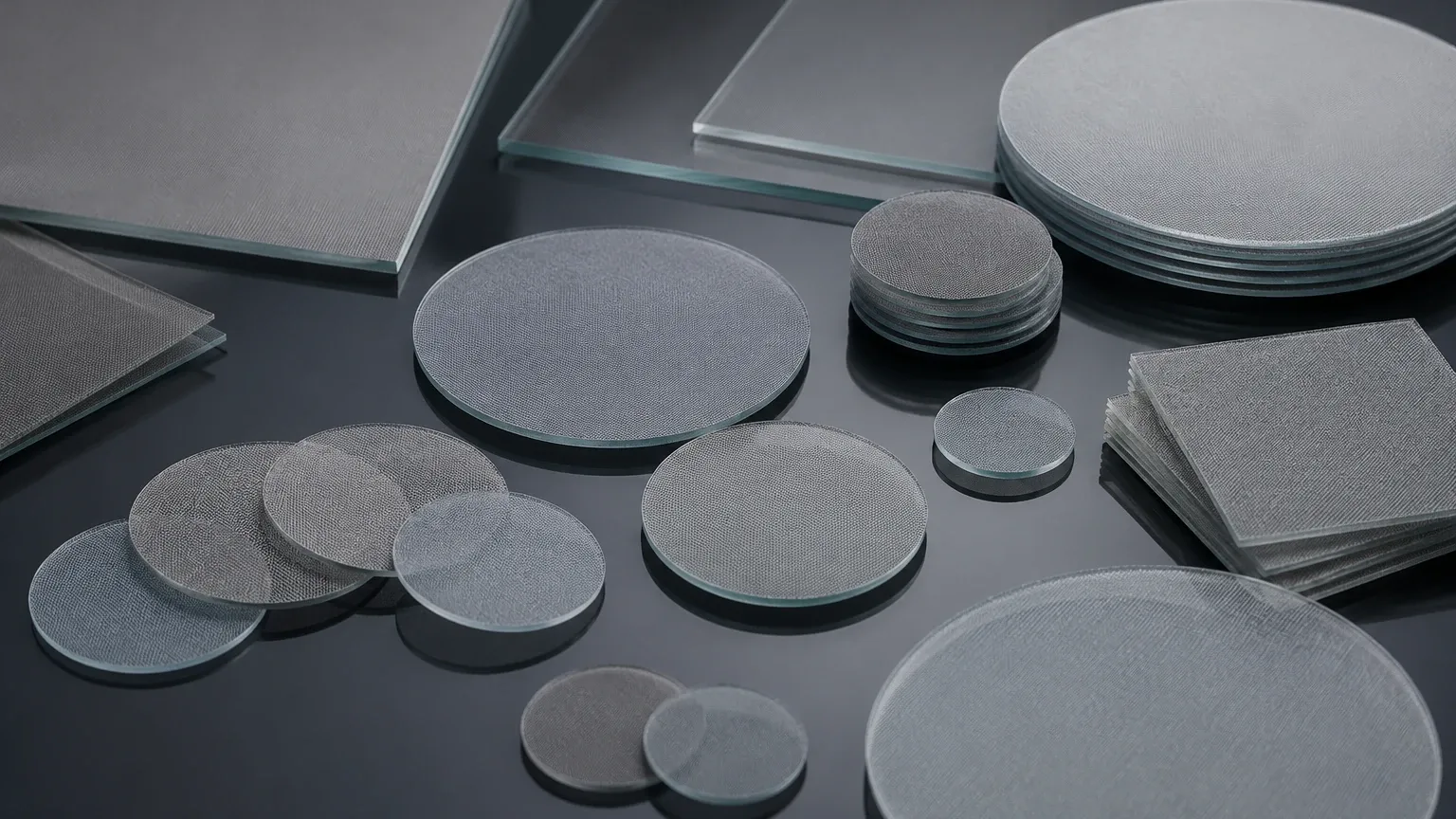
In the landscape of precision industrial filtration, the selection of media is dictated by the specific chemical, thermal, and mechanical requirements of the process. Glass filter discs, typically manufactured from high-quality borosilicate glass or through a sintering process to create fritted glass, represent a critical solution for applications requiring high chemical inertness and precise porosity. While often associated with laboratory-scale operations, these components are frequently integrated into industrial systems where metal sensitivity or specific corrosive environments preclude the use of standard alloys.
For engineers and procurement specialists, understanding the technical nuances of glass filtration is essential when evaluating Filter Discs & Packs for specialized chemical processing, pharmaceutical synthesis, or analytical instrumentation. This guide examines the engineering properties, selection criteria, and operational considerations of glass filter discs within the broader context of industrial filtration solutions.
Understanding Glass Filter Discs: Composition and Manufacture
Glass filter discs are primarily categorized by their manufacturing method and the resulting structure of the filtration matrix. The most common form used in industrial and analytical settings is the sintered glass disc, also known as a fritted glass disc.
Borosilicate Glass 3.3
Most high-performance glass filter discs are fabricated from Borosilicate Glass 3.3. This material is favored in industrial filtration due to its exceptional resistance to water, neutral and acid solutions, concentrated acids and their mixtures, as well as to chlorine, bromine, iodine, and organic matters. Its low coefficient of thermal expansion makes it highly resistant to thermal shock, a critical factor in processes involving rapid temperature fluctuations.
The Sintering Process
To produce a glass filter disc, crushed glass is graded into specific particle sizes. These particles are then placed in a mold and heated to a temperature where the surfaces of the glass particles soften and fuse together without melting the entire mass into a solid block. This process, known as sintering, creates a porous structure with interconnected voids. The resulting "frit" acts as a depth filter, trapping particles within the tortuous paths of the fused glass matrix.
Technical Specifications: Porosity and Filtration Grades
The performance of a glass filter disc is defined by its porosity, which refers to the maximum pore size present in the disc. In international standards, such as ISO 4793, glass filters are classified into different porosity grades, typically ranging from P250 (coarse) to P1.6 (extra fine).
Common Porosity Classifications
1. Coarse Filtration (Grade 0 / P250): Pore sizes between 160 and 250 µm. These are typically used for gas distribution, support for other filter media, or coarse filtration of large crystalline precipitates.
2. Medium Filtration (Grade 1 & 2 / P100 – P40): Pore sizes ranging from 40 to 160 µm. These are used for filtering coarse precipitates and as preparative tools in chemical synthesis.
3. Fine Filtration (Grade 3 / P16): Pore sizes between 10 and 16 µm. This is one of the most common grades for analytical work, capable of retaining fine precipitates.
4. Analytical Filtration (Grade 4 / P6): Pore sizes between 4 and 10 µm. Used for very fine precipitates and analytical clarity.
5. Bacteriological Filtration (Grade 5 / P1.6): Pore sizes between 1.0 and 1.6 µm. These are used for the removal of bacteria and ultra-fine particles from liquid or gas streams.
Engineers must match the porosity grade not only to the particle size of the contaminant but also to the required flow rate and pressure drop. Finer porosity grades naturally offer higher resistance to flow, requiring higher differential pressures to maintain throughput.
Chemical and Thermal Resistance Profiles
One of the primary reasons for selecting glass filter discs over metal or polymer alternatives is their chemical profile. However, even borosilicate glass has limitations that must be accounted for in industrial design.
Acid and Alkali Resistance
Borosilicate glass is resistant to almost all chemicals except for hydrofluoric acid, hot concentrated phosphoric acid, and strong alkaline solutions (such as concentrated caustic soda) at elevated temperatures. These substances will etch the glass, widening the pore structure and eventually compromising the structural integrity of the disc.
Thermal Limits
The maximum working temperature for borosilicate glass filter discs is typically around 450°C to 500°C for short durations, with a continuous operating temperature recommended below 250°C to 300°C to prevent structural stress. More importantly, the rate of heating and cooling must be controlled. Rapid localized heating can cause thermal gradients that lead to cracking, especially in discs with larger diameters or those integrated into metal housings.
Comparing Glass Filter Discs with Stainless Steel Alternatives
In many industrial applications, engineers must choose between glass and stainless steel for their Filter Discs & Packs. While glass offers superior inertness in specific acidic environments, stainless steel filters—such as those manufactured by Kaifil—provide distinct advantages in mechanical durability and scalability.
Mechanical Strength and Pressure Resistance
Glass is inherently brittle. Under high-pressure differentials or mechanical shock, glass filter discs are prone to catastrophic failure (shattering). In contrast, stainless steel wire mesh or sintered metal discs can withstand significantly higher pressures and are resistant to physical impacts. For high-pressure hydraulic or industrial gas applications, stainless steel is generally the preferred material.
Cleanability and Reusability
While glass can be cleaned with aggressive acids (like chromic acid or aqua regia), it is sensitive to ultrasonic cleaning if the frequency and power are not precisely controlled, as cavitation can erode the sintered bonds. Stainless steel filters are highly compatible with ultrasonic cleaning, backwashing, and high-pressure steam sterilization (SIP), making them more suitable for long-term, high-volume industrial cycles.
Customization and Integration
Stainless steel filters offer greater flexibility in terms of structural integration. They can be welded, pleated, or formed into complex multi-layer packs to increase surface area. Glass discs are generally limited to flat geometries and require specialized gaskets or compression fittings to seal within a process line without breaking the glass edge.
Common Operational Risks and Mitigation
Operating glass filter discs in an industrial environment requires specific protocols to avoid premature failure and ensure filtration consistency.
1. Clogging and Pore Blinding
Because glass frits are depth filters, particles can become lodged deep within the matrix. If a disc is not cleaned immediately after use, dried solids can become nearly impossible to remove. Mitigation involves a strict cleaning regimen and, where possible, using a coarser pre-filter to protect the fine glass disc.
2. Thermal Shock
As mentioned, rapid temperature changes are a leading cause of glass failure. When glass discs are used in steam-jacketed vessels or high-temperature gas streams, the ramp-up and ramp-down phases must be strictly managed. Engineers should specify the maximum allowable thermal gradient (often around 100°C/min for borosilicate) to the operations team.
3. Mechanical Stress during Installation
Glass discs are often broken during installation due to uneven torque on flange bolts or the use of improper gasket materials. Using PTFE or Viton gaskets that provide even load distribution is essential. The housing must be designed to ensure that the glass disc is not subjected to bending moments.
Selection Criteria for Industrial Procurement
When specifying glass filter discs for a project, the following data points must be confirmed to ensure the component is fit for purpose:
* Nominal vs. Absolute Rating: Clarify whether the porosity grade refers to the average pore size or the maximum particle size that can pass through the disc.
* Differential Pressure Limits: Determine the maximum pressure the disc will face during the end of its filtration cycle when it is partially loaded with solids.
* Housing Compatibility: Ensure the disc dimensions (diameter and thickness) match the tolerances of the industrial housing. Standard diameters often range from 10mm to 300mm, but custom sizes may be required.
* Flow Rate Requirements: Calculate the required surface area based on the fluid viscosity and the desired throughput to avoid excessive pressure drop.
Maintenance and Cleaning Protocols
To extend the service life of glass filter discs, maintenance should be proactive rather than reactive.
1. Chemical Cleaning: For organic contaminants, soaking in a concentrated sulfuric acid and sodium nitrate solution is common. For protein-based contaminants, pepsin in hydrochloric acid is effective.
2. Rinsing: After chemical cleaning, discs must be rinsed thoroughly with distilled water or deionized water, followed by a final rinse with a volatile solvent like acetone if rapid drying is required.
3. Drying: Glass filters should be dried in an oven at approximately 110°C. Increasing the temperature too rapidly can cause internal stresses in the sintered structure.
4. Integrity Testing: Periodically, the bubble point test should be performed to ensure the maximum pore size has not increased due to chemical erosion or physical wear.
Conclusion
Glass filter discs remain a vital component in the filtration toolkit, offering unmatched chemical purity for specific high-sensitivity applications. However, for industrial-scale operations where durability, high pressure, and ease of maintenance are paramount, engineers often transition from glass to robust metal filtration solutions.
Understanding the limitations and strengths of glass media allows for a more informed selection process when browsing Filter Discs & Packs. Whether the application demands the absolute inertness of borosilicate glass or the rugged performance of stainless steel, the choice must be grounded in the specific mechanical and chemical realities of the industrial environment. By carefully evaluating porosity, thermal limits, and cleaning requirements, technical professionals can ensure optimized filtration performance and long-term cost-efficiency.
