


Glass Microfiber Filter Discs
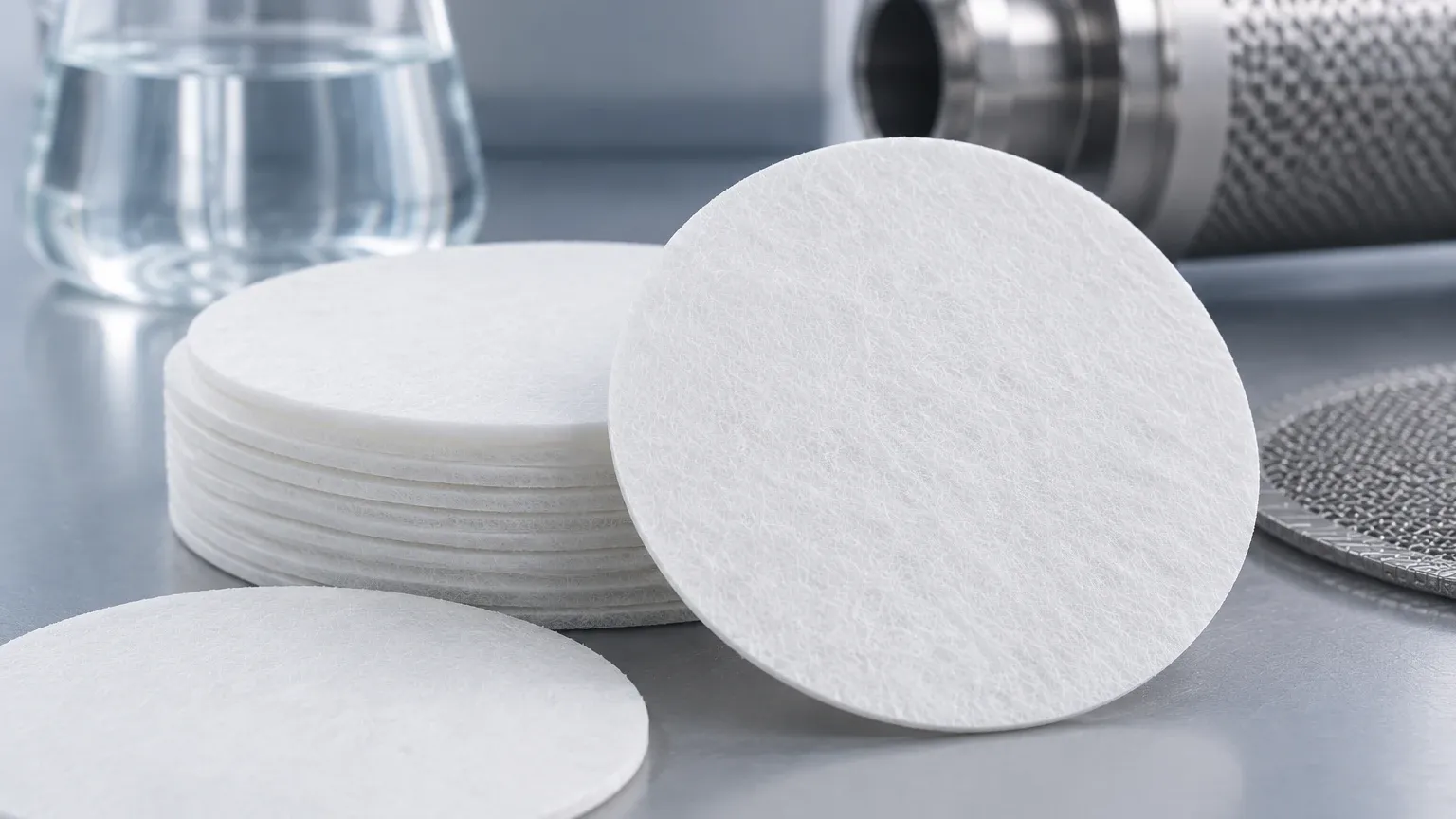
In industrial filtration, the selection of media is dictated by the specific physical and chemical demands of the process fluid. Glass microfiber filter discs represent a critical category of depth filtration media, engineered from 100% borosilicate glass fibers. These discs are characterized by their high loading capacity, exceptional thermal stability, and fine particle retention capabilities. Unlike surface filters, such as standard wire mesh or membranes, glass microfiber media utilizes a complex three-dimensional matrix to trap contaminants throughout the depth of the material.
For engineers and procurement teams, understanding the technical nuances of these discs is essential for optimizing the performance of Filter Discs & Packs. Whether used as standalone laboratory filters or integrated into multi-layered industrial filter assemblies, glass microfiber media provides a unique balance of high flow rates and sub-micron efficiency that is difficult to achieve with synthetic or metallic media alone.
Understanding the Composition of Glass Microfiber Media
The performance of glass microfiber filter discs is rooted in the unique properties of borosilicate glass. These fibers are produced through a specialized process that results in extremely fine diameters, often in the sub-micron range. When these fibers are felted into a disc, they create a highly porous structure with a void volume often exceeding 90%.
This high porosity is the primary reason for the media’s high flow rates and low initial pressure drop. Because the fibers are randomly oriented, they create a tortuous path for the fluid, ensuring that particles are captured through a combination of mechanical sieving, adsorption, and inertial impaction.
Binder-Free vs. Binder-Containing Discs
In industrial applications, the choice between binder-free and binder-containing discs is a primary engineering consideration:
1. Binder-Free Discs: These consist of 100% borosilicate glass. They are preferred for high-temperature applications (up to 500°C) and for processes where chemical purity is paramount. They eliminate the risk of extractables leaching into the filtrate, making them ideal for pharmaceutical and analytical applications.
2. Binder-Containing Discs: These incorporate organic resins (such as acrylic or epoxy) to enhance the structural integrity and burst strength of the disc. While the binder limits the maximum operating temperature (typically to 120°C–150°C), it significantly reduces fiber shedding and improves the handling characteristics of the media during the assembly of complex filter packs.
Key Performance Metrics for Industrial Selection
When specifying glass microfiber filter discs for industrial systems, several technical parameters must be evaluated to ensure compatibility with the operating environment.
Filtration Efficiency and Pore Size
Unlike stainless steel mesh, which has a defined, measurable aperture, glass microfiber is a depth medium with a "nominal" rating. Common grades range from 0.7 µm to 2.7 µm. Engineers must distinguish between the nominal rating (the particle size at which a specific percentage of solids are retained) and the absolute retention capability. In high-purity chemical processing, glass microfiber is often used as a pre-filter to protect expensive membrane stages by removing the bulk of fine particulate matter.
Loading Capacity
One of the most significant advantages of glass microfiber is its loading capacity. Because the media is thick and porous, it can hold a substantial volume of contaminants before the differential pressure (ΔP) reaches the terminal limit. This makes it far more efficient than thin membranes for fluids with high solids content or high viscosity.
Thermal and Chemical Resistance
Borosilicate glass is naturally resistant to most acids and organic solvents. However, it is susceptible to degradation in the presence of hydrofluoric acid and high-concentration alkaline solutions. From a thermal perspective, binder-free glass microfiber is one of the few non-metallic media capable of maintaining structural integrity in extreme heat, which is vital for stack gas sampling and high-temperature oil filtration.
Strategic Role in Multi-Stage Filter Discs & Packs
In heavy-duty industrial environments, glass microfiber media is rarely used in isolation. Instead, it is frequently integrated into Filter Discs & Packs that utilize stainless steel components for structural support.
The Need for Reinforcement
Glass microfiber is inherently fragile. Under high-pressure hydraulic or pneumatic flow, a standalone glass disc would likely rupture or bypass. To prevent this, Kaifil engineers custom filter packs that sandwich the glass microfiber between layers of stainless steel wire mesh. The mesh provides the mechanical "skeleton" required to withstand high differential pressures, while the glass microfiber provides the fine filtration logic.
Edge Sealing and Migration Control
A common concern with glass fiber media is fiber migration—the tendency for small glass fragments to break off and enter the downstream flow. By utilizing advanced edge-sealing techniques, such as aluminum or stainless steel rimming, the glass media is securely encapsulated. This not only prevents edge bypass but also compresses the perimeter of the disc to ensure that all fluid must pass through the depth of the media.
Application-Specific Engineering Considerations
The versatility of glass microfiber filter discs allows them to be deployed across diverse sectors, each with unique technical requirements.
Chemical and Petrochemical Processing
In these industries, the primary requirement is chemical inertness. Glass microfiber is used to clarify aggressive solvents and acids. Engineers must ensure that the housing and support mesh (typically 316L stainless steel) match the chemical resistance of the glass media to prevent galvanic corrosion or material degradation.
Pharmaceutical and Food & Beverage
For these regulated industries, binder-free discs are the standard. The focus here is on extractables and compliance with safety standards. Glass microfiber is often used in the clarification of cell culture broths or the filtration of viscous syrups where high throughput is required without frequent filter changes.
Water Treatment and Environmental Monitoring
Glass microfiber discs are the industry standard for Total Suspended Solids (TSS) testing and wastewater analysis. Their ability to withstand high temperatures allows for the ignition of the filter during gravimetric analysis, a process that would destroy synthetic polymer filters.
Optimizing Service Life and Replacement Schedules
Total cost of ownership in industrial filtration is driven by the frequency of filter replacements and the associated downtime. Optimizing the service life of glass microfiber filter discs requires a proactive approach to system design.
1. Differential Pressure Monitoring: Industrial systems should be equipped with ΔP sensors. For glass microfiber, the initial pressure drop is low, but as the depth matrix fills, the pressure will rise exponentially. Replacing the disc before it reaches the "blinded" state prevents media compression and potential fiber breakthrough.
2. Pre-filtration Layers: To extend the life of a fine glass microfiber disc, it is often combined with a coarser stainless steel mesh pre-filter in a single pack. This multi-stage approach ensures that larger particles are captured by the mesh, leaving the glass fiber to handle only the sub-micron contaminants.
3. Flow Velocity Management: High face velocities can force contaminants deeper into the media than necessary, leading to premature clogging. Designing systems with adequate surface area—often by using larger diameter discs or multiple disc arrays—can significantly extend the operational interval.
Technical Checklist for Procurement Teams
Before ordering custom Filter Discs & Packs containing glass microfiber media, engineers and purchasing agents should confirm the following technical specifications to ensure the product is fit for purpose:
* Operating Temperature: Will the process exceed 150°C? If so, binder-free media is mandatory.
* Fluid Chemistry: Is the pH within the compatible range for borosilicate glass (typically pH 0–9)?
* Retention Requirement: Is a nominal or absolute rating required for the specific particle size distribution of the contaminant?
* Mechanical Load: What is the maximum expected differential pressure? Does the assembly require multi-layer stainless steel mesh support?
* Dimensions and Tolerances: Precision in disc diameter and thickness is critical for ensuring a leak-proof seal within the filter housing.
* Compliance: Are there specific industry certifications required, such as FDA compliance for food contact or ISO standards for cleanroom production?
By addressing these factors during the design and procurement phase, industrial operators can leverage the superior depth filtration properties of glass microfiber while maintaining the structural reliability provided by professional metal filtration components. Kaifil’s expertise in manufacturing custom stainless steel filtration solutions ensures that these delicate media are integrated into robust, high-performance assemblies capable of meeting the most demanding industrial challenges.
