


Duran Filter Discs
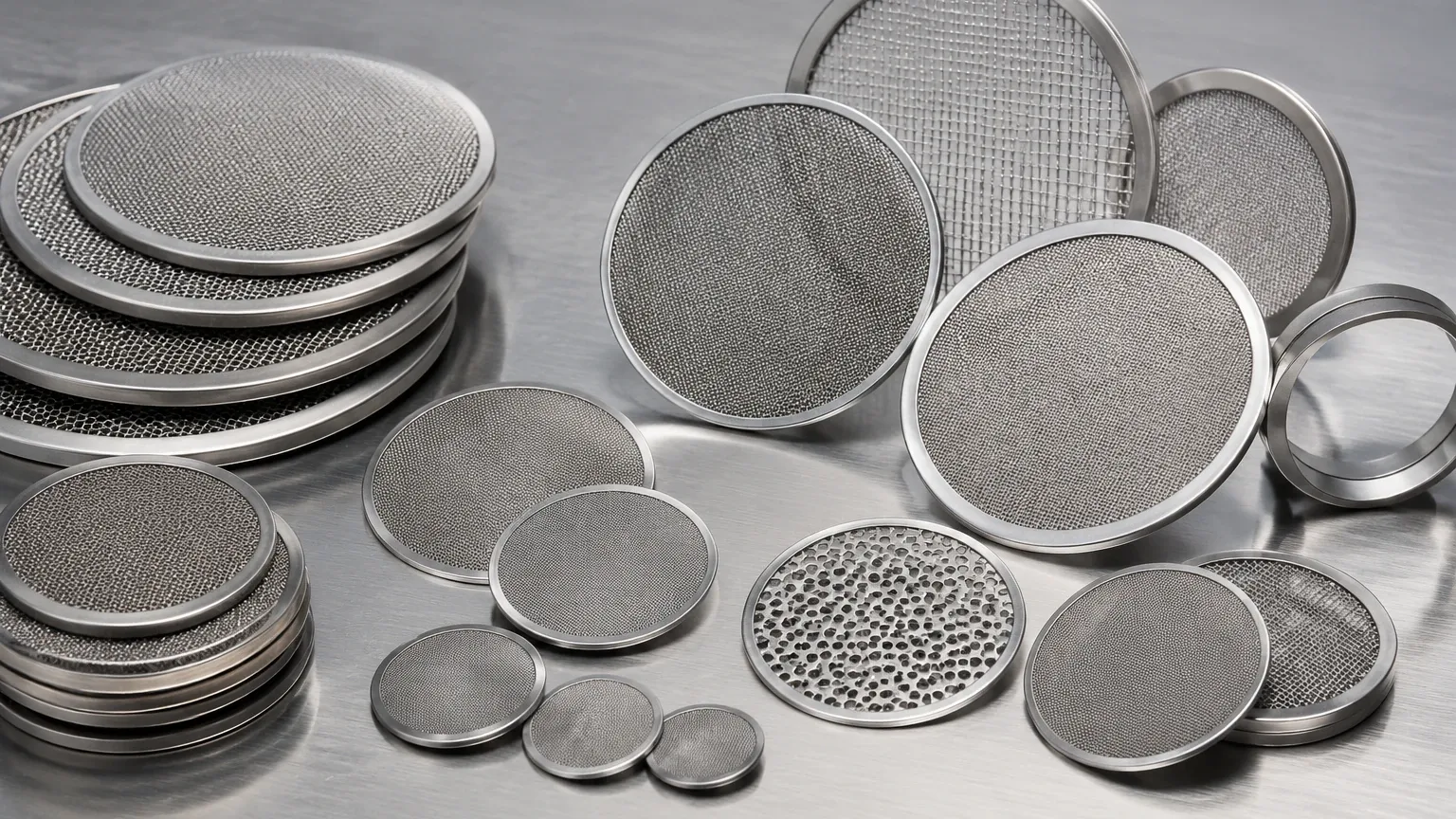
In the landscape of precision industrial filtration, the selection of media is dictated by the chemical environment, thermal requirements, and the mechanical stresses of the application. Duran filter discs, traditionally recognized as sintered borosilicate glass components, represent a standard for laboratory and high-purity chemical processing. However, as industrial requirements scale from benchtop analysis to full-scale production, the engineering considerations surrounding these discs evolve. Technical professionals must often evaluate whether glass-based media or high-performance metal Filter Discs & Packs are better suited for their specific operational parameters.
This guide examines the technical specifications of duran filter discs, their integration into industrial systems, and the critical performance metrics engineers must verify to ensure process integrity and cost-efficiency.
Technical Characteristics of Duran Filter Discs
Duran filter discs are manufactured from Borosilicate 3.3 glass, a material prized for its exceptional chemical resistance and thermal stability. The production process involves the sintering of glass particles—heating them until they fuse without melting—to create a porous structure. This results in a rigid, depth-filtration medium that is nearly inert to most acids, neutral solutions, and organic solvents.
Porosity Grades and Micron Ratings
From an engineering perspective, the most critical specification for a duran filter disc is its porosity grade. These are typically categorized under ISO 4793 or similar regional standards (such as the "P" grades in Europe or the "G" grades in other regions).
* P160 (G0): 160–250 µm – Used for coarse filtration and gas distribution.
* P100 (G1): 100–160 µm – Suitable for coarse precipitates and gas dispersion in liquids.
* P40 (G2): 40–100 µm – Used for medium-grade filtration and preparative work.
* P16 (G3): 16–40 µm – Standard for analytical filtration and fine precipitates.
* P10 (G4): 10–16 µm – Designed for very fine precipitates and analytical work.
* P5 (G5): 1.0–1.6 µm – Used for bacterial filtration and ultra-fine clarification.
While these grades provide a reliable baseline for laboratory settings, industrial engineers must account for the "tortuous path" mechanism of depth filtration. Unlike surface filtration, where particles are stopped at the plane of the media, depth filtration in sintered discs traps particles within the matrix, which can lead to higher dirt-holding capacity but also more complex cleaning requirements.
Engineering Considerations: Glass vs. Metal Filter Discs
While duran filter discs offer superior chemical inertness, they possess inherent mechanical limitations that often necessitate a transition to stainless steel Filter Discs & Packs in industrial environments. Engineers must weigh the following factors when selecting between glass and metal media:
Mechanical Strength and Pressure Differential
Glass discs are brittle. Under high differential pressure ($ΔP$), they are susceptible to cracking or catastrophic failure. In contrast, stainless steel filter discs, often made from 304 or 316L wire mesh or sintered metal fibers, can withstand significantly higher pressure drops without compromising structural integrity. In systems where pressure surges are common, such as hydraulic lines or high-viscosity polymer filtration, metal packs are the industry standard.
Thermal Shock and Operating Temperature
Borosilicate glass has a low coefficient of thermal expansion, making it resistant to thermal shock. However, it still has a maximum operating temperature (typically around 450°C to 500°C for short durations) and cannot be used in applications requiring rapid cycling between extreme temperatures. Stainless steel and specialized alloys like Hastelloy can operate in much higher thermal envelopes and offer greater ductility, reducing the risk of fatigue-related failure.
Scalability and Housing Integration
Integrating duran filter discs into industrial pipelines requires specialized glass-to-metal seals or PTFE gaskets to prevent leakage and protect the glass from mechanical stress. Metal filter discs can be easily welded, pleated, or rim-bound with aluminum or stainless steel edges, allowing for seamless integration into standard industrial housings and filter presses.
Selection Criteria for Industrial Filter Discs & Packs
When specifying Filter Discs & Packs for a project, engineers should move beyond simple micron ratings and consider the following technical variables:
1. Flux Rate and Permeability
The flux rate (volume of fluid passing through a unit area per unit of time) is determined by the permeability of the disc. In sintered glass, permeability is relatively fixed by the grain size. In metal wire mesh discs, engineers can optimize flux by selecting specific weave types, such as Plain Dutch Weave or Twilled Dutch Weave, which balance flow capacity with particle retention.
2. Multi-Layer Construction
In industrial applications, a single layer of filtration media is rarely sufficient. "Packs" refer to multi-layer configurations where different mesh counts are combined. A typical three-layer pack might include:
* A Drainage/Support Layer: A coarse mesh that provides structural rigidity.
* The Filtration Layer: The fine mesh or sintered fiber felt that determines the micron rating.
* A Protective Layer: A medium mesh that prevents the filtration layer from being damaged by back-flushing or mechanical abrasion.
3. Chemical Compatibility and Corrosion Resistance
While duran filter discs are resistant to most chemicals, they are vulnerable to hydrofluoric acid, hot phosphoric acid, and strong concentrated alkalis. For these specific environments, or for general industrial use where durability is key, selecting the correct metal alloy is vital. 316L stainless steel provides excellent resistance to general corrosion, while Monel or Inconel may be required for high-chloride or high-temperature oxidative environments.
Common Risks in Precision Filtration Procurement
Technical buyers and engineers often encounter several pitfalls when sourcing duran filter discs or their metal counterparts. Addressing these risks early in the procurement phase is essential for long-term operational success.
Fragility and Handling
The most significant risk with glass filter discs is breakage during installation or maintenance. Even a hairline fracture can lead to bypass, where unfiltered fluid contaminated the downstream process. In critical pharmaceutical or food and beverage applications, this can result in the loss of an entire batch. Metal filter discs mitigate this risk through their inherent toughness.
Flow Maldistribution
If a filter disc is not properly seated within its housing, fluid will follow the path of least resistance, leading to "channeling." This results in premature clogging of certain areas of the disc while others remain unused. Engineers should confirm the tolerances of the disc diameter and the sealing mechanism (such as spot welding or rim binding) to ensure uniform flow across the entire surface area.
Cleaning and Regeneration
Unlike disposable cartridge filters, duran filter discs and stainless steel Filter Discs & Packs are often intended for multiple uses. However, depth filtration media can be difficult to clean if the particles are sticky or if they have bridged within the pores. Engineers must verify that the chosen media can withstand the cleaning protocol, whether it involves ultrasonic baths, chemical solvents, or high-temperature burnout.
Application-Specific Requirements
Pharmaceutical and Biotechnology
In these sectors, the primary concern is purity and the prevention of extractables and leachables. While glass is excellent for this, stainless steel discs must be passivated and electropolished to ensure a smooth, non-reactive surface that meets FDA and cGMP standards. The ability to autoclave the filter components without risk of breakage is a significant advantage of metal packs.
Chemical and Petrochemical Processing
High-volume chemical processing requires filters that can handle aggressive solvents at elevated pressures. Here, the transition from duran filter discs to sintered metal fiber felt or multi-layer wire mesh packs is common. These components offer the high surface area needed for efficient filtration in compact housings.
Food and Beverage
Filtration in the food industry often involves removing fine particulates from syrups, oils, or beverages. The media must be food-grade and resistant to the caustic cleaning agents used in CIP (Clean-In-Place) cycles. Stainless steel discs are preferred here for their durability and the absence of glass-breakage risks in the production line.
Information to Confirm Before Purchasing
Before finalizing a specification for Filter Discs & Packs, project leads should document and confirm the following data points with their manufacturer:
1. Operating Environment: What is the maximum and minimum operating temperature? What is the chemical composition of the fluid, including trace impurities?
2. Pressure Parameters: What is the normal operating pressure, and what is the maximum allowable differential pressure ($ΔP$) before the disc must be cleaned or replaced?
3. Particle Characteristics: What is the particle size distribution of the contaminants? Are the particles rigid, deformable, or fibrous?
4. Flow Requirements: What is the required flow rate, and what is the maximum footprint available for the filter housing?
5. Compliance Standards: Does the application require compliance with specific standards such as ISO, ASTM, or food-grade certifications?
By focusing on these factual engineering boundaries, technical teams can ensure they select the most appropriate filtration media—whether it is the precision of a duran filter disc for laboratory-scale work or the robust performance of a custom-engineered stainless steel pack for industrial production. The goal is always to achieve the optimal balance between filtration efficiency, mechanical durability, and total cost of ownership.
