


Ispring Filter Packs
In the landscape of industrial and high-purity water treatment, the efficiency of a filtration system is often determined by the quality and configuration of its internal components. While many professionals are familiar with ispring filter packs in the context of residential or light commercial reverse osmosis (RO) systems, the engineering principles governing these multi-stage assemblies are critical across a wide range of industrial applications. For engineers and procurement specialists, understanding the transition from standard consumer-grade packs to high-performance industrial Filter Discs & Packs is essential for ensuring system longevity and process consistency.
Industrial filtration demands more than just basic particulate removal; it requires components that can withstand fluctuating pressures, chemical exposure, and rigorous cleaning cycles. This article examines the technical considerations of filter packs, the materials that define their performance, and the engineering criteria necessary for selecting the right filtration solution for demanding environments.
The Role of Multi-Stage Filtration in Industrial and High-Purity Systems
Filter packs are designed to provide sequential filtration, where each layer or stage targets specific contaminants based on size and physical properties. In systems utilizing ispring filter packs, the objective is typically to protect sensitive downstream components—such as RO membranes or high-pressure pumps—from sediment, chlorine, and organic compounds.
In an industrial setting, this multi-stage approach is scaled to handle higher flow rates and more aggressive media. The primary function of these packs is to distribute the particulate load across multiple layers, preventing the immediate clogging of the finest filter media. By utilizing a gradient density or a layered mesh approach, engineers can significantly extend the service life of the filter, reducing the frequency of maintenance shutdowns.
For applications in chemical processing or food and beverage production, the reliability of these packs is paramount. A failure in a single layer of a filter pack can lead to bypass, where unfiltered contaminants reach the final product or damage expensive machinery. Therefore, the structural integrity of the pack—often achieved through precision welding or sintering—is as important as the micron rating itself.
Engineering the Composition of Filter Discs & Packs
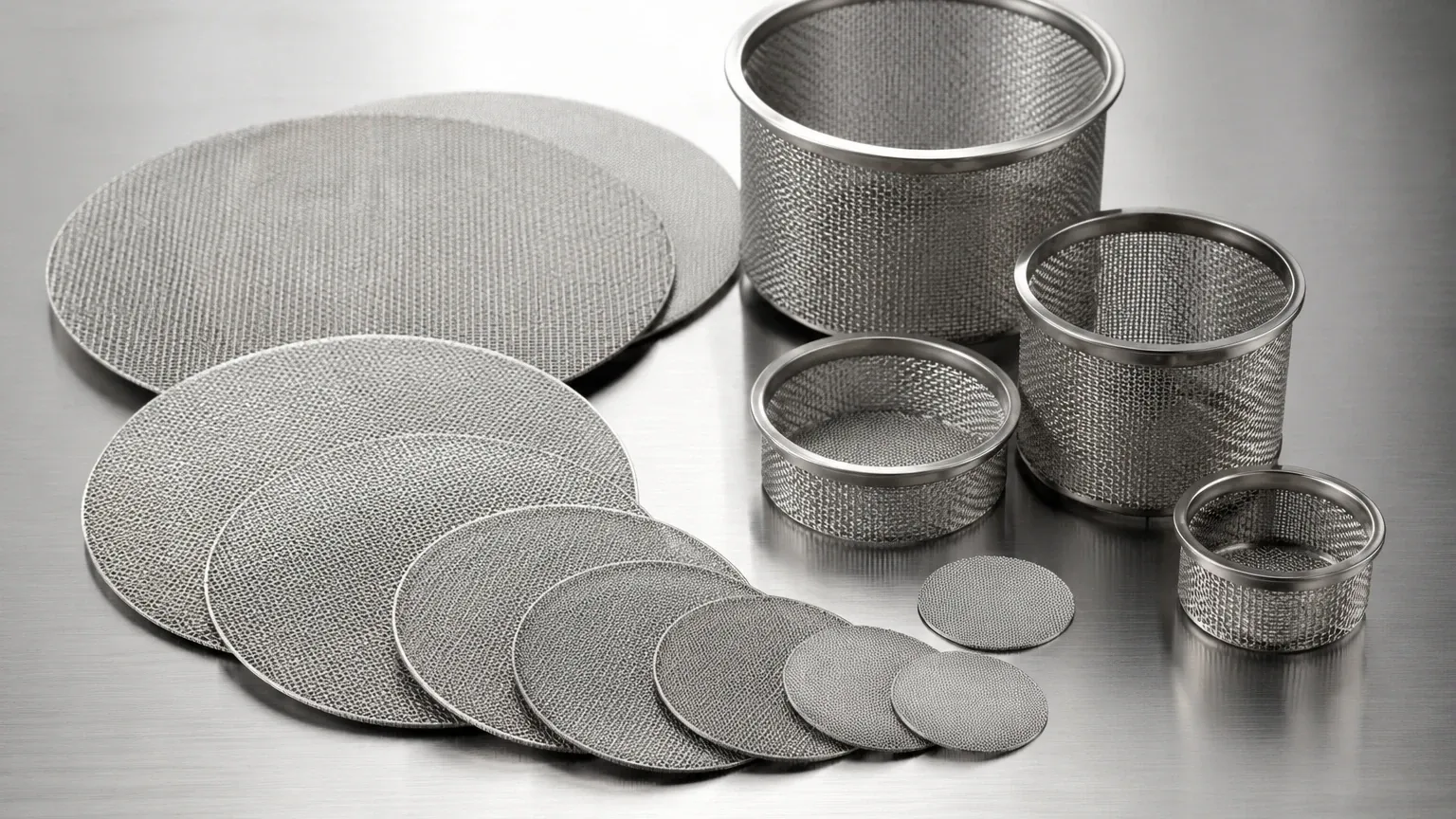
When evaluating Filter Discs & Packs, engineers must look closely at the construction methods used to join the various layers. In high-performance industrial environments, the standard plastic housings and bonded fibers found in some ispring filter packs may be replaced by or supplemented with stainless steel components to handle higher temperatures and pressures.
Layered Mesh Configurations
Industrial filter packs often consist of multiple layers of wire mesh. A typical configuration might include:
1. Drainage Layer: A coarse mesh that provides structural support and ensures even flow distribution.
2. Filter Media Layer: The primary layer responsible for the target micron rating. This can be a single layer of fine mesh or multiple layers of varying fineness.
3. Protective Layer: A secondary mesh that protects the delicate filter media from mechanical damage during installation or backwashing.
Sintering vs. Spot Welding
There are two primary methods for securing these layers. Spot welding is cost-effective and suitable for applications with lower mechanical stress. However, for high-pressure hydraulic systems or steam filtration, sintered filter packs are preferred. Sintering involves bonding the layers of mesh together at their contact points using heat and pressure without the use of binders. This creates a monolithic structure that is incredibly durable and maintains its pore geometry even under extreme conditions.
Material Integrity: Transitioning from Standard to Industrial Grade
The material of construction is perhaps the most critical factor in determining the compatibility of a filter pack with a specific process. While standard ispring filter packs often utilize polypropylene, activated carbon, and specialized polymers, industrial applications frequently necessitate the use of stainless steel.
Stainless Steel 304 and 316L
Stainless steel is the industry standard for filtration in corrosive or high-temperature environments.
* Type 304: Offers excellent resistance to a wide range of atmospheric environments and many corrosive media. It is commonly used in food processing and general industrial applications.
* Type 316L: Contains molybdenum, which provides superior resistance to chlorides and acids. The "L" stands for low carbon, which improves weldability and reduces the risk of intergranular corrosion in the heat-affected zones of welds.
For engineers replacing or upgrading components in a water treatment train, moving from polymer-based packs to stainless steel Filter Discs & Packs can offer a significant increase in total cost of ownership (TCO) efficiency due to the ability to clean and reuse the metal components.
Technical Parameters: Micron Precision and Mesh Layering
Selecting the correct micron rating for a filter pack requires a balance between filtration efficiency and flow resistance. The micron rating indicates the size of the smallest particle the filter is designed to trap.
Absolute vs. Nominal Ratings
In technical procurement, it is vital to distinguish between nominal and absolute micron ratings. A nominal rating is an average based on the weight of particles retained, whereas an absolute rating indicates that 99.9% of particles above a certain size will be captured. Industrial-grade metal filter packs provide much more consistent absolute ratings compared to fibrous or depth-style ispring filter packs, which may experience "pore migration" or unloading under pressure surges.
Mesh Count and Wire Diameter
The performance of the wire mesh within the pack is determined by the mesh count (number of wires per inch) and the wire diameter. A higher mesh count provides finer filtration but results in a higher pressure drop. Engineers must calculate the "open area" percentage to ensure that the filter pack does not become a bottleneck in the system.
Hydraulic Performance: Managing Flow Rates and Pressure Differentials
Every filtration component introduces a pressure drop (Delta P) into the system. For systems using ispring filter packs, maintaining a consistent flow is essential for the proper operation of RO membranes. In industrial hydraulics or water treatment, excessive pressure drop can lead to pump cavitation and increased energy consumption.
Initial Pressure Drop
The initial pressure drop is the resistance of a clean filter. This value must be factored into the system's pump head calculations. Factors influencing this include the fluid viscosity, flow velocity, and the total surface area of the Filter Discs & Packs.
Dirt Holding Capacity
As the filter pack captures contaminants, the pressure drop increases. A well-engineered filter pack will have a high dirt-holding capacity, meaning it can retain a large volume of solids before reaching the terminal pressure drop (the point at which the filter must be cleaned or replaced). Multi-layered packs excel here by utilizing the outer layers for "pre-filtration," allowing the inner, finer layers to remain functional for longer periods.
Customization and OEM Integration for Specialized Applications
One of the primary challenges for engineers is finding filter packs that fit non-standard housings or meet unique process requirements. While off-the-shelf ispring filter packs serve a broad market, many industrial systems require customized solutions.
Geometric Customization
Filter discs can be produced in various shapes, including circular, rectangular, oval, or ring-shaped. They can also be formed into pleated structures to increase the surface area within a compact footprint. Custom edging, such as aluminum or stainless steel rims, can be added to ensure a leak-proof seal within the filter housing.
Performance Customization
By varying the number of layers and the specific mesh types (e.g., plain weave, twilled weave, or dutch weave), manufacturers like Kaifil can tune the performance of the filter pack to specific fluid dynamics. This is particularly useful in the pharmaceutical and chemical industries, where precise control over particle size distribution is critical for product quality.
Maintenance Protocols and Total Cost of Ownership (TCO)
The decision between disposable and cleanable filter packs often comes down to a TCO analysis. Standard ispring filter packs are typically disposable, which simplifies maintenance but increases the ongoing cost of consumables and waste disposal.
Cleaning Methods for Stainless Steel Packs
Stainless steel Filter Discs & Packs offer the advantage of being cleanable. Common industrial cleaning methods include:
* Ultrasonic Cleaning: Uses high-frequency sound waves to create cavitation bubbles that dislodge particles from deep within the mesh layers.
* Backwashing: Reversing the flow of fluid through the filter to flush out accumulated solids.
* Chemical Cleaning: Using specialized solvents or acids to dissolve scale or organic buildup, provided the filter material is chemically compatible.
Replacement Cycles
Even with cleaning, all filter packs have a finite service life. Engineers should monitor the pressure drop over time; if the "clean" pressure drop begins to rise after successive cleanings, it indicates that fine particulates are becoming permanently lodged in the media, or the mesh is suffering from mechanical fatigue. Establishing a clear replacement cycle based on these metrics is essential for preventing unplanned downtime.
Conclusion: Selecting the Right Filtration Solution
Whether you are maintaining a high-purity water system that utilizes ispring filter packs or designing a heavy-duty industrial process, the principles of effective filtration remain the same: material compatibility, structural integrity, and precise micron control.
For industrial professionals, the transition to robust, stainless steel Filter Discs & Packs often provides the durability and performance required to meet strict regulatory standards and operational goals. By focusing on engineering specifications—such as sintered layer configurations, 316L material options, and absolute micron ratings—purchasing teams can ensure they are investing in components that support long-term system health.
When selecting a filtration partner, it is important to confirm their ability to provide technical documentation, material certifications, and customization options. As a professional manufacturer, Kaifil specializes in these high-performance solutions, offering the expertise needed to develop custom filtration components for the most demanding industrial environments. Understanding the nuances of filter pack design allows engineers to optimize their systems for efficiency, reliability, and cost-effectiveness.
