


La Colombe Filter Packs
In the commercial beverage industry, the demand for consistent, high-quality extractions has led to the widespread adoption of specialized filtration systems. While consumers recognize names like La Colombe filter packs for their convenience and flavor profile in cold brew and drip applications, the industrial engineering behind these products involves sophisticated filtration technology. For engineers and production managers in the food and beverage sector, understanding the transition from standard consumer-grade filters to industrial-scale Filter Discs & Packs is essential for maintaining brand consistency and operational efficiency.
Industrial filtration in the coffee and beverage space is not merely about separating solids from liquids; it is about precision control over particle size, flow rates, and the structural integrity of the filter medium under pressure. This article explores the technical specifications, material considerations, and engineering requirements for filter discs and packs used in large-scale beverage production environments.
The Engineering Behind Industrial Beverage Filtration
When scaling production to meet the demands of a brand like La Colombe, the filtration process moves beyond simple paper or cloth media. Industrial systems often utilize multi-layer stainless steel wire mesh packs to achieve the necessary clarity and throughput. These components are designed to withstand the hydraulic pressures of high-volume extraction while providing a repeatable filtration threshold.
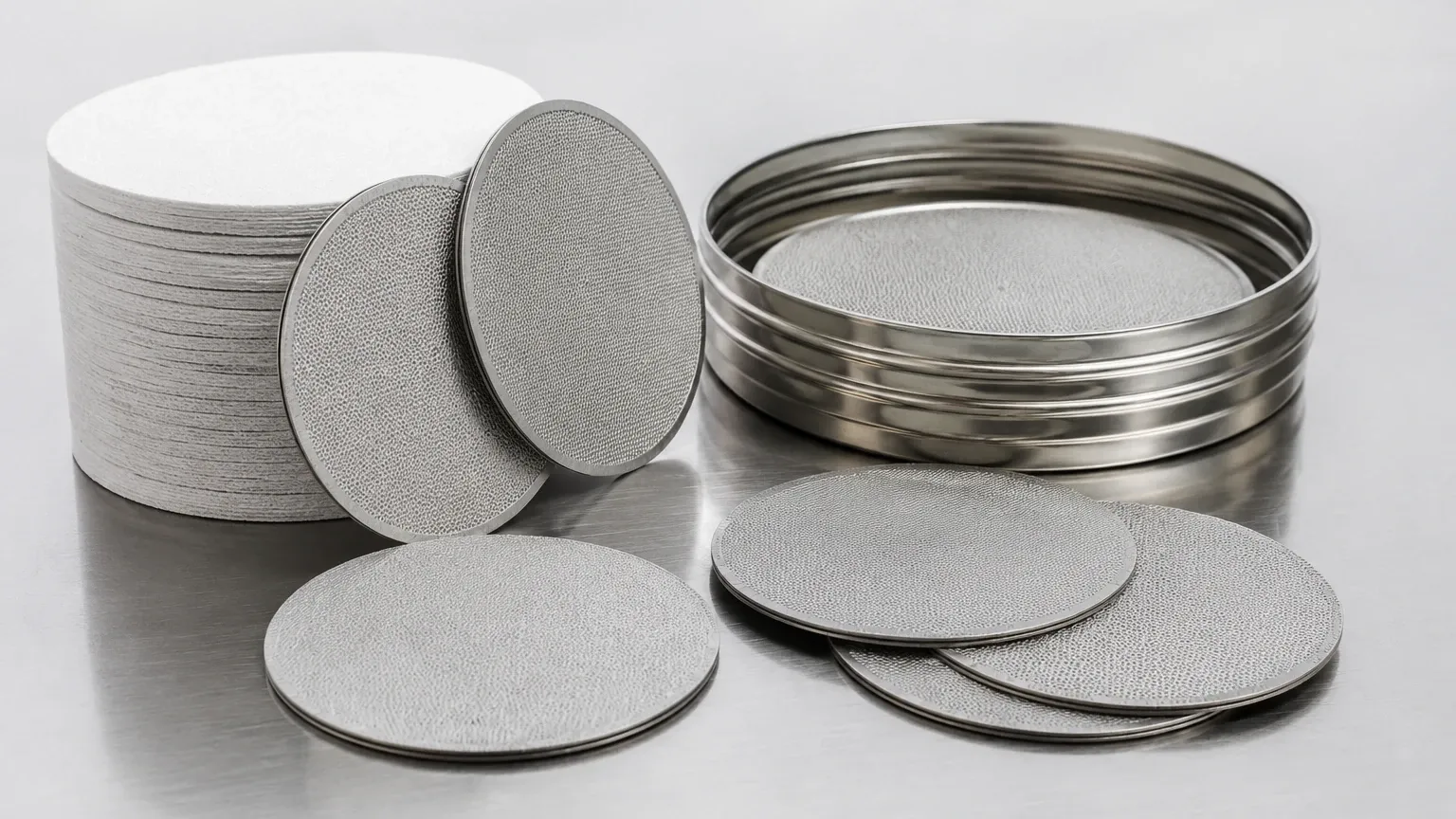
Filter Discs & Packs serve as the primary barrier in many extraction and clarification stages. In large-scale cold brew production, for instance, the "pack" refers to a combination of mesh layers—often ranging from coarse support layers to fine filtration layers—welded or bound together. This multi-stage approach ensures that fine sediments are captured without prematurely blinding the filter, a common failure point in lower-quality systems.
Why Stainless Steel is the Industrial Standard
While disposable paper filters are common in small-scale applications, industrial beverage processing relies heavily on stainless steel (typically Grade 304 or 316L). The shift to metal filtration is driven by several technical factors:
1. Durability and Reusability: Unlike paper, stainless steel filter discs can be cleaned and reused through multiple production cycles, significantly reducing the waste stream and long-term consumable costs.
2. Chemical Resistance: Stainless steel is resistant to the organic acids found in coffee and the caustic chemicals used in Clean-In-Place (CIP) cycles.
3. Mechanical Strength: In high-pressure extraction or extrusion processes, paper filters would rupture. Metal packs maintain their shape and pore size even under significant differential pressure.
Technical Specifications of Filter Discs & Packs
Selecting the right filter pack requires a deep dive into the technical parameters of the wire mesh. For engineers, the primary considerations are the weave type, micron rating, and the structural assembly of the disc.
Weave Types and Their Applications
The performance of a filter pack is largely determined by the weave of the wire mesh. Common weaves used in beverage filtration include:
* Plain Weave: The simplest and most common weave, where each warp wire crosses over and under each weft wire. It offers high precision in pore size and is ideal for general-purpose filtration.
* Dutch Weave: This weave uses a larger diameter warp wire and a smaller diameter weft wire. It creates a much denser mesh with smaller triangular openings, allowing for finer filtration and higher pressure resistance. This is often used in the final clarification stages of coffee concentrate production.
* Twilled Weave: Used when a heavier wire is required for a given mesh count, providing increased strength for high-viscosity or high-pressure applications.
Micron Rating and Particle Retention
In the context of products similar to La Colombe filter packs, the micron rating is critical. Cold brew applications typically require a filtration level that removes all visible sediment while allowing essential oils to pass through, usually ranging from 50 to 150 microns. However, for concentrated extracts or RTD (Ready-to-Drink) products, secondary filtration may go as fine as 5 to 10 microns to ensure shelf stability and prevent precipitation over time.
Customization and OEM Solutions for Scale
Every industrial brewing system has unique geometry and flow requirements. Off-the-shelf solutions rarely suffice for high-capacity facilities. Customization of Filter Discs & Packs allows engineers to optimize the filtration surface area and fitment within existing housings.
Multi-Layer Sintered vs. Spot-Welded Packs
For demanding applications, engineers must choose between different assembly methods:
* Spot-Welded Packs: Multiple layers of mesh are held together by spot welding at the edges. This is a cost-effective solution for applications where the pack is supported by a heavy-duty plate or frame.
* Sintered Packs: The mesh layers are bonded together through a heat and pressure process (sintering) without the use of binders. This creates a monolithic structure that is incredibly strong, easy to clean, and prevents any risk of layer separation during backpulsing or high-pressure cycles.
* Rimmed Discs: Adding an aluminum or stainless steel rim (binding) around the edge of the filter disc ensures a tight seal within the filter housing, preventing "bypass"—where unfiltered liquid escapes around the edges of the filter.
Operational Considerations: Maintenance and Replacement
In a B2B environment, the Total Cost of Ownership (TCO) of filtration components is a primary metric. While the initial investment in stainless steel Filter Discs & Packs is higher than disposable alternatives, the operational lifespan and performance consistency offer a superior return on investment.
Cleaning and Sterilization
To maintain the flow rates required for large-scale production, filters must be cleaned effectively. Stainless steel packs are compatible with various cleaning methods:
* Ultrasonic Cleaning: High-frequency sound waves create cavitation bubbles that dislodge fine coffee particulates trapped deep within the mesh pores.
* Backwashing: Reversing the flow of liquid through the filter to push out accumulated solids.
* Chemical Cleaning: Using food-grade caustic or acidic solutions to dissolve organic buildup without damaging the filter media.
Identifying the Need for Replacement
Engineers should monitor the pressure drop (differential pressure) across the filter pack. A consistent increase in the baseline pressure after cleaning cycles indicates that the mesh is becoming permanently blinded or that the structural integrity of the weave is compromised. Establishing a regular replacement schedule based on these metrics ensures that the quality of the final beverage—whether it is a cold brew inspired by La Colombe or a specialized extract—remains constant.
Selecting the Right Partner for Filtration Components
When sourcing Filter Discs & Packs for industrial beverage applications, it is vital to work with a manufacturer that understands the nuances of food-grade production. Key factors to confirm with a supplier include:
* Material Certification: Ensure the stainless steel is certified for food contact and is free from contaminants.
* Precision Manufacturing: Verify that the mesh counts and micron ratings are verified through rigorous quality control processes.
* Engineering Support: A supplier like Kaifil provides technical guidance on mesh selection and pack configuration to solve specific filtration challenges, such as reducing sediment in high-flow systems.
Conclusion
The success of high-volume beverage products, such as those utilizing La Colombe filter packs, relies on the invisible infrastructure of industrial filtration. By moving to high-performance stainless steel Filter Discs & Packs, production facilities can achieve higher clarity, better flow rates, and more sustainable operations. For the engineer, the choice of filter is not just a procurement decision; it is a critical component of the product's flavor profile and the facility's bottom line.
When evaluating your next filtration upgrade or designing a new extraction line, consider the mechanical and chemical demands of your process. Precision-engineered metal mesh solutions provide the reliability and accuracy needed to compete in the modern beverage market, ensuring that every batch meets the high standards expected by consumers and professional tasters alike.
