


Oil Filter Packs
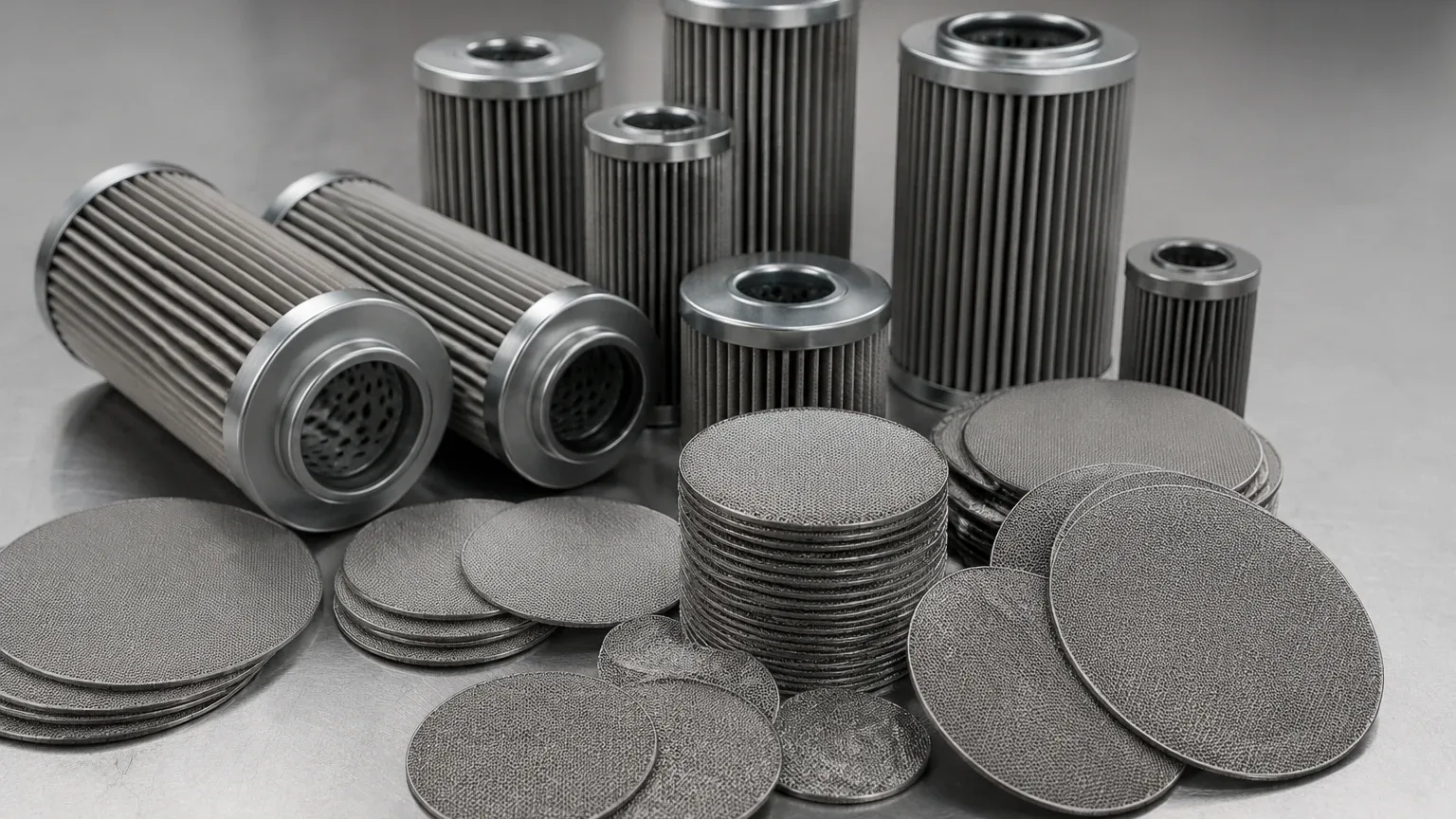
In industrial filtration, the term "oil filter packs" refers to specialized assemblies of wire mesh discs designed to remove contaminants from hydraulic oils, lubricating fluids, and liquid polymers. These components are critical for maintaining the operational integrity of high-pressure systems where particulate contamination can lead to mechanical wear, valve sticking, or complete system failure. For engineers and technical procurement teams, selecting the correct Filter Discs & Packs requires a deep understanding of mesh geometry, material compatibility, and the mechanical stresses inherent in high-flow oil environments.
Industrial oil filtration is not a one-size-fits-all process. Depending on the viscosity of the oil and the sensitivity of the downstream components, a filter pack may consist of a single layer of precision-woven wire cloth or multiple layers of varying mesh counts bonded together. This article examines the technical specifications, engineering considerations, and application-specific requirements for oil filter packs in modern industrial settings.
Understanding the Structure of Filter Discs & Packs
The fundamental component of an oil filter pack is the stainless steel wire mesh. Unlike disposable cellulose or synthetic fiber filters, metal filter packs offer superior mechanical strength and the ability to withstand extreme temperatures and pressures. These packs are typically categorized by their construction method:
Single-Layer Filter Discs
Single-layer discs are often used in low-pressure applications or as a secondary safety screen. They are stamped from a single sheet of wire mesh, usually in a plain or twilled weave. While cost-effective, they lack the depth-loading capacity of multi-layer configurations.
Multi-Layer Spot-Welded Packs
For more demanding oil filtration, multiple layers of mesh are stacked and spot-welded at specific points. This configuration allows for a graduated filtration process. For example, a coarse outer layer might act as a support and pre-filter, while a fine inner layer provides the final micron-rated filtration. Spot welding ensures the layers remain aligned during installation and operation.
Rimmed or Framed Packs
In high-pressure hydraulic or extrusion systems, the edges of the filter pack are a potential point of failure. Rimmed packs feature an aluminum, stainless steel, or copper border compressed around the circumference of the mesh layers. This rim serves two purposes: it provides a rigid sealing surface to prevent bypass leakage and protects the mesh edges from fraying under high flow velocities.
Material Selection and Engineering Specifications
Material choice is the primary determinant of a filter pack's lifespan and chemical resistance. Kaifil utilizes various alloys to meet specific industrial demands, with stainless steel being the industry standard due to its corrosion resistance and structural stability.
* AISI 304 Stainless Steel: The most common material for general oil filtration. It provides excellent strength and good corrosion resistance for standard hydraulic and lubricating oils.
* AISI 316 and 316L Stainless Steel: Specified for environments involving aggressive chemicals, high moisture content, or acidic additives. 316L (low carbon) is preferred for applications involving welding to prevent intergranular corrosion.
* Specialty Alloys: In niche applications involving high-temperature synthetic oils or corrosive chemical additives, materials like Monel or Inconel may be utilized, though stainless steel remains the most frequent choice for standard industrial oil filter packs.
Engineers must also consider the weave type. Plain Weave is standard for general filtration, while Dutch Weave (Plain or Twilled) provides a denser structure with higher filtration accuracy and better pressure resistance, making it ideal for fine oil filtration where high differential pressures are expected.
Performance Criteria: Micron Rating and Flow Resistance
The primary function of an oil filter pack is to achieve a specific level of fluid cleanliness, often measured by the ISO 4406 cleanliness code. To achieve this, the filter's micron rating must be precisely matched to the system's requirements.
Nominal vs. Absolute Filtration
In the context of metal wire mesh, it is vital to distinguish between nominal and absolute ratings. A nominal rating refers to the ability of the mesh to retain a percentage of particles of a certain size. An absolute rating, common in precision oil filter packs, indicates the pore size where no particle larger than the specified micron can pass through. For sensitive hydraulic servos, absolute filtration is often mandatory.
Pressure Drop (ΔP)
Every filter introduces resistance to the flow. In oil systems, this pressure drop is influenced by the oil's viscosity, which changes significantly with temperature. A well-engineered filter pack must balance high filtration efficiency with a low initial pressure drop to prevent pump cavitation or the premature opening of bypass valves. Multi-layer designs help manage this by increasing the available surface area for contaminant capture.
Industrial Applications and Operating Environments
Oil filter packs are utilized across a broad spectrum of industries, each with unique environmental challenges:
1. Hydraulic Systems: Used in heavy machinery and aerospace, these packs protect sensitive valves and actuators from metal shavings and environmental dust. They must handle rapid pressure fluctuations and high-frequency vibrations.
2. Plastic and Polymer Extrusion: In these applications, the "oil" is often a high-viscosity molten polymer. Filter packs (often called screen packs) are used to remove gels and un-melted particles that would otherwise cause defects in the final product.
3. Chemical Processing: Filters used here must withstand corrosive fluids and high operating temperatures. Stainless steel packs are often the only viable solution for filtering hot process oils.
4. Power Generation: Large-scale turbines and gearboxes require continuous lubrication. Filter packs in these systems are designed for long service lives and high dirt-holding capacity to minimize downtime during maintenance intervals.
Customization and OEM Considerations for Engineers
When sourcing oil filter packs, standard off-the-shelf components often fail to meet the specific geometric or performance requirements of custom machinery. Engineering teams should confirm the following parameters during the design phase:
* Layer Sequence: Determining the optimal stack of mesh counts (e.g., 20/60/100/60/20) to maximize both filtration and mechanical support.
* Shape and Dimensions: While circular discs are most common, custom shapes including ovals, rectangles, or kidney-shaped packs are often required for specific housing designs.
* Welding and Bonding: Depending on the application, spot welding, full-perimeter welding, or mechanical rimming may be more appropriate to ensure structural integrity.
* Flow Direction: Some multi-layer packs are asymmetrical, meaning they must be installed in a specific orientation to function correctly. Clear marking or asymmetrical rimming can prevent installation errors.
Kaifil provides comprehensive OEM support, allowing engineers to specify these variables to ensure the filter pack integrates seamlessly into their existing filtration housings.
Maintenance, Cleaning, and Replacement Cycles
One of the significant advantages of stainless steel oil filter packs over disposable media is their reusability. However, the cleaning process must be handled correctly to avoid damaging the precision mesh.
Cleaning Methods
* Ultrasonic Cleaning: The most effective method for metal filter packs. High-frequency sound waves create cavitation bubbles that dislodge fine particulates from deep within the mesh layers.
* Solvent Cleaning: Effective for removing organic residues or heavy grease, provided the solvent is compatible with the filter material and rimming metal.
* Backwashing: In some automated systems, the flow is periodically reversed to flush contaminants off the surface of the filter pack. This is most effective for surface-loading (single layer) filters.
Determining Replacement
Despite being cleanable, filter packs eventually reach the end of their functional life. Engineers should monitor the "clean pressure drop"—the pressure differential across the filter immediately after cleaning. If the clean pressure drop remains significantly higher than the original specification, it indicates that particulates are permanently trapped within the mesh or that the mesh has been compressed, reducing the open area. At this point, the pack must be replaced to maintain system efficiency.
Conclusion
Oil filter packs are essential components for ensuring the longevity and reliability of industrial fluid systems. By selecting the appropriate material, weave type, and layer configuration, engineers can optimize filtration performance while controlling costs. Whether for high-pressure hydraulics or high-viscosity polymer processing, the durability and precision of stainless steel Filter Discs & Packs provide a level of performance that synthetic alternatives cannot match. When specifying these components, focusing on technical boundaries—such as absolute micron ratings, mechanical rimming, and material grade—ensures that the filtration solution will withstand the rigors of demanding industrial environments.
