


Pack Filtration Eau
In the landscape of industrial water treatment and liquid processing, the term "pack filtration eau" refers to the specialized configuration of multi-layered stainless steel mesh assemblies designed to remove particulate matter from water streams. These filtration packs are critical components in high-pressure systems where traditional polymer filters fail due to temperature, chemical incompatibility, or mechanical stress. For engineers and procurement specialists, selecting the correct filtration pack is not merely about choosing a mesh size; it involves a complex evaluation of flow dynamics, material longevity, and the specific requirements of the industrial water circuit.
Industrial water filtration demands a high degree of precision. Whether the application involves cooling water for power generation, process water for pharmaceutical manufacturing, or high-purity water for food and beverage production, the integrity of the filtration medium determines the efficiency of the entire system. Stainless steel filter packs provide a robust, cleanable, and highly customizable solution that ensures consistent performance under demanding conditions.
Technical Fundamentals of Pack Filtration Eau
The efficacy of a pack filtration eau system is rooted in the mechanical properties of the wire mesh used. Unlike depth filters, which trap particles throughout their structure, wire mesh packs primarily function through surface filtration or thin-layer cake filtration. This allows for more predictable flow rates and easier cleaning cycles.
Material Selection for Aqueous Environments
When designing a filtration pack for water-based applications, material selection is the first and most critical decision. The most common materials utilized are:
* AISI 304 Stainless Steel: Suitable for general industrial water applications where corrosion risks are moderate. It provides excellent mechanical strength and cost-effectiveness.
* AISI 316L Stainless Steel: The "L" denotes low carbon content, which is essential for components that require welding. 316L offers superior resistance to pitting and crevice corrosion, particularly in water containing chlorides or in acidic environments common in chemical processing.
* Specialty Alloys: For highly aggressive brackish water or high-temperature steam filtration, alloys like Monel or Inconel may be specified, though 316L remains the industry standard for the majority of B2B water filtration needs.
Mesh Weave Patterns and Their Impact
The geometry of the weave dictates the filtration accuracy (micron rating) and the pressure drop across the pack. Engineers must choose between several standard weaves:
1. Plain Weave: The simplest pattern, where wires cross over and under each other. It offers high flow rates but is generally limited to coarser filtration tasks.
2. Twilled Weave: Allows for thicker wires and higher mesh counts, providing increased strength for finer filtration.
3. Dutch Weave (Plain and Twilled): This weave uses a larger diameter warp wire and a smaller diameter shute wire. The result is a dense, high-strength mesh with very fine openings, ideal for high-pressure water filtration where precision is paramount.
Engineering Considerations for Multi-Layer Packs
A single layer of wire mesh is often insufficient for industrial water applications due to the risk of deformation under high differential pressure. This is where the concept of the "pack" becomes vital. A pack filtration eau assembly typically consists of multiple layers of mesh bonded together to create a single, high-performance unit.
The Layered Structure
In a typical multi-layer pack, the layers are arranged to optimize both filtration and structural support:
* Filtration Layer: The central layer (or layers) determines the micron rating. This is the finest mesh in the assembly.
* Support Layers: Coarser mesh layers are placed on either side of the filtration layer. These provide mechanical rigidity, preventing the fine mesh from stretching or tearing under the force of the water flow.
* Drainage Layers: In complex assemblies, drainage layers facilitate the even distribution of water across the entire surface of the filter, preventing localized clogging and extending the service life.
Sintered vs. Spot-Welded Packs
There are two primary methods for securing these layers. Spot-welded packs are cost-effective and suitable for many standard applications. However, for high-pressure systems or applications where fiber migration must be zero, sintered mesh packs are preferred. Sintering involves heating the layers in a vacuum furnace until the wire contact points fuse together. This creates a monolithic structure that maintains its pore size even under extreme mechanical stress.
When evaluating high-performance Filter Discs & Packs, engineers should specify the bonding method based on the maximum expected differential pressure ($ΔP$) of their system.
Performance Metrics and Selection Criteria
Selecting the right pack filtration eau requires a deep understanding of the system’s operating parameters. A mismatch between the filter specification and the application can lead to frequent downtime, pump damage, or contaminated end-products.
Micron Rating: Absolute vs. Nominal
In the B2B sector, clarity on micron ratings is essential. A nominal rating refers to the ability of the filter to retain a certain percentage (usually 60% to 90%) of particles of a specific size. An absolute rating, however, indicates the size of the largest spherical particle that can pass through the mesh. For critical water filtration, such as protecting sensitive spray nozzles or membrane systems, absolute ratings are mandatory to prevent downstream damage.
Flow Rate and Pressure Drop
The relationship between flow rate and pressure drop is the primary driver of energy consumption in water systems. A pack with a high mesh density will offer finer filtration but will also create a higher initial pressure drop. Engineers must calculate the Effective Filtration Area (EFA) to ensure that the flux (flow per unit area) remains within the manufacturer’s recommended limits. Overloading a filter pack leads to rapid "blinding" (clogging) and potential structural failure.
Rimming and Sealing
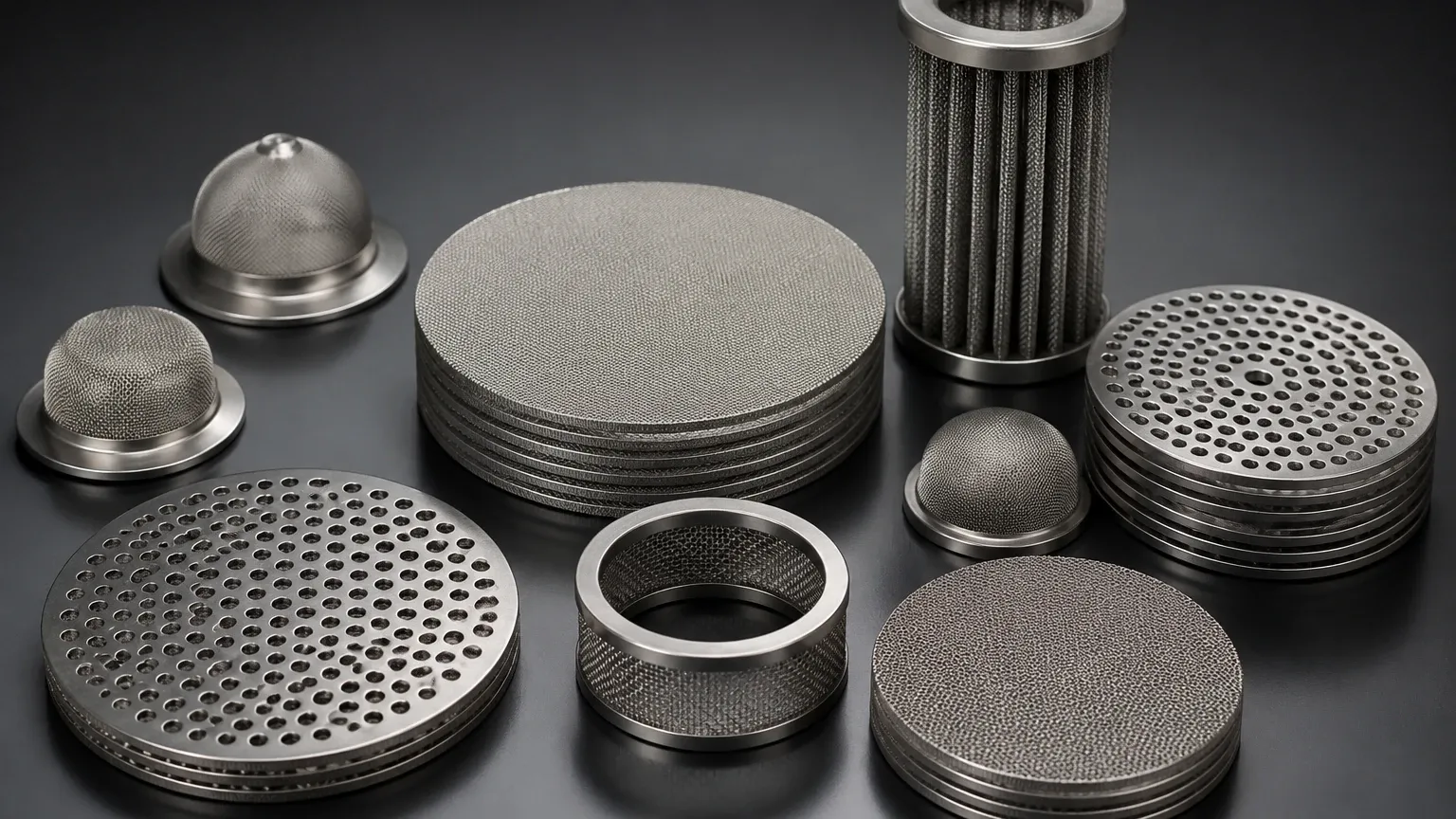
To prevent bypass—where unfiltered water leaks around the edges of the filter—packs are often finished with a metal rim. These rims can be made of aluminum, copper, or stainless steel. The choice of rim material must be compatible with the filter housing and the chemical composition of the water. A precision-engineered rim ensures a tight seal and provides a flat surface for gaskets or mechanical clamping.
Common Risks in Industrial Water Filtration
Even the highest quality pack filtration eau can fail if environmental factors are not managed. Understanding these risks allows for better system design and maintenance planning.
1. Biofouling: In untreated water systems, the growth of algae or bacteria on the mesh surface can rapidly increase pressure drop. Stainless steel is easier to treat with biocides or heat than polymer filters, but the mesh count must be chosen to allow for effective cleaning.
2. Scaling: Mineral deposits, such as calcium carbonate, can precipitate onto the wire mesh, especially in high-temperature applications. Regular acid cleaning or ultrasonic baths are often required to restore the mesh to its original permeability.
3. Mechanical Fatigue: In systems with frequent pressure pulsations (e.g., downstream of a reciprocating pump), the wires in the mesh can suffer from fatigue. Specifying a sintered pack or adding extra support layers can mitigate this risk.
4. Edge Leakage: If the pack is not sized correctly for the housing, water will take the path of least resistance around the edges. This renders the filtration process ineffective. Custom-sized Filter Discs & Packs are often necessary to ensure a perfect fit in OEM equipment.
Customization and OEM Solutions
One of the primary advantages of working with a professional manufacturer like Kaifil is the ability to customize the filtration pack to exact specifications. Industrial water systems are rarely "one size fits all," and off-the-shelf solutions often require compromises in performance or longevity.
Tailored Geometry
While circular discs are the most common, pack filtration eau can be manufactured in various shapes, including oval, rectangular, or ring-shaped configurations. Multi-segment packs can also be designed for large-scale filtration housings where a single large disc would be difficult to handle or prone to sagging.
Layer Configuration
Depending on the particulate load and the nature of the contaminants (e.g., fibrous vs. granular), the layer sequence can be adjusted. For example, a "graded" pack might use a series of increasingly fine mesh layers to provide depth-filtration-like capacity within a metallic structure. This is particularly useful in water systems with a wide range of particle sizes.
Maintenance and Total Cost of Ownership
When evaluating the cost of pack filtration eau, it is vital to look beyond the initial purchase price. The total cost of ownership (TCO) includes the cost of energy (due to pressure drop), the cost of downtime for replacement, and the cost of cleaning.
Stainless steel packs offer a significantly lower TCO than disposable filters in many industrial settings. Because they are cleanable, they can be reused hundreds of times. Common cleaning methods include:
* Backwashing: Reversing the flow of water to dislodge particles from the surface.
* Ultrasonic Cleaning: Using high-frequency sound waves in a cleaning solution to remove fine particles trapped deep within the mesh pores.
* Chemical Cleaning: Using mild acids or bases to dissolve scale or organic matter.
By implementing a structured maintenance schedule, facilities can maximize the lifespan of their filter packs, often reaching several years of continuous service.
Procurement Checklist for Engineers
Before finalizing a specification for water filtration packs, engineers should confirm the following data points with their supplier:
* Operating Environment: What is the pH level, temperature, and chemical composition of the water?
* Particulate Profile: What is the nature of the solids being removed? Are they hard, soft, fibrous, or abrasive?
* Flow Requirements: What is the maximum and minimum flow rate? What is the maximum allowable initial pressure drop?
* Housing Dimensions: What are the exact tolerances of the filter housing? Does the pack require a specific rim thickness for sealing?
* Compliance: Are there industry-specific standards (e.g., FDA for food contact or USP for pharmaceuticals) that the materials must meet?
By addressing these factors, purchasing teams can ensure they receive a filtration solution that is optimized for their specific "pack filtration eau" application, leading to more reliable operations and reduced long-term costs. For those seeking high-performance components, exploring the range of Filter Discs & Packs is the first step toward achieving optimized industrial water filtration.
