


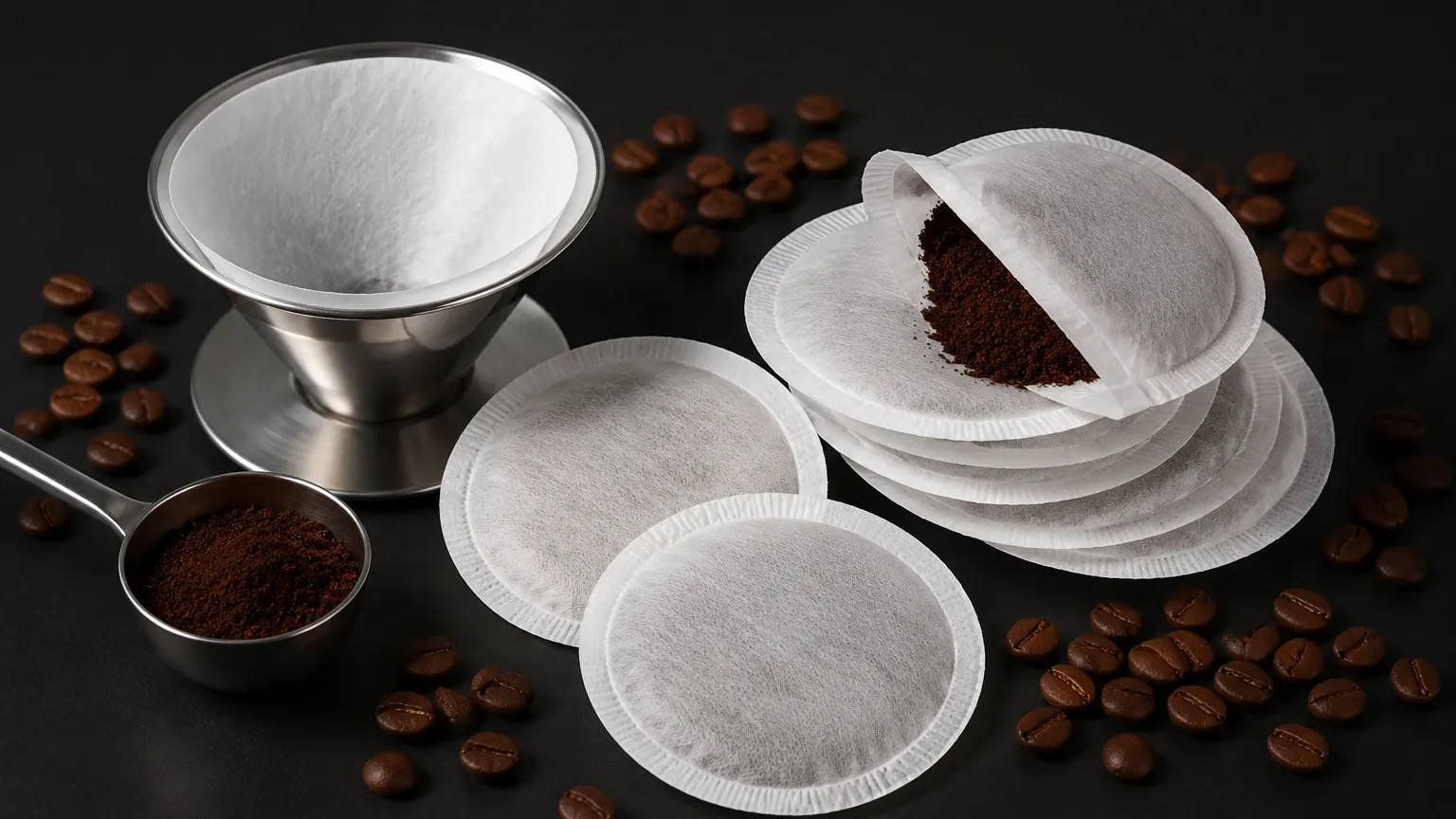
Prefilled Coffee Filter Packs
In the industrial food and beverage sector, the consistency and quality of extraction processes are dictated by the precision of the filtration media used. While the end-consumer interacts with prefilled coffee filter packs as a matter of convenience, the engineering behind the production, packaging, and commercial-scale brewing of these products relies heavily on high-performance Filter Discs & Packs. For engineers and procurement specialists in the beverage processing industry, understanding the technical specifications of stainless steel wire mesh and its role in achieving repeatable extraction profiles is essential for maintaining brand standards and operational efficiency.
This article examines the technical requirements of filtration components used in the manufacture and industrial brewing of coffee, focusing on material selection, mesh geometry, and the structural integrity required for high-volume processing.
The Role of Precision Filtration in Beverage Processing
Industrial coffee production, ranging from large-scale extraction for liquid concentrates to the high-speed filling of prefilled coffee filter packs, requires filtration solutions that can withstand mechanical stress while providing exact micron-rated separation. The primary challenge in coffee filtration is the management of "fines"—microscopic particles of ground coffee that can pass through standard filters, leading to sediment in the final product or clogging of downstream equipment.
Stainless steel Filter Discs & Packs are utilized in several stages of the process:
1. Grinding and Sizing: Ensuring consistent particle distribution before the coffee is loaded into packs.
2. Extraction: In commercial brewing systems designed for prefilled packs, metal filter discs provide the necessary backpressure and flow control to optimize flavor extraction.
3. Packaging Lines: Precision mesh components are often integrated into the machinery that seals and forms the packs to prevent dust contamination in the sealing area.
Engineering Specifications for Filter Discs & Packs
When specifying filtration components for coffee-related applications, engineers must look beyond simple dimensions. The performance of a filter is a result of its weave type, wire diameter, and layering strategy.
Weave Types and Particle Retention
The choice of weave determines the effective filtration area (EFA) and the mechanical strength of the disc. Common weaves include:
* Plain Weave: Offers a straightforward aperture size and is suitable for high-flow applications where pressure drop must be kept to a minimum.
* Dutch Weave: Provides a much tighter mesh and higher strength, making it ideal for high-pressure extraction where fine particle retention is critical.
* Twill Weave: Allows for a heavier wire diameter in a given mesh count, increasing the durability of the disc in automated machinery.
For the production of prefilled coffee filter packs, a Dutch weave or a multi-layer sintered mesh is often preferred to ensure that the structural integrity of the filter remains intact over thousands of cycles, preventing bypass and ensuring a clean cup profile.
Micron Rating and Flow Dynamics
Coffee extraction is highly sensitive to the flow rate of water through the grounds. If the micron rating of the filter disc is too large, sediment levels increase. If it is too small, the pressure increases, potentially leading to over-extraction or mechanical failure of the pack. Industrial filters are typically specified between 20 and 100 microns, depending on the grind size intended for the prefilled coffee filter packs.
Material Selection: 304 vs. 316L Stainless Steel
In the food and beverage industry, material compliance is a non-negotiable boundary. Stainless steel is the industry standard due to its corrosion resistance and ability to withstand rigorous Cleaning-in-Place (CIP) protocols.
Type 304 Stainless Steel
304 stainless steel is the most common material for coffee filtration. It offers excellent resistance to the organic acids found in coffee and is cost-effective for large-scale production runs. It provides sufficient durability for most dry-handling and standard brewing temperatures.
Type 316L Stainless Steel
For applications involving high-salinity water or more aggressive cleaning chemicals, 316L stainless steel is recommended. The addition of molybdenum provides superior pitting resistance. In the context of prefilled coffee filter packs, 316L is often used in the high-pressure extraction chambers of commercial brewers where the environment is more corrosive over long-term exposure.
Structural Design: Single Layer vs. Multi-Layer Packs
Filter Discs & Packs can be engineered as single-layer components or complex multi-layer assemblies. The choice depends on the mechanical load and the required lifespan of the part.
1. Single-Layer Discs: Best for low-pressure applications or as a secondary support layer. They are cost-effective but may lack the rigidity needed for high-speed automated packaging.
2. Multi-Layer Sintered Packs: These consist of several layers of wire mesh (e.g., a fine filtration layer, a drainage layer, and a support layer) that are bonded together through heat and pressure without the use of adhesives. This creates a monolithic structure that is incredibly robust. Sintered packs are ideal for industrial brewers that use prefilled coffee filter packs, as they do not deform under the high hydraulic pressures required for rapid extraction.
3. Rimmed and Framed Discs: To ensure a perfect seal within the processing equipment, filter discs can be finished with aluminum, stainless steel, or copper rims. This prevents the edges of the mesh from fraying and ensures that 100% of the fluid passes through the filtration media rather than around it.
Addressing Common Risks in Industrial Coffee Filtration
Engineers must account for several operational risks when integrating Filter Discs & Packs into their production lines.
Pressure Drop and Clogging
As coffee oils and fines accumulate, the pressure drop across the filter increases. In automated systems using prefilled coffee filter packs, an unexpected spike in pressure can lead to machine downtime. Selecting a mesh with a high open-area percentage can mitigate this risk by providing more pathways for fluid flow, even as some pores become partially obscured.
Mechanical Fatigue
In high-speed packaging, the filter components are subjected to repetitive mechanical stress. If the wire mesh is not properly annealed or if the weave is too loose, the wires can shift, altering the micron rating. Sintered mesh packs are the technical solution to this problem, as the wires are fused at every contact point, ensuring permanent pore geometry.
Contamination and Compliance
Any metal component in contact with food products must be free of manufacturing oils and burrs. High-quality Filter Discs & Packs undergo ultrasonic cleaning and deburring processes to meet stringent hygiene standards. When sourcing components for prefilled coffee filter packs, it is vital to confirm that the manufacturer follows ISO quality management systems and provides material certifications (MTRs).
Customization Options for OEM Applications
No two industrial coffee applications are identical. Customization is often required to fit specific machine dimensions or to achieve a particular flavor profile. Key customization variables include:
* Shape and Diameter: From small circular discs for single-serve pods to large rectangular packs for industrial extraction tanks.
* Layer Configuration: Tailoring the number of layers to balance filtration fineness with structural strength.
* Edge Finishing: Options include spot welding, binding, or rimming to facilitate easy installation and removal.
* Surface Treatments: Electropolishing can be applied to improve the corrosion resistance and cleanability of the stainless steel surface.
Evaluation Criteria for Purchasing Teams
When evaluating a supplier for coffee filtration components, purchasing teams should focus on the total cost of ownership (TCO) rather than the initial unit price. A low-cost filter that fails prematurely or causes bypass will result in significantly higher costs due to product waste and maintenance labor.
Questions to ask before procurement:
* What is the burst pressure of the multi-layer pack?
* Is the mesh ultrasonically cleaned to remove residual lubricants from the weaving process?
* Can the supplier provide a consistent micron rating across large production batches?
* What is the lead time for custom-tooled rimmed discs?
Conclusion
The efficiency of producing and utilizing prefilled coffee filter packs is fundamentally linked to the quality of the industrial filtration components involved in the process. By selecting the appropriate Filter Discs & Packs, manufacturers can ensure consistent extraction, protect their machinery from sediment damage, and maintain the high standards required in the competitive beverage market. Whether the application requires a simple 304 stainless steel disc or a complex multi-layer 316L sintered pack, engineering the solution to the specific demands of the coffee industry is the key to long-term operational success.
